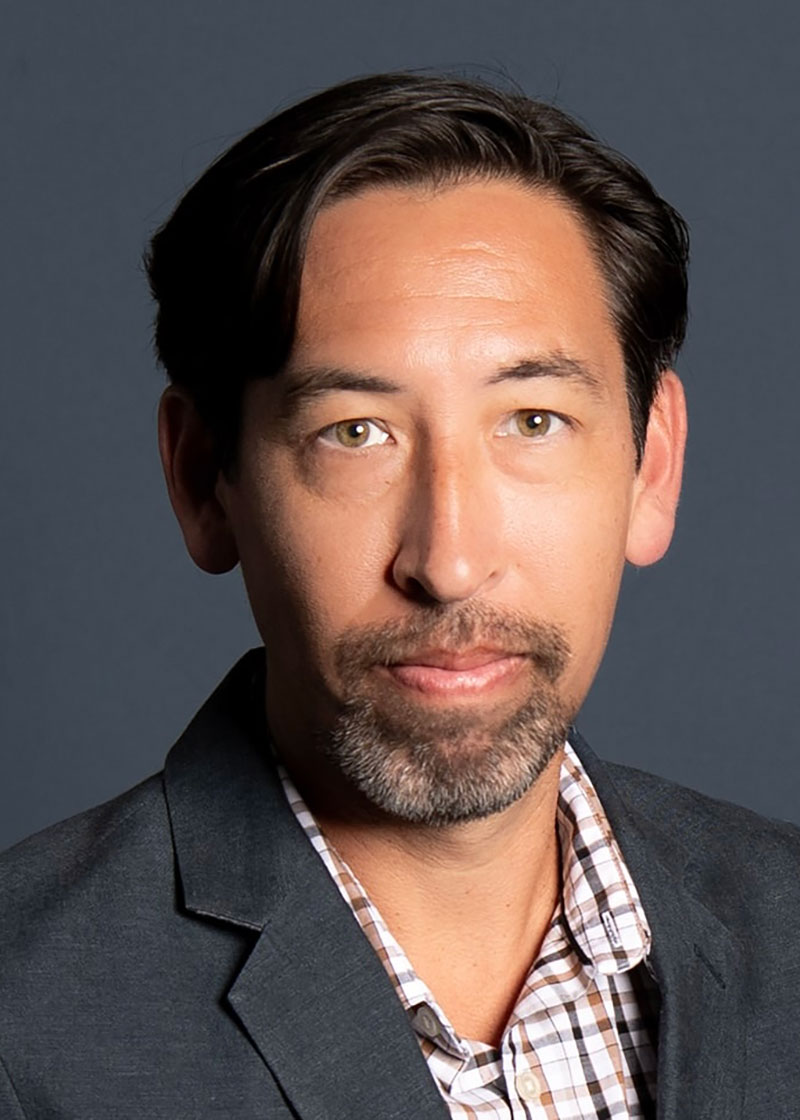
Dr. Gordon Fisher, professor in the UAB Department of Human Studies and CEDHARS scientist, has been elected president-elect of the southeast chapter of the American College of Sports Medicine and appointed to ACSM's Basic and Applied Sciences Board of Trustees.
The new role positions him in a place to influence ACSM programming and participation engagement in the largest academic professional sports science and exercise medicine organizations.
"Serving in those roles, you obviously have an opportunity to kind of put your stamp on areas that you feel are important," Fisher said.
Through the leadership roles, Fisher aims to help bridge the gap of implementation from scientific discovery to real-world practice, ensuring exercise science findings reach healthcare providers, community organizations and individuals.
Although Fisher’s academic interests didn’t originally involve disability when he set out to study exercise as medicine early in his career, mentorship from CEDHARS Director Dr. Jim Rimmer led him to study the discipline through a disability lens.
A pilot grant from the UAB SHP Research Collaborative helped launch Fisher’s career, studying high-intensity interval training for people with spinal cord injury, and eventually led to an NIH grant.
"That's kind of how I found my entry into disability research, and how I ended up landing my biggest grant was from an area that was really new to me," he said.
Fisher’s journey is emblematic of Rimmer’s aim to have CEDHARS as a catalyst for bringing researchers of all disciplines at UAB and beyond into the field of disability health.
"Jim was really instrumental in getting me involved in the work related to CEDHARS,” Fisher said. "We're very lucky to have CEDHARS at UAB to advocate and support that work."
Rather than just studying physical activity participation, which historically made up a large portion of disability research, Fisher helped bring rigorous physiological measures and specific aims into the field.
"I wanted to do a lot of the same measurements that I did with obesity and cardiometabolic disease patients and really get down to the physiology."
Fisher’s work exemplifies how bringing skilled researchers from outside disciplines can gather strong evidence that doesn’t just encourage exercise for people with disabilities, but fine-tunes interventions that can improve quality of life.
In his new roles at ACSM, Fisher won’t necessarily be able to bring sweeping policy changes, nor does there need to be. But he will be able to elevate the voices and visibility of disability health researchers and their work.
Because ACSM is such a student-driven organization, providing a space for disability health at the table will help expose future researchers to how disability health can become a part of their research, creating a new generation of professionals like Fisher and integrating disability health into mainstream exercise science.
"I will definitely continue to advocate and bring awareness and obviously use my network to get people doing that work to attend these meetings, just making sure that there’s a place in the program for disabilities,” Fisher said.
Fisher said that although research has advanced science’s understanding of disability and interventions, there is still a great deal of attention needed for disability and chronic conditions.
"There are a lot of the same questions that we have been asking in other chronic diseases that we still know very little about in people with disabilities,” Fisher said. "Those things are amplified tenfold in folks who have even bigger barriers to moving."