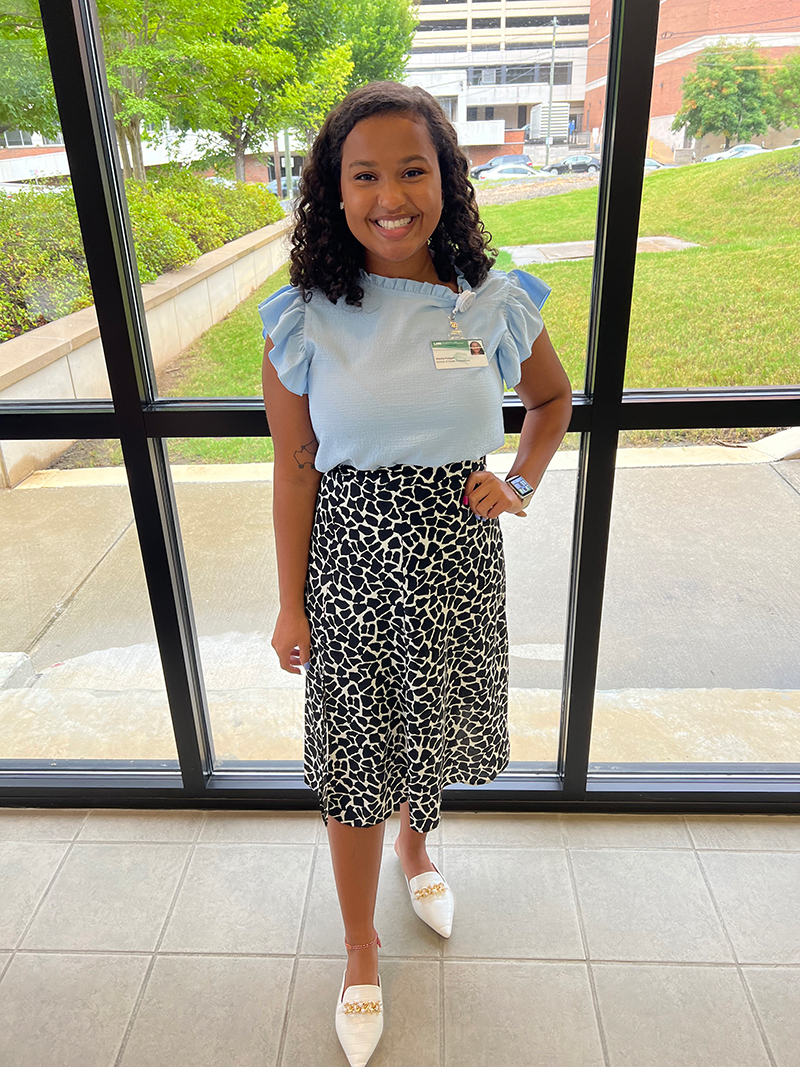
 Padgett has been working toward a career in OT since she began her undergraduate degree.Sheree Padgett’s independence and determination to excel have been a part of who she is since early childhood, when life circumstances meant she had to grow up fast. At age 8 she was doing household chores usually reserved for teenagers and helping her mom take care of her grandmother and little sister.
“I grew up in a single-parent household, and my mom [who has a disability] couldn’t really work outside the home. When my grandmother got sick, we moved in with her and my grandfather,” says Padgett, who is from Theodore, AL, a small town just south of Mobile. “Regular eight-year-olds might have been outside playing, but I was washing dishes, doing laundry, mowing the lawn.”
These experiences instilled the motivation and self-discipline that helped Padgett become the first person in her family to go to college and earn full scholarships for all her undergraduate studies. She began that work at Coastal Alabama Community College in Bay Minette and finished it at UAB, where she was awarded a highly competitive Presidential Scholarship. She maintained a 4.0 GPA the entire time—all while working 5 days a week.
“I am where I am today because of how I grew up,” says Padgett, 22. “I don’t see any of it as a struggle. I don’t any of it as a disadvantage. Instead, I use it to my advantage as motivation. I just look at it as ‘OK, this happened to me, and I’m going to use it and move on.’”
In this interview, Padgett talks more about the experiences that made her who she is today, some key moments from her first semester, and how she’s learned to fit in social time.
Tell me more about how your life experiences have helped you succeed as an adult.
I’ve always wanted to do well for my family. And, always, I want to beat the statistics you see if you’re looking in from the outside: So, they live in a trailer. None of them work except for her grandfather. She’s not going to be anything. And I feel like, being biracial, there’s a stigma: the odds are stacked against her. I wanted to beat all that.
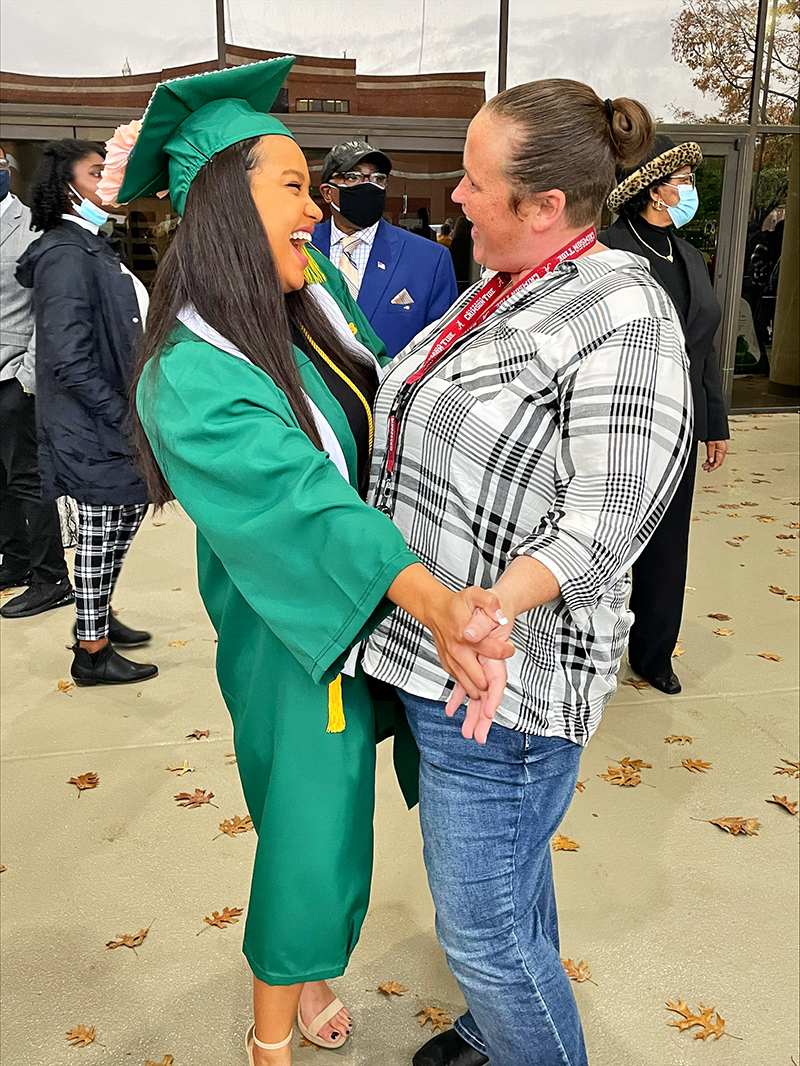 Padgett and her mom, Gina, celebrating her graduation from UAB’s undergraduate program in kinesiology (concentration, exercise science). Also, I want to be able to tell my mom, “Hey, Mom, you might have not been able to do all you wanted to do for us. But I want you to know that you didn’t fail us. I saw all your hard work and dedication. And I’m using that to build a foundation for my life.
How does your background affect how you approach school—and life?
When it comes to academics, I’m here for a reason. I’m not just here living life. I’m here to do school.
I don’t really have any financial help [from family], and my goal is to pay for school out of pocket, with no student loans. I save everything I can from my scholarships. At first, I didn’t know what I was saving for. I just wanted to have money to fall back on depending on what happened. Now, I’m focused on saving money for kids and building a nice retirement.
I know you can’t plan [every part of] your life out. I like to be present, but also look out into the future. Because every move you make now is going to affect you in the future. I try to be aware of that.
You’re very self-motivated and driven, but I imagine that drive can be stressful at times. Tell me about that, and how you manage the pressure.
I feel guilty when I don’t study, and I stress out about school so much. I’ve always been that way, so I feel like, if I don’t stress, bad things are going to happen. During the summer semester I made sure I stressed a little less and gave myself more [downtime] so I wouldn’t feel so exhausted.
My social time became an important aspect [of my life] because I knew that if I didn’t focus on it, I would be more exhausted and not perform that well in class. I made sure my mental health came first, and part of that was ensuring that I was making time for myself and my friends. I had a lot of pool and movies days with friends that were muchly needed.
I finished the summer semester with all As. It was difficult at times to juggle everything, but it all worked out in the end.
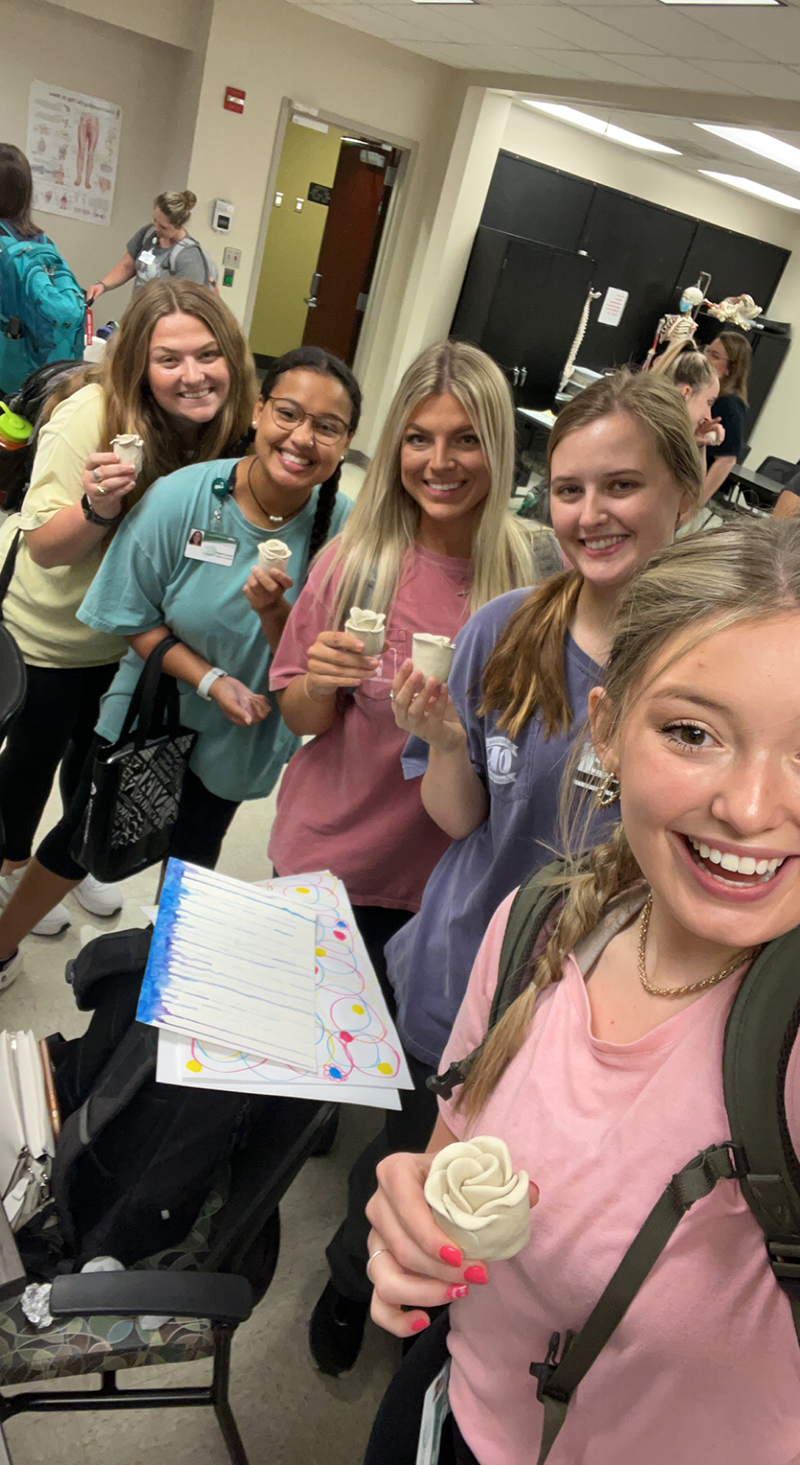 Padgett with her peers in creative occupations class. What else stands out to you from your first semester, and what are you looking forward to this fall?
A key moment in summer semester was getting closer with my friends during creative occupations class. In one of those classes, we had to create a collage of things our group had in common. This class specifically was interesting because, although we had a smaller group, I was able to see my similarities with other groups and learn more about them.
This fall, I am looking forward to my OT 720 class and learning more about pediatrics. I would like to work in peds eventually, and I’m excited to see if that remains the same after this class.
With OT, there are endless opportunities in terms of areas that you can go into. I think that diversity was what brought me in [to the profession] because you don’t have to be tied down to one area. And, with OT, you’re not just there just to be there, you’re making a difference in a person’s life.
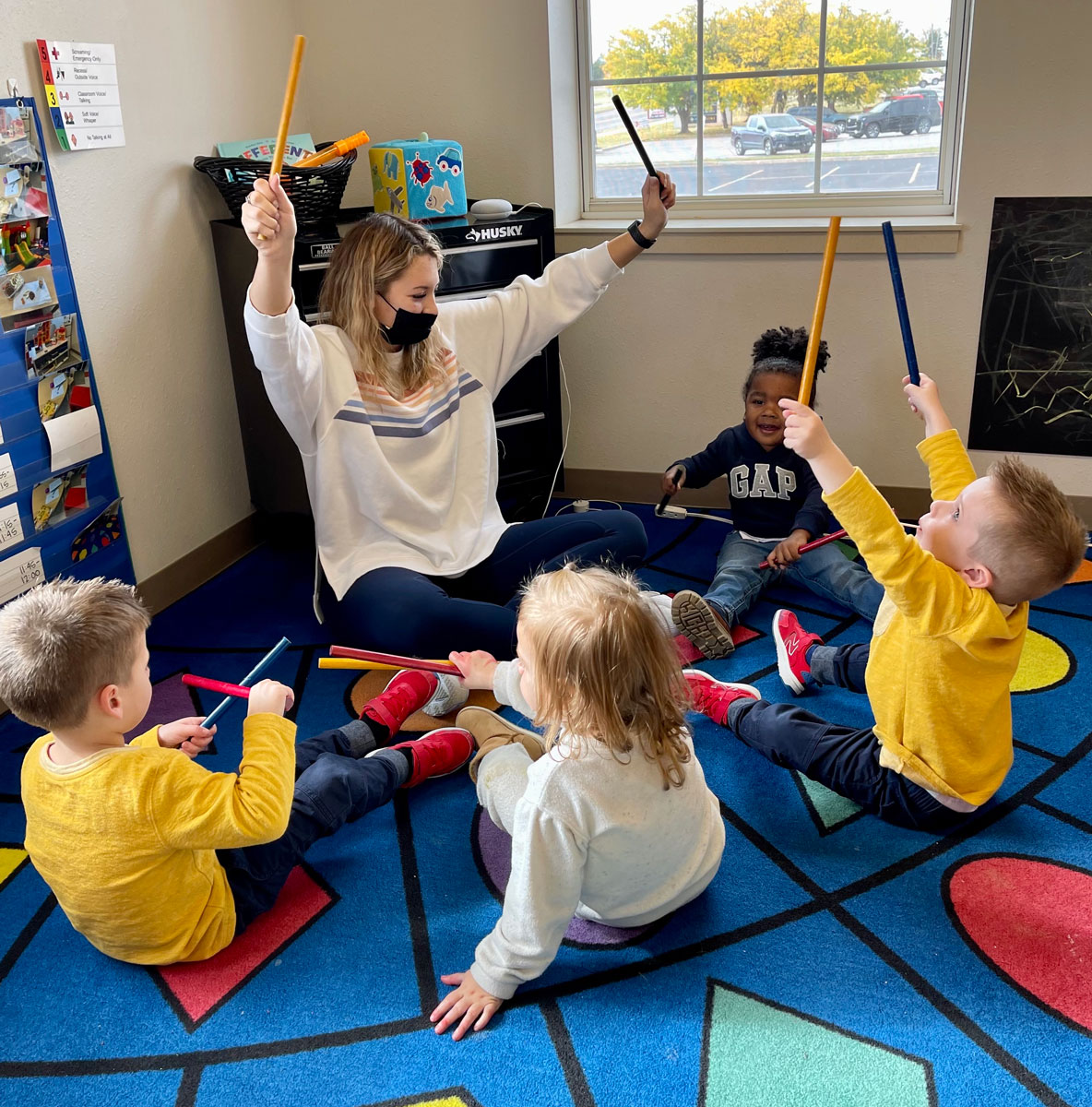 Fulks working with children at the Oklahoma Autism Center, where she spent a gap year as a behavioral analyst. Cheyenne Fulks, who began her studies this spring as part of the OTD 2 cohort, is named in honor of her father’s favorite Native American chief.
“Chief Black Kettle was chief of a Cheyenne tribe and is well known as a peacemaker," says Fulks, a member of the Choctaw Nation of Oklahoma. “He had 17 children, one of whom was named Cheyenne, whose position was termed ‘princess.’ It’s a very elaborate reasoning for my name.”
Fulks, who is fluent in Choctaw, grew up mostly in the small town of Purcell, OK, where she was immersed in Native American culture. “I felt a big sense of community because the whole state is a native nation,” she says.
She welcomes questions about her Native American heritage. “Educating people about my culture makes me feel more connected to it,” says Fulks.
The Choctaw Nation awarded her scholarships throughout elementary and high school that provided her with an iPad and a clothing allowance. It paid for her health care and her undergraduate education.
Fulks’s father teaches history, and he encouraged her to learn about the past, including that of her family and tribe. “I can track them all the way back to when we lived in Mississippi, before the Trail of Tears,” she says.
The Trail of Tears (1830−1850) refers to the forced removal of more than 60,000 Native Americans from their ancestral homelands in the southern United States to what is now the state of Oklahoma.
The Choctaw were the first of the five tribes the US government forced on these westward marches that killed thousands of Native Americans though disease, exposure, and starvation. A Choctaw chief termed it “the trail of tears and death.”
Fulks has a strong sense of the past and a deep-seated connection with her Native American community, but she is crafting a future that is uniquely her own.
“Leaving Oklahoma was hard, but I always liked the idea of getting out of the state, of being different and doing my own thing,” she says.
Here, Fulks talks about experiences that have helped shape her life.
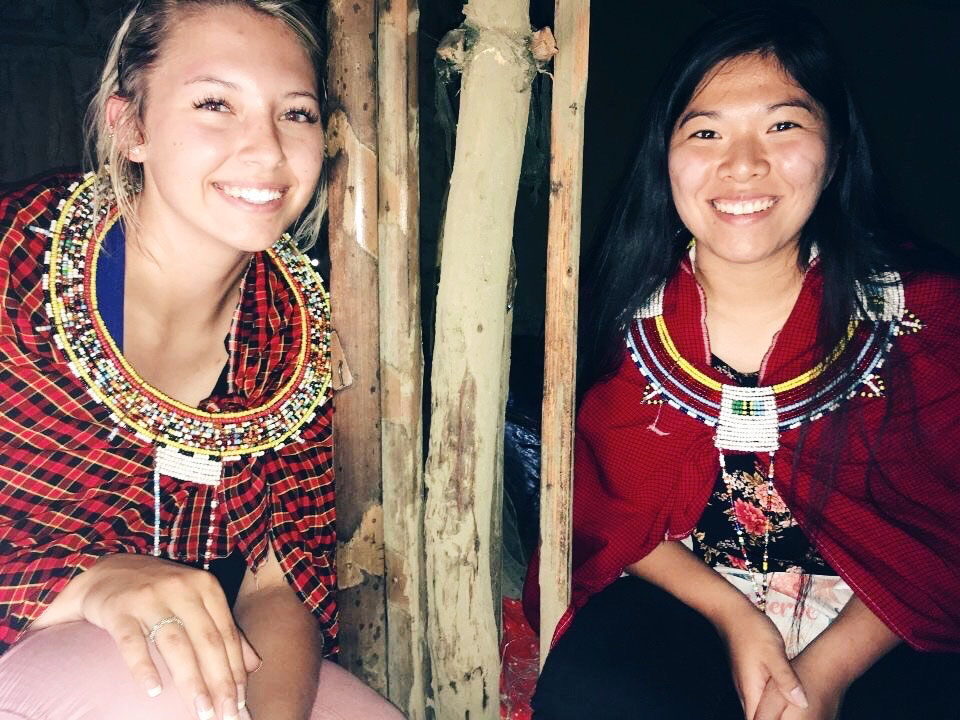 Fulks and a fellow study abroad student visiting a Maasai tribe in Tanzania that educated them about Maasai traditions and culture. Did you grow up speaking Choctaw?
Yes, a little bit. My grandmother, who is Choctaw, spoke it, and my dad kind of did, but not the way she did. My grandmother had stroke when I was 9 and couldn’t speak afterward. When that happened, I stopped learning it. But when I got to University of Oklahoma [OU] for undergrad, they had Choctaw, and I took classes. Now I can read it, write it, and tutor people in it.
How did you decide you wanted to be an OT?
I always knew I wanted to go into occupational therapy or something like it. I first got the feel for OT, PT, and rehab when my grandmother had her stroke. Then, my senior year of high school, my mom got breast cancer and had a double mastectomy. She had [a lot of therapy], and I went with her to appointments. I thought the therapy was amazing, and it really made me see the difference between PT and OT—and how much I think OT is more fun. I majored in health and exercise science at OU, and was pre-OT the entire time.
What other experiences have helped you reach this key point in your life?
I went to Tanzania in East Africa the summer after my freshman year through a study abroad program. I think by studying abroad I realized how quickly my life could change for the better by getting out of my comfort zone. I saw a change in myself that educated me beyond what my small-town life could ever have offered me.
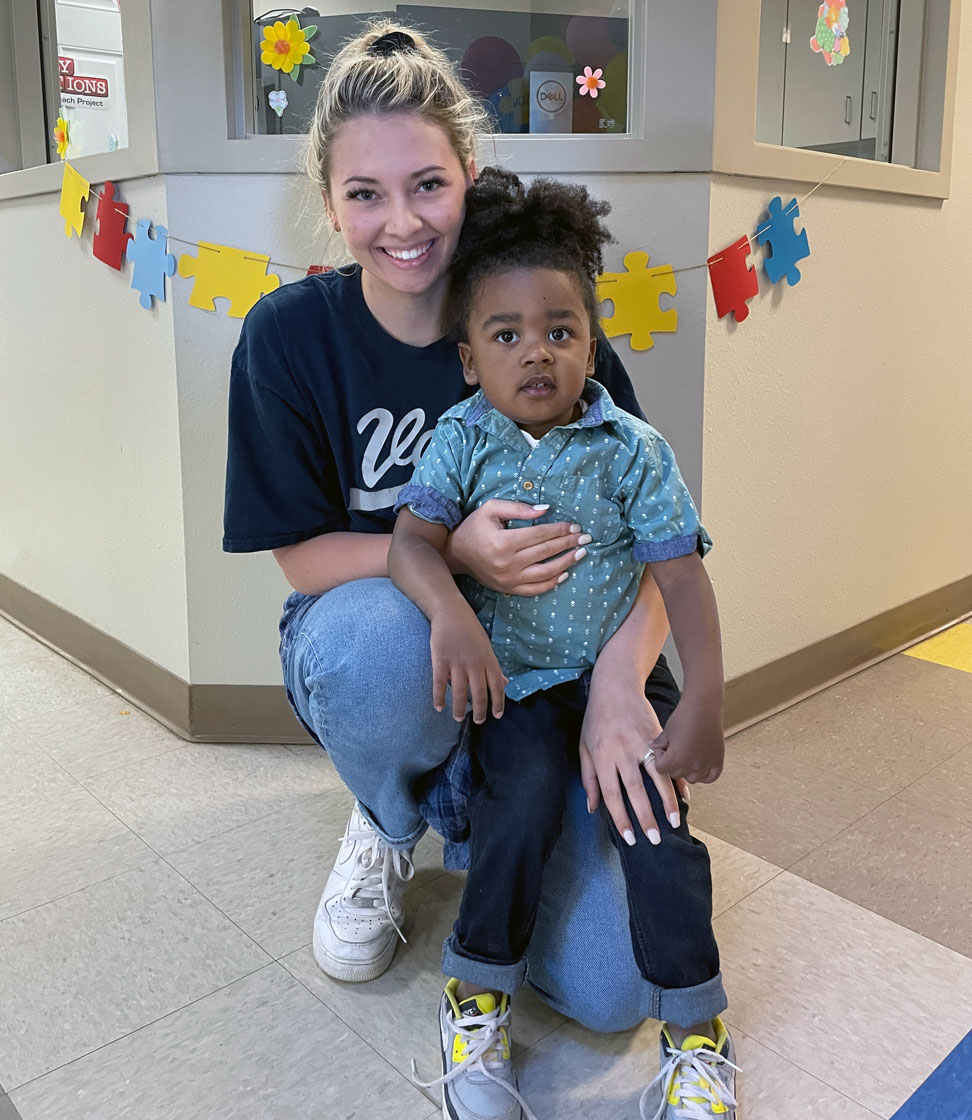 Fulks worked with this boy at the Oklahoma Autism Center for most of her time there. She is still in touch with him and his family. I took classes in East African women’s studies and film and arts. My study abroad group toured residential care centers for vulnerable children, and I learned that, sometimes, children are adopted against the wishes of their biological family, who place them there to get free food, shelter, and school.
My favorite quote from my study abroad experience is “Education is not a way to escape poverty—it is a way of fighting it.” [Julius Nyerere, former president of the United Republic of Tanzania.]
I also took a gap year after undergrad and worked as a behavioral analyst in an early intervention program at an autism center in Oklahoma City. The program was for kids younger than 5 who were at risk for autism.
I worked with them on fine motor skills, vocabulary, and imitation behaviors. I watched one of my kids, who had never talked, start talking. Another kid, who was 3, went from never walking to running around and playing just like every other kid. The experience made me fall in love with kiddos, and I felt like I was making a real difference in their lives.
Why did you choose UAB to pursue graduate work in occupational therapy?
My fiancé was planning to go to law school, and got in pretty much everywhere he applied, including Samford University. I thought UAB looked really cool, and I applied. I did my interview over Zoom with Dr. Jenkins—he was awesome. My fiancé and I agreed on Birmingham, and I committed to UAB as soon as I could.
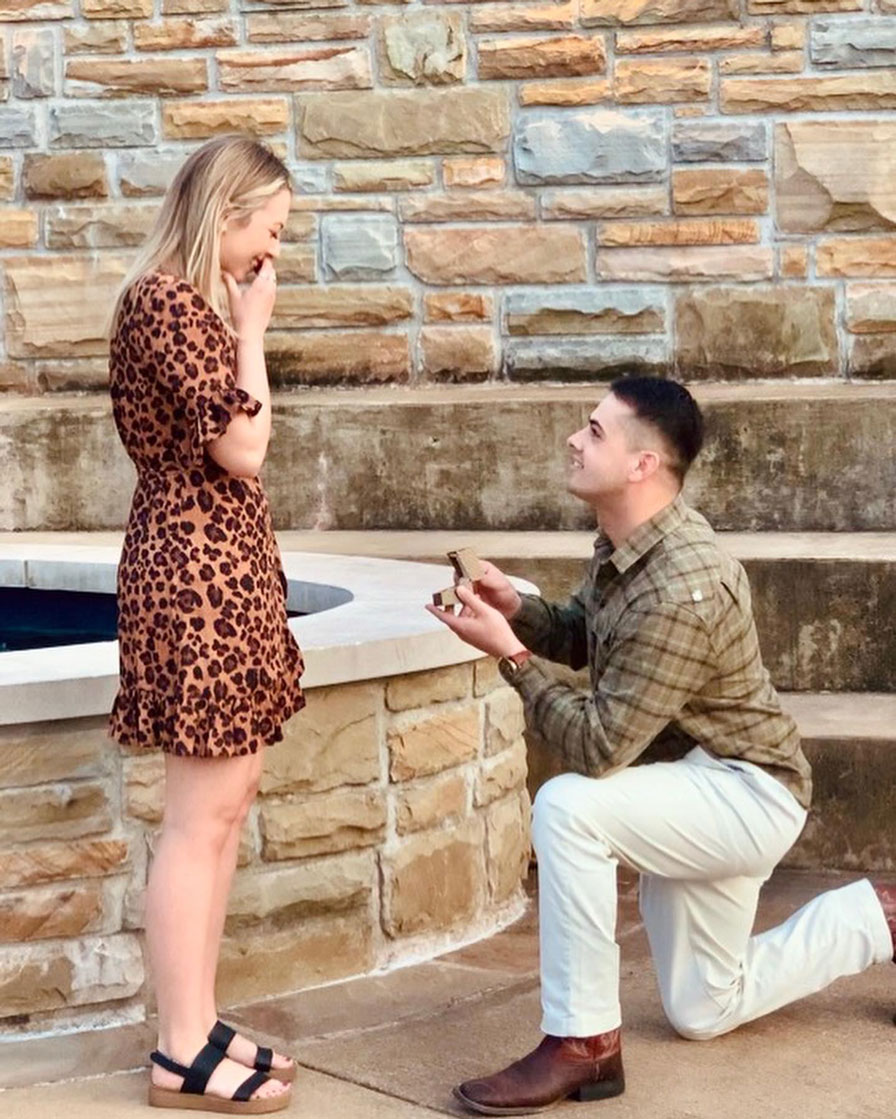 Fulks’s fiancé surprised her with a marriage proposal at Vulcan Park.
How is life in Birmingham?
I love it. Like Oklahoma City, it’s got a very diverse population, but Birmingham is prettier. I hang out with [friends from Alabama in my OTD program], and they’re having fun introducing me to new things.
I got engaged here. My fiancé proposed in March at Vulcan Park—both our families were there. I thought they were in Birmingham to help us with apartment hunting. My sister told me to wear a dress [to the park], which was weird because I don’t wear dresses. Everyone was acting strange and following me around. When we walked up the stairs, my fiancé slipped and fell [he was not hurt], and that’s not like him. I thought it was nerves and that [the proposal] might be happening.When we got down, he went into a big speech. I still have no idea what he said to me, but it was a really cool moment.
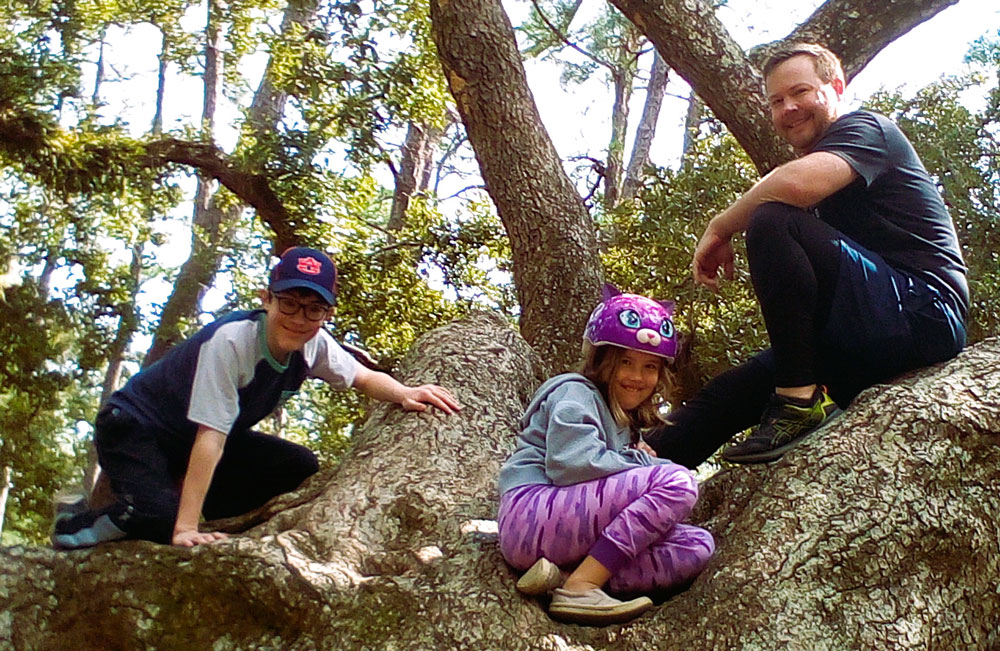 Osborn and his children John Steadman, 13, and Johannah, 8, enjoy a day in the outdoors. When Brandon Osborn, 38, began the entry-level OTD program in early May as part of its second cohort, he’d already spent 15 years working in several professions. That work had provided for his family—his wife, Jessica, and their two children, John Steadman, 13, and Johannah, 8—but it hadn’t fulfilled his dream of doing work he loves that also enriches the lives of others.
Osborn started work as landscaping supervisor after he earned his undergraduate degree in horticulture in 2007 from Auburn University. Three years into the job, he knew it wasn’t for him. At that time, the Great Recession had gutted many industries, but Osborn had a contact in oil and gas development, one of the few sectors that was booming.
“There was a major uptick in domestic drilling around 2009. Companies were offering great salaries for entry-level landmen who were willing to travel. I needed a job that could support my family, and I was fortunate enough to know someone who helped me get my foot in the door,” Osborn says.
He spent the next decade helping clients acquire oil, gas, and mineral assets. The work took him to Texas, Ohio, and West Virginia. When the pandemic brought the industry to a near halt, Osborn was determined to find a career he could commit to for life.
“I didn’t decide overnight to become an occupational therapist,” he says. “I had many conversations with my wife, and a lot of prayer. We decided that if I was going to have to reinvent again, I should do something that is meaningful, that will give joy, and that will be something that I want to do for the rest of my life.”
Here, Osborn talks about the experiences that led him to occupational therapy and how he balances being a husband and father with a demanding academic program.
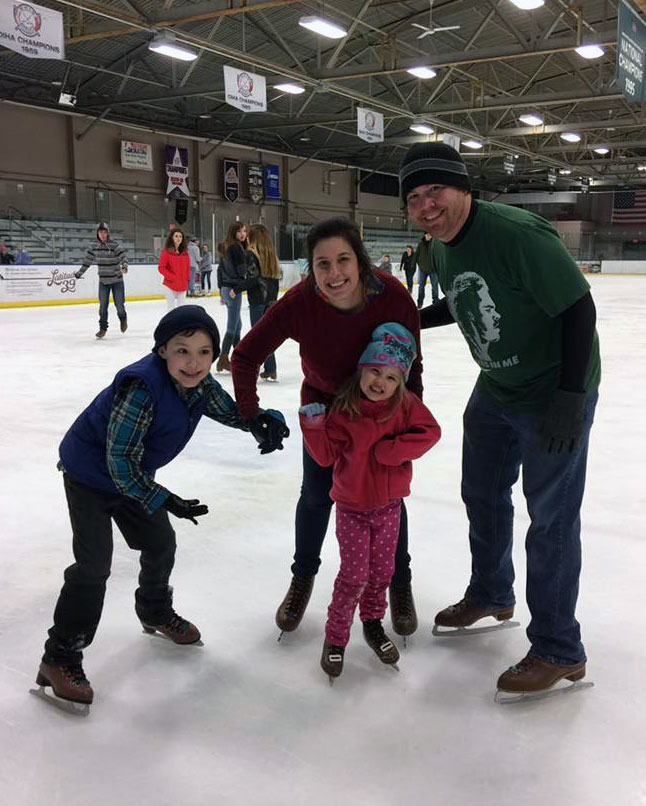 Family time at the ice skating rink.
What did you know about occupational therapy before you considered it as a profession?
I didn’t fully understand occupational therapy until I saw my son benefit from the interventions. He has a sensory processing disorder, and when he was younger it was really pronounced.
One day I came home from work and there was a strange lady on the floor playing with my son and his trains. She was an OT, and after a few sessions we started seeing a world of difference in my son, who was around 4 at the time. He just came out of shell. It was amazing to watch.
As time went on, I saw how broad the field was. That therapist referred us to a colleague who specialized in equestrian therapy. My son loved it, and he never once thought of it as therapy. He just thought of it as riding horses, and every night he would say prayers for them—I think their names were Daisy and Duke.
Those experiences put occupational therapy in my field of vision. It took me a few years, but here I am.
What’s it like to be a student again after 15 years in the working world?
When I walked in [to the school], it felt like home. It wasn’t intimidating, it wasn’t a sterile environment. I could feel the instructors really cared about us and were invested in us. For the first time, I knew this was not just a job—it was something I was made to do.
I’d always wanted to go back to school, but life happens, and you start telling yourself, “I can’t” because of this or that. But now, even on a tough day, I can’t imagine not being overjoyed about being here, because it’s just a dream. It’s not only changing my life, but that of my family, and even future generations of my family.
Every day I leave here feeling like the sky’s the limit.
What has been your biggest challenge?
Getting back into the swing of full-time academic life has been something of a challenge, but it seems to come naturally. I’m also a full-time dad, and I’m still working. It sounds like a lot, but my family is a great support.
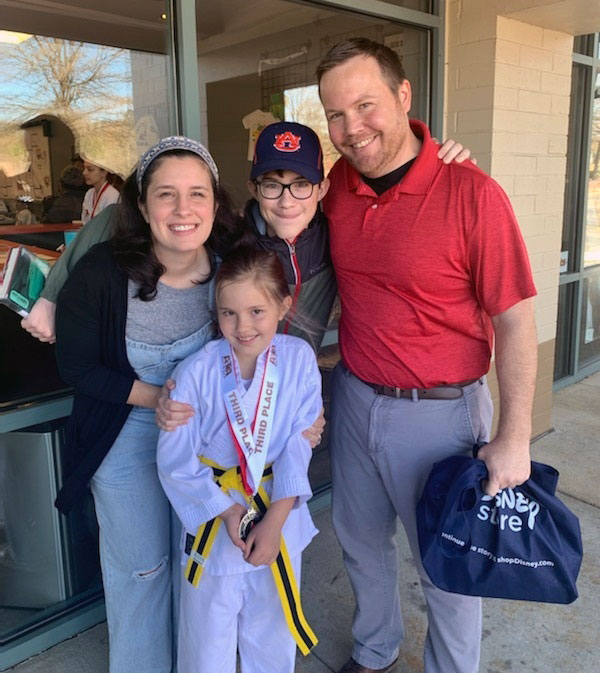 The Osborn family celebrates Johannah's first karate tournament. I couldn’t have done this without my wife, Jessica. I really married up when I married her. She’s the most supportive person I’ve ever met, and I don’t have the words to express just how grateful I am for her. My kids think it’s cool, though they mostly think of it as another job I go to—just one with a lot more homework. It’s definitely a team effort, and I feel like we’re all in this together.
Tell me a little about what you like to do in your downtime—if you have any!
I like to play golf when I can. I don’t play much, so I’m not good at it, but it’s fun and it’s relaxing. I enjoy spending time with my family. We go hiking a good bit—Birmingham has so many great options. I think Moss Rock is our favorite. And I try to cook. Lately, I’ve been dabbling with making homemade pizzas and barbecue.
What else would you like to share with your classmates and faculty?
I know I’m surrounded by people who are going to make a difference. They’re bright, they have they have so much talent, and they bring so many unique traits to this work. They are going to change the world, and I’m thankful to be a part of it.
Who are your fellow classmates or your new students? Where do they come from? Why are they here? What do they love?
Find out in this profile series that will introduce you to six of the talented, driven students in the OTD 2 cohort.
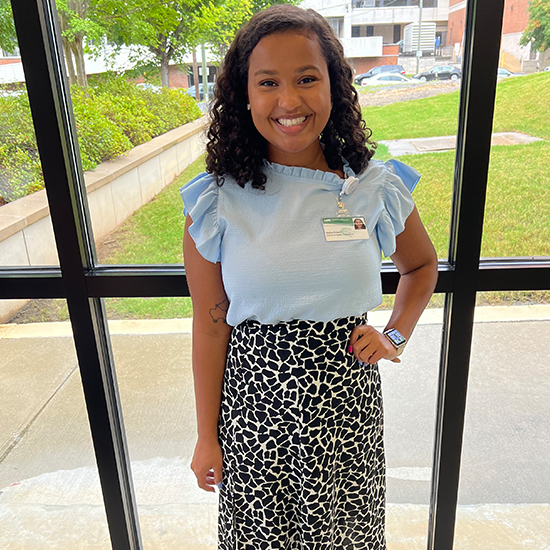
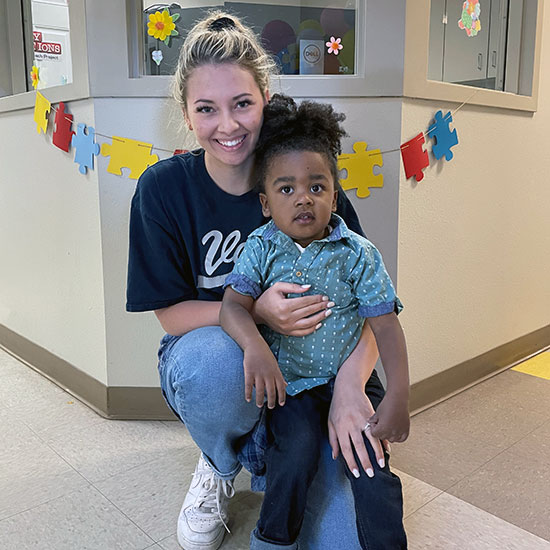
Sheree Padgett
Sheree Padgett’s independence and determination to excel have been a part of who she is since early childhood, when life circumstances meant she had to grow up fast. These experiences, however, instilled the motivation and self-discipline that helped Padgett become the first person in her family to go to college and earn full scholarships for all her undergraduate studies.
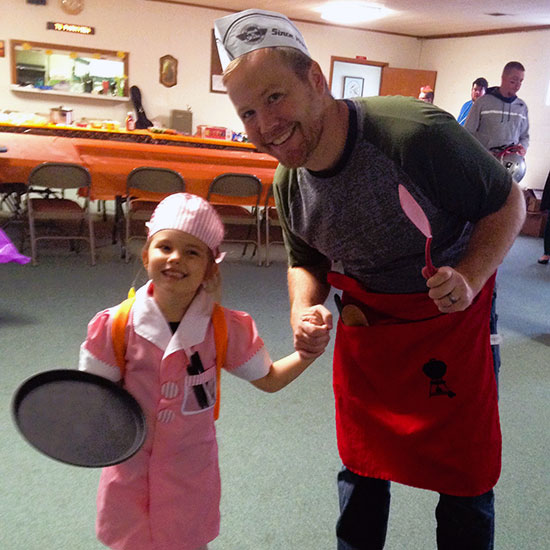
Cheyenne Fulks
Cheyenne Fulks, a member of the Choctaw Nation of Oklahoma, grew up immersed in Native American culture. She had mixed feelings about leaving the comfort zone of family and her tight-knit community, but the move has helped her thrive personally and professionally.
Brandon Osborn
When Brandon Osborn decided to pursue a new profession after years in the working world, he looked for a lifetime career that would bring meaning and joy to his life and to others.
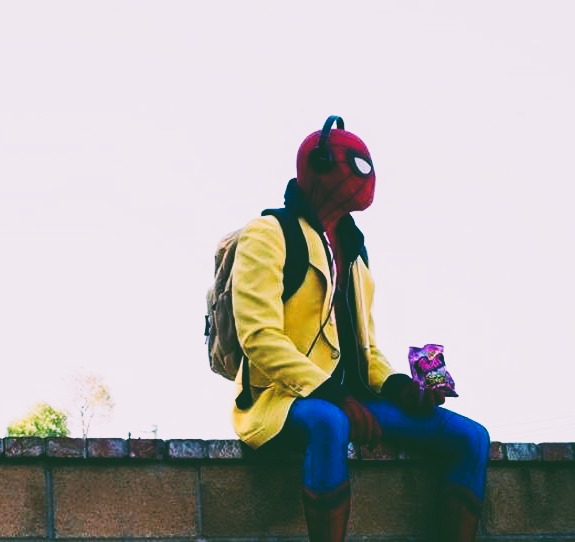
Er Bautista
Er (pronounced “E. R.”) Bautista came from California to Alabama and UAB to work toward a career in OT, which he chose because it combines his life of creativity with his love for helping others.
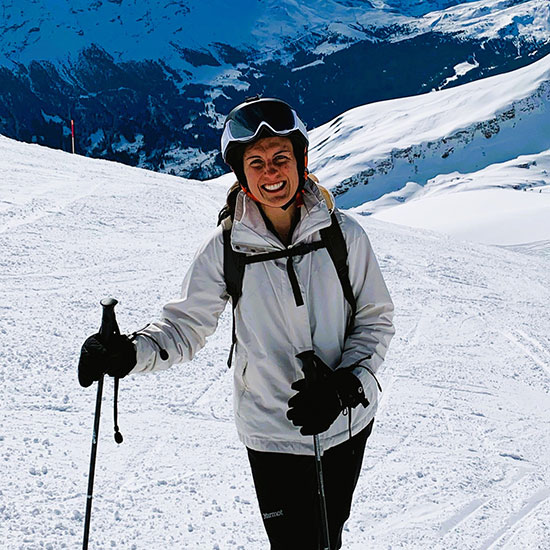
Elise Pittman
After earning her undergraduate degree, Elise Pittman wasn’t sure what shape her future studies and career would take. Her road to decision took her abroad for work and then back to her hometown of Birmingham, AL, where she’s now pursuing her OTD degree with a passion for the profession she’s chosen.
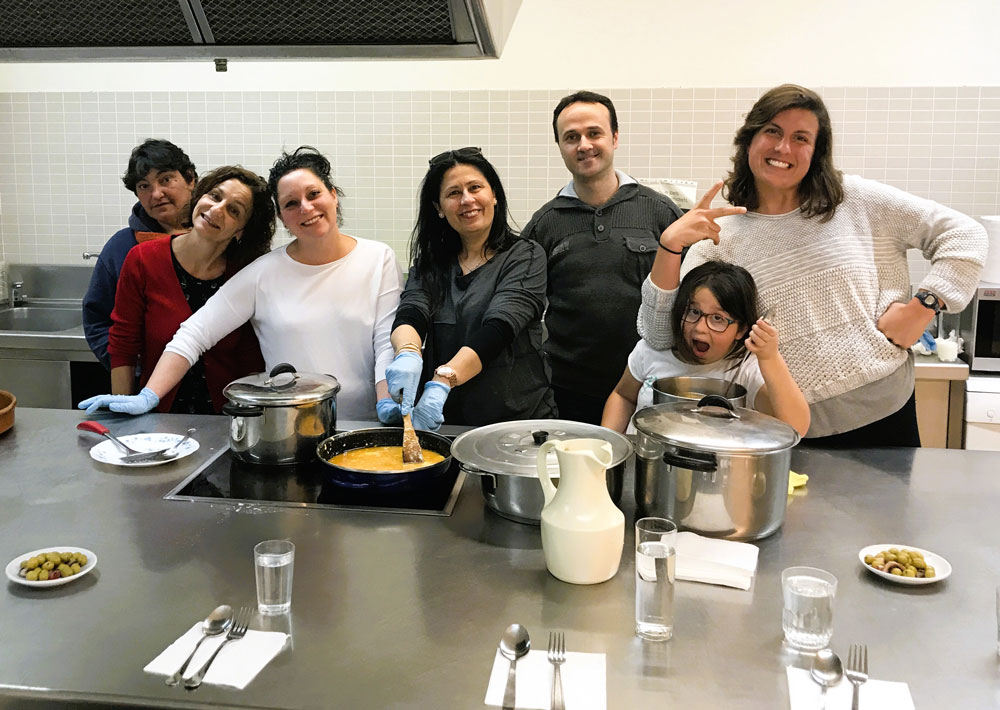 Elise with friends in the Spanish soup kitchen that paired with elementary schools to pick up and re-cook leftover food and serve it to those in need.During a drive in the fall of 2020 to visit her grandfather in Tupelo, MS, Elise Pittman had a moment of clarity about her future. Her mother, a speech therapist, had told her for years that she’d be a great occupational therapist (OT), but Pittman had always passed on the idea. At that moment, however, she knew it was the fit she’d been looking since earning her undergraduate degree in 2017.
She hadn’t been entirely happy with her plan for her first year after graduation. She was headed to an internship at a church in Vilanova i la Geltrú, a small Spanish fishing town 40 km southwest of Barcelona.
“I just felt like everybody had their thing to go to [after graduation], and all my friends said, ‘Oh, you’re going to Spain, that’s so cool.’ But internally, I felt I was not progressing like I wanted to,” she says. “I had this part of me that wanted to achieve a high goal, and I felt like I didn’t know what I was doing.”
But her experience abroad would make her more comfortable with herself—and with taking time to discover the career she wanted. She taught English at the small church and cleaned it once a week, worked two nights a week at a local soup kitchen, and became fluent in Spanish.
After a year she returned home to Birmingham, AL, where she worked as a student minister and mission coordinator and started a graduate program in education at a local university.
“I thought I would be a Spanish teacher, but I withdrew after one semester,” she says. “I had been putting so much into it and trying so hard, but I didn’t feel a spark. I wasn’t excited about it—I think I just wanted so badly for something to fit.”
Soon after, she began a job as a special education aide in a Birmingham suburb, where one of her coworkers was an OT who provided therapy for some of Pittman’s students.
“I would drop the kids off to see her,” she says. “One day she asked if I wanted to shadow her and see what she does. I was interested, so every time one of my kids went for therapy, I would go with them and sit in a corner and watch.”
Shadowing her coworker ignited the spark she’d been looking for and she began to think seriously about a career in OT.
Here, Pittman, 27, talks about how she learned to take the time she needed to let her future unfold, why she chose UAB to pursue her OTD degree, and her love of teatime and outdoor adventures.
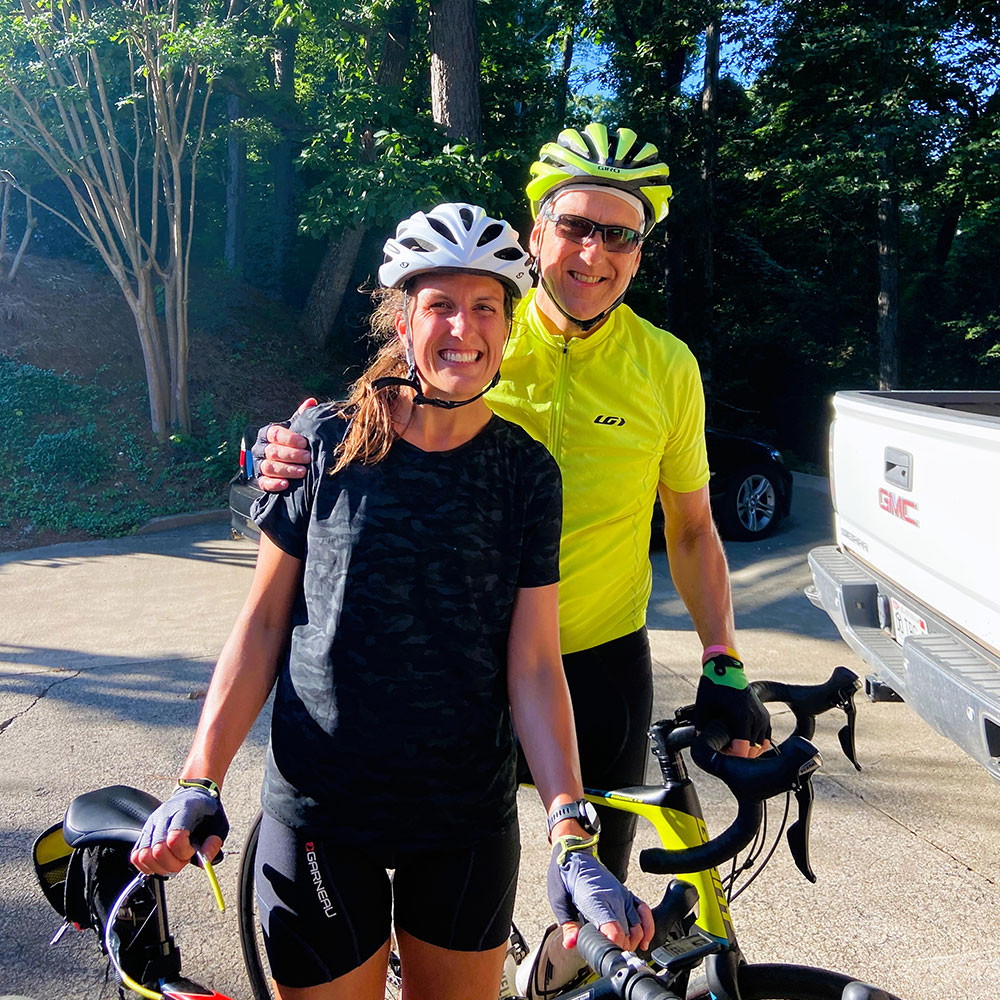 Elise and her dad about to take off on a bike ride.
How you were able to slow down and discover what you wanted to do with your life?
I feel like our culture really pushes you to either find your forever job right away or go to grad school. And I didn’t know what I was supposed to be doing. Then, one of my ministers told me about an opportunity to serve for a year at a church in Spain.
I lived alone there, and I was more by myself than with other people. I became more of a listener than an in-your-face talker. I’m still extroverted, but I enjoy my alone time a lot more after that experience.
Living there also gave me a larger worldview and [the knowledge] that different people have different experiences and don’t always know [what the future holds]. I learned I didn’t need to push so hard to figure everything out. In Spain, I learned more about the world and how things don’t have to be just one way.
What was your next move when you decided occupational therapy was the career for you?
My boyfriend lives in Bozeman, Montana, and at first my plan was to move there and do an online program. I started looking at prerequisites and online programs in late 2020. I was going to be super ambitious and apply for the coming year.
I found a program at [a Texas university]. It was 70% online and 30% on campus—you’d go for a week each semester. It seemed like a good option.
You were close to accepting an admission offer from the Texas program. Why did you choose UAB instead?
I didn’t have any of the prereqs [when I started the application process]. I talked to different OT administrators, and they all just told me, “You have to have the prereqs.” There was such a difference when I called Kerry [Kerry McAlpine, administrator of graduate and professional admissions for UAB’s Department of Occupational Therapy].
I think we stayed on the phone for two hours that first day. Kerry took the time to go through all my questions and talk me through everything. He said, “You can get in, you can do it.” It really felt like he was Team Elise.
I thought, “Okay, I’m going to get this done.” Kerry worked with me for the next year to help make it happen. During the application process I interviewed with [the Texas program] at the same time I interviewed at UAB. I interviewed for the Texas program in front of a computer that asked recorded questions—there was no person involved.
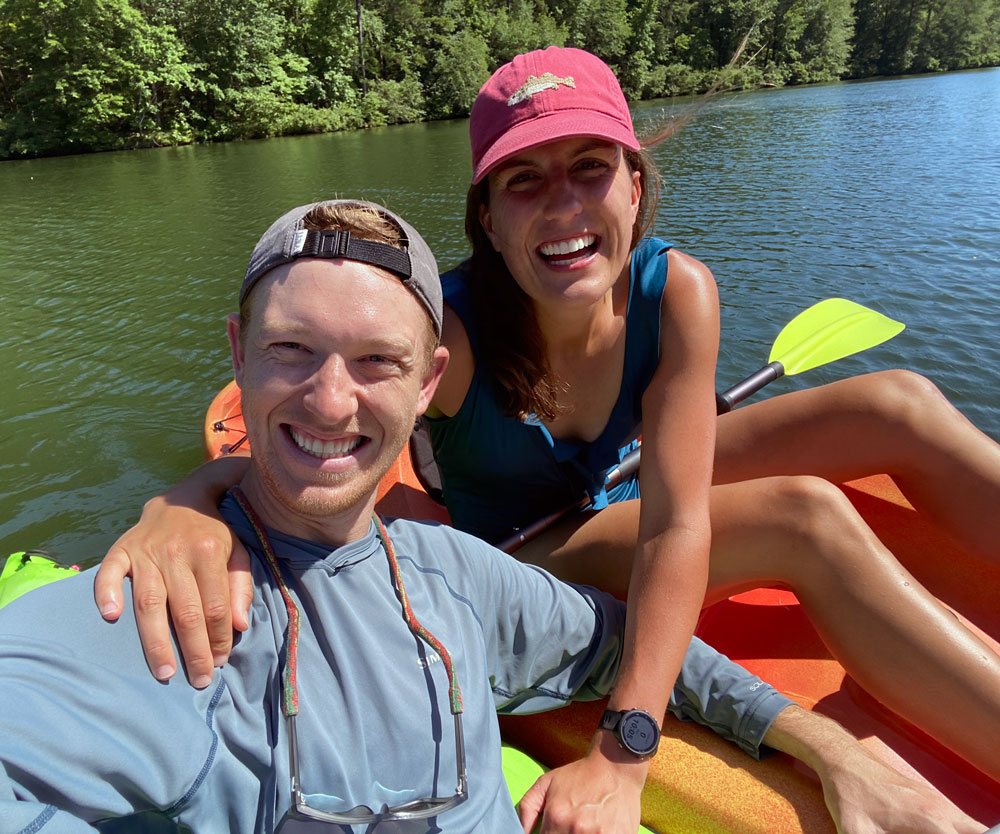 Being outdoors with friends is one of Elise's most-loved activities.It wasn't until Kerry called me to tell me I’d gotten in that I [made my final decision]. The other program sent me an acceptance through email. UAB’s process just felt much more personal.
What do you think your biggest challenge will be in the next few years?
Sometimes, I feel overwhelmed by how much we have to learn in two and a half years. It’s also a challenge to get back into the routine of studying after being out of school for so long.
I wonder, how are we going to learn everything we need to know, how am I going to ask all my questions, how am I going to get to know all these people? But it will happen, and I’m excited about the different perspectives everyone brings and being in an environment that encourages conversations between students and professors. I know this is exactly where I need to be.
What else would you like your classmates and professors to know about you?
I want to make friends with everybody! I love tea, so I’m here for anyone who wants to do teatime. I love camping, hiking, biking, and running—I’m signed up for the next New York Marathon.
I really enjoy being outdoors and love it when friends come with me. I also love food and, while I’ve been living here for 27 years, I still have restaurants on my list. Let me know if you want to go explore with me!
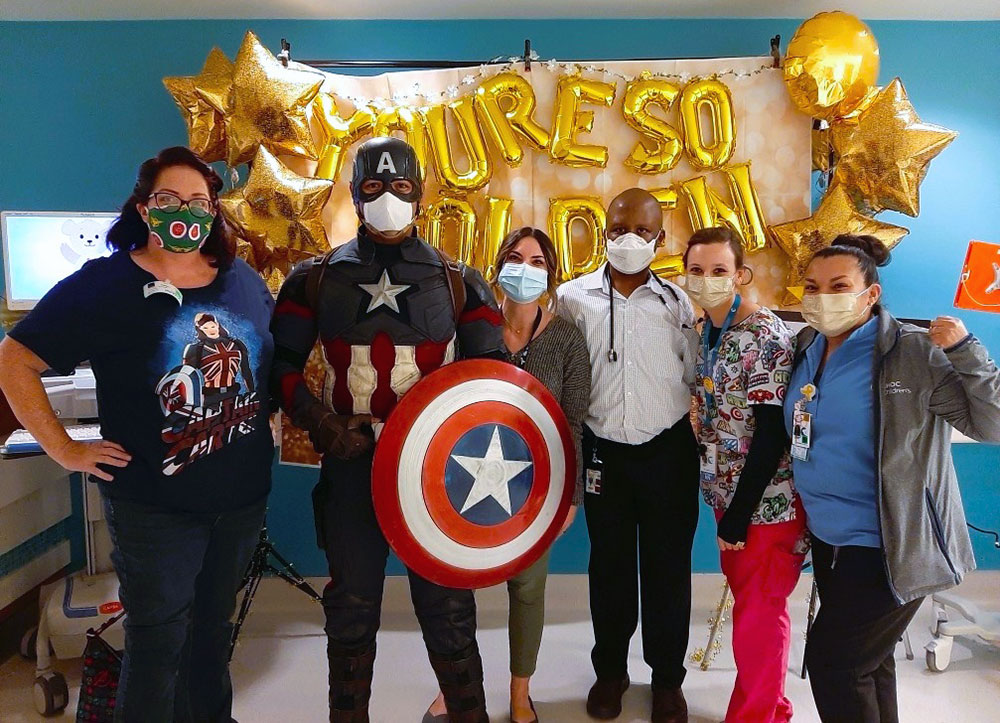 Er as Captain America (his favorite self-created costume so far) at a children's hospital visit.John Ermanuel Bautista, who will turn 26 in June, was nervous when he walked into the young patient’s room. Staff at the children’s hospital had told him the girl with the shunt was withdrawn. She didn’t want to talk to the nurses or doctors and was having a hard time eating and standing.
It was the first time Bautista had visited a patient wearing his screen-accurate Captain American costume, into which he’d put many hours of build time. He made the visit as part of the West Coast chapter of the Avengers Initiative, a cosplay group of Marvel Comic fans based in the Los Angeles area. Its mission includes volunteering in the local community—the group calls this “Causeplay.”
The hospital had just eased its COVID-19 restrictions, and the patient (around 10, says Bautista) hadn’t yet had this kind visit that can make hospitalized children smile and give them time when they can just be regular kids. “I walked in, and her eyes lit up,” says Bautista, who prefers to be called be called “Er” (pronounced “E. R.”), a nickname he’s had since the third grade
“She started telling me all her opinions about Marvel characters and TV shows. She was the most talkative the nurses and doctors had ever seen her, and I was able to get her to stand because she wanted to hold my [Captain America] shields,” he says.
That experience gave Bautista an insight that would help shape his future.
“I realized I can have an impact on people, whether it’s through the career in occupational therapy I hoped to pursue, or in my off time, when I like to dress up as fun onscreen characters,” he says.
During the interview for this profile, Bautista also talked about his Filipino heritage, his love of arts and crafts, and a childhood experience with an OT, all of which came together to lead him to the career he’s working toward at UAB.
Our conversation has been lightly edited for clarity and length.
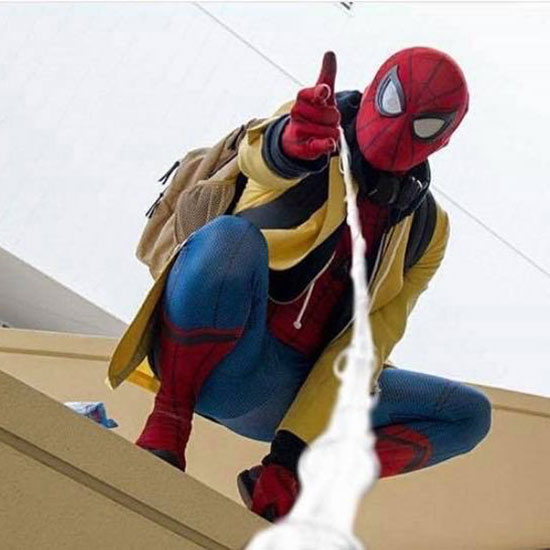 Er in action as Spiderman.Please tell me a bit about your background and where you’re from.
I'm from Eagle Rock, a smaller neighborhood in Los Angeles. It's got a really tight Filipino community. My parents emigrated from the Philippines in the 90s and had me not long after. Growing up in the close-knit Filipino community of Eagle Rock provided my family and me with a lot of familiar comforts. What I recall the most was the vast amount of Filipino food my community had to offer.
On long workdays when my parents didn't have time to cook or grocery shop, I remember going down to this take-out spot called Nanay Gloria's. We’d grab a few take-out boxes of delicious house-made Filipino food entrees and take them home, where we had white rice ready. Some mornings we would swing by the bakery that baked fresh pandesal, a slightly sweet Filipino breakfast roll, and eat them in the car while they were still warm.
I think this really shaped my palette as an adult and, despite not growing up in the Philippines, I feel like it brought me closer to my culture as a Filipino-American.
How did you decide on a career in occupational therapy?
As an undergraduate I worked as a rehab aide at a skilled nursing facility. I was working closely with occupational therapists (OTs), and I heard them say things to their clients like, “Hey, do you like coloring” or “We should paint or play a board game or a puzzle.” It was tailored to each patient’s interests, and I found that really interesting.
The OTs also focused on fine motor skills and, being artsy and crafty myself, I really value my hands and those skills—and my ability to express myself creatively [in many mediums]. When I found out OTs use lots of diverse, creative approaches, that just drew me in.
Occupational therapy had also made a personal impact on my life. As a child I had issues with pencil grip, and my handwriting was terrible. I worked with an OT on fine motor skills and eventually became somebody who is proud of those skills. I can't imagine not having them now—it’s such a big part of my personality. And I can't wait to have the opportunity to provide that kind of care.
How did you choose UAB for your OTD degree?
I'm really interested in pediatrics, and UAB’s program offers good opportunities to work with kids—and I really like the like Magic Camp focus. The program also feels way more hands on than other programs I looked at, and Dr. Jenkins and Mr. Vice told me [when I interviewed with them] that the fieldwork is pretty flexible. And those things just got me.
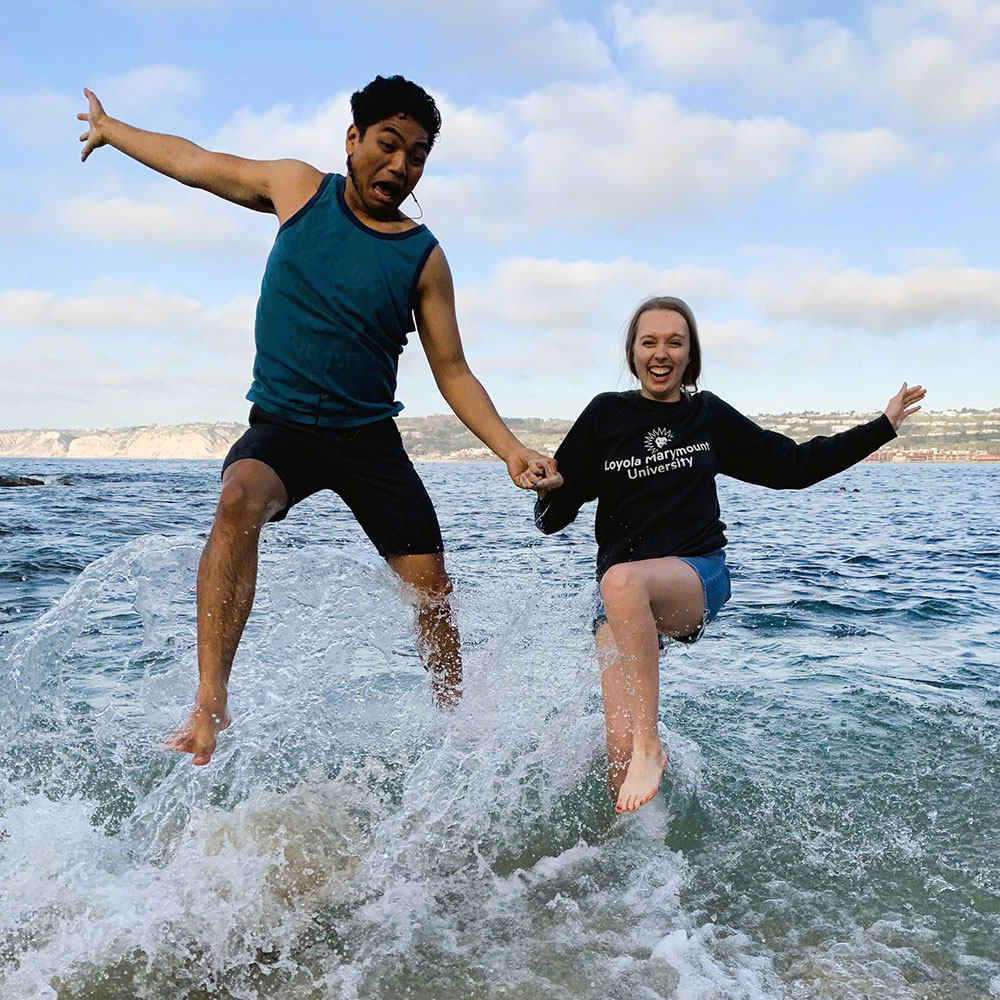 Er is startled by a wave at La Jolla Beach in San Diego while his wife, Margaret Sills (she goes by Maggie), remains cool. How did you get into cosplay?
As a kid, I was really into comic books. Later, the big movies [based on comics] started coming out and every character you see up there is incredible. I was young when I went to my first convention and decided to start dressing up. I started [learning to create costumes] by going to Goodwill and buying pants and shirts and cutting them for a character.
It takes time [to learn], but I've been doing it for almost 10 years now. I taught myself how to sew, to do hand stitching and leather crafting. I learned to work with heat guns and different materials like thermoplastics. Coming from LA, I also had the opportunity to meet [professional] costume creators and talk to them about their process.
Cosplay connects you to [others who share your interest] and you can hang out together in costume and volunteer. I've already done a couple volunteer opportunities in Birmingham in costume. I did one for a convention that was donating funds to a children's hospital. We’d stand in a circle and people would give us a dollar so they could shoot us with a Nerf gun.
For me it all came together, combining crafting and costuming and my love of helping other people.
What else would you like the department’s students, faculty, staff to know about you?
I'm very friendly and open to making friends. I've lived in California my whole life, all of my lifelong friends are there, and I was kind of anxious about meeting people. I am kind of reserved, so it's been hard reaching out to people and being like, hey, let's be friends.
I love surfing, archery, and boxing. I really like these solo, almost combat sports. I do sword fighting called HEMA, or Historical European Martial Arts. I have a lot of hobbies, anything that I can try that’s hands on, which I think feeds well into me becoming an occupational therapist. I feel like being able to understand different sports and hobbies and occupations can help me help other people.