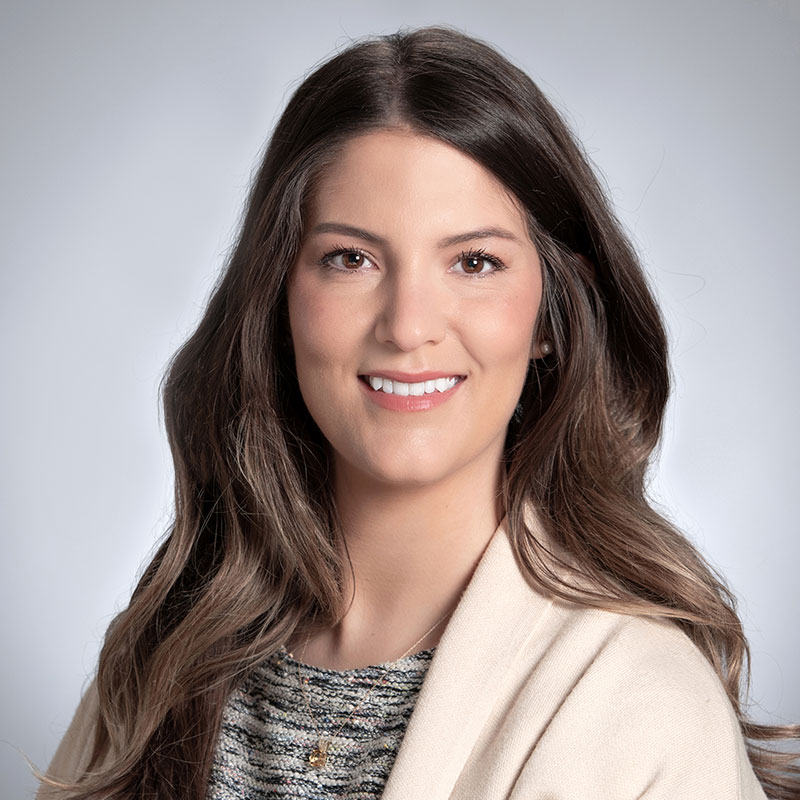
 Sarah Beth Spraberry’s interest in vision rehabilitation began during her time as a UAB MSOT student. After graduating from that program in 2015 and earning her OTR/L credential, she began her occupational therapy career in acute care and inpatient rehabilitation. Yet, she always knew that her future focus would be low vision.
She returned to UAB in 2020 to enroll in its Low Vision Rehabilitation Graduate Certificate program (LVRGCP). The COVID-19 pandemic was raging, and Spraberry was hearing increasing reports of visual problems from patients with the virus. Through the LVRGCP, she was able to tap into a network of occupational therapists to discuss this then-unknown effect of COVID on the eyes.
“Patients talked about blurring of vision and other visual issues,” she says. “It was awesome to be able to communicate with others who were interested in low vision and seeing similar problems.”
After graduating from the LVRGCP in 2023, Spraberry joined UAB’s Department of Occupational Therapy as an assistant professor, and now spends much of her time working with patients at the UAB Center for Low Vision Rehabilitation.
Until Spraberry’s addition, Jason Vice, PhD, OTR/L, SCLV, assistant professor of occupational therapy, had been the center’s only occupational therapist, a role he fulfilled alongside his significant teaching responsibilities and research efforts. Now, their combined efforts allow the center to offer occupational therapy services to low vision patients 5 days a week.
It’s a career Spraberry loves, and one that kindles her imagination.
“I’ve always wanted to implement my personality and creativity in my work, and working in low vision allows me to be the most creative I can be as an OT,” she says. “I want to practice at the top of my license, and it’s exciting that I can do that in a low vision setting.”
New Outlets for Low Vision Skills
Spraberry also works with patients in UAB’s amyotrophic lateral sclerosis (ALS) clinic. There, she has translated her low vision expertise into tools and education that help patients with fatigue and motor symptoms continue their occupations.
“I’ve adapted cell phones for people with ALS so they can use voice commands and OCR [optical character recognition],” she says. “It’s a huge way to increase people’s ability to participate in daily activities.”
Spraberry’s new role, which in the fall will include assisting with low vision labs, coincides with another personal milestone—motherhood. Her daughter Mary Nell is now 4 months old, and becoming a mother has given Spraberry another outlet for her low vision knowledge.
“I check her vision, and we have high-contrast playtime,” she says. “I think many people who do the low vision certification understand the wide variety of occupations that the training can assist with and just how exciting it is to help people get back to doing the things that really matter to them.”
UAB Department of Occupational Therapy faculty are as diverse in their training, areas of specialization, and approach to education as the field itself. Learn more about the lives and work of these dedicated therapists, scientists, and teachers.
Sarah Beth Spraberry
Sarah Beth Spraberry’s interest in vision rehabilitation began during her time as a UAB MSOT student. After graduating from that program in 2015 and earning her OTR/L credential, she began her occupational therapy career in acute care and inpatient rehabilitation. Yet, she always knew that her future focus would be low vision.
She returned to UAB in 2020 to enroll in its Low Vision Rehabilitation Graduate Certificate program (LVRGCP) and, after earning her certificate in 2023, joined the Department of Occupational Therapy as an assistant professor. She now spends much of her time working with patients at the UAB Center for Low Vision Rehabilitation.
It’s a career Spraberry loves, and one that kindles her imagination.
“I’ve always wanted to implement my personality and creativity in my work, and working in low vision allows me to be the most creative I can be as an OT,” she says. “I want to practice at the top of my license, and it’s exciting that I can do that in a low vision setting.”
Read More: Spraberry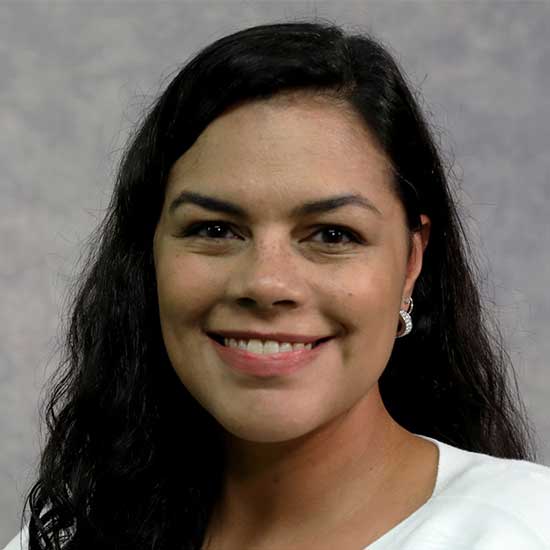
Sarah dos Anjos
It’s the complexity of human occupations and the need to consider the whole person to provide the best care that Sarah dos Anjos, PhD, OT, MSc, assistant professor of occupational therapy, most wants to impart to her students.
“What we do is one hundred percent client centered,” she says. “We need to be able to see our clients holistically so we can understand how to help them and how to mediate the process so they can reach their goal, whatever that goal may be.”
Read More: dos Anjos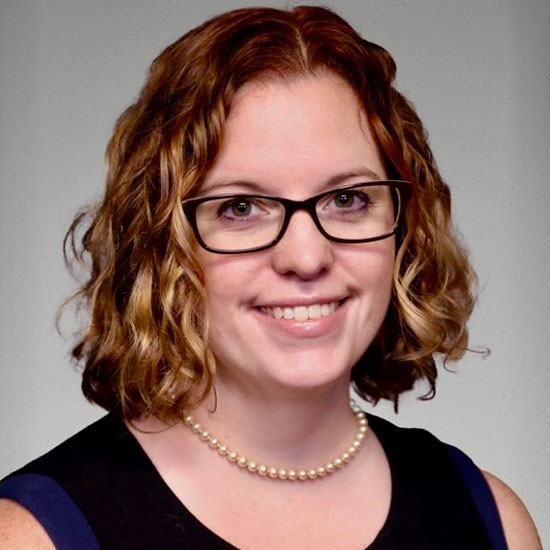
Megan Carpenter
Megan Carpenter, OTD, OTR/L, SCFES, assistant professor of occupational therapy, had spent more than a decade in clinical practice as a pediatric OT when she decided to return to school to earn her clinical doctorate in occupational therapy.
She achieved that goal in 2018, and has since played a pivotal role in the education of OT students, first as the academic fieldwork coordinator for Samford University’s Department of Occupational Therapy, and now as the inaugural doctoral capstone coordinator for UAB’s entry-level OTD program.
Read More: Carpenter
Jason Vice
Jason Vice, MS, OTR/L, SCLV, assistant professor of occupational therapy, stays busy with a trio of professional responsibilities. In addition to teaching three courses and conducting vision science research, he is one of a handful of occupational therapists (OTs) in Alabama with a dedicated clinical practice focused on low vision care.
Read More: Vice
Brooks Wingo
Brooks Wingo, PhD, associate professor of occupational therapy, has several goals that underlie all her research efforts. One is identifying behavioral interventions that improve the health and lives of people with complex medical conditions and that can move rapidly from successful scientific investigation into widespread clinical care.
That’s her hope for her current multisite randomized controlled trial, which will test the effects of a low glycemic load diet and calorie restriction in people with multiple sclerosis (MS). She and her colleagues hope to start enrollment in January 2023 for the trial, which will recruit participants at UAB and Washington University in St. Louis (WUSTL).
Read More: WingoOriginally written and published May 26, 2022.
Sarah dos Anjos, PhD, OTD, MS, OTR/LIt’s the complexity of human occupations and the need to consider the whole person to provide the best care that Sarah dos Anjos, PhD, OTD, MS, OTR/L, assistant professor of occupational therapy, most wants to impart to her students.
“What we do is one hundred percent client centered,” she says. “We need to be able to see our clients holistically so we can understand how to help them and how to mediate the process so they can reach their goal, whatever that goal may be.”
Occupational therapists (OTs) must navigate many facets of their client’s lives to help them function as they need and want, she says.
“There’s family, there’s financial resources and health insurance, there is where they live and their resources and support system. At the same time, we must ask, what did they used to do, what they want to do now, what are the options available?” she says. “I want my students to be able to work with all these pieces to help their clients meet their goals.”
Dr. dos Anjos teaches in all the department’s programs, including the PhD in Rehabilitation Sciences. She has focused her clinical practice and research on helping people with stroke and other nervous system injuries recover and maintain function and quality of life.
“This is the population I’m passionate about, and the one I’ve spent my career working with,” she says.
Neurorehabilitation, however, wasn’t always her first choice of specialization.
Life Inspires a Calling
When Dr. dos Anjos began her bachelor’s degree in occupational therapy at the Medical Science School of Minas Gerais in Belo Horizonte, Brazil, she imagined a career caring for children with intellectual disabilities.
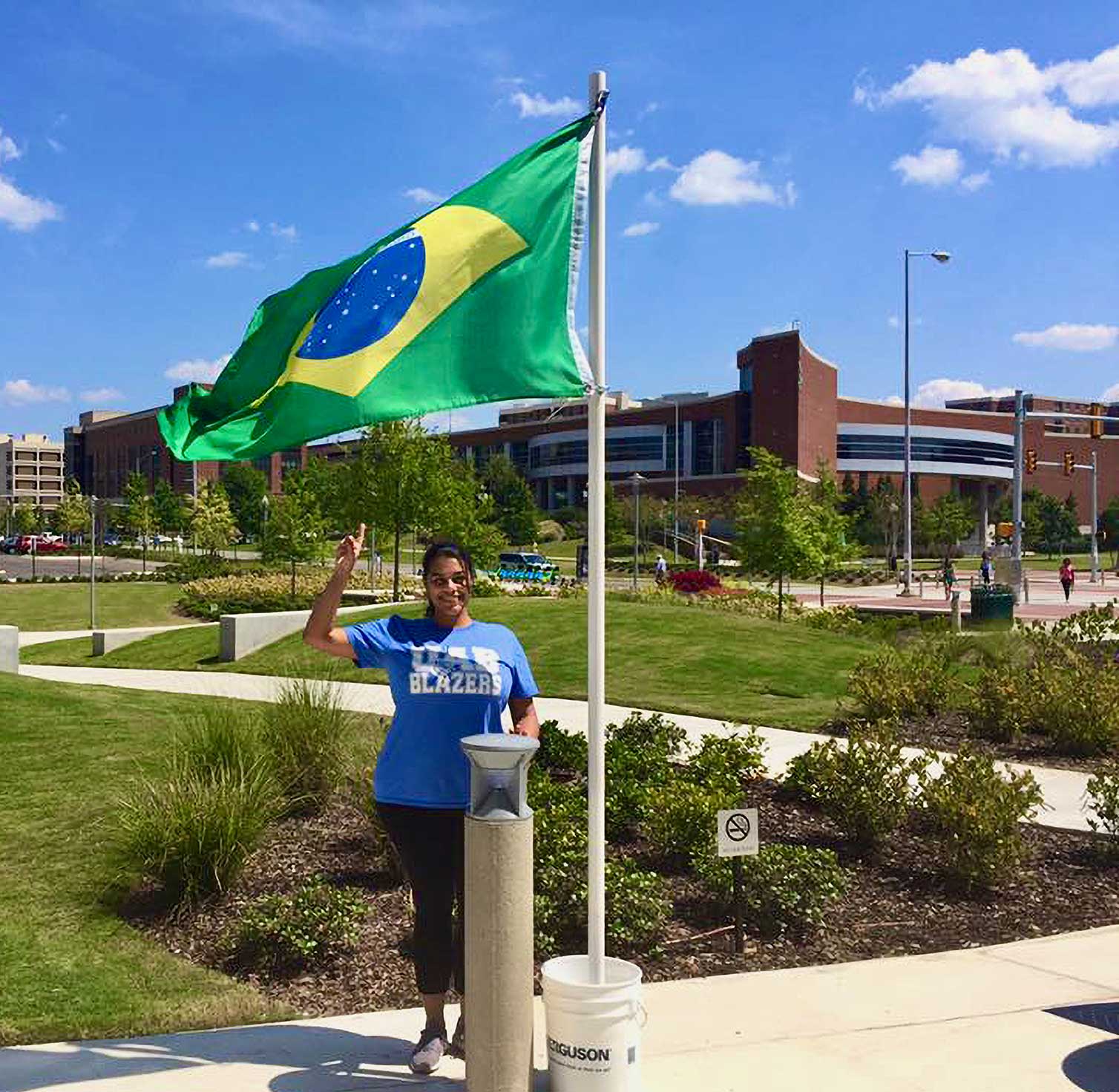 Dr. dos Anjos under the Brazilian flag flying on UAB's campus.“Then life intervened and helped me figure out that adult neurorehabilitation is what I should do,” she says.
First, a professor introduced to her the world of nervous system injuries and to helping clients recover from them. “I was fascinated by her expertise and the things that she was able to do for her clients—how she could help them function again, or do what they wanted to do,” she says.
Around the same time, the far-reaching effects of these devastating injuries affected her own family.
“My grandmother had multiple strokes, and I saw how her behavior changed and how that impacted the family,” Dr. dos Anjos says. “My grandmother was such a strong woman, a stubborn woman, and she was completely changed until the day she passed away.”
As she watched OTs and PTs work with her grandmother, her commitment to adult neurorehabilitation solidified.
Experience, Exploration Yield Expertise
Dr. dos Anjos spent more than a decade after graduation in clinical practice working with adults with brain injuries and seniors with dementia.
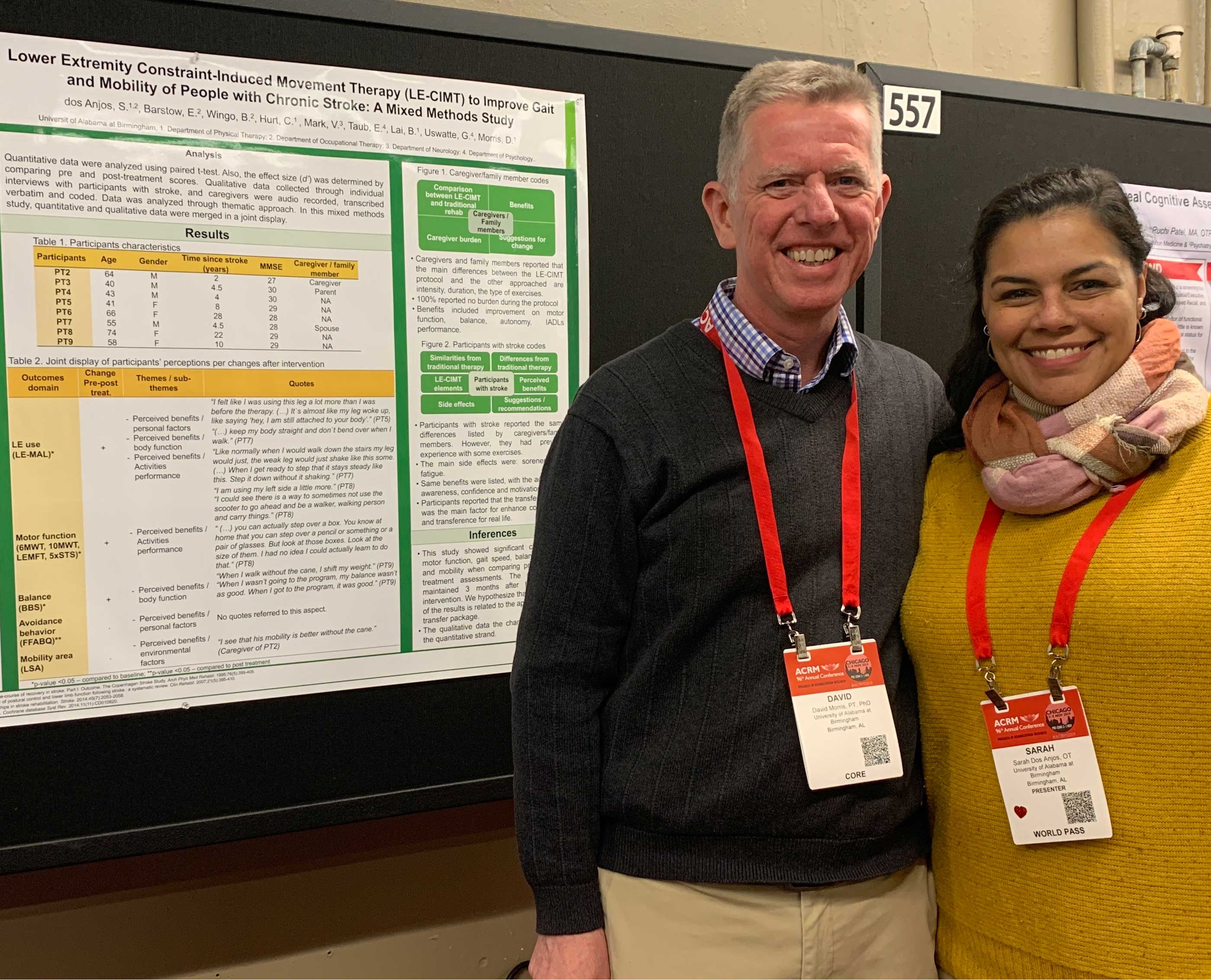 Dr. dos Anjos and Dr. Morris present some of their CIMT research at an American Congress of Rehabilitation Medicine annual conference.“I had a high volume of clients with stroke, traumatic brain injury, brain tumors, and so many other neurological conditions, and I was intrigued by the power of the brain and how those conditions impact who we are, what we do, and how we interact with the world,” she says.
She began studying interventions aimed at recovering body and motor function. A physical therapist (PT) colleague introduced her to constraint-induced movement therapy (CIMT), which helps people recover motor function after a stroke. Her colleague had begun a CIMT research program after David M. Morris, PT, PhD, FAPTA, now chair of UAB’s Department of Physical Therapy, visited Brazil in 2006 to give a lecture about the technique.
Dr. dos Anjos began using the CIMT protocol with her clients with stroke, and in 2008 came to UAB for additional training. When she returned home, she and two PTs founded the CI Therapy Group-Brazil, which teaches the protocol to OTs and PTs around the nation.
After a time, her passion for understanding the brain and nervous system took her back to school. She earned her master’s degree in neurology at Brazil’s Medical School of the São Paulo University, where her focus was transcranial magnetic stimulation for people with stroke.
She then decided to earn her PhD—and to go abroad to do it.
“I thought it would be interesting to see different things and learn with different people,” she says. “I already had a connection with Dr. Morris, and he encouraged me to apply UAB’s Rehabilitation Science Program. Now, here I am, six years later—I’ve finished the PhD and done my post-doctoral training.”
She is proud, she says, of the depth and breadth of her neurorehabilitation expertise, for which she credits an interdisciplinary learning and research environment.
“That knowledge came from interacting with people from other disciplines, my clients, and people from different parts of the globe, as well as from using different techniques,” she says. “I am so grateful to work on interdisciplinary teams with PTs, speech pathologists, neuropsychologists, and many others.”
She continues to build her knowledge. This summer she will complete both her Post-Professional Clinical Doctorate in Occupational Therapy and the Low Vision Rehabilitation Graduate Certificate Program
The Future
Dr. dos Anjos continues to explore ways to expand the applications and availability of CIMT, an offshoot of which is now being studied as an approach to increase processing speed in individuals with cognitive impairment.
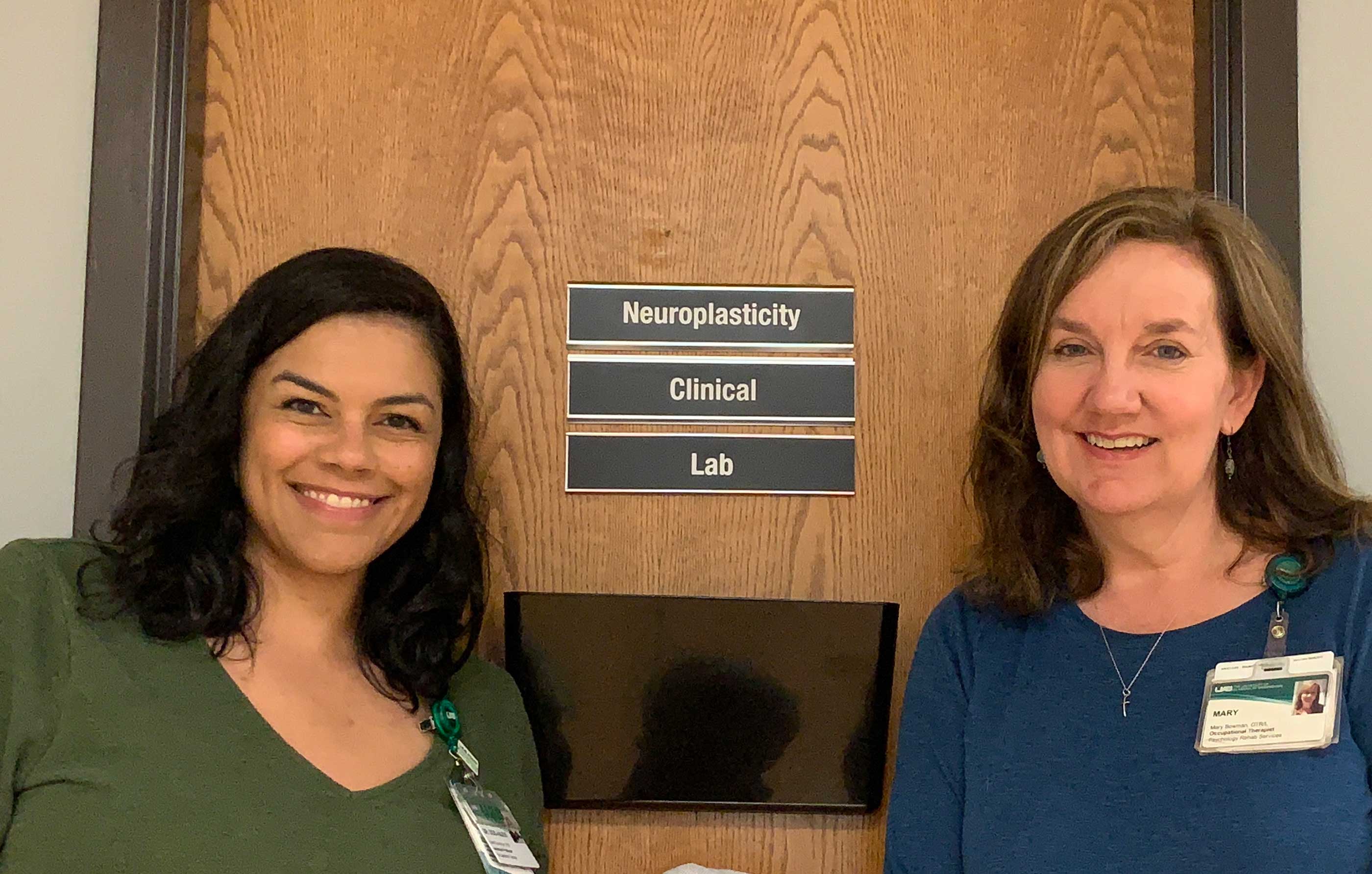 Dr. dos Anjos and Ms. Bowman outside the Neuroplasticity Clinical Lab they plan to expand into a clinical practice for individuals with stroke.She is interested in how elements of the CI Therapy protocol can be applied as add-ons to traditional motor training to induce transference of skills gained in the clinic to daily situations in the client’s own environment. One of her current research projects is aimed at developing a reimbursable form of CIMT (currently, people must pay out of pocket for this intensive therapy) and investigating how long people with stroke retain motor skill improvements and other benefits of the therapy.
Dr. dos Anjos is doing some of this research through the Neuroplasticity Clinical Lab led by Assistant Professor of Occupational Therapy Mary Bowman, OTR/L, C/NDT, LSVT-BIG. They will soon expand the lab into a clinical practice that offers CIMT to individuals with stroke, and where faculty and students can develop clinical and research skills in neurorehabilitation.
Dr. dos Anjos is also passionate about diversity, equity, and inclusion (DEI). She and Carmen Capó-Lugo, PhD, PT, assistant professor of physical therapy, started the group “DEI Practical Conversations” for some members of the OT and PT faculty.
“This is something that is dear to my heart,” she says. “I’ve learned a lot since I moved [to the US], because of the things I have experienced here, the things other people from minoritized groups are going through, and the impact of these situations on their lives, their mental health, their relationships, and even their career.” (Read more about her DEI efforts within the School of Health Professions.)
When she’s not teaching, supporting DEI efforts, or diving deep into the workings of the brain, you may find Dr. dos Anjos eating out, reading, or exploring the outdoors.
She notes her door is always open to students, faculty, and staff. “I’m here to support whoever needs a hand,” she says.
 Jason Vice, PhD, OTR/L, SCLV Jason Vice, PhD, OTR/L, SCLV, assistant professor of occupational therapy, stays busy with a trio of professional responsibilities. In addition to teaching three courses and conducting vision science research, he is one of a handful of occupational therapists (OTs) in Alabama with a dedicated clinical practice focused on low vision care.
Dr. Vice is based at the multidisciplinary UAB Center for Low Vision Rehabilitation, where he provides care for children and adults with visual impairments and diseases. His work centers on training his patients to use specialized techniques, alternative practices, and assistive technology to help compensate for their vision loss.
Sometimes, he visits patients’ homes to recommend environmental modifications that can make their living spaces safer and more visually accessible. He’s also the only specialist in Alabama to provide initial training in the use of bioptic telescopes for people with low vision. This device, which attaches to standard eyeglasses, sharpens their visual clarity.
“These patients are not legally able to drive,” Dr. Vice says. “I teach them how to use the telescope to compensate for their vision loss. If we can demonstrate that they can safely compensate for their visual field defects, and they can pass on-road examinations, they can legally drive.”
His aim in all his care is to help individuals with low vision participate in the everyday pursuits they value most. “These patients have been told by repeatedly by their doctors how much vision they’ve lost, which can leave them feeling hopeless about their situation,” he says.
Dr. Vice and his colleagues at the center help them consider things differently. “What we’re really intentional about, particularly from an occupational therapy perspective, is talking upfront about how much vision they have left and how they can learn to use it in a different way. This can shift their thinking in a positive direction.”
With Dr. Vice’s deep engagement in and commitment to the world of occupational therapy, it may be a surprise to learn that it was not his first profession.
Life’s work found in second career
Dr. Vice began his professional life in marketing. He was on business trip in Miami when he learned that his father, who was then living independently in a Birmingham suburb, had experienced a stroke.
“I’d been married for a week and had just returned from my honeymoon when it happened,” Dr. Vice says. “I came home to tend to my father and to help him get through the rehabilitation process.”
Occupational therapy helped his father recover, and Dr. Vice was struck by how much it meant to him to be able to do simple, everyday activities.
“Most people, they want to walk independently, but he was just so proud that he could tie his shoes and dress himself. That was really meaningful to me. And I was interested in in a career change,” he says.
 Dr. Vice and his wife, Claire. Dr. Vice and his wife had made their home in Birmingham, and he completed his needed OT prerequisites at UAB. He applied for and was admitted to its master’s degree in occupational therapy program, where he soon discovered a love for low vison care.
“The entry-level low vision course intrigued me, and I was very inspired by Beth Barstow and Mary Warren,” he says.
Dr. Barstow, associate professor and director of the Graduate Certificate in Low Vision Rehabilitation Program, and Dr. Warren, who founded the program and was its director until her retirement in 2018, became Dr. Vice’s mentors. They tutored him in advanced low vision topics, provided opportunities to gain teaching experience, and advised him on managing the clinical position at UAB’s low vision center that he took after graduating.
Dr. Vice is now taking his turn as an educator and a mentor. His primary goal as a teacher is to help his students understand why their current coursework matters to their future work as OTs.
“It’s also important that they can synthesize that information. I want to ensure they’re flexible enough in their thinking to understand how something they may have learned weeks ago is related to what they’re currently learning,” he says.
He also wants his students to know that he’s accessible to them.
“I know from the outside it may look like I have 80 different things going on, but my students are always my top priority,” he says. “I want them to know I see them as real people, and that I appreciate their dedication to learning.”
Research aimed at improving low vision care
 Dr. Vice with his daughters, Stella and Vivian. Dr. Vice, who completed his PhD in vision science in December 2022, is also focused on expanding his knowledge. His research is aimed at bringing hard data to the clinical decision-making process in the use of eccentric viewing training, a technique used to improve sight in people with impaired central vision.
“Everything these patients try to focus on is blurry, but their peripheral vision is normal,” he says. “Some people learn how to alter the direction of their gaze to move the bad spots out of the way. And some of them, for reasons we don’t understand, get really good at it. My research looks at how we can train these individuals to use eccentric viewing techniques so they can make those changes more effectively.”
Eccentric vision training is not new, but, currently, therapists must use their judgment rather than quantitative measurements to decide if the therapy is effective in individual patients. This means therapists may decide to stop training too early in people who might benefit if they continued for just a few more sessions.
Dr. Vice hopes to bring quantifiable data to this decision-making process. He is studying a computer-based system called gaze-contingent eye tracking that quantitatively measures a person’s eye movements, how well they can hold their eye in one position, and whether those skills are improving over time.
“Our goal is to use that information to make evidence-based recommendations for clinical changes that will improve the real-world delivery of care for patients with a central vision impairment,” he says.
Downtime is family time
 Tana, a Belgian Malinois-terrier mix, makes it her business to know what her people are doing. In between his teaching, research, and clinical practice, Dr. Vice enjoys spending time with his wife Claire, their daughters, Stella, 10, and Vivian, 4, and their dog, Tana.
“We like to get out and do things together, walk, visit the Botanical Garden,” says Dr. Vice, who also enjoys Birmingham’s music scene.
Tana, a Belgian Malinois-terrier mix the family adopted from the Birmingham Humane Society just before the pandemic lockdown in 2020, loves spending time with her human family. “She’s a lot of fun, and she has some funny habits,” he says.
Tana worries when a family member is absent. “She checks in all the rooms to see what’s going on and won’t eat until everyone is home,” Dr. Vice says. “She just loves for all of us to be together.”
Original profile posted June 2022. Updated in 2023 to reflect Dr. Vice earning his PhD.
 Dr. Carpenter with her parents, Linda and David Brady, at her graduation from Quinnipiac University, where she earned her clinical doctorate in occupational therapy Megan Carpenter, OTD, OTR/L, SCFES, assistant professor of occupational therapy, had spent more than a decade in clinical practice as a pediatric OT when she decided to return to school to earn her clinical doctorate in occupational therapy.
At the time, she was working as a pediatric feeding specialist at a clinic for children and adults with disabilities, where she also provided clinical instruction to OT students rotating though on fieldwork. It was a role she loved—and one that led her to pursue an advanced degree.
“One reason I went back to school was so I could step into the academic world, where I could teach on a bigger scale and make an impact on a bigger scale,” says Dr. Carpenter, who has now achieved those goals.
Since earning her OTD in 2018, she has played a pivotal role in the education of OT students, first as the academic fieldwork coordinator for Samford University’s Department of Occupational Therapy, and now as the inaugural doctoral capstone coordinator for UAB’s entry-level OTD program.
Capstone program emphasizes individuality
When Dr. Carpenter joined UAB’s OT department in 2020 to establish its capstone program, she focused on creating an environment in which students could design research projects that express their distinct passions and professional interests.
“Since day one, it has been about individuality for the students in their capstone projects, as well as collaboration with faculty and staff and our community partners,” she says. “My ultimate goal is to take students on a journey, from the creation of their project to its implementation, that maintains their creativity and fosters their writing skills so they can produce a quality but feasible capstone project in an area they are passionate about.”
Her number-one piece of advice for her students is to stay calm. “I remind them that this is a journey for all of us, and if I’m not panicking, neither should they. Together, we’ve got this,” she says.
 Dr. Carpenter loves to collect seashells at the beach and classify them by their common names. She is shown here at Gulf Shores with her husband Brad, and their 10-year-old twin daughters, Anna Kate (right) and Lee Ann (left). She’d also like her students to know that she’s available to listen and to help them problem-solve. “I want my students to know that my door is always open, that I believe in grace and mercyn, and that I’m proud of all of them,” she says.
Early interest grows into flourishing career
Dr. Carpenter’s own passion for OT began when she was in her teens. She credits her mother for setting on her on this path, and showing her, by example, the value of excelling as an independent, professional woman.
“My mother was a special education teacher. She is fluent in sign language, and taught individuals with hearing impairments. She’s a lifelong learner who went on to become a special education administrator and program director,” Dr. Carpenter says. “She showed me that I could push forward in my career, always learning, always doing more.”
When her mother created an inclusive preschool, Dr. Carpenter, still in high school, volunteered for its summer program.
“The program was for children with disabilities to learn alongside their typically developing peers,” she says. “I got to see OTs, PTs, and speech therapists at work in that setting, and I just fell in love with OT. I knew at sixteen it was what I wanted to do.”
Her 9 years as a pediatric OT at United Ability, a Birmingham, AL-based non-profit serving child and adults with disabilities, provided another pivotal experience. “I worked alongside some great physical therapists, occupational therapists, and speech therapists, and they helped me become a well-rounded, holistic therapist,” she says.
 With just over 30 minutes on the clock, OT students from UAB and OTA students from Wallace State work together to solve an escape room puzzle. It was during that time that Dr. Carpenter earned her specialty certification in feeding, eating, swallowing. Her interest in helping children with feeding difficulties and their families arose from her personal experience as a mother of premature twins with severe gastroesophageal reflux.
“I had a hard time getting treatment for their feeding issues, but it made me see that I could make a difference and pushed me to do the specialty certification,” says Dr. Carpenter, who continues her clinical practice as a pediatric feeding specialist for the Alabama Institute for the Deaf and Blind.
In that role she works with children from birth to age 3, traveling to their homes or daycare centers to address a variety of feeding challenges. “I empathize with what families and their children with feeding issues go through, and now I can give them the help they need,” she says.
Recent research explores OT-themed escape room experience as an educational tool
Dr. Carpenter’s most recent study investigated the use of a novel escape room experience for team-based learning. She and her colleagues created the escape room and its OT-specific storyline and tested its use in OTD students from UAB and OTA students from Wallace State Community College.
Groups of students from both programs had 60 minutes to work together to use recently learned skills and knowledge to solve puzzles, which gave them the clues they needed to “escape” the room. Post-escape, students answered questions about their experiences in an online survey, with most reporting that they enjoyed the experience and saw it as a fun and exciting way to apply learned skills.
“Students also noted that the opportunity to collaborate with peers from different OT programs was a key benefit of the project,” says Dr. Carpenter, who is principal investigator for the study. Her co-investigators are Deek Cunningham, MS, OTR/L, SIPT, ATP, and colleagues from Wallace State, Laura Smith, MS, OTA, director of the OTA program, and Kelly Krigbaum, OTA, academic fieldwork coordinator for the OTA program.
Dr. Carpenter, Mr. Cunningham, Ms. Smith, and Ms. Krigbaum shared their findings in September 2022, in a 2-hour workshop at Alabama Occupational Therapy Association Annual Fall Conference.
Brooks Wingo, PhD Brooks Wingo, PhD, associate professor of occupational therapy, has several goals that underlie all her research efforts. One is identifying behavioral interventions that improve the health and lives of people with complex medical conditions and that can move rapidly from successful scientific investigation into widespread clinical care.
That’s her hope for her current multisite randomized controlled trial, which will test the effects of a low glycemic load diet and calorie restriction in people with multiple sclerosis (MS). She and her colleagues hope to start enrollment in January 2023 for the trial, which will recruit participants at UAB and Washington University in St. Louis (WUSTL).
“Unlike medications, which take years to move from research to patient care, clinics could implement these interventions almost immediately,” she says.
She and her collaborators at WUSTL and in UAB’s Department of Nutrition, School of Public Health, and Heersink School of Medicine also want to understand how these dietary interventions produce benefits. In this study, they’re using MRI to see if the interventions reduce neuroinflammation, which may contribute to common MS symptoms such as fatigue, poor sleep, and pain.
“Understanding how these mechanisms work and relate to each other and to MS symptoms and outcomes has potential to open up many new roads for research,” Dr. Wingo says.
From social work to occupational therapy
Dr. Wingo has broken novel research ground as part of the Department of Occupational Therapy faculty, but she is not an occupational therapist. She earned her undergraduate and master’s degrees in social work, the field in which she began her professional career.
As a social worker, she focused on mental health, and spent about 5 years working in inpatient and outpatient psychiatric units, doing everything from behavior modification to discharge and family planning.
“Around this time, a new generation of antipsychotic medications became available, and they helped people who had not been helped by anything else,” Dr. Wingo says.
Although these atypical antipsychotics improved previously intractable symptoms of mental illnesses such as schizoaffective disorder and bipolar disorder, they caused rapid, intense weight gain and type 2 diabetes.
“We had patients who gained 30 pounds in the first month. We quickly moved from focusing on their mental health to treating their physical health, as well,” she says.
One of Dr. Wingo’s passions was—and still is—exercise, and her unit supervisor asked to help find ways to encourage these patients to increase their physical activity and improve their diet.
“We quickly realized that it was really difficult to help this patient population adopt healthy lifestyle habits, and that spurred me to get my PhD in health education and promotion, with a focus on obesity and healthy eating behaviors,” she says. “My goal was to find solutions that work for populations with many barriers to healthy behaviors.”
As Dr. Wingo progressed through her postdoctoral training in nutrition, she worked in a UAB weight loss clinic and considered which population she wanted to focus on in her professional research. It was then that James Rimmer, PhD, who is currently director of the UAB National Center on Health, Physical Activity and Disability, knocked at her door.
“He asked if I had considered working with people with disabilities. I hadn’t, but knew we had a few individuals with disabilities in the clinic, and that we didn’t know how to help them,” she says.
She began working with people with spinal cord injuries (SCI) and, later, MS. She dug into the literature to see what research had been done on obesity and nutritional interventions in these populations, and found almost nothing.
 Dr. Wingo is on the American College of Rehabilitation Medicine Board of Governors, and was chair of its Career Development Networking Group in 2018. She is shown here (third from left) with other group leaders. “It was a twofold opportunity,” she says. “First, it was an area in which I could potentially make a big impact. Second, for an early career investigator at the time, the field was wide open.”
The work also brought her into close contact with occupational therapists. “The OTs kind of adopted me. They do a lot of work with people with spinal cord injuries and MS, and we were using similar interventions,” she says.
Dr. Wingo felt her research and the work of occupational therapists complemented each other well, and after completing her postdoctoral training in 2013 she joined the Department of Occupational Therapy. She and the department have benefited from the collaboration ever since.
Adapting interventions for people with complex conditions
The dietary interventions Dr. Wingo and her colleagues are studying are effective in the general population, which usually means middle-aged, relatively healthy white men.
“What we want to find out with our research is whether they work as well in people with MS, and if we can modify them so they’re easier for people with complex medical conditions to put into practice,” she says.
People with MS and SCI often have multiple barriers to healthy eating. “They’re the same kind of barriers we all face, but on steroids,” Dr. Wingo says.
She notes that many of these individuals live on disability, and fresh fruits and vegetables may be out of their financial reach. The conditions, as well as the medications used to treat them, also can make it hard for these individuals to stick with behavioral changes that could potentially improve their symptoms and quality of life.
Dr. Wingo and her colleagues will soon submit a grant application for a study of time-restricted eating (TRE) that they have modified for people with MS. With this diet pattern, people restrict their eating to a certain number of hours per day and fast during the remaining hours.
Previous research shows that TRE seems to work best when people begin their window for eating early in the day. Yet, for many people with MS, who often feel fatigued and take medications that make them sleepy, getting up for an early breakfast isn’t feasible.
 In her downtime, Dr. Wingo enjoys reading crime novels and traveling with her family. Here she and her husband, Greg, and her 14-year-old son, Shepard, prepare to snorkel in the Galapagos Islands. “We’re adapting TRE for this population by asking people to eat within an hour of waking, even if that’s at noon,” she says. “This study will help us understand how this strategy compares with eating windows that start earlier in the day.”
Dr. Wingo has also begun examining racial disparities in MS. She’s working with undergraduate students in the UAB School of Health Professions Honors Program to gather information from African Americans with MS on their diet and exercise patterns, socioeconomic and employment status, and other factors that may affect their symptoms and disease outcomes.
“We know that rates of obesity, cardiometabolic diseases, and diabetes are disproportionally higher among African Americans than whites in the general population, and that these factors are linked to worse health outcomes,” she says. “We’ve begun to paint a picture of these relationships so that, in the future, we can tailor interventions that improve health outcomes for people who don’t have good access to neurology care or primary care.”