
When Irving Arnold Miseda arrived at the University of Alabama at Birmingham to pursue his master’s degree in business administration, he was focused on building a future.
Irving came to the U.S. in 2025 as an international student from Kenya, with plans to earn his degree, get involved on campus, and make the most of the opportunity in front of him.
At first, everything seemed to be moving in the right direction, but within his first semester, life began to shift in ways he had not anticipated, and what once felt manageable quickly became overwhelming.
A job he had expected to secure did not come through when he needed it, and the cost of living proved higher than what he had planned for. As the financial strain grew, the numbers stopped adding up, and eventually Irving faced eviction and found himself without much stability.
“I felt like I was being punished for being poor,” Irving recalled. “All I wanted to do was to go to school, and I just did not know why it was being so difficult.”
Even as things became more uncertain, he tried to hold everything together on his own. He contacted his landlord to request an extension, reached out to his professors to explain his situation, and began searching for places to sleep. At times, he stayed awake through the night, trying to figure out where he could rest during the day.
After several days of trying to manage it alone, the situation became too heavy to carry.
“I was looking for ways in which I could help get myself back on my feet,” he said.
Through people he met in a Bible study, Irving learned about UAB’s Student Assistance & Support. Without a clear path forward, he decided to reach out.
For someone who was used to handling challenges independently, asking for help did not come easy. “At first I was nervous,” he said. “You’re at your lowest, so you don’t have confidence. You feel small.You feel beaten down.” Still, he walked into the Student Assistance & Support office expecting judgment, but what he found instead was understanding.
When Irving first met with Mandy Hunt, a coordinator in the Student Assistance & Support office, he was struggling to put his experience into words. At one point, he asked if she could read what he had written because he did not have the composure to explain everything out loud.
“The first thing I felt was heard,” Irving said. “I felt hope.”
What followed was a coordinated effort to support him as a whole person. Student Assistance & Support helped Irving connect with Student Counseling Services and off-campus housing resources to address both the emotional and practical challenges he was facing.
Through counseling, he began processing the emotional toll of the crisis and working toward a healthier mindset. With off-campus housing support, he better understood his situation and worked with his landlord toward an agreement that ultimately allowed him to renew his lease and return home.
Looking back, Irving was struck by how intentionally the support was structured around his overall well-being.
“It was broken down into different elements,” he said. Recalling what Mandy told him during those first conversations: “We first need to address your mental aspect because this is pretty traumatic. We need to address your health. Are you eating well? And then we’re going to also address your temporary housing.”
That approach began to reshape how Irving understood both help and independence.
“I had a persona of, ‘It’s me against the world. I can do it all by myself, by any means necessary,’” he said. “And through getting the help and going through the process, I realized that if I’m going to succeed, I’m going to do it the right way.”
He also started to see himself differently. Before the crisis, Irving had questioned whether he truly belonged in graduate school, but after experiencing support and care from those around him, that uncertainty began to fade.
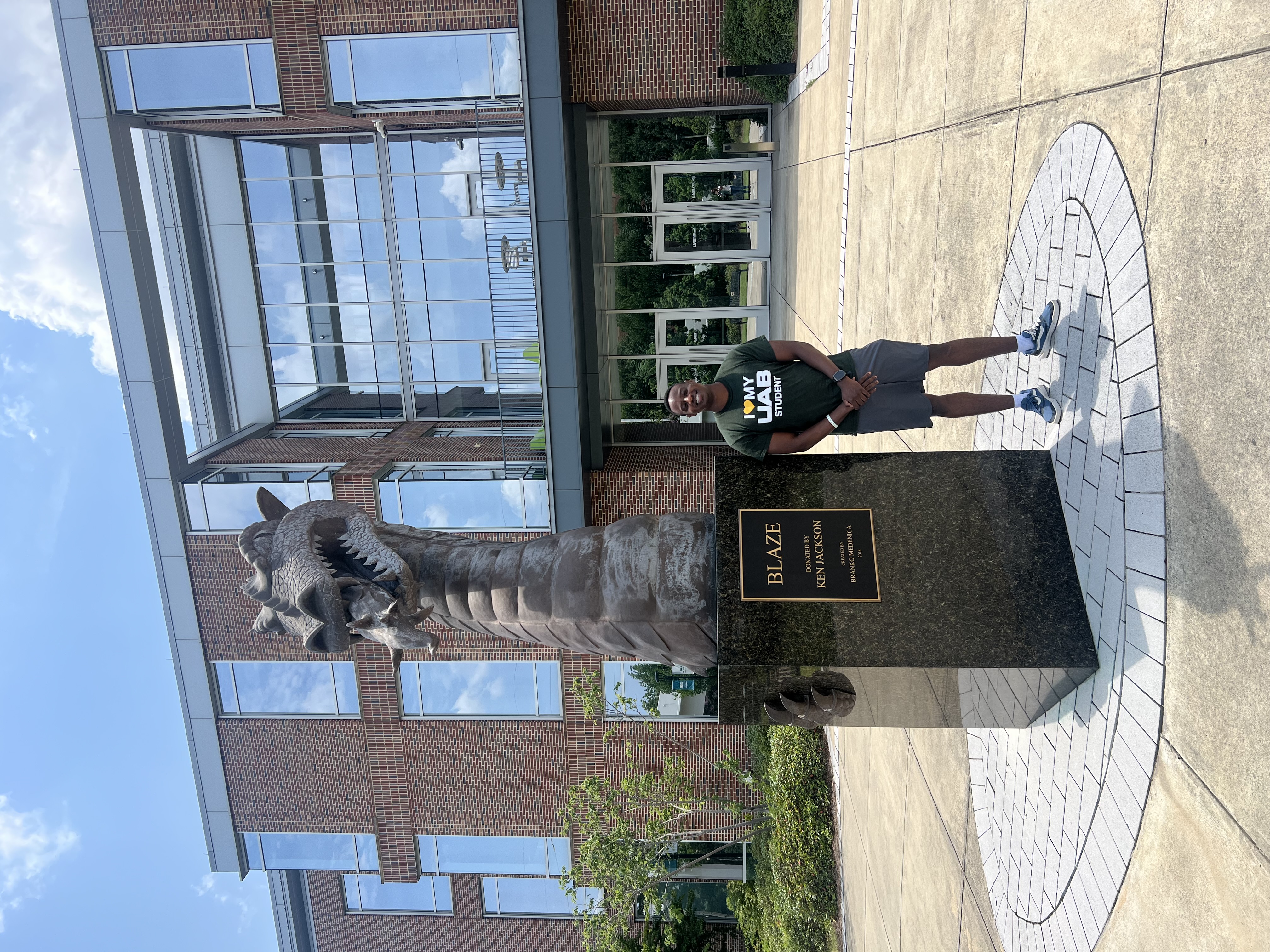
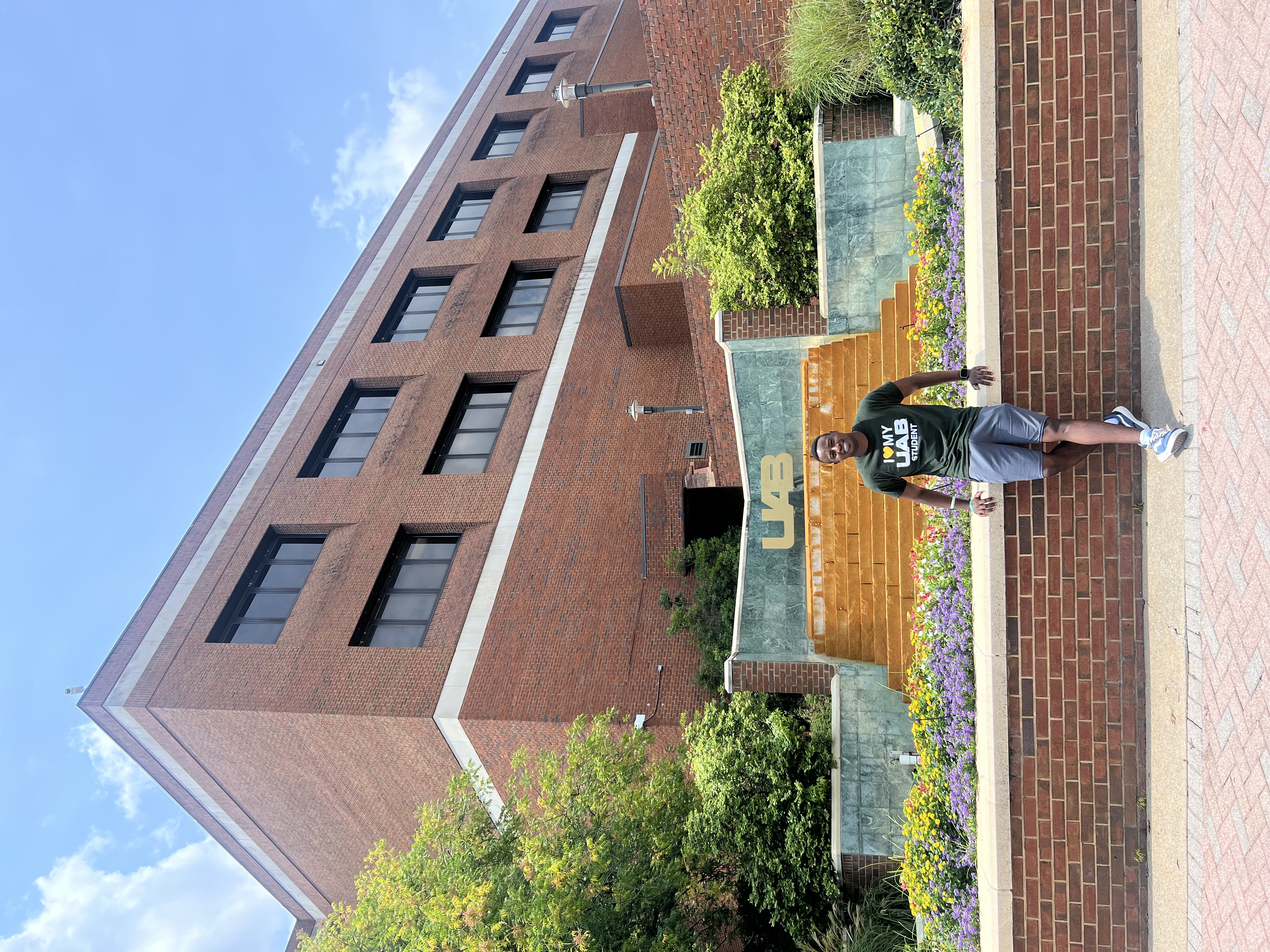
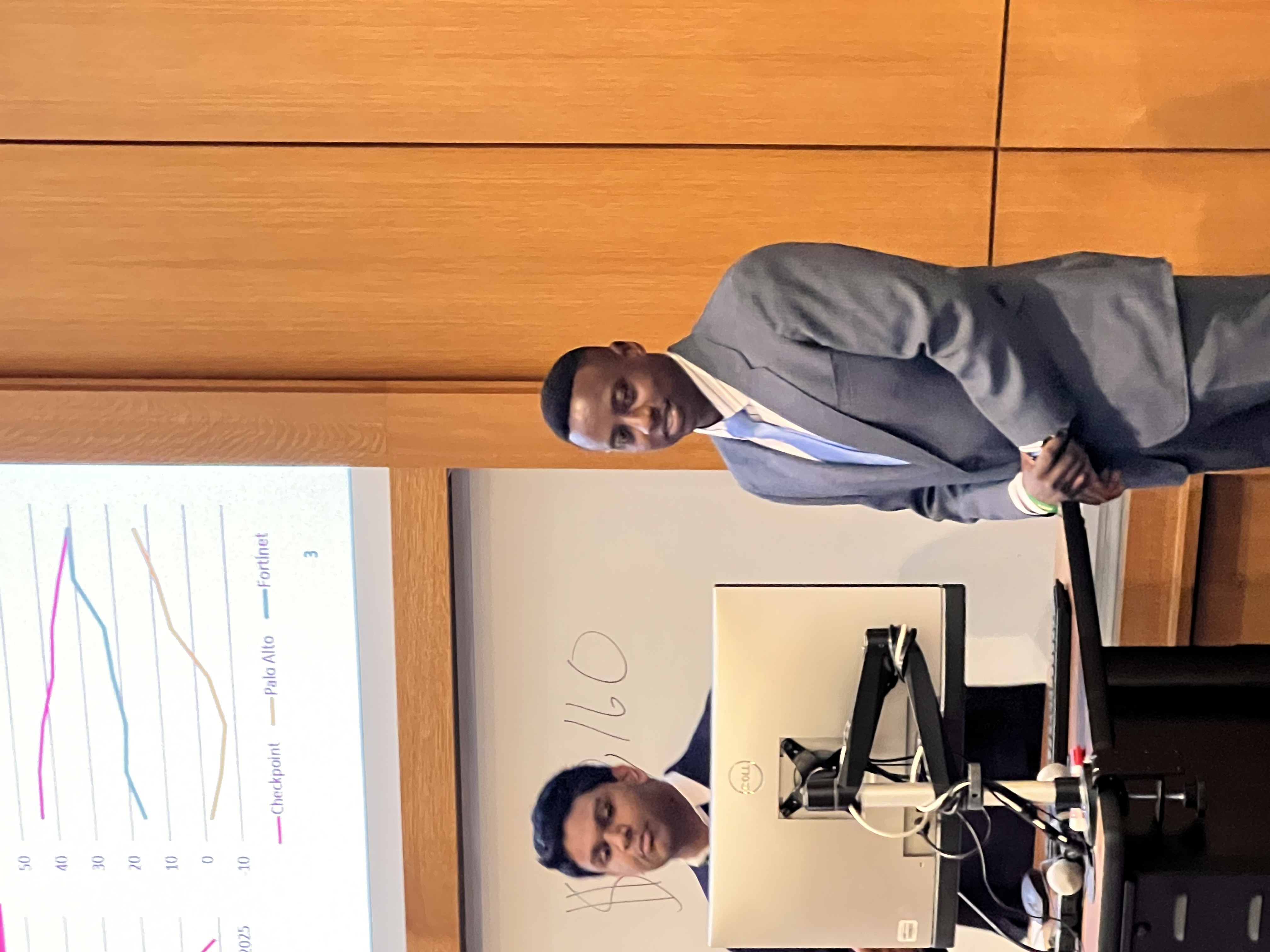
"I’m a grad student,” he said. “I do deserve to be here. I earned the right to be here.”
That shift changed more than his mindset; it changed his level of engagement with the UAB community. He began volunteering more, connecting with others, and stepping into new roles. He joined the Financial Management Association and the Green and Gold Fund, served as a graduate teaching assistant, and was appointed as an ambassador for the Collat School of Business. He also became a recipient of the Joseph F. Volker International Scholarship for 2026.
Through those experiences, Irving began to recognize the value of connection.
“I realized human interaction is a lot healthier than isolation,” he said.
Today, he looks back on his experience with Student Assistance & Support as an important part of his UAB journey, not just because it helped him through a crisis, but because it changed how he moves through challenges.
His advice to other students is simple: ask for help.
“Reaching out for support is not a form of weakness,” Irving said. “It is actually a form of strength.”
He hopes other students understand that they do not have to navigate hardships alone.
“Support does not just mean helping someone in their time of need,” Irving said. “It also means putting someone in the perfect environment for them to succeed.”
For information about Student Assistance & Support and the services available to UAB students, visit this link: https://www.uab.edu/students/assistance/
If you are struggling, know that you are not alone! Fill out this form and the Student Assistance & Support team will outreach to you to help you navigate obstacles that may be impacting your success both personally and as a student here at UAB.