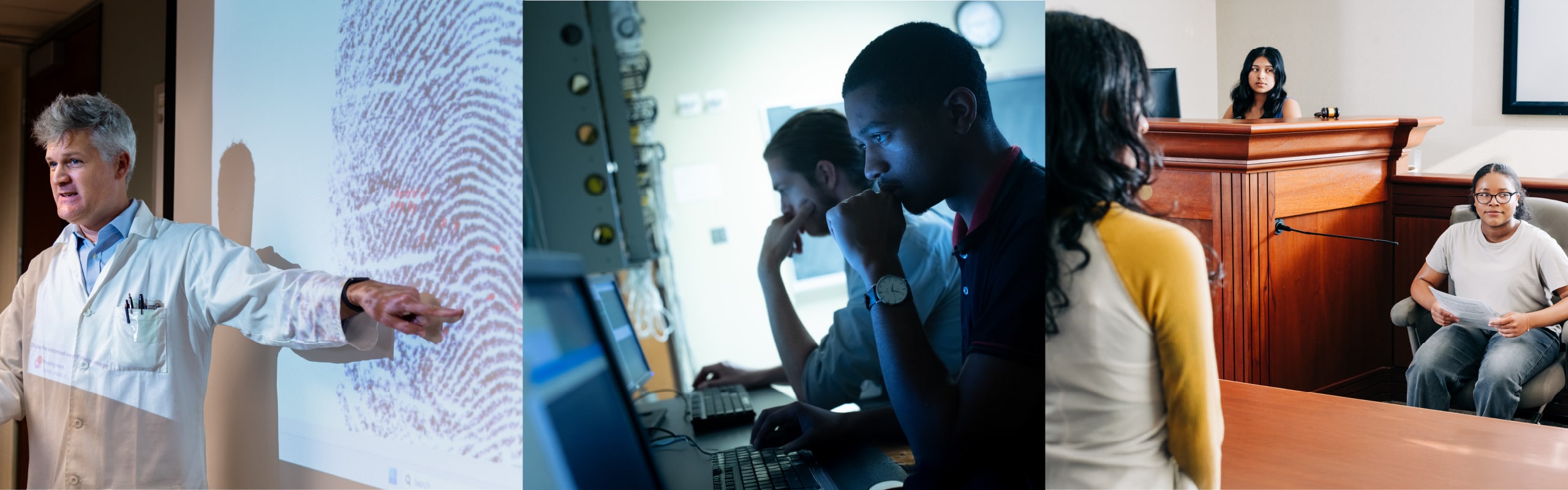
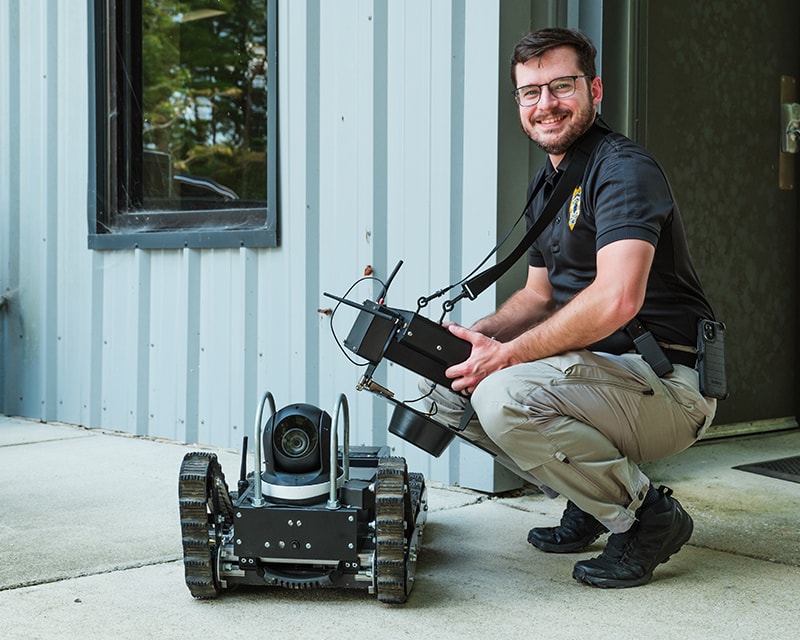
 The J. Frank Barefield, Jr. Department of Criminal Justice offers graduate degrees in:
- Criminal Justice (MSCJ) - offered with on-campus and online options
- Forensic Science (MSFS)
We also collaboratively offer an MS in Cyber Security with the Department of Computer Science. In addition, we offer a joint MSCJ/MPA program in partnership with the Department of Political Science and Public Administration and a graduate-level certificate in computer forensics for students interested in digital intelligence analysis and investigation.
Advance Your Career
Graduates of our MSCJ program have gone on to some of the best doctoral training programs in the United States, including those at SUNY Albany, Michigan State University, the University of Maryland, and the University of California-Irvine. UAB MSCJ graduates have also advanced in state and federal law enforcement, secured positions as research and data analysts, and are working as intelligence consultants and investigators.
Our forensic science program (MSFS) is one of the oldest laboratory-based programs of its kind in North America, and one of a select few that is accredited by the Forensic Science Education Programs Accreditation Commission (FEPAC). Graduates of the MSFS program have gone on to successful careers in crime laboratories in all 50 states, as well as Canada.
Learn in the Classroom and the Field
Our graduate programs offer students the opportunity to network with those already working in the field; acquire valuable experience through internship placements in business, industry, or government; and gain plenty of hands-on learning in both laboratory settings and in the field.
Our programs also offer students the opportunity work on original research projects with faculty mentors that can lead to publications or to poster or paper presentations at professional conferences.
We invite you to explore our programs and find the right one for you!
The Master of Science in Criminal Justice (MSCJ) provides students with a high-quality educational experience based on critical thinking, analysis, and research. The program offers students the opportunity to network with those already working in the field and to work on original research projects with faculty mentors.
The UAB MSCJ is designed to meet the needs of students with diverse interests and aspirations. To do this, the MSCJ program is divided into two tracks:
- The Thesis Track (30 hours) prepares students to pursue doctoral-level study in criminology, criminal justice, or a related field. Students selecting this option complete a thesis project with a faculty adviser. This track is offered on-campus.
- The Applied Track (33 hours) is geared toward working professionals and provides advanced training in such areas as research methods, criminological theory, and policy analysis. This track is offered both on-campus and online.
The GRE is no longer required for admission into the MSCJ program.
Study with Us
The required core curriculum for both tracks includes courses in criminological theory, research methods, statistics, criminal justice policy, and patterns in crime. The curriculum is grounded in the study of crime and justice from the perspectives of criminology, sociology, political science, psychology, and law, and stresses both theoretical and quantitative analyses.
Graduates of the program have gone on to pursue doctorates in criminal justice and criminology at some of the finest doctoral training programs in the country, or to careers in public and private-sector agencies in the criminal justice system at the federal, state, and local levels of government.
For more information, please see the UAB Graduate Catalog.
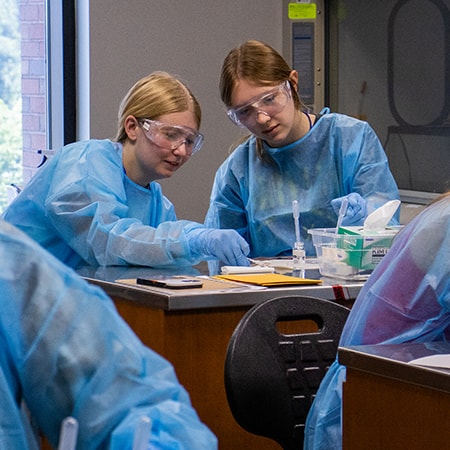

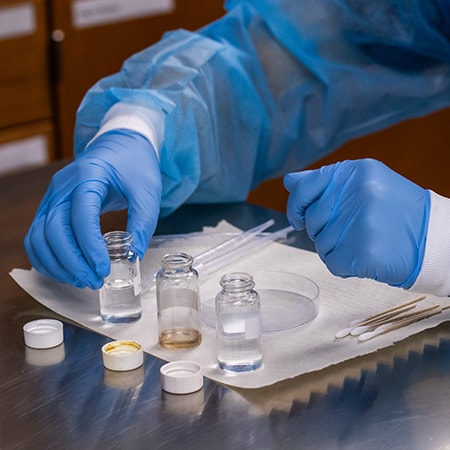
The UAB Master of Science in Forensic Science program is one of fewer than 30 Master of Science in Forensic Science programs in the U.S. accredited by FEPAC, the Forensic Science Education Programs Accreditation Commission. Our program prepares students for careers in various forensic science and conventional analytical laboratories, emphasizing the application of scientific methods and technologies to legal proceedings. It may also be used to build a strong foundation for doctoral and professional studies and offers the opportunity for students to pursue a Graduate Certificate in Computer Forensics that involves additional, elective coursework.
Congratulations to the classes of 2022-2024. During this time 30 students completed the program. Of these, 22 (73%) are working in a laboratory. Eighteen of the graduates are employed in municipal or state forensic science laboratories, one in a computer forensic laboratory, three are employed in commercial laboratories, and two are in PhD programs. Of the remaining graduates, one graduate was working in a different field and five were not employed or did not respond to the post-graduate survey. The students in the graduating classes of 2022-24 also participated in internships at the Alabama Department of Forensic Sciences, the UAB Core Toxicology Laboratory, and Labcorp.
According to the National Institute of Justice, students wishing to pursue a career in forensic science should be aware that positions in these fields usually require extensive background checks similar to those required for law enforcement personnel, and are likely a condition of employment.
Research Papers
-
2024
- Analysis of Burned Fabrics Using Fourier Transform Infrared Spectroscopy
- Development of a Direct Application Workflow for UAB’s Custom Three STR Multiplex
- Technique/Chemical Comparisons of Submerged Fingerprints
- Prevalence and Analysis of Xylazine in Postmortem Casework in Jefferson County, Alabama
- Stability of Fentanyl in Toxicology Samples Selected from a Study of Mortality amongst the Homeless Population in Jefferson County
- Comparative Analysis of Cannabinoid Metabolites in Urine Using Gas Chromatography-Mass Spectrometry
- Qualitative Analysis of Pharmaceutical and Illicit Drugs in Wastewater Using Gas Chromatography-Mass Spectrometry
-
2023
- DNA Analysis of Soil-Contaminated Blood in the Presence of Naturally Occurring PCR Inhibitors
- The Validation of a Qualitative DPX and GC-MS Method of Testing For THC-COOH in Urine
- A Target Fiber Analysis of Red Acrylic on Movie Theater Seats
- Locating and Photographing Biological Stains Using Inexpensive Light Sources
- Identification Through the Human Skin Microbiome After Primary Transfer and Handwashing
- Analysis of Drugs in Alcoholic Beverage Residue Related to Drug Facilitated Sexual Assault
- A Comparison of a Direct Lysis Method with a Silica Spin Column Method for DNA Extraction from Blood
- Comparing DNA Collection Methods and Locations for Face Masks
-
2022
- Identification of TIANAA Supplement Ingredients & Tianeptine Pyrolysis Products using Gas Chromatography
- Exploring New Methods for Extracting DNA from large pieces of fabric
- The Effect of Multiple Washes and Thread Count on Semen-Stained Sheets
- Determining Extended PMI of Fetal Pigs Buried In Fayetteville, TN in June 2021 Based on ATR-FTIR Blood Analysis
- Using DNA Recovered from Secondary Transfer to Link Perpetrators to Violent Crime
Theses
-
2024
- Identfication of the Synthetic Cannabinoids BZO-POXIZID And MDA-19 Using Gas Chromatography- Mass Spectrometry
- The Effect of The Chemical and Physical Properties of Coton on The Retention of Spermatozoa
- Fentanyl Overdoses and Use of Randox MultiSTAT for Investigative Purposes.
-
2023
- Validation of ‘Bath Salts’ Using Gas Chromatography-Mass Spectrometry
- Analyzing Cannabinoid Stability in Different Conditions And Validating Novel Cannabinoids for Oral Fluid Analysis
- Use of ATR-FTIR Spectroscopy for Estimating Postmortem Interval, Age of Bloodstains, Sex of Blood Donor, And Species Differentiation
- Development and Validation of a Multiplex STR Amplification Reaction for Academic and Research Purposes
-
2022
- Evaluating Cannabinoid Interference and Drug Stability in Oral Fluid for DUID Testing
- The Validation of a Qualitative Analytical Method to Detect Nine Cannabinoids for Forensic Drug Analysis Using Gas Chromatography/Mass Spectrometry
- Method Development of Drug Court Samples
The program support includes many UAB faculty members from other departments, personnel from the Alabama Department of Forensic Sciences' Birmingham laboratory, the Jefferson County Medical Examiner's Office, and local forensic science-related private institutions. In addition, the program maintains a close working relationship with the DNA profiling laboratories of the Alabama Department of Forensic Sciences and hosts the editorial offices of the Forensic Science Review (the only review journal in forensic science). Faculty research and practice focus especially on forensic aspects of drug chemistry and DNA-based identification.
For more information contact the Director of Graduate Studies in Forensic Science, Jason Linville.

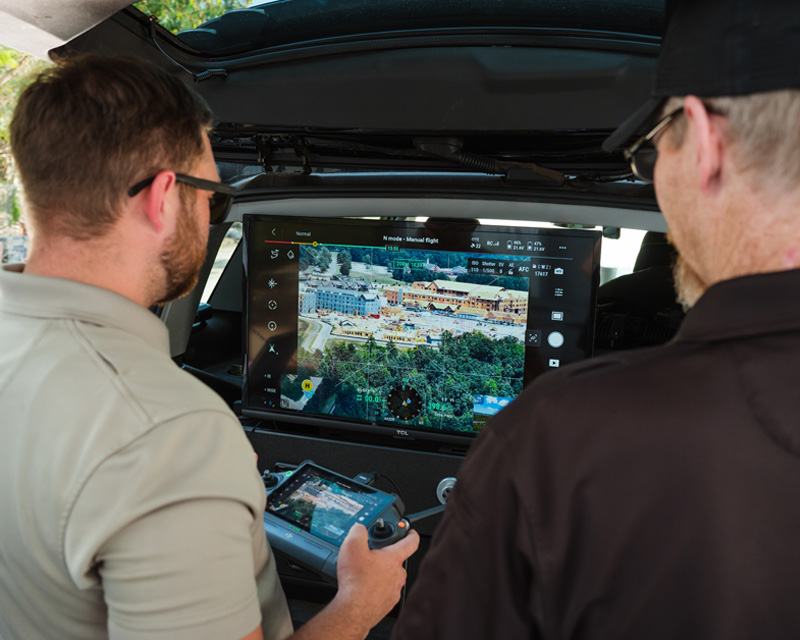
The joint MSCJ/MPA prepares students for positions in the public sector, including police agencies, correctional agencies, and agencies involved in ancillary roles with the criminal justice system. Offering a unique and rigorous curriculum, the program focuses on the administration of agencies operating within the criminal justice or juvenile justice systems.
The program arose from the need for middle managers in these agencies to be versed in the latest theories and practice of criminal justice, as well as possess administrative and management skills including public policy, human resource management, and program evaluation. The program thus provides its graduates a solid foundation in criminal justice and the skills needed to become an effective supervisor or manager.
Program Requirements
Students are required to complete a total of 60 semester hours for the coordinated degree (includes 3 hours of internship and a 3-hour capstone project). This includes 30 hours in each department. Full-time students should be able to complete all degree requirements within three years.
Course Catalog
A complete list of program requirements and courses are available in the UAB Graduate Catalog's Criminal Justice and MPA catalogs.
Program Admissions
Students must apply and be admitted to the MPA and MSCJ programs separately. The requirements for each degree must be met and close communication with both programs is required.
Questions?
Contact Director of Graduate Studies, Dr. Tara D. Warner, for more information.
Ready to Apply?
All the information you need to apply can be found on UAB's Graduate Admissions website.
Criminals increasingly use computers as weapons to illegally access information or release worms and viruses to disrupt computer networks. Law enforcement agencies often must rely on criminal forensics experts to acquire, investigate, and report on the electronic evidence of criminal cases.
The certificate offers requisite training to students in the core area of retrieval, preservation, and analysis of digital evidence (documents and images, data, etc.) stored on various devices including personal computers, tablets, and cell phones. The program provides training in the tools necessary to identify, and appropriately respond to, attacks on local- and wide-area networks. Individuals certified in Computer Forensics will be prepared to testify in litigation as expert witnesses in criminal and civil litigation.

Program Requirements
The purpose of the graduate certificate program is to provide to degree and non-degree seeking students an opportunity to acquire specialized computer forensics knowledge and training. Class descriptions can be found in the Criminal Justice section of the UAB Graduate Catalog.
Graduate Certificate in Computer Forensics requires 18 hours of classes:
- CJ 501: Foundations of Computer Forensics
- CJ 502: Computer Forensics
- CJ 519: Investigating Online Crimes
- CJ 537: Digital Media Forensics
- CJ 538: Investigation of Malicious Attacks
- CJ 554: Financial Crimes and Investigations