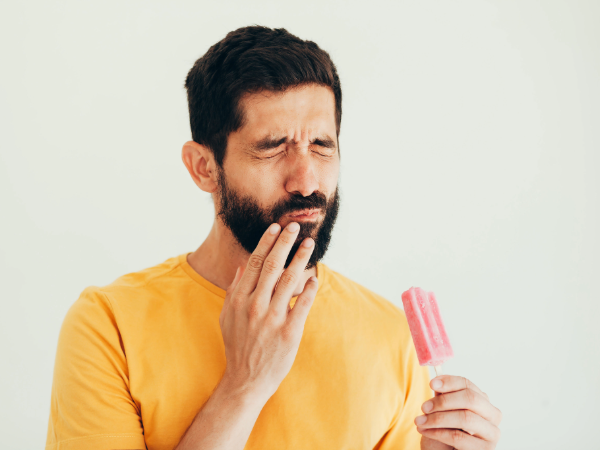
 One sip of ice water. A bite of something sweet. Even a breath of cold air. If something that never bothered your teeth before suddenly makes you wince, you may wonder what changed.
Tooth sensitivity is common, but it is not always caused by the same thing. Emerson Martins, a restorative dentistry expert at UAB Dentistry, explains why teeth can become sensitive and when a new sensation is worth mentioning to your dentist.
Why do my teeth hurt when I drink something cold?
A tooth has several layers. Enamel protects the outer part of the tooth, while a layer called dentin sits underneath it. When dentin becomes exposed, cold, heat, touch and certain foods can trigger a short, sharp sensation.
“Patients may notice sensitivity very suddenly, even though the changes that led to it have been developing over time,” Martins said. “The important thing is understanding why the tooth has become sensitive rather than simply avoiding whatever triggers it.”
Why would my teeth suddenly become sensitive?
Sensitivity can develop when enamel wears down or when the roots of the teeth become exposed. Gum recession, tooth wear and dental erosion caused by acidic foods and drinks—such as sodas and energy drinks—as well as acid reflux (GERD) can leave dentin less protected. The American Dental Association notes that both dietary acids and intrinsic acids, such as those associated with acid reflux, can contribute to erosive tooth wear and, in more advanced cases, exposed dentin and sensitivity.
Low saliva flow, or xerostomia, can also affect the oral environment and increase the risk of dental problems. If dry mouth or acid reflux may be contributing to changes in your teeth, it is important to discuss these concerns with your dentist and, when appropriate, your physician.
But a sensitive tooth does not always mean dentin hypersensitivity. Tooth decay, a cracked or chipped tooth, problems with an existing filling and other dental conditions can cause similar discomfort.
“Sensitivity is a symptom, not a diagnosis,” Martins said. “Two patients may describe a similar feeling but have very different reasons for experiencing it. Identifying the cause helps us determine what treatment, if any, is needed.”
Can brushing too hard make my teeth sensitive?
More pressure does not necessarily mean cleaner teeth. Brushing habits, improper technique and using a toothbrush with hard bristles can contribute to tooth wear, particularly when combined with other factors that affect the tooth surface. Gum recession can also expose areas of the tooth that are more sensitive.
If you are concerned about your brushing technique, your dental team can show you how to clean your teeth effectively without unnecessary force and how to choose a soft-bristled toothbrush to help protect your teeth.
Does tooth sensitivity mean I have a cavity?
Not necessarily. A cavity can cause sensitivity, but so can several other dental conditions. The sensation alone cannot tell you what is happening inside or around the tooth.
This is especially important if sensitivity is new, continues to get worse or seems to come from one particular tooth.
Does toothpaste for sensitive teeth actually work?
Some toothpastes contain ingredients designed to reduce dentin sensitivity and can provide relief when dentin hypersensitivity is the cause. However, toothpaste for sensitive teeth cannot treat every condition that causes tooth pain. In some cases, treatment such as a filling or root canal may be needed when toothpaste or other desensitizing treatments do not address the cause of the sensitivity.
“Before assuming sensitivity is something you simply have to live with, talk with your dentist,” Martins said. “Once we understand what is causing it, we can recommend an approach that makes sense for your individual needs.”
When should I see a dentist about sensitive teeth?
Pay attention to sensitivity that is new, persistent, worsening or limited to a particular tooth. Pain that continues after the hot or cold trigger is gone may also deserve a closer look because true dentin hypersensitivity is generally brief.
A dental exam can help identify what is behind the change and determine whether treatment is needed.
Learn Why Regular Dental Checkups Matter
About UAB Dentistry Comprehensive Care Clinic
Most new adult patients begin their journey at UAB Dentistry Comprehensive Care. Our team provides comprehensive dental services, including preventive, restorative and prosthetic care, in a supervised educational setting. Patients benefit from personalized treatment planning, continuity of care and faculty oversight throughout treatment while helping prepare the next generation of dental professionals.
Book an Appointment: (205) 934-2700
Article Attribution
Written by: Edlyn Olmos
Medically Reviewed by: Emerson Martins, D.D.S., M.S.c, Ph.D.
More Patient Education
How to Protect Your Natural Teeth and Prevent Tooth Loss
Electric or manual toothbrush: Which is right for you?
Tooth Decay and Cavities: Symptoms, Treatment, and Prevention