The Global Health Reciprocal Innovations Scientific
Working Group aims to facilitate the exchange of innovations between low and middle-income countries (LMICs) and higher-income countries in addressing HIV challenges. Open to UAB and non-UAB individuals, it plans seminars, networking events, and capacity-building activities for program translation, implementation, and evaluation in new settings. SWG leadership provides advice on contractual and regulatory challenges.
Global Health Reciprocal Innovation (GHRI) is a recently coined term to describe the bidirectional and iterative exchange of technology, methodology, or processes between Low and Middle Income Countries (LMICs) and high-income countries to address common health challenges and provide mutual benefit.
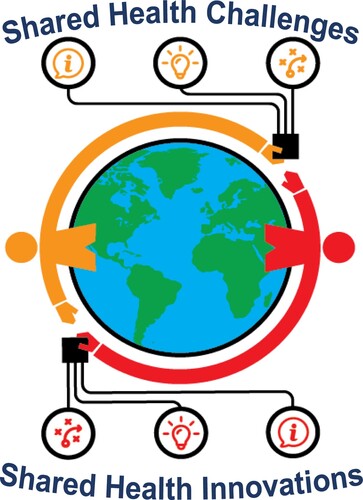
(from Sors et al. 2022 Glob Public Health)
Congratulations to our 2025 GHRI Pilot Awardees
Project title: Sisters in Motion: A pilot evaluation of a community- based lifestyle program for Black women with HIV and cardiometabolic risk in Zambia and Alabama.
Team: Dr. Belinda V. Chihota (MPI - Centre for Infectious Disease Research in Zambia (CIDRZ)), Dr. Raymond Jones (MPI - UAB), Dr. Anjali Sharma (CIDRZ), Dr. Amy Goss (UAB), & Dr. Sula Mazimba (University of Virginia)
Project title: Reciprocal Innovation and Adaptation of an Eswatini AI-Powered Serious Game to Enhance Accurate HIV Risk Perception and Reduce PrEP Stigma Among Youth in Alabama
Team: Bhekumusa Lukhele (PI - UAB), Dr. Fortunate Shabalala (University of Eswatini), Dr. John Osborne (UAB), & Dr. Katia Bruxvoort (UAB)
Group Leaders
 Michael Vinikoor, MD Director |
 Rena Patel, MD Co-Director |
 Katia Bruxvoort, PhD, MPH Co-Director |
T. Ramsey Haggerty, MPA
Program Manager, CFAR