The UAB Heersink School of Medicine Infectious Diseases Research Fellowship Program provides clinical fellows and postdoctoral scholars with an opportunity to train in research with our ID faculty.
Research Fellowship Experience
MDs or MD/PhDs from clinical fellowship programs and current or rising postdocs/PhDs can apply to our internally funded postdoctoral research fellowship program. All applicants must have a primary mentor who is a primary faculty member of the UAB ID Division. Successful applicants to this mentored program work on research projects in areas of our faculty’s longstanding expertise and funding: HIV, STIs, and other viral and fungal infections. They also draw from our faculty’s expertise in hospital epidemiology, infection prevention, and immunocompromised hosts.
Our program draws from the Division’s experience with an NIH T32-funded program and is modeled after successful T32 programs today. The program offers mentored training in the epidemiology, implementation science, and pathogenesis of ID, with a focus on HIV, STIs, other viral and fungal infections, immunocompromised hosts, and hospital epidemiology.
This research program is embedded in an outstanding training environment at UAB -- one that has a strong history of interdisciplinary collaboration across divisions, departments, and schools and provides a singular environment for mentoring trainees in research and preparing them for careers in academia, public health, and industry. The core activities and mentoring structure for this proposal are situated in the Division of Adult ID.
Research fellows select one of three methodological tracks of focus: pathogenesis and immunology, epidemiology, health outcomes, and implementation science. Faculty with expertise in these tracks work within the identified topic areas, providing a robust, interdisciplinary training environment.
Each track has components tailored to the area of focus, including core methods didactics recommended for all trainees that are informed by prior training, experiences, and interests. Leadership and team science training is also incorporated into the fellowship experience.
Tracks
Pathogenesis and Immunology Track
This track offers laboratory-based research opportunities in bacterial or viral pathogens, including pathogenesis, immunology, and molecular epidemiology. Scholars receive rigorous laboratory-based training in close association with established laboratories and successful mentors.
| Sample methods training opportunities for this track |
|---|
| Clinical & Translational Science Training Program (UAB-CCTS) |
| Microbial Pathogenesis |
| Pathogenomics Journal Club |
| Intro to Immunology, I, II |
| Mucosal Immunology |
| Lymphocyte Biology |
| Prokaryotic Genetics & Molec. Biol. |
| Virology |
| Intro to Structural Biology |
Epidemiology Track
This track offers research opportunities in clinical epidemiology, clinical trials, and observational analysis. Scholars will learn skills needed to perform research in populations with or at risk for infections, with attention to measuring exposure and outcomes, and implementing robust study designs. Trainees will have the opportunity to earn a master’s degree in epidemiology or a related field.
| Sample methods training opportunities for this track |
|---|
| Principles of Epidemiological Research |
| Quant. methods in epi |
| Intermediate statistical analysis, I, II |
| University of Washington HIV/STI Course (2 weeks) |
| Epidemiology of Infectious Diseases |
| Intermediate statistical analysis III |
| Infection Prevention and Hospital Epidemiology |
| ID of Global Health Significance |
Health Outcomes and Implementation Science Track
This track recognizes the growing need for rigorous training in health outcomes research and the science of translating research to practice. Scholars will develop knowledge and skills needed to understand implementation and health outcomes research, with individualized programming offered to enhance methodologies often applied within these scientific fields (e.g., qualitative research).
| Sample methods training opportunities for this track |
|---|
| Dissemination and Implementation Science in Health Care |
| Population and Health Outcomes Research Seminar Series |
| Inter-CFAR IS Fellowship |
| Implementation Sci. Hub lecture series (Monthly) |
| Health Disparities in Diverse Populations |
| Foundations of Qualitative Research. |
| Qualitative Research: Analysis and Interpretation. |
| COERE Methods Symposium |
Apply
Applicants will include MDs or MD/PhDs from clinical fellowship programs and current or rising postdoctoral scholars/PhDs or equivalent. Applicants can include:
- Existing UAB clinical fellows within the Division of ID or in other UAB divisions/departments/schools
- Postdoctoral scholars within the Division of ID or in other UAB divisions/departments/schools
- Clinical fellows or postdoctoral scholars from outside of UAB who are a U.S. citizen or permanent resident
Regardless of the trainee type, the primary mentor must be a UAB ID faculty member.
The selection process emphasizes commitment by the candidate to a research-related career, alignment of their proposed project with ID research, and with the proposed ID faculty mentor and mentorship team. Applicants will submit a current CV and formal Statement of Interest including their project title and proposed or confirmed mentors. Two letters of recommendation are also required. For a complete program description, please email jamiewhite@uabmc.edu.
The annual window for submissions will be opened March 16 through May 15, with a fellowship start date as early as July 1.
Let's get acquainted
It's not just what you learn. It's also about the people you learn with. Our Research Infectious Diseases Fellowship program leaders are dedicated to developing the potential of every talented trainee.
Meet our people
Got more questions? Reach out and let's talk.
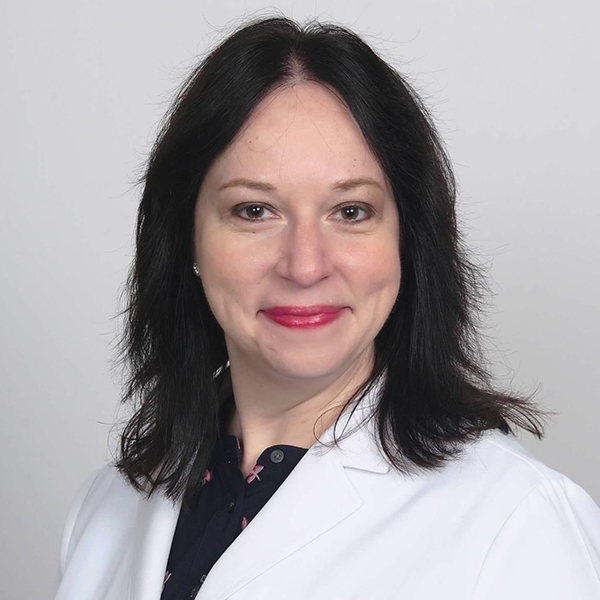 I'd be delighted to talk with you about the many exciting possibilities that await you at UAB and Birmingham. Contact me for more information about this funded research opportunity.
Christina Muzny, MD, MSPH, Program Director
Send an Email
 I'm always ready to answer questions about our research programs. Please feel free to contact me for more details about this funded research opportunity.
Jamie White, Deputy Research Administrator – Division of Infectious Diseases
Send an Email