Meet a Civitan Scientist is a series that highlights the impactful research of Civitan scientists and their contributions to understanding and addressing neurodevelopmental challenges.
In this installment, Ming Meng, Ph.D., professor in the Department of Neurobiology, explores his research using brain imaging, behavioral experiments, and computational modeling to study how perception, attention, and mental imagery work together to shape conscious experience.
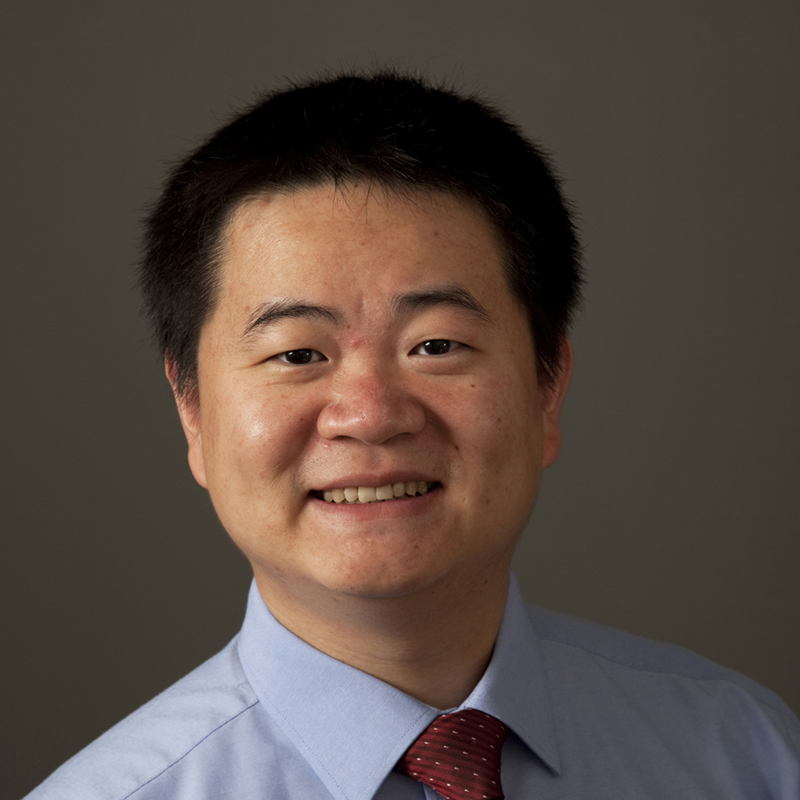 Understanding how the brain creates meaning
The Meng Lab explores how the brain transforms visual information into meaningful experiences and concepts. Recognizing a familiar face, interpreting a facial expression, or imagining a person in the mind, are all examples of how the brain organizes complex sensory signals into coherent perceptions.
“I have long been fascinated by one fundamental question: How does physical activity in the brain become subjective experience?” Meng said. “Vision provides a uniquely powerful window into this question because it connects basic sensory processing to higher cognitive functions such as social understanding, imagination, and decision-making.”
Meng became especially interested in how the brain forms stable and meaningful concepts from incomplete, ambiguous, or even competing sensory information.
Over time, his interests expanded toward understanding how these perceptual and cognitive processes change across development and aging, and how they may differ in neurodevelopmental or neurological conditions.
By studying how the healthy brain organizes visual and emotional information into meaningful experiences, Meng hopes to better understand what changes in conditions such as autism spectrum disorder and other developmental disabilities.
“Our work on binocular vision, attention, and conscious perception may also help improve understanding of how the brain adapts to atypical sensory experiences during development,” Meng said. “I hope this research contributes to better tools for early assessment, personalized interventions, and strategies that support communication, learning, and everyday functioning across the lifespan, including during healthy aging and neurodegenerative decline.”
One major milestone in Meng’s research has been the development of computational models that explain how the brain combines sensory input with internal cognitive states. His lab is also developing new neuroimaging approaches that allow researchers to study fast-changing brain dynamics with much finer temporal precision than traditional fMRI methods.
“I hope our work will help bridge neuroscience, artificial intelligence, and clinical research by providing a deeper understanding of how the brain constructs meaningful experience across development, adulthood, and aging,” Meng said.