Our Get to Know series highlights our dynamic researchers from across the UAB Comprehensive Diabetes Center (UCDC), from faculty members to trainees and laboratory staff. This month, we’re spotlighting Glenn C. Rowe, Ph.D., associate professor in the Department of Medicine Division of Cardiovascular Disease. The Rowe Lab focuses on understanding the molecular pathways that influence mitochondrial metabolism in response to diet and exercise, to improve mitochondrial function and reduce the harmful effects of the metabolic syndrome.
Tell us a little bit about you and your role at UAB and the UCDC.
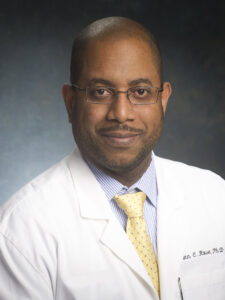 Glenn Rowe, Ph.D.I am an associate professor in the Division of Cardiovascular Disease in the Department of Medicine. I joined the faculty at UAB as assistant professor in 2014 as my first faculty position out of my post-doc laboratory. During my recruitment, I had the opportunity to interact with many of the faculty in the UCDC at the time and those interactions were very instrumental in my decision to come to UAB. Since joining the faculty, I continued to be involved with the UCDC including many of the faculty development activities. I can say that the community that the UCDC offers has been very influential in my time and success here at UAB.
What is your research focus?
My laboratory studies the cellular programs that regulate metabolic function in striated muscle. Specifically, the lab is interested in how physiological (exercise) and pathological (metabolic dysfunction) affect skeletal muscle adaptations. My lab is interested in understanding the molecular mechanisms that contribute to skeletal muscle function. The lab studies the role of the PGC-1 family of transcriptional coactivators in exercise-induced adaptations and mitochondrial quality control in skeletal muscle. The lab also studies the contribution of mitochondrial dysfunction in the development of skeletal muscle atrophy and the underlying molecular mechanisms that lead to this pathology. In addition, we are actively investigating the underlying mechanisms that lead to muscle atrophy after spinal cord injury. The laboratory generates and utilizes innovative, novel and sophisticated preclinical rodent models to address underlying molecular mechanisms with potential clinical implications.
What first got you interested in diabetes research?
My interest in diabetes research and metabolism began during my time in graduate school. My thesis project was originally focused on understanding the transcriptional reprogramming of mesenchymal stems cells from being able to differentiate into either osteoblasts (bones forming cells) or adipocytes (fat cells). To make a long story short, it turned out that what we were looking at was not a differentiation issue, but a metabolic issue including changes in glucose homeostasis and insulin responsiveness. It was these initial studies that exposed me to questions around metabolism and diabetes. When it was time to identify a post-doc lab, I joined a lab that studied transcriptional programming of metabolism.
Tell us a little bit about your research and collaborations.
My research focuses on understanding the molecular changes that occur metabolically in skeletal muscle. To this end my research interest has intersected with that of many of the UCDC membership over the years. Some of the current collaborations are with Drs. Habbegger, Bhatnagar, and Wende.
What does support of the UCDC and its mission mean to you?
The UCDC has been a very intricate part in my initial coming to UAB and my early faculty development. The community of scholars that make up the UCDC allows for collaboration and the vetting of ideas. It also provides an informal space to help navigate the challenges and opportunities that being a faculty member entails.
What do you enjoy outside of the lab?
One of the things I enjoy outside of the lab is cooking. I like to refer to it as science you can eat. I get to apply many of the same skillsets from the lab in the kitchen. Everything from reading and tweaking protocols (recipes) to using cool gadgets. I have more cooking thermometers than I care to mention.