Our Get to Know series highlights our dynamic researchers from across the UAB Comprehensive Diabetes Center (UCDC), from faculty members to trainees and laboratory staff. This month, we’re spotlighting Hui-Ying Lim, Ph.D., associate professor in the Department of Genetics. Her work has identified several genes that play important roles in diabetes control. Her lab’s current interest is understanding the role of Thioester-containing protein 2 (Tep2) in obesity and insulin resistance.
Tell us about you and your role at UAB and UCDC.
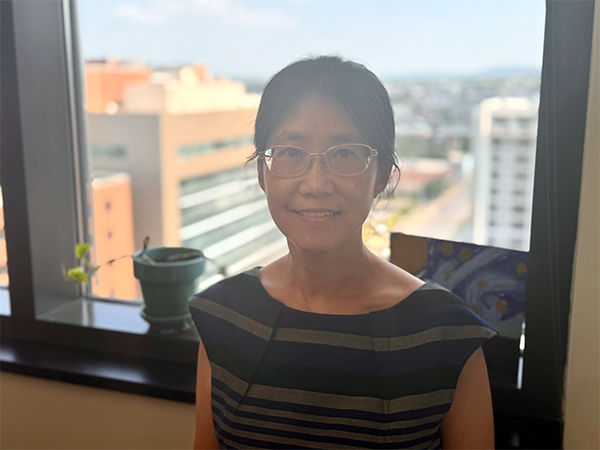 Hui-Ying Lim, Ph.D.I majored in Microbiology as an undergraduate in Singapore and did a one-year internship in biomedical research in Japan after my undergraduate. I then pursued graduate training at Columbia University in New York City and earned my Ph.D. in Pathobiology. I did my postdoctoral training on cardiac stress signaling and energy metabolism at the Sanford-Burnham-Prebys Institute in San Diego. I then moved to Oklahoma City for my first independent position as a principal investigator in 2011. I joined UAB as an Associate Professor of Genetics in 2024 and have been a member of the UCDC since.
Tell us about your current research and collaborations and how it relates to diabetes.
My lab is interested in understanding the role of Tep2 (Thioester-containing protein 2) in obesity and insulin resistance. Tep2 is an immune effector that is expressed in immune responsive tissues. We found that Tep2 is expressed in cardiomyocytes and secreted into the blood for the maintenance of systemic lipid homeostasis. Interestingly, we found that Tep2 is upregulated in cardiomyocytes in obesity and helps mitigate the development of obese cardiomyopathy. Our research is relevant to diabetes because it identifies a new role of Tep2 in controlling normal and deregulated metabolic homeostasis such as obesity and diabetes.
What got you interested in diabetes research?
My lab previously conducted a genetic screen in flies and identified several genes that we found to play important roles in diabetes control, including the first-ever identified glucose transporter and its upstream regulator in the Drosophila midgut. We’ve also had a longstanding and fruitful collaboration with Dr. Weidong Wang whose lab studies, among other things, diabetes and obesity in mouse models. It is the culmination of our discoveries and learning from other lab’s discoveries that got me interested in diabetes research.
What does support of the UCDC and its mission mean to you?
The resources and environment at the UCDC are excellent and have provided an insightful and important platform for my lab and myself to continually learn about diabetes. The UCDC mission serves as an inspiration for me to strive to do the best experiments we can in the lab and to train new scientists.
What do you enjoy outside of the lab?
I enjoy spending time with my family. We have two older teenagers and are in the thick of teenage hood!