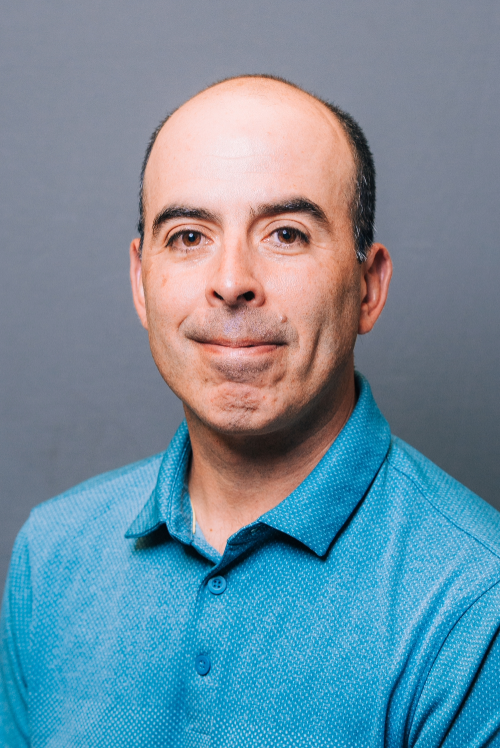
 Carlos Orihuela, Ph.D.Carlos J. Orihuela, Ph.D., Professor in the Department of Microbiology, has been named the latest recipient of the school's Featured Discovery award. This recognition celebrates notable faculty research contributions and highlights the impact of their scientific advancements.
Orihuela’s study, “Allele-specific zinc metalloprotease B influences cardiac damage during invasive pneumococcal disease,” was published in Cell Reports. Through their research, the team examined the relationship between heart failure and pneumonia, as well as the bacterial genes that were present in genetic lineages of Streptococcus pneumoniae that more frequently caused heart damage during pneumonia. They identified a specific version of the enzyme Zinc Metalloprotease B that potentiated bacterial tropism to the heart.
“The experience in total was incredibly rewarding: the challenge, the responsibility — I couldn't have asked for a better project, or a better place, to do my dissertation work,” said Jennifer Luck, Ph.D., first author of the study, who recently completed her Ph.D. in pathobiology and molecular medicine at UAB. “I found passion in my microscopy and the care of my mice, and I feel our work really reflects that. I'm really excited about what the future holds for this project: the prospectives, the new challenges, and new questions.”
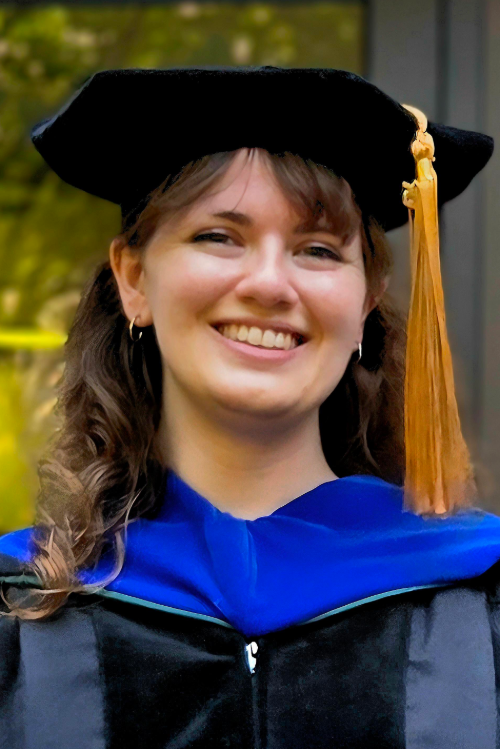 Jennifer Luck, Ph.D.The Heersink communications team met with Orihuela to gain insights into the study and help raise awareness about both the research and the Heersink School of Medicine.
What compelled you to pursue this research?
Our lab has been exploring the mechanisms behind heart failure during and after pneumonia for a decade. For this paper, we wanted to take an unbiased approach and decided to pursue bacterial genome-wide association studies to find new determinants. This is difficult to do, but with our partners at the University of Maryland, Dr. Hervé Tettelin and Dr. Adonis D’Mello, we had the opportunity to get it done, so we went for it!
What was your most unexpected finding?
We were thinking we’d find genes whose presence was associated with the ability of Streptococcus pneumoniae to cause heart failure. In other words, they encoded a protein or toxin that gave the bacteria this ability and this gene would be absent in strains that were not associated with heart failure. We were partially right, and it’s not that strains that cause cardiac damage carry an extra gene that gives them this ability; instead, they encode a specific version of a shared gene that is cardiotropic. In this case, the metalloprotease ZmpB.
How do you feel your research will impact the science community?
I think our work shows the utility and power of bacterial Genome Wide Association Studies (GWAS). With the increase in number of publicly available genomes this is something that should become easier to do. I hope that our approach serves as a template for other investigators. Our findings also add to the increasing volume of data that shows S. pneumoniae can directly damage the heart. This is something that, while quite real and common, is not well appreciated by the basic science community who is instead more focused on classic roles for this bacteria.
What is your research’s relevance to human disease?
We found a molecular explanation for why some strains of S. pneumoniae are associated with high incidence of major adverse cardiac events (up to 44%) during hospitalization of patients. We also found that the effector molecule responsible, ZmpB, can be neutralized with antibody. Thus, we can potentially protect people from adverse cardiac events caused by bacterial injury during severe pneumonia infections.
What made you come to UAB?
Although my group was well established at my former institute, I specifically came to UAB because of the resources available to its faculty. UAB, in particular the Department of Microbiology, has tremendous historical strength with regard to pneumococcal research, and I wanted to be part of this group. I remember, just over a decade ago, when I was applying for the job, I sat with our former Dean, Dr. Vickers, and he asked me what other reasons I had for wanting to come to UAB. My answer was I wanted to gain access to and collaborate with the cardiac researchers here at UAB who are outstanding.
What do you find makes the science community here unique?
UAB has a tremendous sense of collegiality and collaboration that spans departments and schools. That is not the case at many other major research institutes. UAB is a great place to work and live, and it makes doing great science much easier!
Check out previous Featured Discoveries or nominate yourself or a colleague.