A team from the UAB Systems Pharmacology AI Research Center (SPARC) received a Certificate of Innovation in Biomedical AI at the national Bridge2AI Spring 2026 All-Hands Meeting. Their poster was recognized as the most groundbreaking and original presentation applying artificial intelligence to a biomedical or healthcare challenge.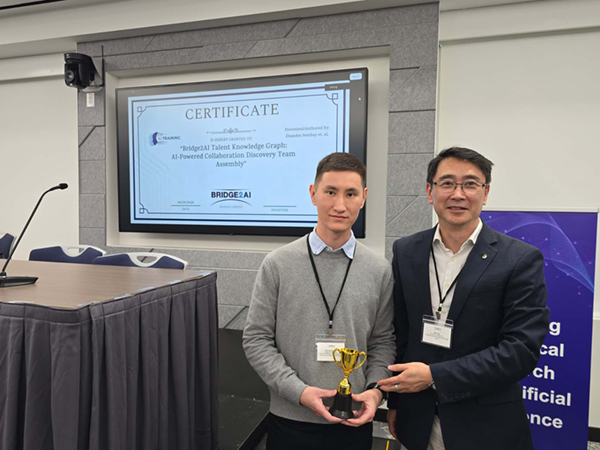
The recognition was awarded for the poster “Bridge2AI Talent Knowledge Graph: AI-Powered Collaboration Discovery and Team Assembly,” presented by Zhandos Sembay, informatics analyst in SPARC. The project was led by Sembay under the mentorship of Jake Y. Chen, Ph.D., professor in the Department of Biomedical Informatics and Data Science and director of SPARC.
The poster was selected from approximately 60 presentations from teams across the Bridge2AI community, including researchers from Harvard University, Washington University in St. Louis, the University of California San Diego, Stanford University, the University of South Florida, UAB, and other biomedical research organizations. The recognition highlights the growing visibility of UAB’s work in biomedical AI, knowledge representation, translational informatics, and AI-enabled team science.
The project addresses a common challenge in biomedical research: relevant expertise often exists across institutions, disciplines, datasets, publications, and professional networks, making collaboration difficult to identify through traditional searches. The Bridge2AI Talent Knowledge Graph uses AI and knowledge graph technologies to organize researchers, publications, datasets, expertise areas, and collaboration opportunities into a searchable research network.
The platform is designed to help researchers identify complementary expertise, build stronger teams, support mentorship, and accelerate collaborative biomedical AI research.
The platform also has applications beyond Bridge2AI. Translational and clinical researchers often need teams that combine disease expertise, cohort access, clinical operations, biostatistics, biomedical informatics, AI and machine learning, ethics, implementation science, and community engagement. A knowledge graph-based collaboration platform could help investigators identify partners across departments, centers, and institutions, supporting competitive grant applications, multi-site studies, and translational research efforts.
“This recognition reflects the work of the SPARC team and the collaborative spirit of the Bridge2AI community,” Sembay said. “Dr. Chen’s vision is that AI should not only help researchers find information. It should help researchers find each other, understand where their expertise fits, and build teams capable of solving problems that no single lab can solve alone.”
The Bridge2AI All-Hands Meeting brought together researchers, trainees, NIH leaders, and consortium working groups from across the country. The meeting included consortium briefings, early-career researcher lightning pitches, poster sessions, working group discussions, and a closing ceremony recognizing innovative contributions to biomedical AI.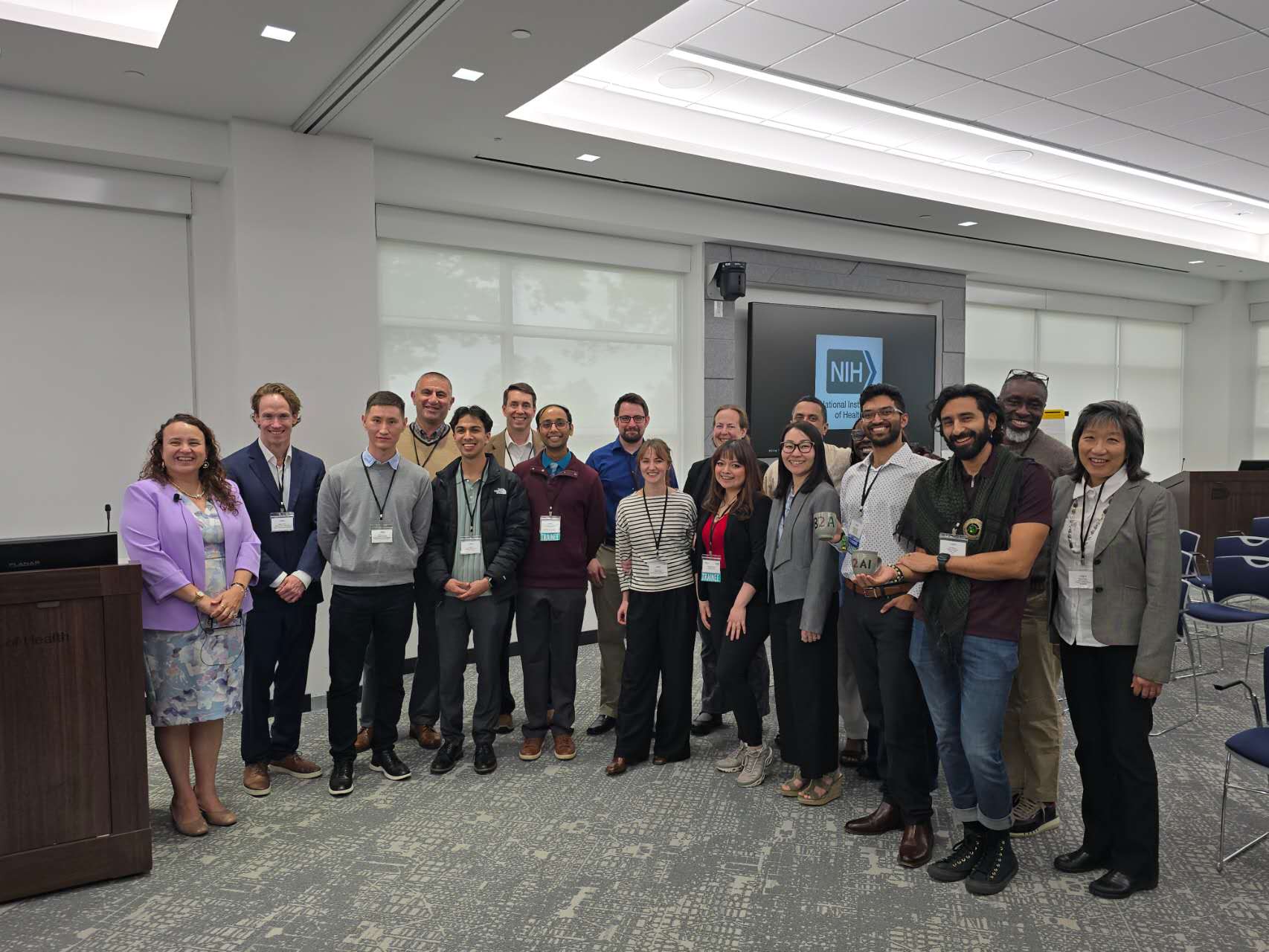
Bridge2AI, funded by the NIH Common Fund, is a national initiative focused on accelerating the ethical and effective use of artificial intelligence in biomedical and behavioral research. The consortium supports development of AI-ready datasets, standards, best practices, and collaborative frameworks for responsible AI innovation in health research.
For the Department of Biomedical Informatics and Data Science and SPARC, the certificate underscores the department’s growing leadership in biomedical AI, translational informatics, knowledge representation, and AI-enabled team science. It also reflects a broader shift in biomedical research as AI tools increasingly support both data analysis and scientific collaboration.
The broader project team includes Swathi Thaker and Pamela Payne-Foster from UAB; Jiawei Xu and Ying Ding from the University of Texas at Austin; and Monica Munoz-Torres from the University of Colorado Anschutz Medical Campus. The work was conducted under the leadership and mentorship Chen.