One medical student’s path from sketchbook to surgical illustration
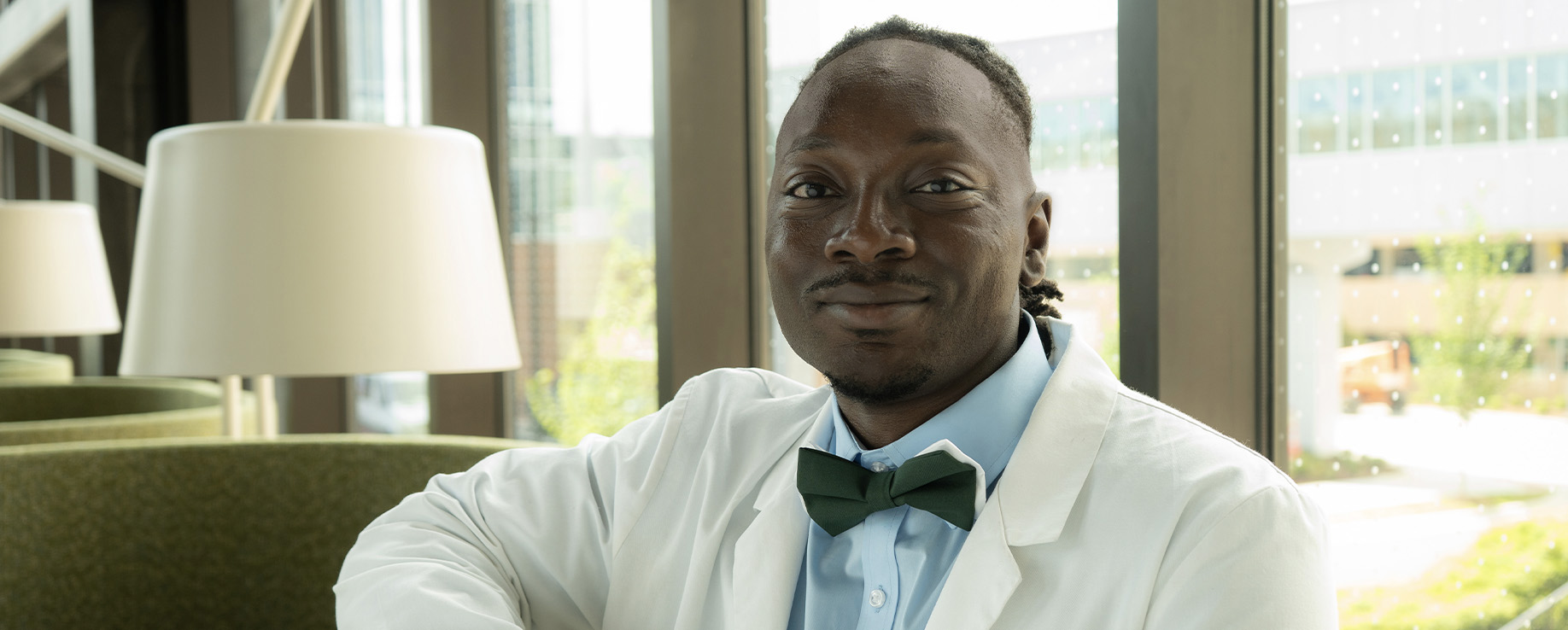
Leopold Nkengbeza does not separate art from medicine. For him, the two have always been intertwined.
Born in Edéa, Cameroon, Nkengbeza spent his early childhood in a setting where access to care was limited. A serious illness at a young age shaped his understanding of medicine’s value and stayed with him long after his family moved to the United States.
Now a fourth-year medical student at Heersink School of Medicine, Nkengbeza carries with him the belief that medicine is a way to give back and connect with others, while his passion for the arts shapes how he understands and communicates his clinical training.
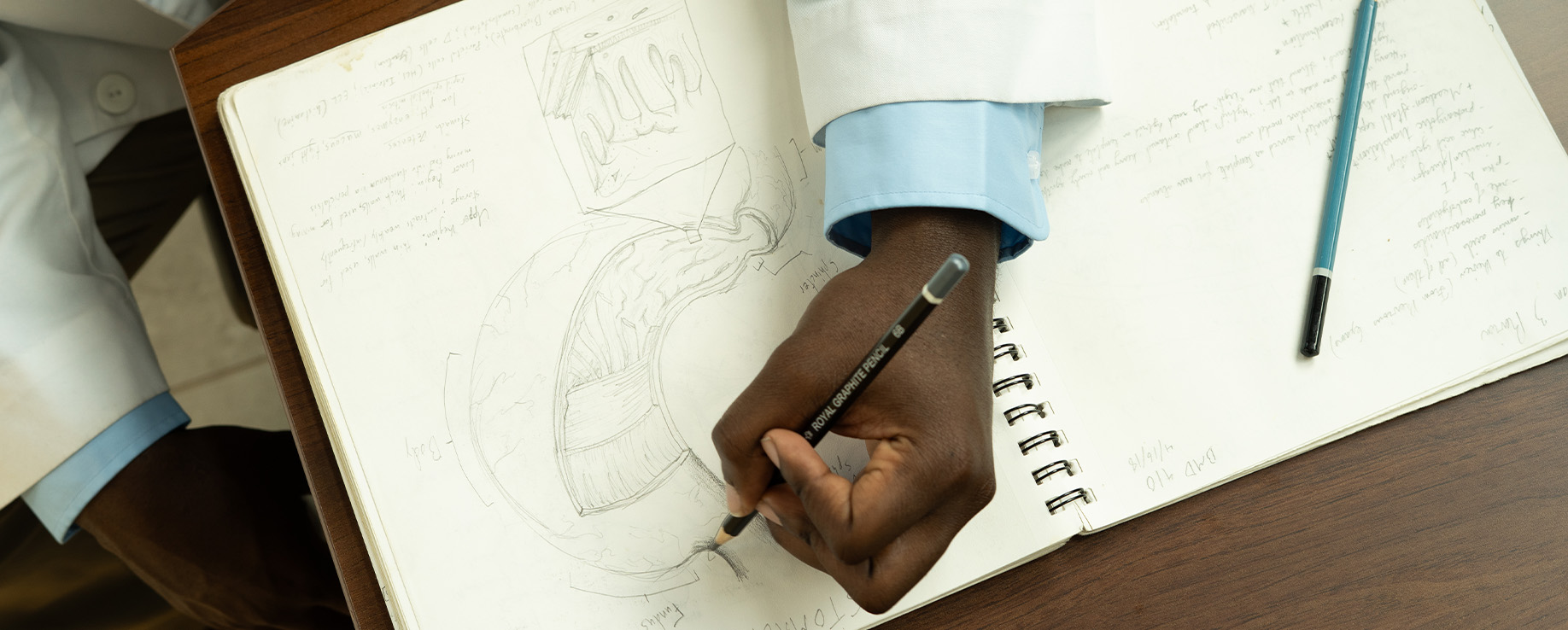
Drawing was never something Nkengbeza had to learn; rather, it was something he always did.
Over time, drawing evolved from a simple hobby into a valuable study tool. While studying in college and medical school, Nkengbeza used illustrations to memorize complex medical concepts. “If I can draw it, I can remember it,” Nkengbeza said. “Drawing helps me to visualize and recall what I am learning.”
While he prefers a pen and a sketchbook, Nkengbeza incorporated digital tools into his work during his time at UAB. He says these tools allow him to work more effectively and give him access to a wider range of techniques that expand how he approaches illustrations.
-
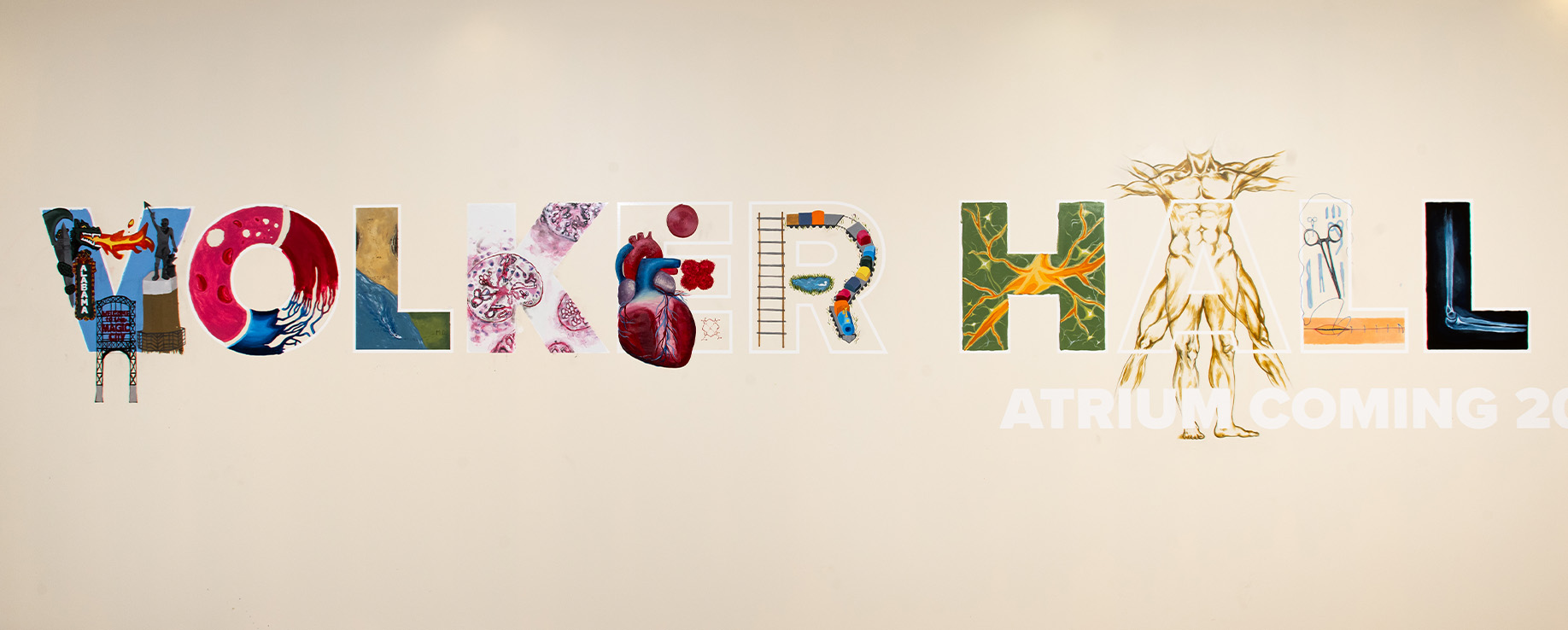 In 2025, medical students transformed a temporary construction wall at Volker Hall into a mural representing UAB Medicine and Birmingham. Nkengbeza painted the letters O and H.
 -
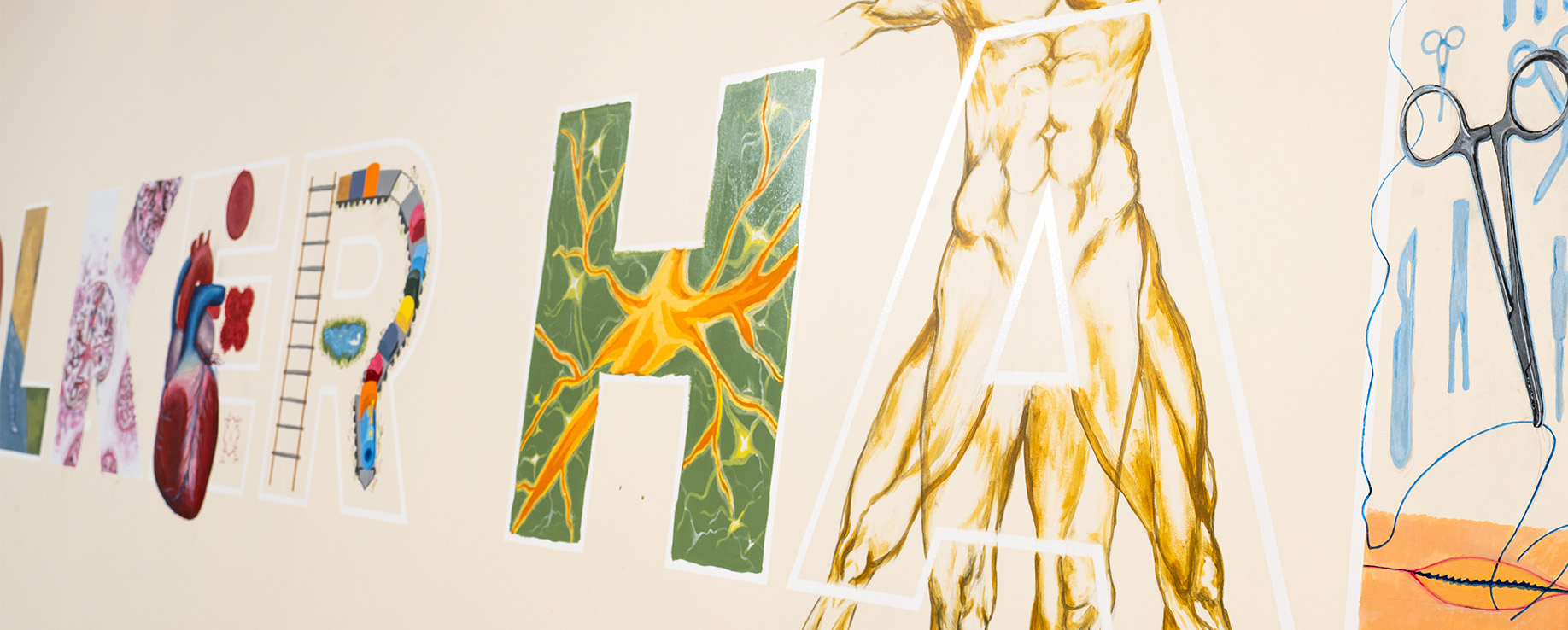 In 2025, medical students transformed a temporary construction wall at Volker Hall into a mural representing UAB Medicine and Birmingham. Nkengbeza painted the letters O and H.
One of Nkengbeza’s most visible contributions at Heersink is his work on the Volker Hall mural, where he designed the letters “O” and “H” alongside fellow medical students.
For the letter “O,” he drew inspiration from the cardiovascular system, stating that the letter’s circular form became a representation of circulation and an eternal cycle, reflecting the way arteries, veins, and capillaries function as a connected loop.
For the letter “H,” Nkengbeza turned it into a branching structure of the nervous system. He was drawn to the design of interconnected pathways that echo how neurons extend and communicate throughout the body.
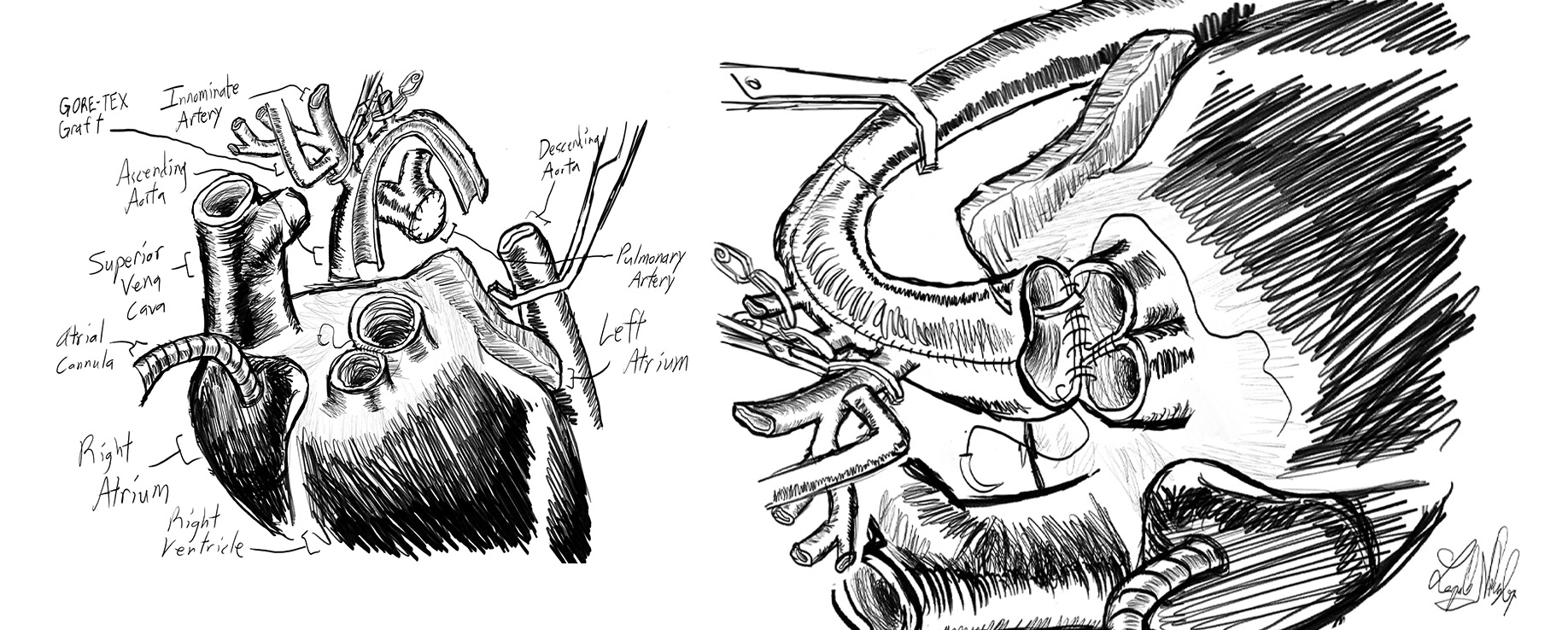
Nkengbeza’s artistic skills soon became part of his research work. The opportunity emerged through his classmates, Mason Berry and Ben Hambright, who had seen his illustrations and connected him with cardiothoracic surgery research projects at UAB.
Working alongside faculty in the UAB Department of Surgery, Nkengbeza’s initial research project focused on creating two illustrations of vascular rings, a complex congenital heart condition. In this project, he produced detailed anatomical views depicting a right aortic arch, an abnormal development that can compress the airway and esophagus in pediatric patients. This featured work was published in the Journal of Surgical Research.
Nkengbeza also illustrated a modified version of the Norwood procedure known as the “double-barrel” Norwood. In this variation, the aorta and pulmonary artery are joined side by side to create a single pathway for blood flow, and it is used in more complex cases than the standard procedure. In his illustration, he showed the patient’s heart anatomy, and the additional images walked through each step of the surgery, including how the vessels are cut, reconstructed, and sewn back together, along with the placement of a shunt between the pulmonary artery and aorta.
Each illustration is built through collaboration. “The surgeons know what needs to be shown to other surgeons,” Nkengbeza explained. “My role is to bring that to life in a way others can understand.”
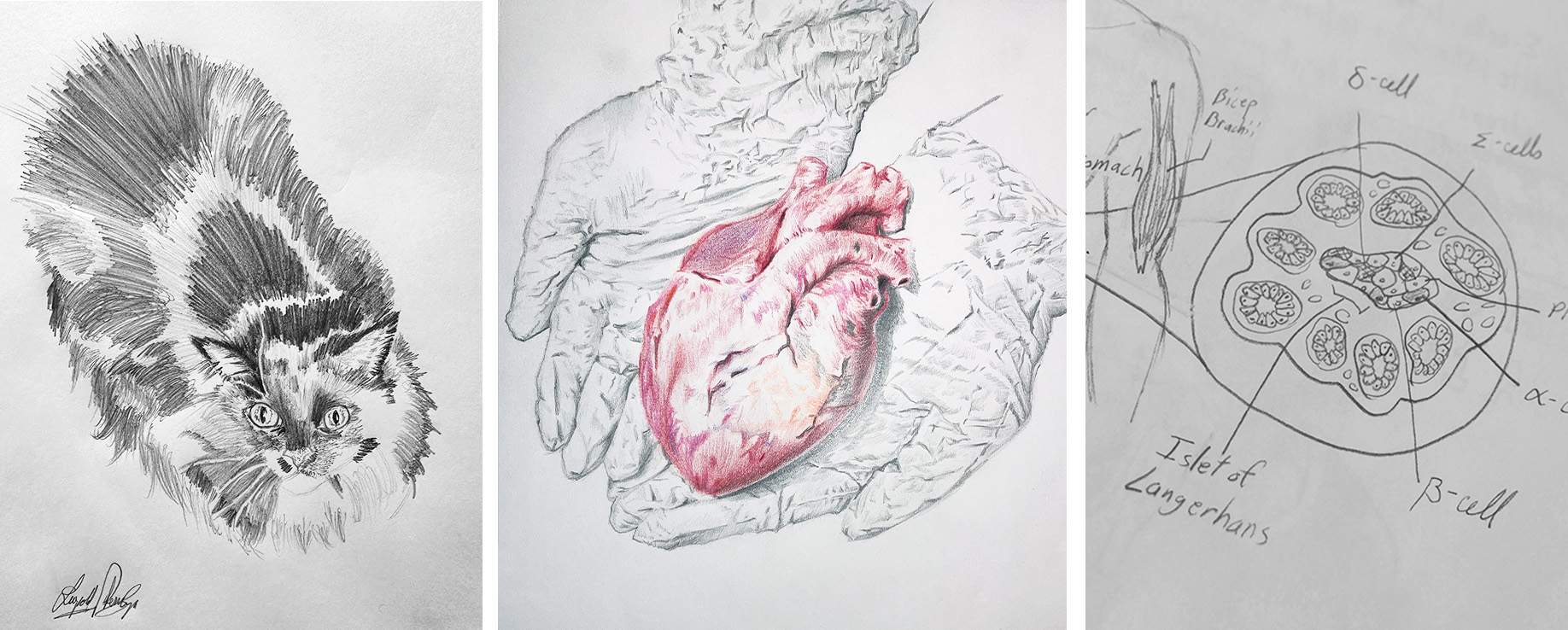
Nkengbeza describes this work as a distinctive intersection of medicine and art, one that benefits from both visual skills and technical knowledge. As someone trained in both, he is able to translate complex procedures into clear visual representations that support both physicians and patients.
Looking ahead, this intersection is where he sees his future.
He plans to continue incorporating illustration into his work beyond his time at Heersink. He notes that while there are many artists and many physicians, there are fewer who can combine both roles. For Nkengbeza, illustration is not just a skill, but an extension of how he practices and communicates medicine.
Read more stories from UAB Medicine Magazine.