How dedicated guidance shaped Brenton Bicknell’s path to medicine and research
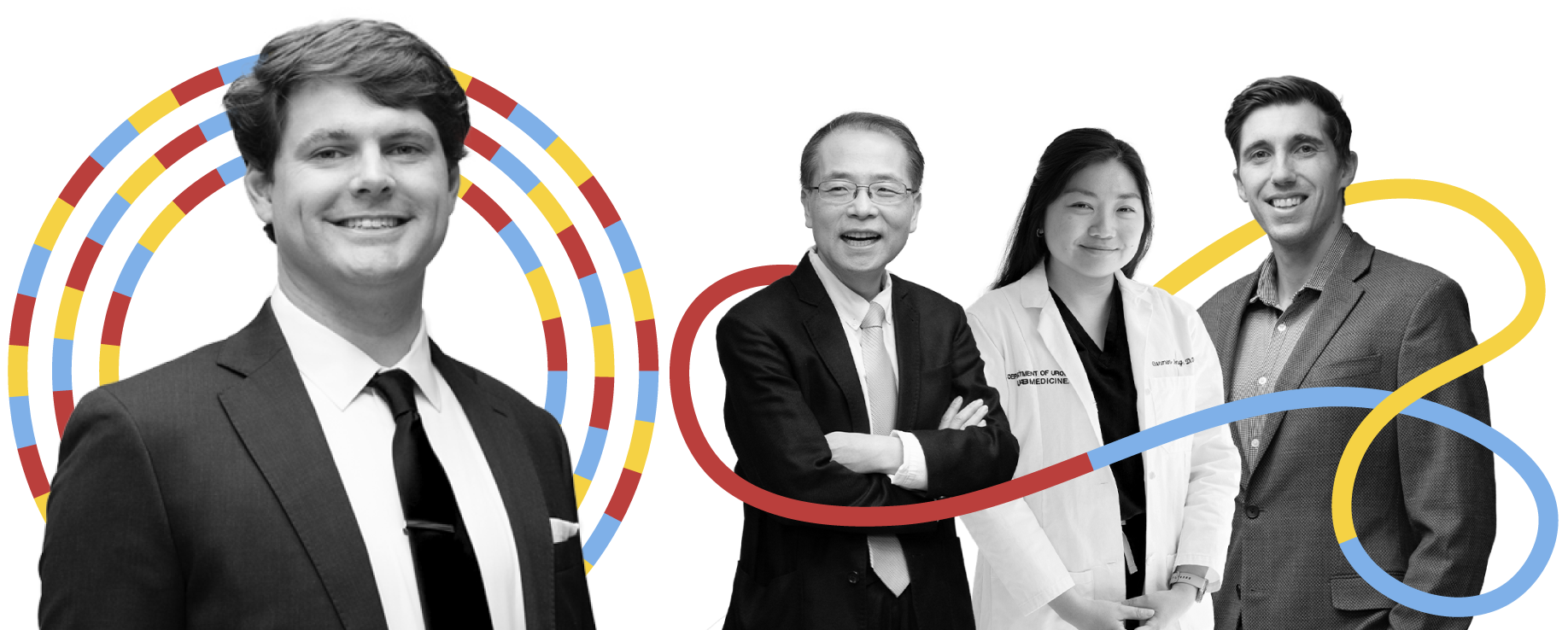
In a quiet lab at the Heersink School of Medicine, Brenton Bicknell, MS4, studies a dataset that is integral to a research project he has been working on with his mentor, Robert Tauscher, M.D., assistant professor in the UAB Department of Ophthalmology and Visual Sciences and interim residency program director. A typical day begins with extracting data from the electronic medical record and troubleshooting datasets, then moves into statistical analysis, manuscript editing, and conversations with collaborators across departments and institutions. Beneath the technical work, Bicknell continually asks what might be missing, thinking of both the numbers and the patients behind them. That discipline, shaped equally by curiosity and responsibility, developed over four years under the guidance of mentors who challenged him not just to participate in research, but to lead it.

Curiosity meets expectation
Bicknell’s interest in medicine began as a patient. After shoulder surgery as a teenager, he experienced firsthand how healthcare could restore both function and confidence, an experience that left a lasting impression. Encouraged by his strengths in science and math and inspired by early exposure to engineering and problem-solving, Bicknell entered medical school determined to understand how treatments worked and how they could be improved. Research, however, was unfamiliar territory.
That changed when he joined the lab of Do-Yeon Cho, M.D., professor and vice chair of Clinical Affairs in the UAB Department of Otolaryngology – Head and Neck Surgery and director of the UAB Comprehensive Smell and Taste Clinic. Cho, a rhinologist and clinical scientist, was drawn to otolaryngology because it combines surgery with complex physiology—from smell and voice to hearing, airway function, and rare molecular defects that can cause major health problems. His work bridges lab discoveries with patient care, translating research into treatments that improve outcomes for people with chronic sinus conditions.
To explore an early interest in surgical research and a career as a clinician-scientist, Bicknell joined the lab through a summer medical research program, and Cho quickly noticed his curiosity and drive. Bicknell asked questions beyond the immediate project and sought to understand both the mechanisms and how the research could affect patients. The early months required adjustment as he learned statistical tools, refined study design, and prepared for his first national conference. Bicknell delivered an oral presentation at the 2023 Annual Meeting of the American Rhinologic Society titled “High Dose Ciprofloxacin and Azithromycin Sinus Stent for the Treatment of Chronic Rhinosinusitis,” a project completed with Cho and his research team that went on to be published in The Laryngoscope.
Cho remembers that presentation as a defining moment. “Brenton prepared extensively and delivered it with confidence, showing not only mastery of the material but ownership of the work,” Cho said. For Bicknell, it marked a turning point when research became more than learning and offered a chance to contribute in a meaningful way.

Building momentum
That sense of purpose carried into new collaborations, including work with Carmen Tong, D.O., associate professor in the UAB Department of Urology, assistant program director for the Urology Residency, and director of the Urology Clerkship. Tong, a pediatric urologist, has dedicated her career to improving outcomes for children with complex urologic conditions, combining patient care with research to identify risk factors and refine treatment pathways.
Tong first met Bicknell early in his medical training, when he expressed interest in urology, and was immediately struck by his humility and drive. “He was extremely humble about his prior research experience and let me know that he wanted to do more,” Tong said. “Once he started working, he took off.”
Together, they examined pediatric kidney stone disease by analyzing clinical datasets to understand the environmental and biological factors contributing to stone formation in children. The work required detailed chart reviews, coordination across institutions, and careful statistical modeling to identify patterns that could support earlier intervention and more individualized care.
“Research surprised me in how collaborative it is,” Bicknell said. “You realize quickly that good work depends on a team.”
Through the process, Tong observed his growth. He consistently pushed projects forward, took initiative, and embraced challenges. She describes their mentorship as building a car together: starting with a simple framework, Bicknell turned it into a race car.
Leading with intention
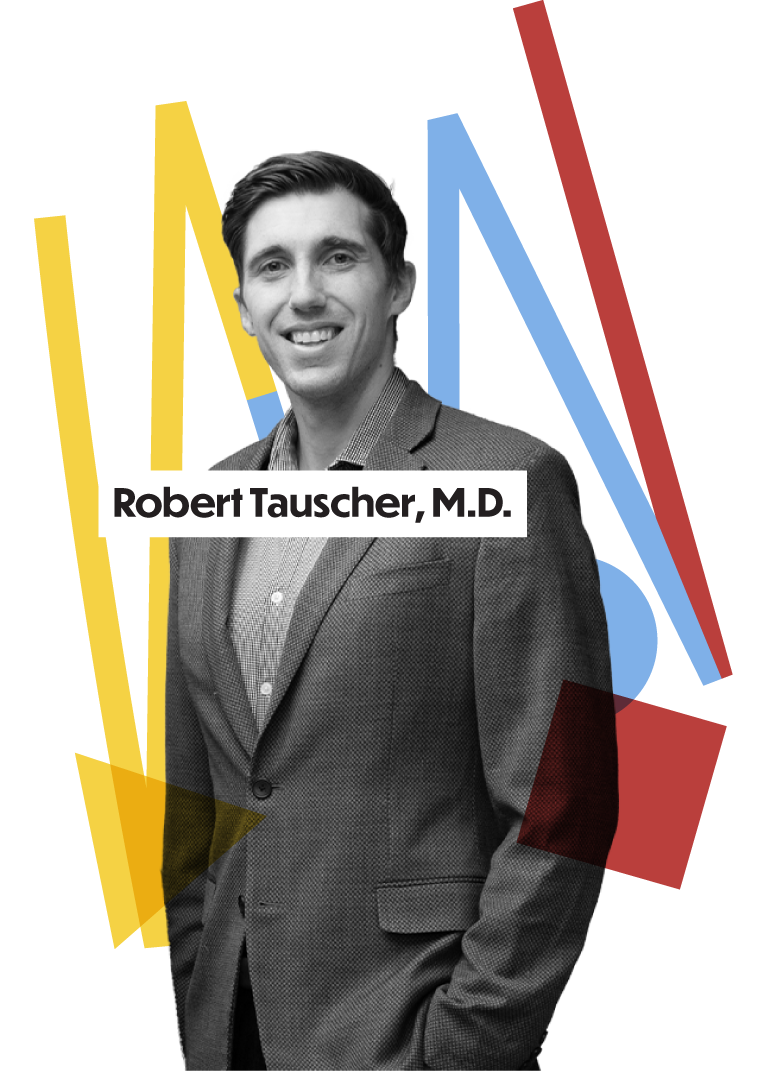
By the time Bicknell discovered his passion for ophthalmology, he had learned how to ask rigorous questions and manage complex projects. Working with Tauscher, Bicknell refined his focus and goals. Tauscher’s research spans medical education and pediatric neuro-ophthalmology, a field he pursued because of the complexity of neuro-ophthalmologic disease and the interplay between the brain and vision. That focus shaped his fellowship and current research.
“I remember when Brenton first reached out,” Tauscher said. “He didn’t just say he was interested. He came with a plan.” Under Tauscher’s mentorship, Bicknell contributed to projects examining pediatric ophthalmologic conditions.
Tauscher watched him transition from mentee to mentor as he took the lead on a project and invited other students to participate, sharing responsibility and fostering collaboration within the lab. The experience changed Bicknell’s perspective.
“It made me think differently about what I was capable of,” he said.
The work of mentorship
Cho, Tong, and Tauscher all view mentorship as central to academic medicine, and their work with Bicknell has influenced how they guide others. Cho focuses on fostering independence and resilience, giving students responsibility early while holding them to high standards. Over the years, he has learned that this approach not only helps students grow but also shapes how he mentors and conducts research.
 Tong sees mentorship as a two-way street. She invests carefully and notes that mentees often push mentors to think differently and discover new perspectives in research and patient care. She also believes that students benefit from having more than one mentor, each one offering guidance and perspectives in different areas of the specialty they are pursuing. Tauscher emphasizes that mentorship extends beyond day-to-day supervision. He believes in advocating for students even when they are not present, connecting them with opportunities, from research projects to scholarships.
For Bicknell, the experience of working with mentors has been as illuminating as the research itself. It taught him how to analyze data and design studies, but it also demonstrated how to guide others through uncertainty. As he begins ophthalmology residency at UAB in June 2026, Bicknell looks forward to continuing his clinical research, applying the same rigor and curiosity he developed in the lab. He is eager to pay forward the guidance he received throughout his medical school journey and to foster the next generation of physician-scientists.
Read more stories from UAB Medicine Magazine.