Low vision is a permanent visual impairment that interferes with a person’s ability to complete daily activities and cannot be corrected with prescription eyewear, medication or surgery.
We spoke with Dr. Brook Gibson, O.D., a low vision specialist at UAB Callahan Eye and the UAB Center for Low Vision Rehabilitation, about how patients can recognize and manage this condition.
What are the most common causes of low vision?
“In adults, age-related macular degeneration (AMD), glaucoma and diabetic retinopathy are among the leading causes of acquired low vision,” Gibson said. “Genetic conditions, retinopathy of prematurity (ROP) and cortical visual impairment (CVI) are some of the more common causes of low vision found in pediatric patients.”
People with low vision may struggle with reading fine print, distinguishing between similar colors or navigating unfamiliar environments. Adults older than 40 are at greater risk for acquired vision loss, which often progresses gradually.
“It is important to keep in mind that vision loss can occur at any age for a variety of reasons,” said Gibson. “Routine eye exams are key for early detection and prevention.”
UAB Callahan Eye is here for your eye needs. To schedule an appointment with Dr. Gibson or any of our providers, call or text 844-UAB-EYES or visit uabcallahaneye.org.
How is low vision managed?
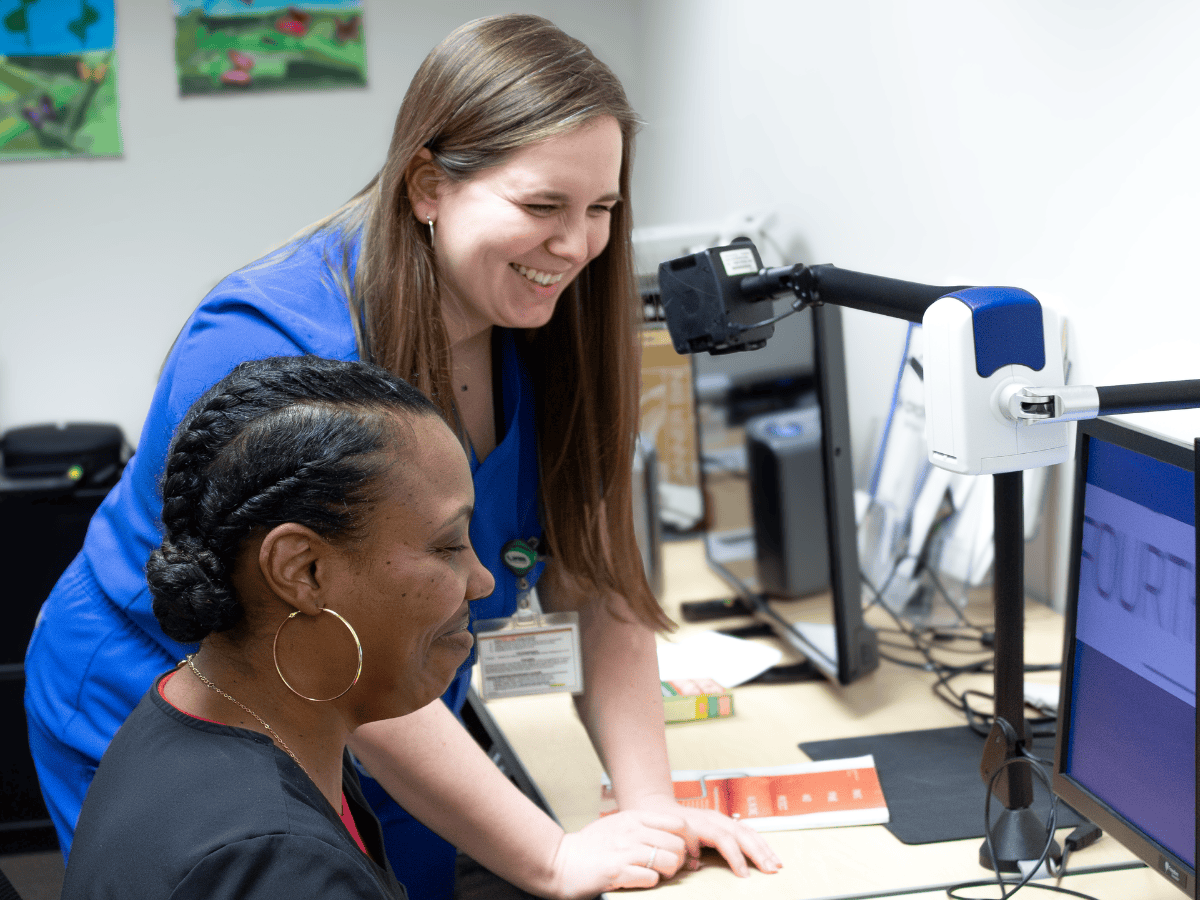
While low vision often cannot be reversed, rehabilitation and assistive devices can help patients maximize their remaining vision. Handheld or video magnifiers may assist with reading and detailed tasks, while telescopes and bioptic systems can improve distance viewing and, in some cases, driving.
Patients may also benefit from working with a certified orientation and mobility specialist, an occupational therapist trained in low vision rehabilitation or a teacher of the visually impaired.
How can patients stay proactive with low vision?
Routine eye exams are vital to recognizing and managing low vision.
“Any change or decrease in vision warrants a thorough eye exam. Early detection and adherence to care recommended by your doctor is necessary for preventing further vision loss,” Gibson said.
 Brook Gibson, O.D.About Dr. Brook Gibson
Brook Gibson, O.D., is an optometrist specializing in low vision rehabilitation and ocular disease management across all age groups.
She earned her Doctor of Optometry degree from the University of Alabama at Birmingham School of Optometry and completed a fellowship in ocular disease management and low vision rehabilitation with the UAB Department of Ophthalmology and Visual Sciences.
Her training included pediatric vision care, specialty contact lenses, neuro-optometry and low vision services.
Gibson is a member of the American Academy of Optometry, the American Optometric Association and the Alabama Optometric Association. She sees patients at UAB Callahan Eye’s downtown clinic locations, including Suite 601, Suite 711 and the UAB Center for Low Vision Rehabilitation.