The 2026 CHARM Hackathon brought together researchers, clinicians, and engineers for a weeklong intensive software development sprint focused on developing artificial intelligence tools to improve care for patients with rare and complex diseases.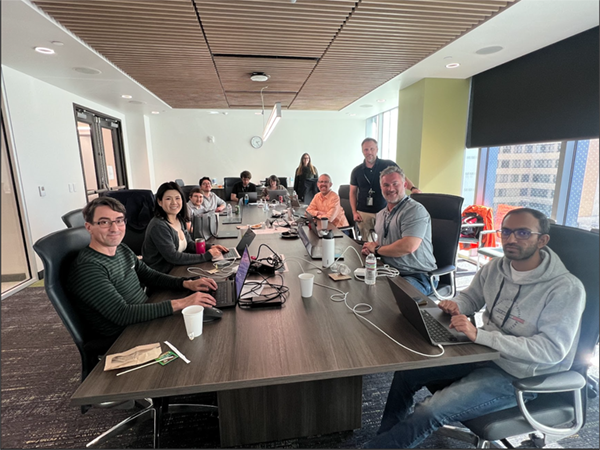
CHARM, which stands for “Collecting, Harmonizing, Analyzing, Reasoning about and Manipulating” biomedical data, is funded under the Advanced Research Projects for Health’s (ARPA-H) broader Biomedical Data Fabric program, with future expansion through the Pediatric Care Expansion initiative (PCX).
“The hackathon brought together 19 CHARM team members from UAB, Maastricht University, and the University of North Carolina to rapidly prototype AI-powered tools that help undiagnosed patients, rare disease patients, and pediatric cancer patients get faster, better answers,” said Matt Might, Ph.D., director of the Hugh Kaul Precision Medicine Institute.
Advancing solutions for complex patient care
The hackathon focused on five "ARPA-Hard" problems identified for PCX.
One key priority was unifying fragmented patient records into a single, comprehensive view — replacing the physical binders many families rely on to track years of medical history. Teams also worked to develop AI tools capable of interpreting incomplete or inconsistent clinical data, including genetic information.
Another focus was building systems to identify “patients like this” across institutions using privacy-preserving methods, as well as tools to match patients with clinical trials and emerging therapies. Participants also explored new ways to connect clinical care with ongoing research, enabling insights to move more seamlessly between the two.
A collaborative, fast-paced approach
The event was organized using an agile format designed to encourage rapid development and collaboration. The week began with brainstorming sessions and project assignments, followed by daily stand-ups and progress check-ins. Teams presented their final work at the end of the week.
Participants had access to shared computing infrastructure, including a dedicated server equipped with advanced AI coding tools, allowing teams to quickly prototype and refine their ideas. Daily social events also helped foster collaboration across institutions and disciplines.
Promising tools and future impact
Several projects demonstrated meaningful progress over the course of the week. These included an AI-powered tool for summarizing complex undiagnosed disease cases, a unified platform integrating multiple CHARM tools for clinical use, and new approaches to identifying similar patients based on clinical trajectories rather than diagnoses alone.
Other teams developed tools to extract standardized genetic and clinical features from unstructured medical records, as well as systems to improve patient matching for clinical trials. A mobile and web-based platform was also created to help collect and unify patient data across health systems.
The work produced during the hackathon highlights the growing potential of AI to address longstanding challenges in rare disease care. By bringing together diverse expertise, shared resources, and real patient data, participants were able to make rapid progress on tools designed to improve diagnosis, treatment, and outcomes.
These efforts are expected to contribute directly to ongoing federal initiatives, positioning several of the prototypes for future clinical implementation and broader impact.