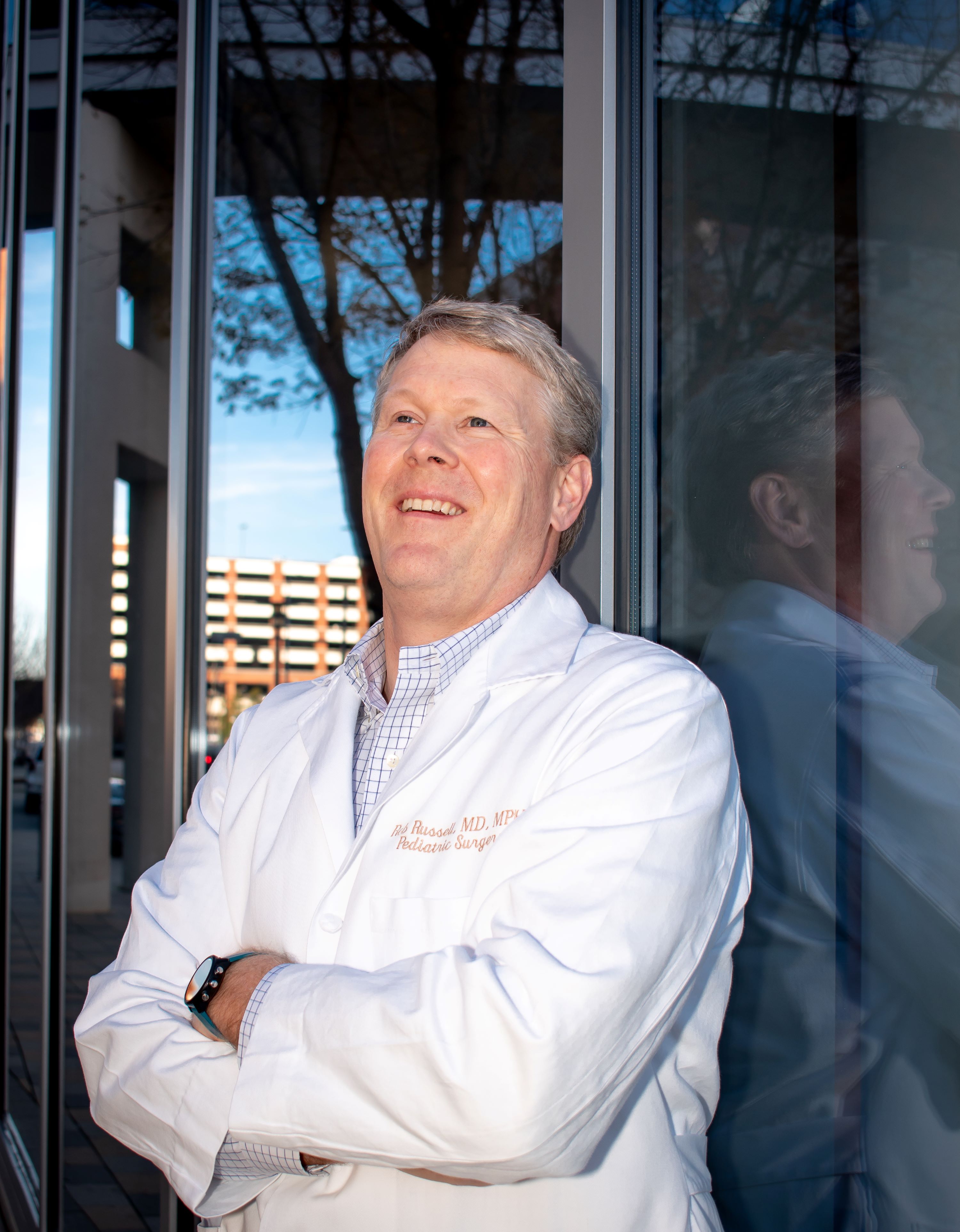
 As a pediatric surgeon and director of the Trauma Program at Children’s of Alabama, Robert Russell, M.D., MPH, cares for the youngest, smallest, and most innocent patients of Alabama.
A professor in the Division of Pediatric Surgery, he has been a faculty member at UAB since 2012. His research niche is pediatric trauma, and this year he joined the American College of Surgeons Committee on Trauma (COT), the preeminent group working on improving the care of injured patients globally.
Learn about Russell’s journey to becoming a pediatric surgeon, the cutting-edge research he’s leading, and why he loves his job.
Operating on children: the challenges and rewards
Russell’s path to becoming a pediatric surgeon started with his own family: his father and grandfather were both general surgeons. From a young age, Russell went on global medical volunteer trips and watched his dad operate, and he knew he wanted to be a proceduralist (“to see a problem and go in and try to fix things”).
As a surgical resident at Vanderbilt University, Russell was leaning towards transplantation as a specialty, but many of his mentors were pediatric surgeons. Being a general surgeon and having variety in cases was appealing to him: he says he rarely does the same type of operation in a single day.
In a week at Children’s, for example, Russell and his fellow pediatric surgeons could treat a premature baby’s intestinal blockage, perform an appendectomy on an 11-year-old, or help a 3-week-old baby feed again by fixing their hypertrophic pyloric stenosis, a muscle thickening of the outflow channel of the stomach leading to vomiting and an inability to gain weight.
Some cases are emergent, some urgent, and some elective. A pediatric general surgeon will handle a variety of operations, from routine general surgery cases to those resulting from birth defects or traumatic injuries.
He acknowledges there is an emotional weight to operating on children that illuminates the role as truly a professional calling.
“You have to enjoy not just being around children but their families too,” he explained. “I get asked a lot in the clinic, ‘What would you do if this was your child?’ You’re really helping the parents through this journey.”
Though it can be challenging and stressful to be a pediatric surgeon, Russell finds it extremely rewarding as well.
“Children are so resilient and heal so well,” Russell said. “They haven’t done any of the things to their bodies that adults may do, like smoking or drinking alcohol. A kid can be really injured, and in a couple of days they’re back running around, happy, and doing normal things.”
“Commander-in-chief” of the multidisciplinary team that cares for pediatric trauma patients
All general pediatric surgeons are pediatric trauma surgeons too.
Russell describes the role of pediatric surgeons and pediatric surgery fellows as a “commander-in-chief” of the multidisciplinary team that care for a single child with traumatic injuries. He says that while he and his colleagues don’t operate on trauma cases often, they are the ones guiding patients and their families through the hospital from admission to discharge.
When an injured child comes to Children’s, general pediatric surgeons coordinate with emergency department, critical care services, orthopaedic surgery, neurosurgery, and other needed services in addition to operating if necessary. They then oversee care for the child on a day-to-day basis for the rest of their stay and prepare them for discharge to home or to rehabilitation services if necessary.
Russell, who became the director of the pediatric trauma program at Children’s in 2013, says he appreciates building relationships with colleagues from many different specialties.
“I enjoy helping align all these services for the best possible holistic care of our trauma patients,” Russell said.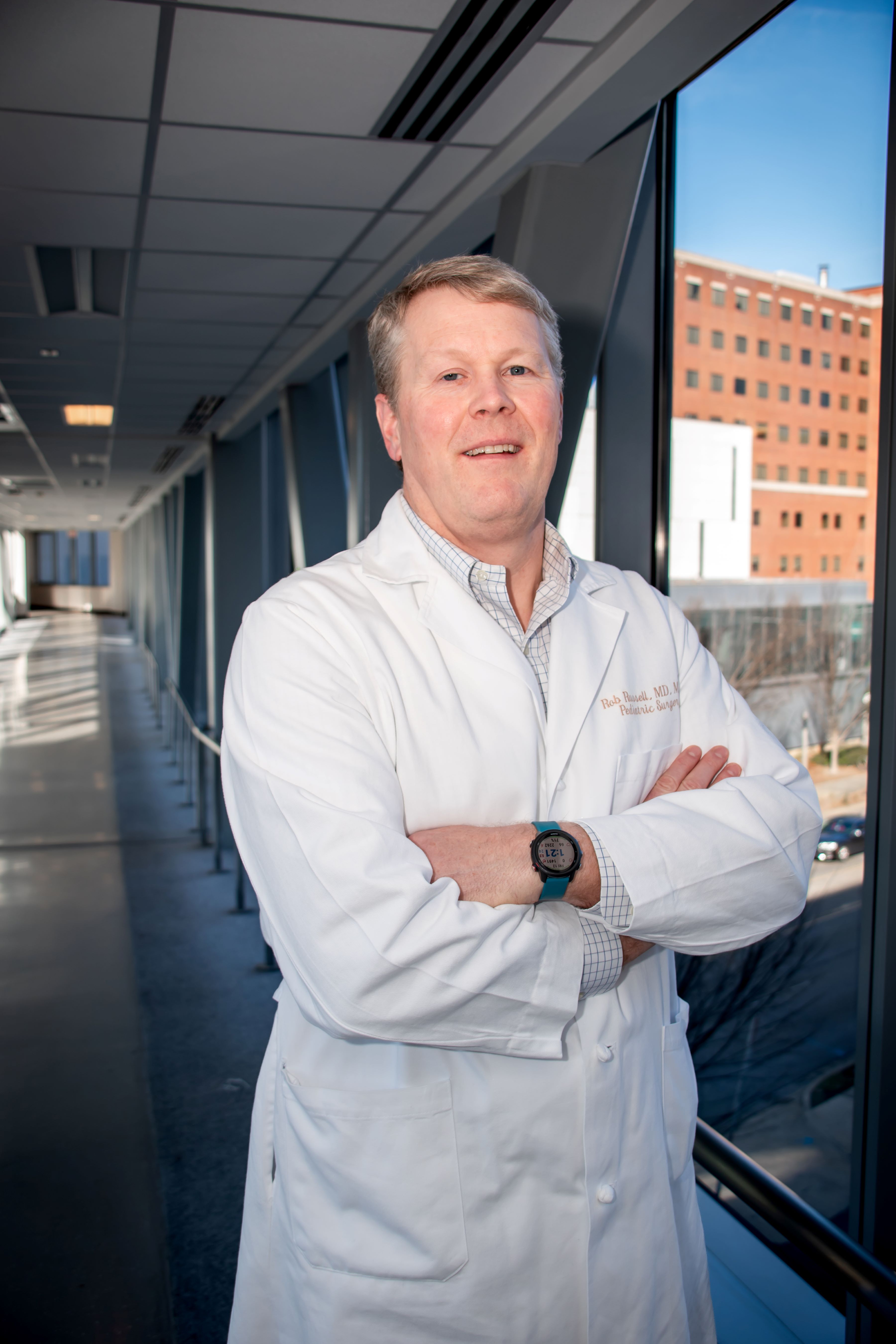
Future frontiers of pediatric trauma research
Russell has found his research focus in the narrow niche of pediatric trauma.
Over the past decade, Russell explains, there has been a national “frameshift” in pediatric trauma research. Research efforts used to be focused on single hospitals. Now, with research consortiums, researchers can combine experiences from many hospitals and look at a much larger group of patients, enhancing the quality of the data and ensuring that recommendations based on research will be applicable to more patients. UAB is a part of the A+ Pediatric Trauma Research Network consortium, which is comprised of over 20 hospitals: “We can put all our experience together to publish larger studies that are more meaningful,” Russell said.
Russell focuses specifically on pediatric trauma resuscitation - how to best care for a bleeding pediatric trauma patient. He examines what research says is best when it comes to resuscitation methods, IV fluids, different blood products, and use of resuscitation tools in the prehospital setting like prehospital blood and tourniquet use.
In 2022, Russell planned the Pediatric Traumatic Hemorrhagic Shock Consensus Conference to address these questions, and experts from across the country converged in Birmingham to come to a consensus. The conference panel held systematic reviews of the current literature, agreed on 21 recommendations, and published their proceedings.
The conference, Russell says, paved the way in the field for better aligning national clinical care practices for the pediatric patient in hemorrhagic shock, though it will take years to see some changes implemented. In addition, this conference highlighted important research gaps, which if addressed, will continue to guide evidenced-based decisions in the clinical care of these patients.
“This is why researchers do what they do, to change practice, to make it better,” Russell said. “This is really the fruit of your labor.”
Passionate about educating others in best practices, Russell, along with colleagues, led a new series for the Journal of Trauma and Acute Care Surgery with the publication of “Damage-control resuscitation in pediatric trauma: What you need to know” in 2023. Other issues Russell wants to tackle in the field of pediatric trauma include firearm injuries and how to prevent them on a local and national level, along with how upbringing, environment, and resources impact trauma care.
As a pediatric surgeon-member of the COT, Russell believes his purpose is to contribute in ways that help determine how pediatric trauma fits into the national landscape of trauma care. One priority of the COT is the “Pediatric Readiness Project.” Russell explains that 80% of children who go to an emergency room are seen at an emergency department that isn’t specifically oriented to take care of them.
“Our goal with this project is to ensure all hospitals in the nation have the equipment and wherewithal to take care of the pediatric patient, or at least initially until the patient can be transferred to a more specialized center,” Russell said.
UAB and Children’s: connected by a skybridge - and lots of support
When not caring for patients and families at Children’s, Russell is involved in educating the next generation of surgeons – residents and fellows within the UAB Department of Surgery. He says he’s grateful to have the research infrastructure support and faculty development opportunities that UAB and the department offer.
And above all, the culture of the Division of Pediatric Surgery is what drew him to UAB. This special culture has been cultivated by Mike Chen, M.D., MBA, director of the Division of Pediatric Surgery and surgeon-in-chief at Children’s, and his wife Elizabeth Beierle, M.D., the vice chair of faculty development and a professor in the Department of Surgery, and the surgical director of the Hepatobiliary Clinic at Children’s.
“Drs. Chen and Beierle are like second parents to me,” Russell said. “Our group doesn’t just take care of our patients – we take care of each other.”