Jacqueline Garonzik Wang, M.D., Ph.D., director of the UAB Division of Transplantation and co-director of the Comprehensive Transplant Institute, has recently been featured on UAB MedCast.
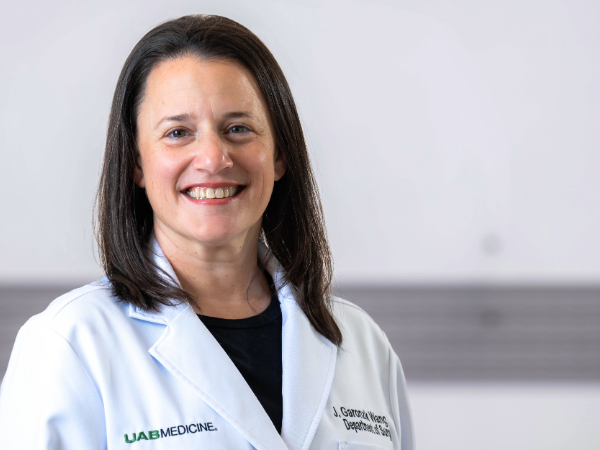 During the episode, Garonzik Wang discusses normothermic machine perfusion (NMP) as a tool to assess donor kidneys that might otherwise be declined and shares how this approach is helping UAB safely expand the pool of usable organs for patients on the transplant waiting list.
About the UAB Division of Transplantation and NMP
In the MedCast discussion, Garonzik Wang explains that about 100,000 people in the United States are currently on the kidney transplant waiting list, while only 20,000 to 30,000 kidney transplants are performed each year. She notes that in 2024, approximately 9,000 recovered kidneys went unused, often because of inefficiencies in the allocation system or uncertainty about whether an organ is suitable for transplant.
Garonzik Wang describes that NMP is a pump-based device that warms the donor kidney to near-physiologic temperature, allowing it to begin functioning outside the body. She clarifies that NMP gives transplant teams real-time functional data, such as how well the kidney metabolizes oxygen and produces urine, to guide transplant decisions.
Garonzik Wang also describes UAB's partnership with 34 Lives, a public benefit corporation based in West Lafayette, Indiana. Through this partnership, organ procurement organizations can refer organs to 34 Lives, where it is placed on NMP for two hours of functional assessment. The process gives affiliated centers, including UAB, information about how each kidney is performing, which supports a more informed transplant decision.
"This technology is really allowing us to rethink what we think the margins are for a suitable kidney and really expand the types of kidneys that we utilize, so that hopefully we can provide more transplants to more patients, both here at UAB and across the country," says Garonzik Wang.
Future Advancements through Organ Perfusion
Garonzik Wang shares that UAB began utilizing the NMP program in early February 2026 and has performed more than 20 cases in the two months since launch. She notes that the technology has also allowed the team to safely consider additional kidneys.
Garonzik Wang highlights that NMP may also improve early function in higher-risk kidneys, an area her team is continuing to study.
“To me, this symbolizes hope, the fact that we can get to our patients quicker, to decrease their waiting time to transplant them when they're healthier, potentially even before they go on to dialysis,” she adds.
To listen to the full episode, visit the UAB MedCast website.