A chance encounter - and a year of cafeteria dinners
Their love story began as it often does for two future doctors: in med school.
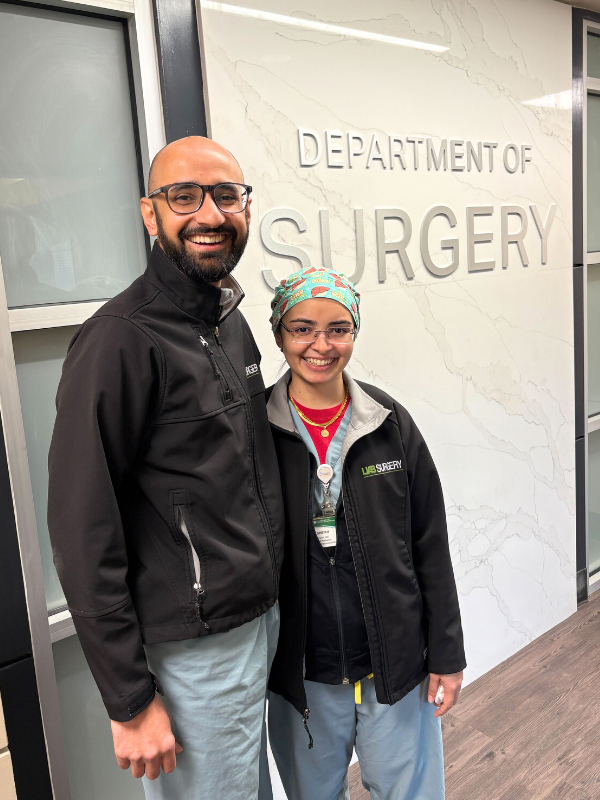
Zain Hashmi, M.D., assistant professor in the UAB Division of Trauma and Acute Care Surgery, and Saulat Sheikh, MBBS, an assistant professor in the UAB Division of Transplantation, met in 2010 at a going away party for a mutual friend. Though they had both attended Aga Khan University Medical College in Karachi, Pakistan for several years at that point, they had never been introduced. Hashmi, however, was familiar with Sheikh’s reputation.
“I was aware of her because she was always on the medical school notice board for her academic accomplishments,” he says.
Meanwhile, Sheikh says: “I didn’t even know he existed.”
Sheikh says she was regimented in med school: studying, working out, and having a quick dinner, usually by herself. However, after connecting at their friend’s party, she looked forward to having occasional dinners with her group of friends, which happened to include Hashmi. And, at the end of most meals, Sheikh would “offer” to eat Hashmi’s dessert – a tradition that continues.
These encounters went on for nearly a year until Sheikh was about to graduate, leave Pakistan, go home to her family in Saudi Arabia, and start her surgical residency in the U.S.
A proposal at the eleventh hour
It was the night before her flight. Sheikh was set to fly home at 3 a.m. the following morning. While packing her bags that evening, just six hours before her flight out of Pakistan, Hashmi stopped by, and cut right to the chase.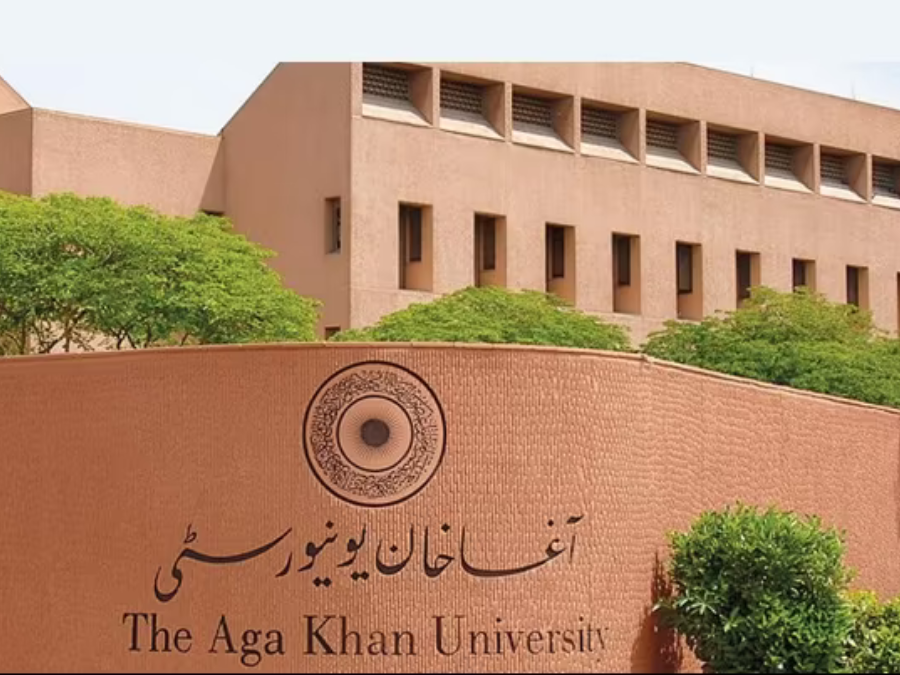
“I think we get along really well,” Hashmi told her. “We should consider getting married.”
Sheikh’s initial reaction: "Really - Is this what a romantic proposal looks like?"
“But upon reflection, I realized yes, we do get along, and we are really good friends, otherwise I would not have given him a moment of my time,” she says.
Their compatibility made them connect easily. They were both driven and ambitious when it came to their career goals. Their personal views aligned well, too, including how they wanted to practice their faith and their moral values.
Though Hashmi says he approached the topic of marriage “pragmatically” and “rationally,” he admits that “the underlying emotion is a feeling that can’t be rationalized.” In other words, he liked her.
With Sheikh about to go to Saudi Arabia, then the U.S. for residency, and with Hashmi studying for his boards, a decision was reached: to defer making a decision.
They would still have many miles to go, literally, on the road to their future happiness together.
A summer of suitors
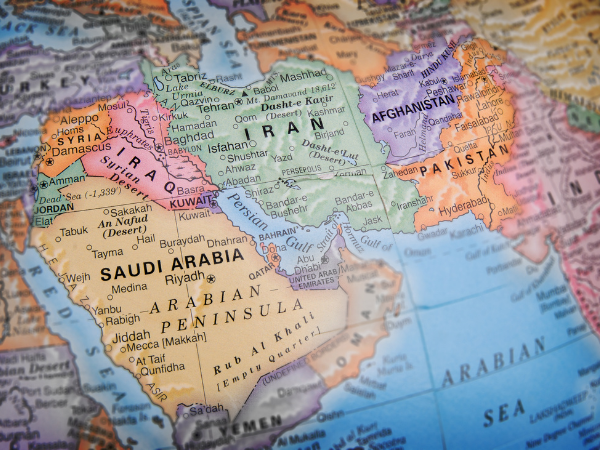 Now in different countries, there was a new test of fate for the young couple: traditional matchmaking.
While Sheikh was in medical school, her parents had been fielding proposals for Sheikh’s hand-in-marriage and deferring potential suitors for her to meet until after graduation. It was now time for Sheikh to head home for the obligatory meetings with potential candidates and their families over tea in order to find a suitable husband before leaving for her surgical residency.
She hadn’t agreed to marry Hashmi, but she hadn’t turned him down either.
“I wondered, how am I going to tell my dad that I met somebody who has asked me to marry him when I needed to go meet x, y, and z people and make a pros and cons list to figure out who I’m going to marry?”
Her parents picked her up from the airport, and her dad stopped for gasoline on the drive home.
“I was sitting in the backseat and I said, mom, I need to tell you something,” Sheikh remembers.
Her mom immediately replied: “Does this have anything to do with that friend of yours, Zain?”
“How did you know?” said a surprised Sheikh, who spoke on the phone with her mom multiple times a day, every day, in medical school.
“I was just telling your dad that I think that guy has something on his mind,” her mom replied. “What are we going to do now?” Sheikh asked.
“Well, we should meet him,” her mom said.
Easier said than done.
The following month, Sheikh dutifully went ahead with the prearranged meetings with potential suitors and their families. Ultimately, nothing came of it because, as Sheikh says, there was a “new player in the game.”
“A disruption, a total disruption” Hashmi adds with a smile.
The long-distance years
The next year and half tested the relationship even further with the couple being in their busy training years in the United States. Sheikh was in her prelim year at Providence Hospital in Southfield, Michigan and Hashmi was at Johns Hopkins Hospital, Baltimore doing a research fellowship.
And yet, the connection remained, with intermittent texting and phone calls.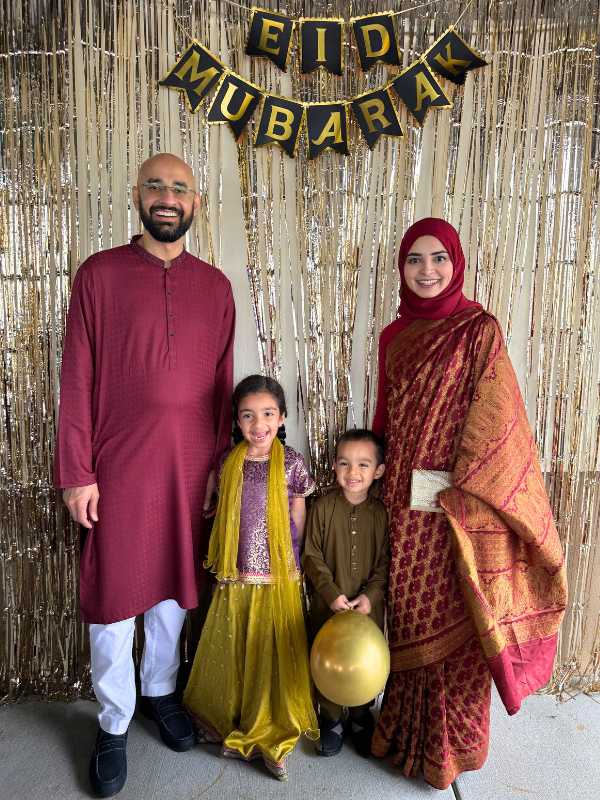
Finally, a pivotal and necessary moment took place: Sheikh’s family met Hashmi’s family at Hashmi’s brother’s wedding in December 2012. In January 2013, a Skype call between Sheikh and Hashmi made their engagement official. (Hashmi jokes this was the beginning of his interest in teletrauma.)
By the time they finally got married in 2014, Sheikh was in El Paso continuing her residency at Texas Tech University and Hashmi was starting his residency in Baltimore. They met in Houston to fly back together to Pakistan for their wedding. Having spent the two permissible weeks of vacation getting married, they deferred their honeymoon and returned to their busy surgical residencies 2,000 miles apart.
Sheikh’s next move, to finish residency training at York Hospital in Pennsylvania, brought her within an hour’s drive to her husband. It was during this time the couple had their first child.
More than a decade after they first met, the couple were finally reunited in Birmingham, Alabama. Hashmi completed the Trauma and Surgical Critical Care Fellowship, Sheikh completed the Abdominal Transplant Fellowship Program, and they were both hired as faculty in the UAB Department of Surgery. Last year, Hashmi and Sheikh even ended up in the same building, with their offices just down the hall from each other.
“We were in different countries, then in different states, and now we’re on the same office floor. It only took fifteen years,” Sheikh jokes.
How a transplant surgeon and a trauma surgeon balance work and family life
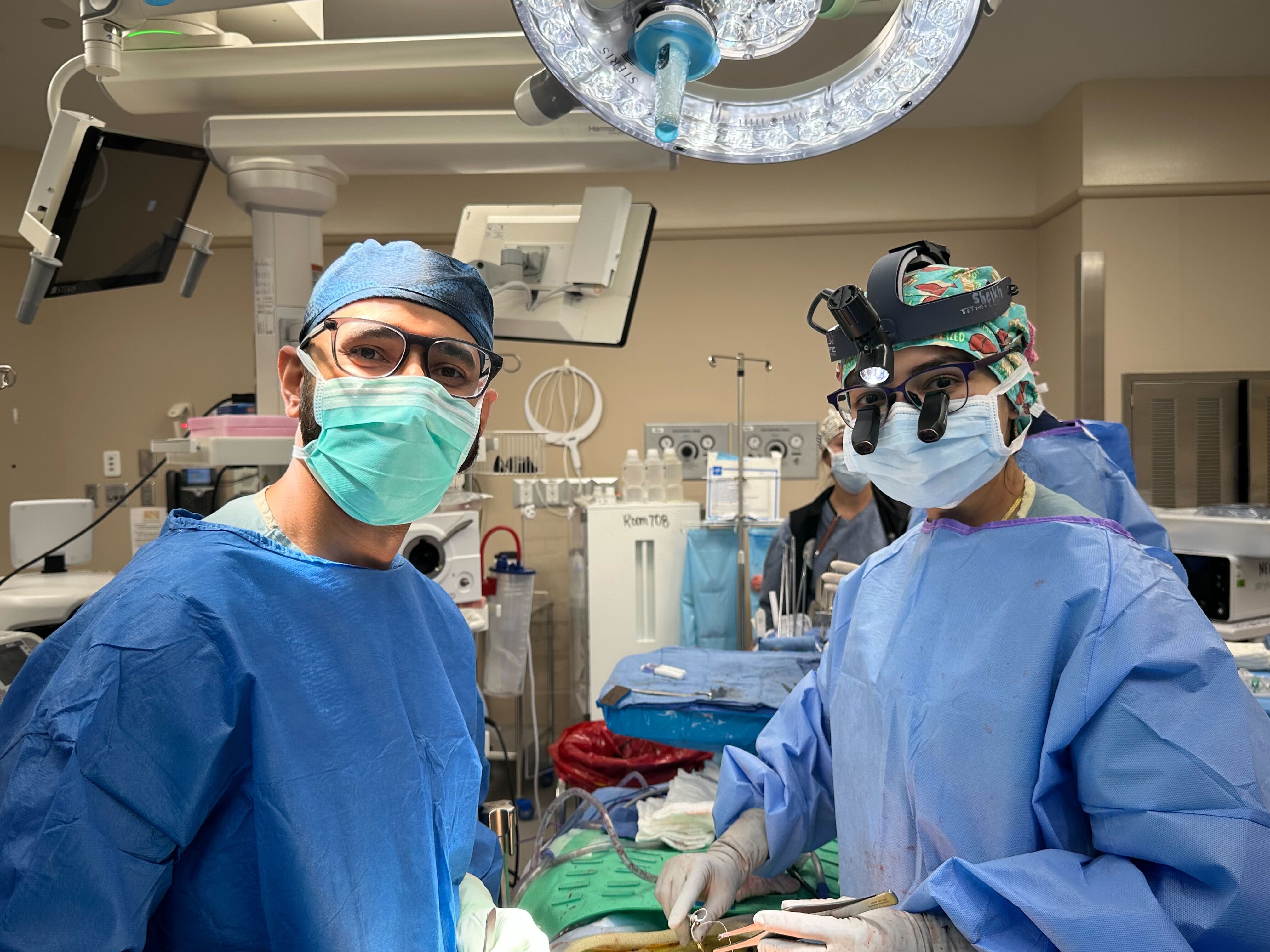 Hashmi and Sheikh are both in high-intensity surgical specialties with two young children. For a marriage to remain strong, Hashmi and Sheikh say trust, communication, and delegation are key.
“We trust each other to know that we are both doing the best that we can for our patients as well as our family,” Sheikh said.
Because much of their time is dedicated to work or work-adjacent activities, the couple says they are very protective of their family time.
“It is okay for you not to do everything, because saying yes to one thing means saying no to something else,” Sheikh said. “Thankfully, we both agree on what we’re going to say yes to.”
After a decade of training, courtship, and long-distance marriage, the couple has now been settled in Birmingham since 2020, where they have since had their second child.
When asked what they love most about UAB, they both replied:
“That we are together.”