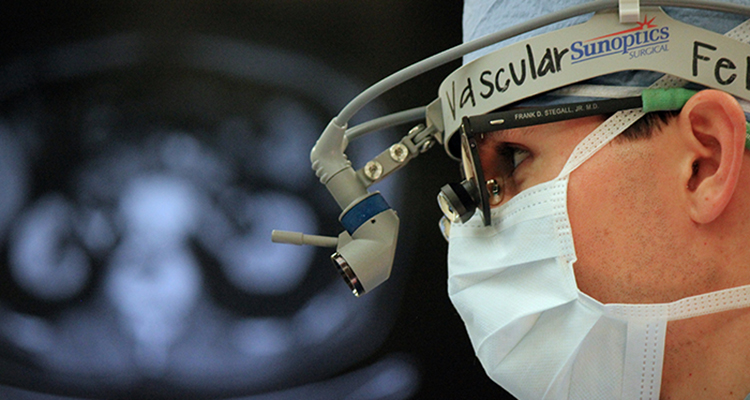
UAB Division of Vascular Surgery and Endovascular Therapy The UAB Division of Vascular Surgery and Endovascular Therapy is a comprehensive academic vascular program providing multidisciplinary care for the full spectrum of arterial and venous disease. Our faculty combine open, endovascular, and hybrid approaches to treat complex aortic disease, peripheral arterial disease, cerebrovascular and mesenteric disease, limb-threatening ischemia, and venous disorders. The program brings together vascular surgeons, podiatrists, wound-care specialists, and other medical and surgical colleagues to provide individualized care for patients with complex vascular conditions.
- Complex Aortic Disease: The division provides open, endovascular, and hybrid treatment for aortic aneurysms, dissections, and other complex aortic pathologies across the aortic spectrum. Faculty have particular expertise in advanced endovascular repair, including patient-specific branched and fenestrated endografts, as well as multidisciplinary management of patients requiring complex aortic intervention.
- Peripheral Arterial Disease and Limb Preservation: The division treats peripheral artery disease, carotid and mesenteric disease, lower-extremity arterial occlusive disease, and other conditions that threaten blood flow to the limbs and organs. The Advanced Limb Preservation Clinic combines vascular reconstruction, endovascular therapy, podiatric expertise, and wound management to treat diabetic foot disease and limb-threatening ischemia, restore perfusion, reduce amputation risk, and improve quality of life.
- Venous Disease: The UAB Comprehensive Vein Program and UAB Vein Clinic at UAB Hospital - Highlands provide evaluation and treatment for the full range of venous disease, from varicose veins and cosmetic concerns to deep vein thrombosis, chronic venous insufficiency, venous ulcers, and pelvic venous disorders. Patients receive coordinated, patient-centered care using contemporary imaging and minimally invasive treatment options.
- Research and Education: The division’s academic programs span clinical trials, registry and health-services research, device innovation, translational vascular biology, and basic science. Through an integrated vascular surgery residency and a two-year vascular surgery fellowship, trainees develop the clinical, operative, research, and leadership skills needed to advance the field.