Key Insights
- The new facility significantly expands UAB’s research capacity, reinforcing its role as a leading engine of discovery and health advancement for Alabama and beyond.
- UAB officially opened the Shelby Biosciences Research Building on Tuesday, October 20.
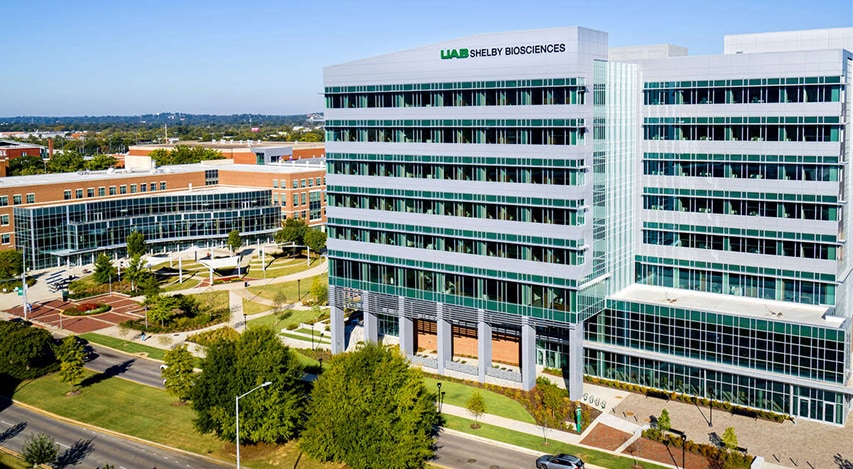
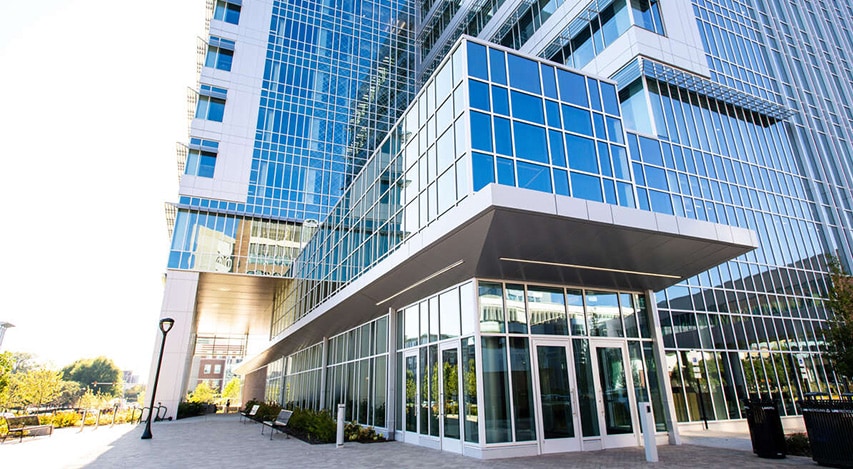
- The eight-story, 228,735-square-foot facility expands biomedical, behavioral and clinical research capacity.
- The $192 million project includes $152 million in federal funding secured through the leadership of former U.S. Senator Richard Shelby and $20 million appropriated by the Alabama Legislature.
- The building supports research in cancer, neuroscience, mental health, aging, chronic disease, precision medicine and artificial intelligence-enabled health care.
- The facility will allow UAB to recruit additional researchers and expand federally funded research programs.


-
The new facility significantly expands UAB’s research capacity, reinforcing its role as a leading engine of discovery and health advancement for Alabama and beyond.
-
The new facility significantly expands UAB’s research capacity, reinforcing its role as a leading engine of discovery and health advancement for Alabama and beyond.
-
The new facility significantly expands UAB’s research capacity, reinforcing its role as a leading engine of discovery and health advancement for Alabama and beyond.
-
The new facility significantly expands UAB’s research capacity, reinforcing its role as a leading engine of discovery and health advancement for Alabama and beyond.
-
The new facility significantly expands UAB’s research capacity, reinforcing its role as a leading engine of discovery and health advancement for Alabama and beyond.
-
The new facility significantly expands UAB’s research capacity, reinforcing its role as a leading engine of discovery and health advancement for Alabama and beyond.
-
The new facility significantly expands UAB’s research capacity, reinforcing its role as a leading engine of discovery and health advancement for Alabama and beyond.
-
The new facility significantly expands UAB’s research capacity, reinforcing its role as a leading engine of discovery and health advancement for Alabama and beyond.
-
The new facility significantly expands UAB’s research capacity, reinforcing its role as a leading engine of discovery and health advancement for Alabama and beyond.
-
The new facility significantly expands UAB’s research capacity, reinforcing its role as a leading engine of discovery and health advancement for Alabama and beyond.
The University of Alabama at Birmingham today officially opened the Shelby Biosciences Research Building at UAB, a transformative eight-story research facility that significantly expands UAB’s capacity to drive discovery and innovation and impact human health across Alabama and beyond.
The $192 million facility — supported by $152 million in federal funding secured through the leadership of retired U.S. Senator Richard Shelby when he was in office, along with $20 million appropriated by the Alabama legislature — represents a significant investment in UAB’s research enterprise and underscores the university’s continued rise as a national leader in biomedical and behavioral research. Completed nine months ahead of schedule, the project reflects strong stewardship of federal and state funds while delivering critical infrastructure that advances health, improves quality of life and supports economic development.
The building brings together research-intensive faculty from UAB’s Marnix E. Heersink School of Medicine and the Department of Psychology in the College of Arts and Sciences, creating a highly collaborative environment designed to accelerate scientific breakthroughs. The opening was commemorated with a ribbon-cutting celebration attended by university leaders, elected officials, faculty, staff and community partners who played key roles in bringing the project to fruition.
“This building, and the discoveries and knowledge it will foster, represent what is possible when higher education institutions work in concert with elected leaders with a shared commitment to improving and saving lives,” said UAB President Ray Watts. “Thanks to the unwavering support of Senator Richard Shelby and Governor Kay Ivey, along with leadership from the Alabama house and senate, UAB is able to expand research that directly improves the health and well-being of the people of Alabama and far beyond. This facility strengthens our ability to make transformational, positive differences in more lives.”
Purpose-built for interdisciplinary discovery
The Shelby Biosciences Research Building is designed to accelerate research in many of the most important areas of modern medicine, including cancer, neuroscience, mental health, aging, chronic disease, precision medicine and emerging data-driven approaches to health care. By bringing together biomedical scientists, behavioral researchers and clinical investigators in a collaborative environment, the facility strengthens UAB's ability to translate laboratory discoveries into new diagnostics, therapies and prevention strategies that improve patient outcomes. The building also enhances opportunities for innovation in artificial intelligence-enabled research, advanced biomedical technologies, clinical trials and population health, positioning UAB as a national leader in addressing some of the most pressing health challenges facing Alabama, the United States and the world.
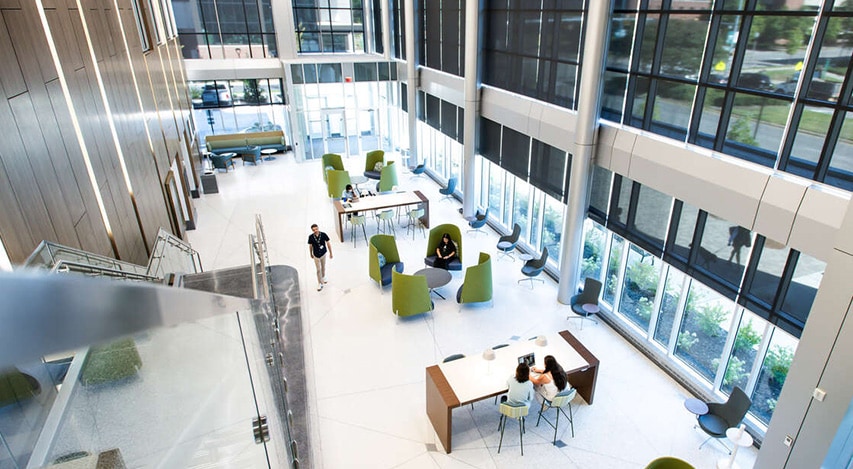
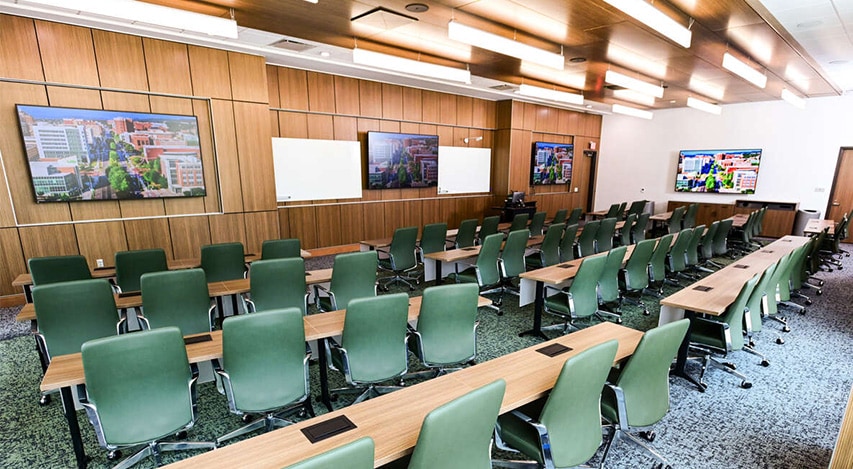
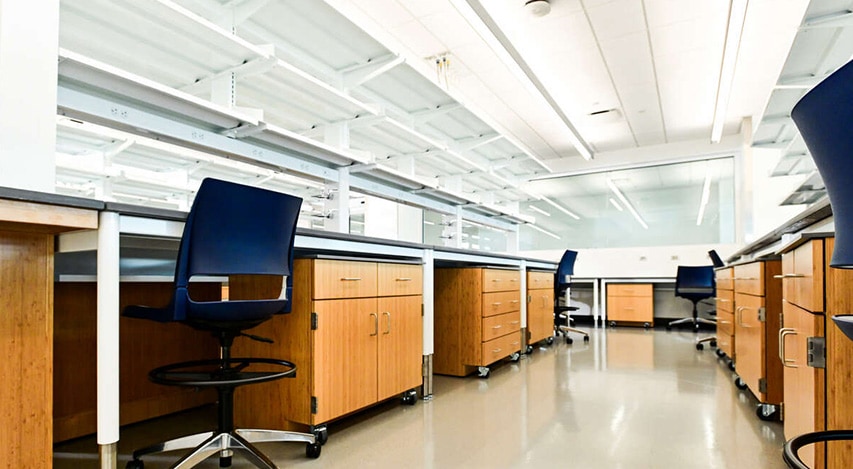
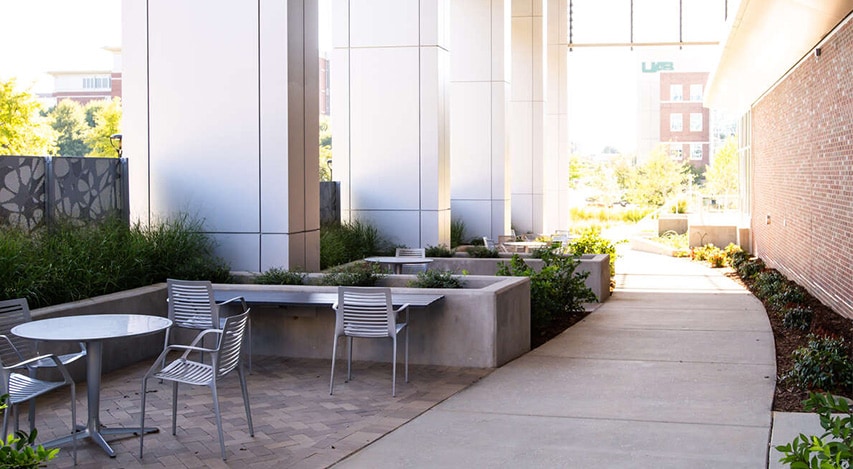
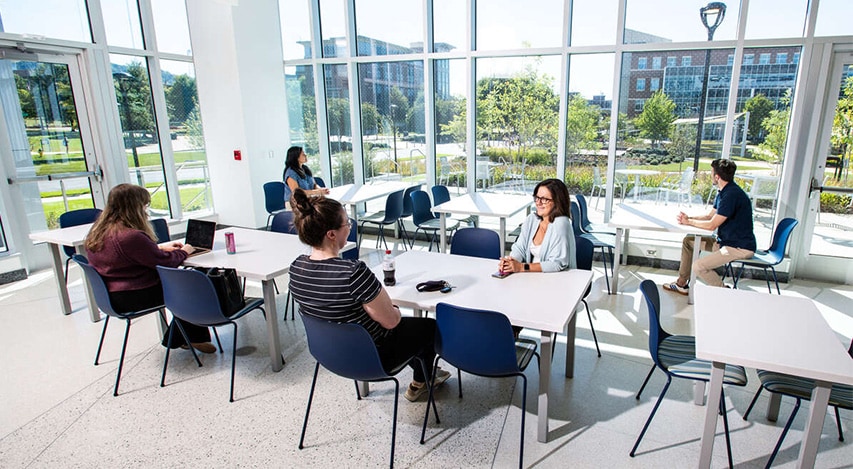
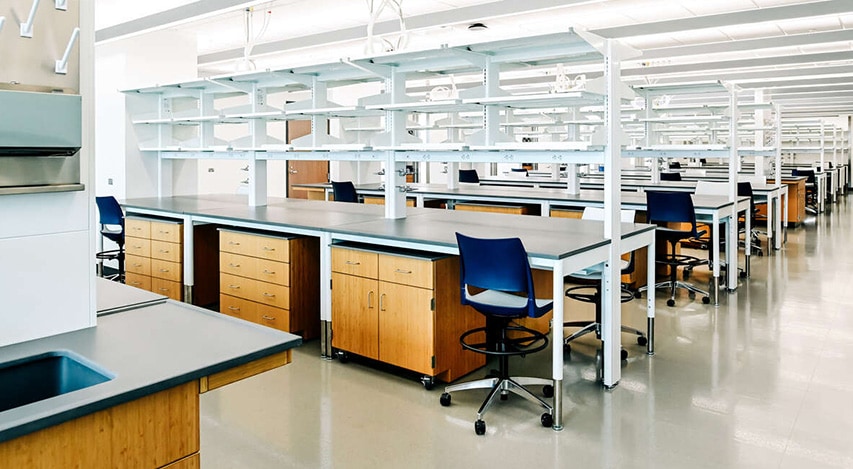
The 228,735-square-foot Shelby Biosciences Research Building includes state-of-the-art wet and dry laboratories, shared research cores, and flexible collaboration spaces that support team science across disciplines. The design emphasizes adaptability — allowing investigators from different fields to evolve their research programs as scientific priorities change — while encouraging daily interaction among researchers, trainees and students.
The facility plays a critical role in advancing UAB’s mission to enrich society and improve health and well-being through transformational educational experiences, groundbreaking research, innovation and entrepreneurship, community engagement, and world-class patient care.
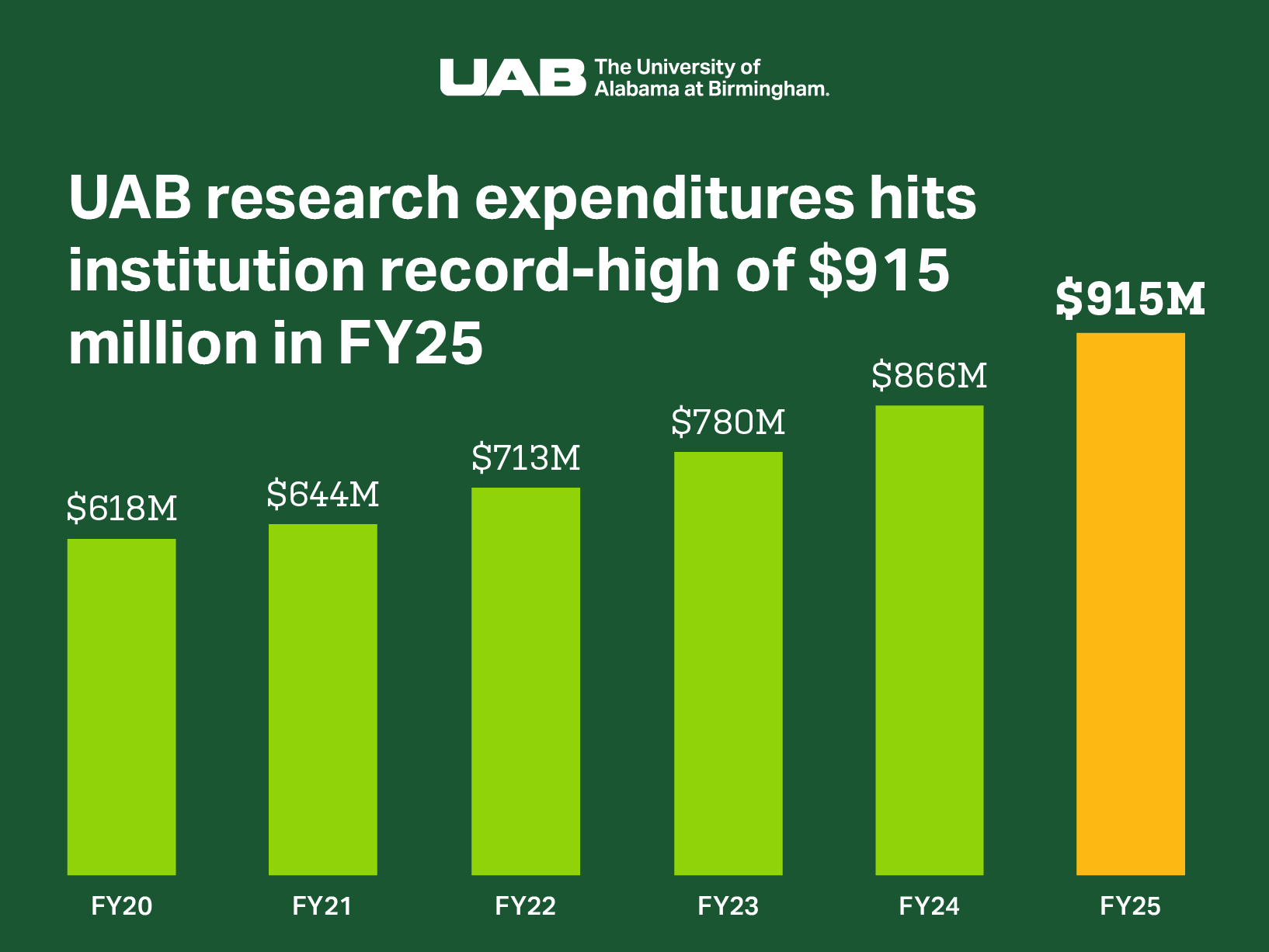 The eight-story, 228,735-square-foot facility expands biomedical, behavioral and clinical research capacity.UAB’s research enterprise has grown dramatically in Watts’ 12-plus years serving as president, with annual research expenditures growing from less than $400 million to more than $900 million a year. Strategic investments in infrastructure — like the Shelby Biosciences Research Building and the Altec Styslinger Genomic Medicine and Data Sciences Building, which opened in 2025 — are key to sustaining that momentum that translates into improving and saving lives.
“This new space dramatically expands our ability to recruit top scientific talent, support complex research programs and pursue discoveries that improve human health,” said Anupam Agarwal, M.D., senior vice president for Medicine and dean of the Heersink School of Medicine. “This building significantly increases the ability of our talented faculty, staff, students and trainees to tackle some of the most pressing biomedical challenges of our time.”
A home for advancing behavioral and psychological science
The Shelby Biosciences Research Building provides a new home for UAB’s research‑intensive Department of Psychology, strengthening the university’s ability to integrate behavioral science with biomedical research, education and patient care.
UAB’s Department of Psychology contributes to the university’s nationally recognized research profile, with faculty engaged in federally funded research that supports the institution’s standing as one of the nation’s most research‑active public universities. UAB ranks among the top 6 percent of institutions worldwide and is the highest‑ranked university in Alabama in the 2024–25 U.S. News & World Report Best Global Universities rankings, and it ranked No. 137 in TIME’s World’s Top Universities of 2026 — assessments driven largely by research output, citations, international impact, academic capacity and performance, and innovation and economic impact. Within this environment, psychology faculty play a vital role in interdisciplinary research that advances understanding of behavior, brain function and mental health — work that will be further fueled by the collaborative design of the new building.
“Under the leadership of Chair Christopher Henrich, our Department of Psychology is uniquely positioned to leverage this building to expand research in areas that influence health, learning and behavior,” said Yogesh Vohra, Ph.D., interim dean of the College of Arts and Sciences. “This facility, in close proximity to various deparments, enhances collaboration across disciplines and elevates the role of psychological science in addressing complex societal challenges.”
The department’s work contributes to UAB’s strength in federally funded research. UAB consistently ranks among the top 30 institutions nationwide and among the top public universities in total funding from the National Institutes of Health, receiving more than $330 million in NIH support annually and nearly $1 billion since 2020. Psychology faculty’s contributions to NIH‑funded research spans neuroscience, behavioral and mental health, aging, and population health — research areas that stand to grow in scale, collaboration and impact within the new facility.
Federal leadership and lasting legacy
Funding for the project reflects the longstanding leadership of retired U.S. Senator Richard Shelby, whose efforts for decades have helped secure significant federal investments in research infrastructure at UAB and across Alabama.
“UAB continues to consistently demonstrate that strategic federal investments in research generate undeniable returns for humankind,” Shelby said. “I am confident the discoveries made in the Shelby Biosciences Research Building will deliver lasting benefits for generations to come.”
The $152 million secured by Shelby in support of the project is from the Health Resources and Services Administration of the U.S. Department of Health and Human Services.
“Senator Shelby understands that biomedical research is not only about science — it’s about opportunity, economic growth, healthier communities and improving people’s lives,” Watts said. “This building stands as part of his legacy, and it underscores why UAB remains Alabama’s most powerful engine for innovation and impact.”
University of Alabama System’s commitment to Alabamians
University of Alabama System Chancellor Sid Trant noted the building’s significance not only for UAB, but for the entire state.
“We are deeply grateful to Senator Shelby for his leadership, vision and strong support for higher education,” Trant said. “The University of Alabama System is proud that UAB continues to advance research and discovery that improves the lives of Alabamians and strengthens our state’s national standing.”
UAB plays a critical role in advancing the system’s mission to serve the people of Alabama through education, research and service. Investments in research infrastructure across the UA System strengthen the state’s workforce, drive economic development, and expand access to innovations that improve health and quality of life in communities throughout Alabama.
“UAB’s unprecedented growth and impact over the last decade have been made possible by President Watts’ inspired leadership and the unwavering, visionary support of the UA System Board of Trustees and our colleagues in the UA System Office,” said Janet Woodruff-Borden, Ph.D., UAB provost and senior vice president for Academic Affairs and a clinical psychologist. “And the positive impact of that leadership has been multiplied exponentially because of the trust and faith our elected leaders have demonstrated in investing strategically in UAB.”
Gateway to the future
As researchers begin work inside the Shelby Biosciences Research Building, UAB leaders say the facility represents more than bricks and mortar — it is a catalyst for discovery, collaboration and transformation, as committed people work to make others’ lives better.
“Our greatest asset at UAB is our people,” Watts said. “I have full faith that the extraordinary scientists, educators and trainees who will work in this building will leverage this space to ask bold questions, pursue innovative solutions, and deliver discoveries that make a meaningful difference in the lives of people across Alabama and around the world.
“The opening represents both the culmination of years of careful planning and partnership and the start of a new chapter that positions UAB to continue advancing knowledge, improving health outcomes, and serving as a cornerstone of progress for Alabama and the nation.”
Shelby Biosciences Research Building: By the Numbers
- $192 million total project cost
- $152 million in federal funding
- $20 million in special state funding
- 8 stories
- 228,735 square feet of research and support space
- 2 academic units housed:
- Marnix E. Heersink School of Medicine
- Department of Psychology, College of Arts and Sciences
- 80 additional researchers UAB can recruit with this space
- Dozens of wet and dry laboratories and shared research spaces
- Hundreds of faculty, staff, trainees and students supported daily
- 1 goal: Advance discovery, collaboration and health outcomes for Alabama and beyond
Brasfield & Gorrie was the successful low bidder and was selected as lead contractor for the Shelby Biosciences Research Building at UAB through the competitive process in accordance with Alabama law.