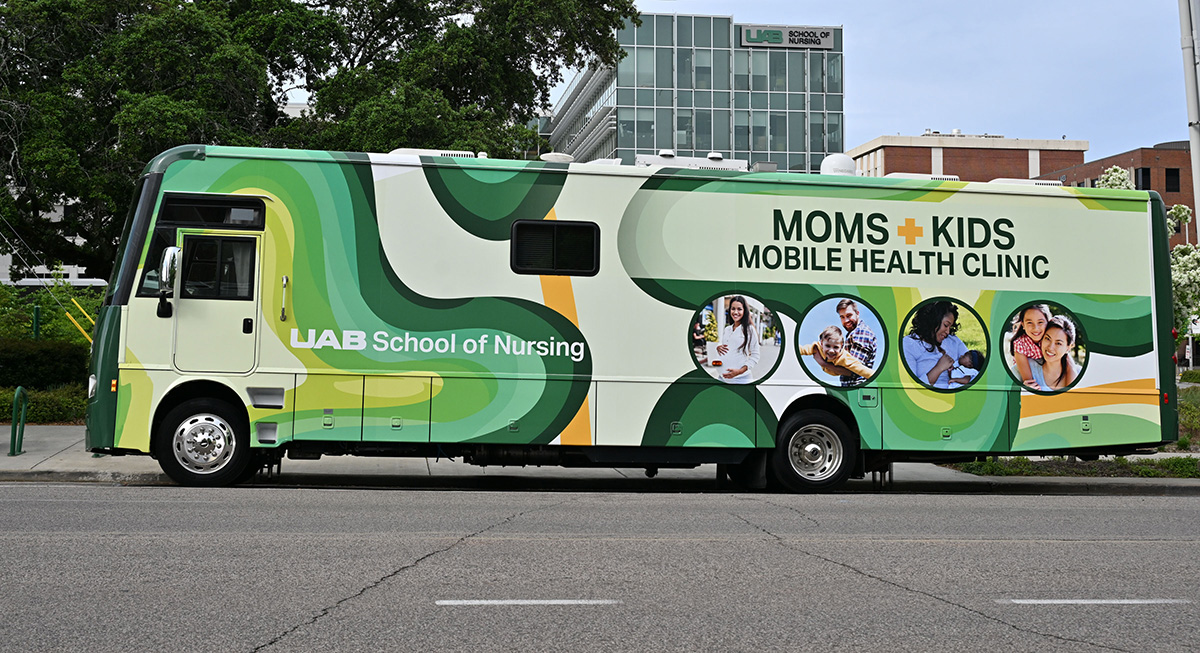
Limited access to care, workforce shortages and transportation barriers increase maternal, infant and child health and mortality risks for many rural Alabama families. A new nurse-led Moms and Kids Mobile Health Clinic, launched by the University of Alabama at Birmingham School of Nursing, is bridging that gap by meeting patients where they are.
The RV-based traveling care model, led by Michele Talley, Ph.D., professor and associate dean for Clinical and Global Partnerships at the School of Nursing, provides health care services for women and children, including prenatal, pregnancy and postpartum care for moms, pediatric care for infants and children, and behavioral health services for families.
“We want to decrease the distance women and children have to travel to receive health care,” Talley said. “Healthy moms are more likely to have healthy babies, and we’re committed to improving care access for those in need. With many rural labor and delivery units closing, women have to drive farther to give birth, causing increased unplanned out-of-hospital births that pose serious risks to both mother and baby. Many Alabama counties also face a shortage of primary care providers, critical for wellness checks and pediatric care. These conditions strain the health care system and lead to longer hospital stays, complex care needs and delays in care. We want to change that.”
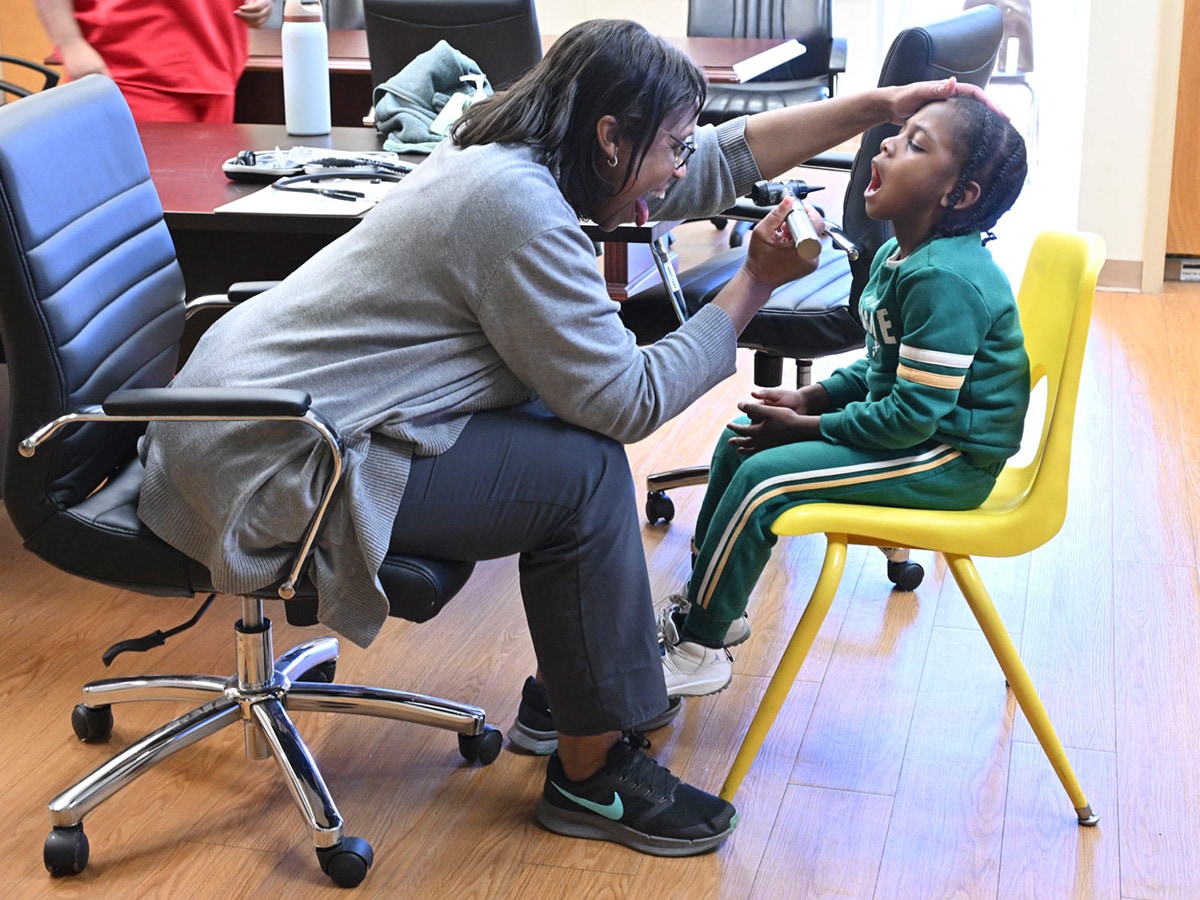 Moms and Kids Mobile Health Clinic at Headstart in Linden, Alabama.The mobile clinic is staffed by a full-time pediatric nurse practitioner, nurse and nurse informatician. The informatician supports health record management and facilitates coordinating referrals and communicating with rural hospitals, physicians and other providers, ensuring consistent care.
“Referrals from community physicians, rural hospitals and others play a crucial role in expanding the clinic’s outreach and identifying and connecting patients who can benefit from the mobile health clinic’s services,” Talley said.
The care team includes a certified nurse-midwife, known as a CNM, and a social worker provided by the Nurse-Family Partnership® of Greater Alabama.
Beyond clinical care, the mobile clinic provides training for nursing students, developing them into skilled professionals. Pediatric nurse practitioner and nurse-midwifery students participate in providing care under the guidance of a nurse practitioner and a nurse-midwife. Bachelor of Science in Nursing students gain hands-on experience by working in the mobile clinic, while Doctor of Nursing Practice students focus on quality improvement initiatives.
“This initiative helps us strengthen maternal, infant and child health outcomes across Alabama, fulfilling the missions of both the School of Nursing and UAB,” said Maria R. Shirey, Ph.D., dean and Fay B. Ireland Endowed Chair. “It allows us to meet the needs of mothers, babies and children in our communities while providing exceptional learning opportunities for our health care workforce.”
“Our goals are not to take patients away from their homes and to be a resource for patients and our health care colleagues to help all Alabamians receive quality care, especially our vulnerable rural communities,” Talley said. “As nurses, we are called to help people, and it is important to us that we reach out to those who need us most and help in the best way we can.”
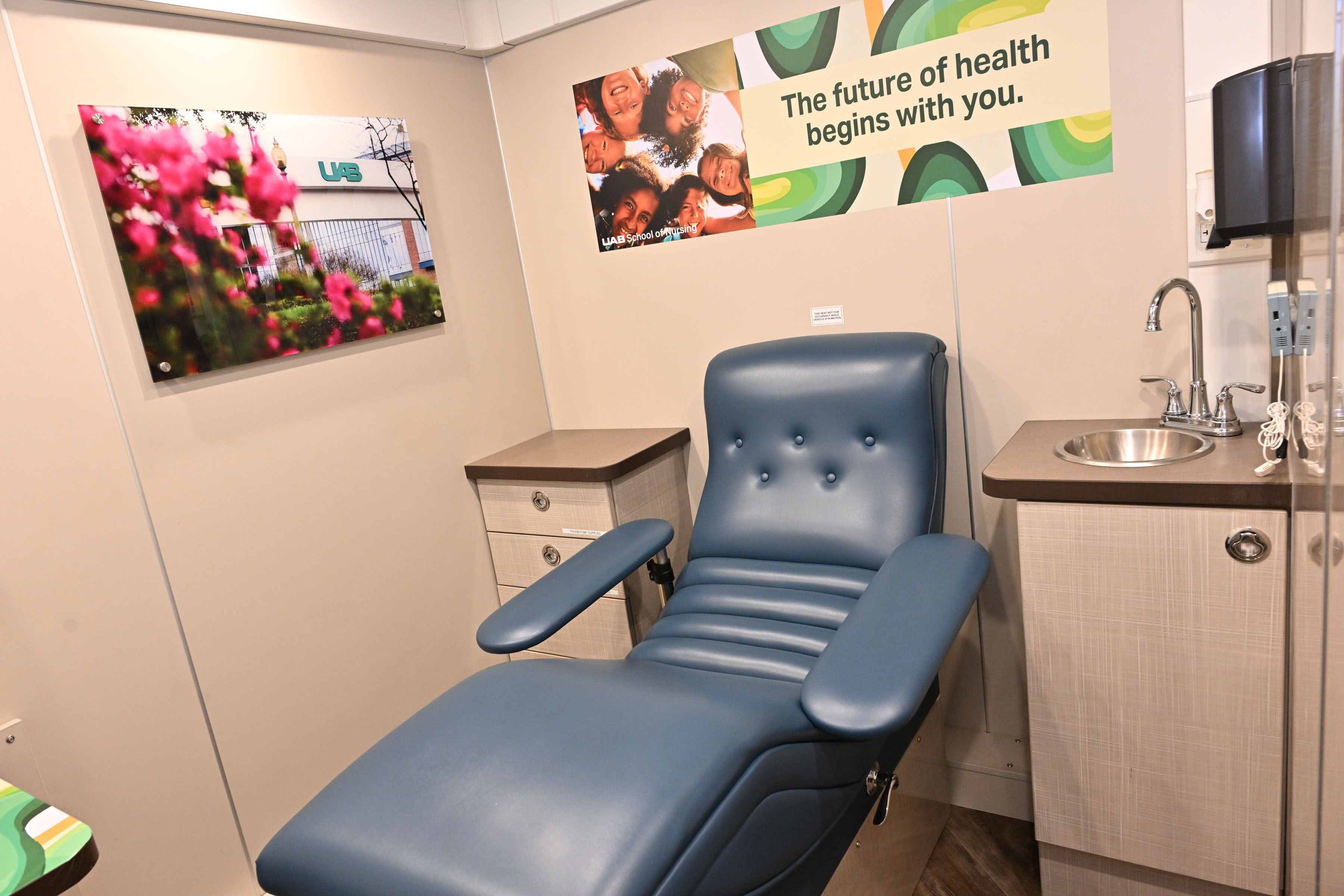 The mobile clinic operates an RV-based traveling care model that goes into different counties to provide maternal and child health care to underserved communities.The mobile health clinic initially served seven counties — Perry, Marengo, Monroe, Wilcox, Clarke, Choctaw and Washington. It has expanded its service to Cullman, Blount, Etowah and St. Clair counties. The final phase will expand services to Cherokee, Calhoun, Talladega, Cleburne, Clay and Randolph counties, bringing services to all 17 counties. Plans include adding a psychiatric mental health nurse practitioner to the care team.
In August 2025, the mobile health clinic saw its first pediatric patients from Head Start Programs in Marengo, Wilcox and Choctaw counties, operated by the Black Belt Community Foundation. These visits included physical and vision exams necessary for enrollment in these programs. As of February 2026, the team has seen more than 120 patients.
Additional collaborators for this project include Alabama Department of Public Health, private practices, community-based hospitals and UAB-affiliated hospitals. The mobile clinic is part of the School of Nursing’s Women and Children Health Initiative, or WACHI, which encompasses all of its maternal and child health-focused work across its teaching, research and practice missions.
“Increasing access to maternal-child health care in Alabama is central to the WACHI mission,” said Allison Shorten, Ph.D., professor and executive director of WACHI. “The Moms and Kids Mobile Health Clinic provides important opportunities for community outreach and connections with services that will make a difference in state health outcomes.”
Learn more at the Moms and Kids Mobile Health Clinic website.