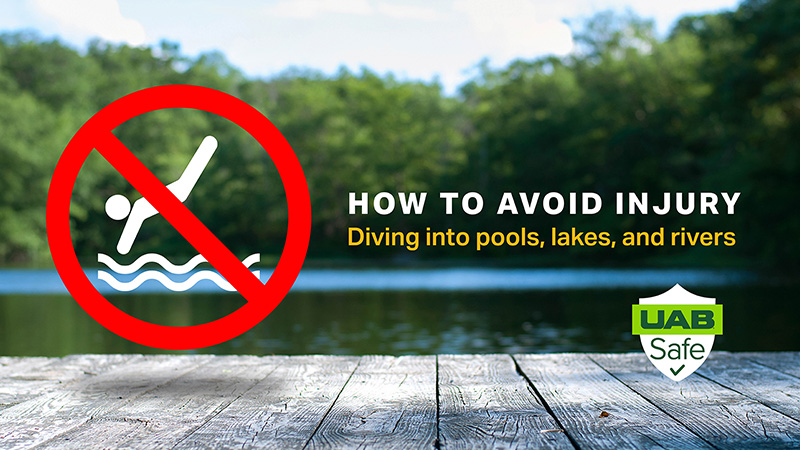
 As summer begins, a UAB neurosurgeon warns families about the dangers of diving in shallow water.
As warmer weather draws families to pools, lakes and rivers, a University of Alabama at Birmingham expert, Jakub Godzik, M.D., associate professor in the UAB Department of Neurosurgery, urges families to take diving safety seriously.
Why shallow water dives are dangerous
Shallow water dives pose a high risk of injury because the body does not have time to slow down after diving into the water.
“If it’s shallow, you’re going at a high speed,” Godzik said. “When your head hits the ground, your body keeps moving. That’s when the neck buckles, and that’s when the fracture can happen,” Godzik said.
Godzik says most people would never consider jumping headfirst from a roof onto solid ground, but the water can create a false sense of security and lead people to underestimate the force created from diving, especially in shallow or unfamiliar water.
The long-term impact of diving injuries
A single misjudged dive into shallow water can cause devasting and irreversible injuries. Godzik says the most common injuries associated with diving are spinal cord injuries and cervical fractures, which are fractures of the small bones in the neck that protect the spinal cord.
“The force from the impact, especially when you dive into a shallow pool, causes your neck to compress, and that force is a lot to those bones. Those bones can fracture,” Godzik said. When the bones in the neck fracture, they can injure the spinal cord permanently, often resulting in paralysis.
Only a small amount of force is required to fracture the cervical spine. Spinal cord injuries are especially devastating because of the spinal cord’s size and fragility. “The spinal cord is only about the size of a pinky finger,” Godzik said. “Recovery rates are not high.”
“Any kind of damage or pressure on it can have severe consequences. It usually results in complete or partial paralysis.”
While fracturing the skull is less common in diving accidents, concussions can still occur, even if the diver does not lose consciousness. “We’re learning more and more that concussions contribute to dementia,” Godzik said. “There are lasting repercussions even from something that’s considered pretty minor.”
These injuries can permanently alter a person’s mobility, independence and quality of life, making prevention especially critical.
What to do after a diving accident
If a person sustains a diving injury, bystanders should ensure the person is not drowning and is out of the water. Once the individual is out of immediate danger, it is important to avoid unnecessary movement.
Godzik shares the following warning signs after a diving accident that should lead to immediate medical attention:
- Severe neck pain
- Numbness or weakness in the hands or feet
- Shooting pain into the arms
- Confusion
- Loss of consciousness
If a person has sustained a fracture, it needs to be stabilized at the location by a medical professional. Moving someone improperly or driving them to the emergency room can increase the risk of worsening a spinal cord injury.
Advice to families this summer
Godzik advises families to stay aware of their surroundings and make thoughtful decisions when spending time around pools, lakes and rivers this summer. Many diving-related injuries occur not because people take extreme risks, but because of a momentary lapse in judgment.
Godzik says proper signage, such as “no diving” signs, plays an important role in injury prevention, but so does using good judgment while enjoying the outdoors or the pool. Awareness of water depth and changing conditions, such as water levels in lake or uneven pool floors, are also important to note before risking a dive.
He recommends avoiding dives into unfamiliar or shallow water, even if it appears safe, limiting alcohol consumption, and moving carefully around slippery pool decks or lake docks to avoid falls. Godzik says most serious injuries stem from brief, preventable lapses in judgment, and they can be avoided with simple awareness and caution.
“It’s a split-second decision that can change your life forever.”