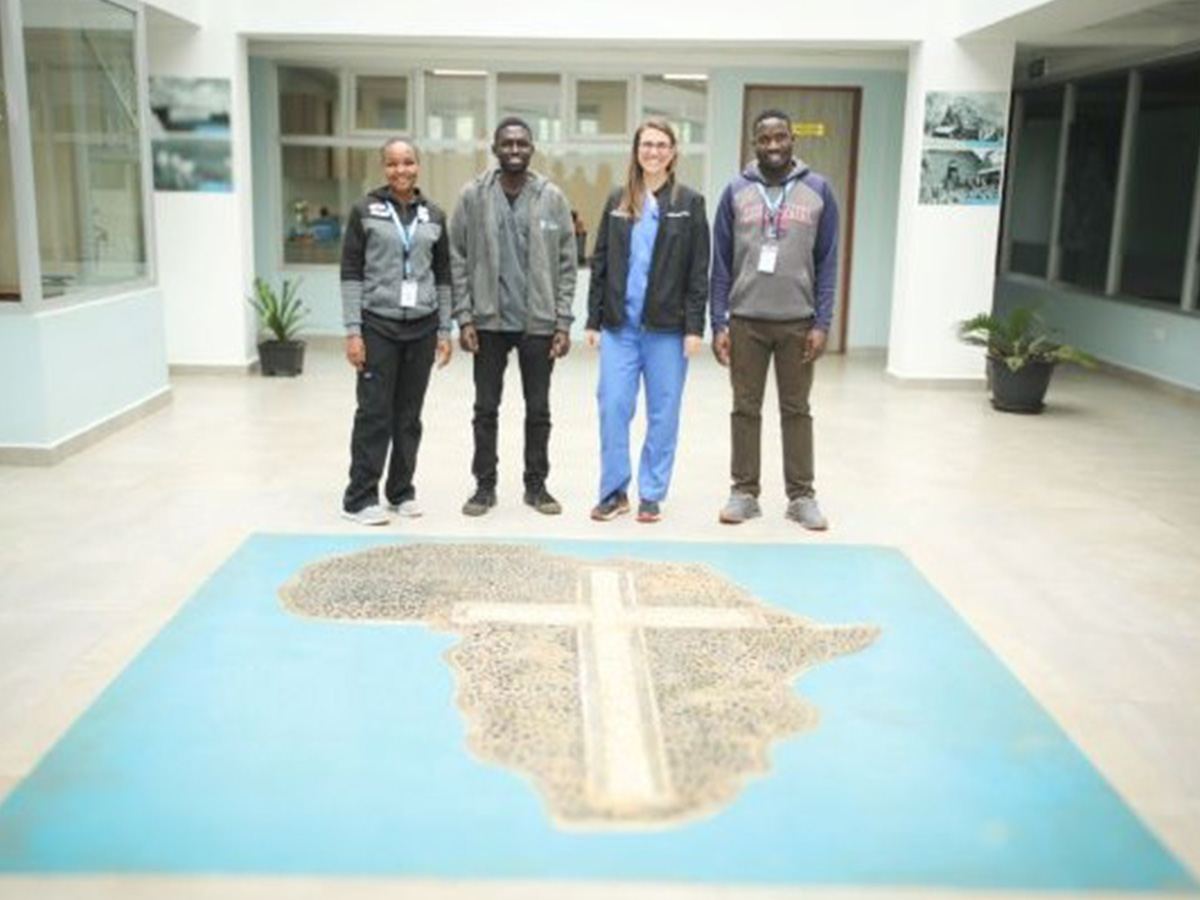
 UAB neurologists are advancing global health in Kenya through neurological care and medical training efforts in Kijabe.Neurologists at the University of Alabama at Birmingham are seeking to address the need for neurological care in Kijabe, Kenya, through the Neurology Global Health Program. The initiative extends UAB’s expertise in patient care and medical education to Kenya and beyond.
Barriers such as limited diagnostic technology, fewer treatment options and the prevalence of infectious diseases make the diagnosis and treatment of neurological disease in Kijabe and surrounding areas more difficult than in the United States.
“People all around the world have brains, and they can all break,” said Juliana Coleman, M.D., assistant professor in the UAB Department of Neurology.
“The developing world has done a phenomenal job of training primary care physicians,” Coleman said. “There’s still a huge need there, but they have made up that gap in impressive ways. The biggest gap is in specialty care and particularly in neurology care.”
Sharing expertise on a global scale
With assistance from Rebeka Simpa, M.D., assistant professor in the Department of Neurology, Coleman launched the global health initiative and led the first organized trip to Kijabe Hospital in July 2024.
Sipma returned for a second trip in January 2025 and most recently completed a third visit alongside neurology resident Rebecca Massey, M.D. The four-week trip included clinical work in Kijabe and surrounding areas, where the team partnered with local providers and trainees through clinics and hosting lecture days.
For both Coleman and Sima, who had prior experience with medical mission work prior to their careers at UAB, the initiative has been a long time coming.
“I wanted to work in medical missions before I knew that I wanted to be a neurologist,” Coleman said. “I grew up in a medical community at my church. We sent a lot of medical missionaries into various parts of the world, and they were my heroes growing up.”
Sipma’s inspiration for global health work is similarly personal.
“I grew up in a farm town, and we did not see many doctors. My family were all farmers who refused to go to the doctor unless there were problems that you just couldn’t fix. All the problems we were seeing doctors for were neurological problems.” Medical mission trips to Guatemala and Honduras in college further influenced Sipma’s desire to pursue medicine and focus on neurology.
“I just kept getting drawn back to the neurological patients because those were like my family members,” Sipma said.
Addressing the gap
Even though neurology is considered an underserved specialty in the United States, the shortage is even broader in the developing world.
Coleman says there are a maximum of 20 neurologists in the entire country of Kenya.
“But the population is 55 million people, which is staggering,” Coleman said. “That means the majority of people who will need neurological care will never see a neurologist, and they will never see a doctor or provider who has even heard a lecture from a neurologist.”
In addition to the gap between providers and patients, Coleman says limited diagnostic technology presents a barrier in places like Kijabe compared to the United States.
“What’s wonderful about neurology is that you can do a neurological exam and take a history, and you can know where in someone’s body the problem is,” Coleman said. “You can make a really good guess based on the history and the pretest probability.”
However, she notes that certain diagnoses, using the example of multiple sclerosis, are more difficult to confirm with access to MRI or other technologies, limiting providers’ confidence in initiating aggressive treatment.
Treatment options themselves are also more limited. “If we have someone here who has epilepsy, we have a list of 20 medications that we could choose from easily. In Kijabe, we have four.”
Investing in a global community
To help address these challenges, UAB neurologists combine direct patient care with medical education during their time in Kenya.
Kijabe Hospital was established 110 years ago and boasts several different residencies. The UAB neurology team primarily works with family medicine residents and clinical officers, many of whom come from Kenya or neighboring countries like Sudan, South Sudan and Ethiopia.
The team typically conducts three clinic days per week, with additional days dedicated to lectures. “They’re getting to practice skills like taking patient histories and doing the examinations and, with some guidance, helping to formulate their clinical thinking,” Sipma said.
The team also travels to Nairobi, where they strengthen regional partnerships with neurologists and neurology fellows at the Aga Khan University.
In addition to training residents in Africa, UAB Neurology’s global outreach trains its own aspiring neurologists. As a fourth-year resident, Massey accomplished similar work in the Dominican Republic.
“I love considering all the ways in which a culture and language influence the way that people view health and illness,” Massey said.
Massey says medicine is a global community, and participating in both the clinical and teaching aspects of the trip allow her to contribute back to the community that is shaping her as a neurologist.
“We’re going and passing along some of the knowledge and helping them to be better clinicians,” Massey said. “There’s something cool about going over to another place when you’re a trainee and getting to interact with and even be friends with some of the folks who are also trainees in a different setting.”