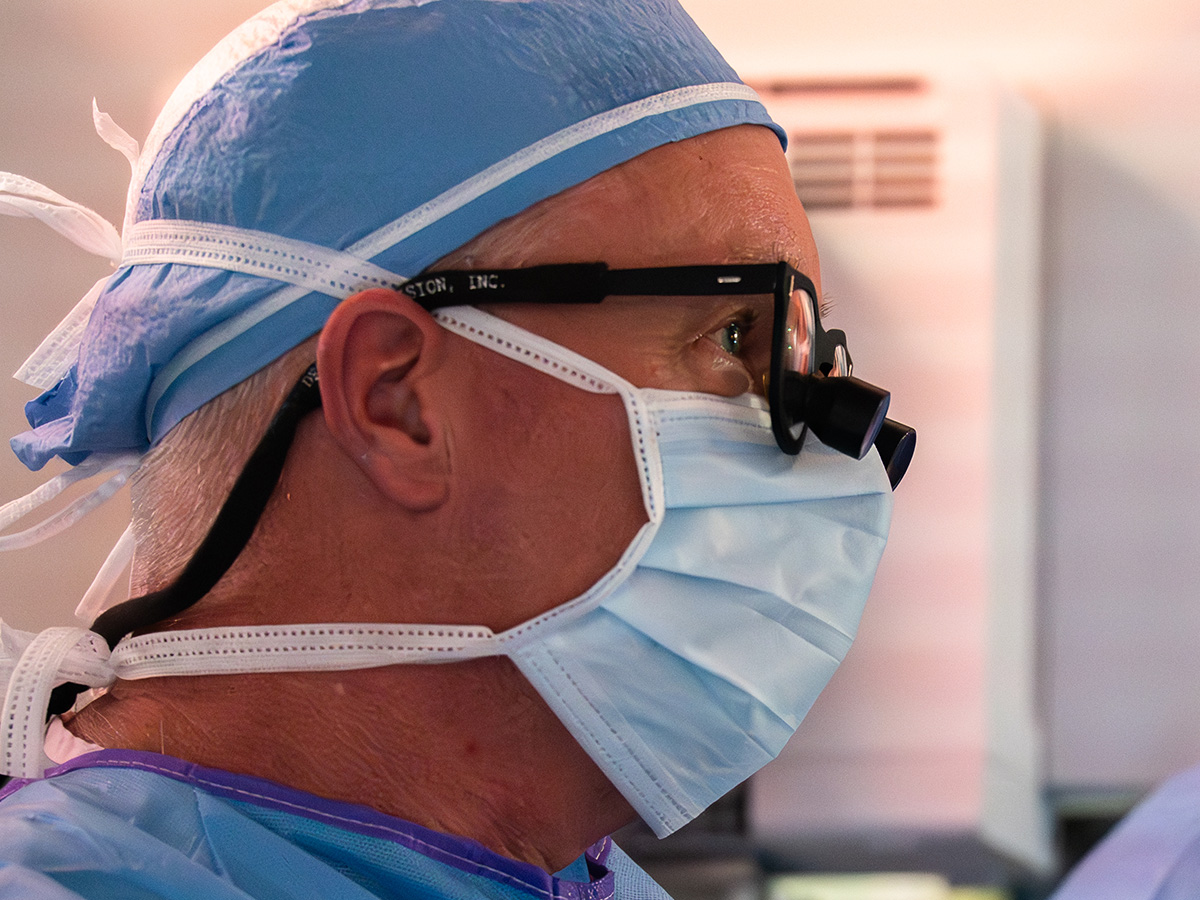
 Michael Hanaway, M.D.In a milestone for UAB Medicine, transplant surgeons have performed the institution’s first robotic kidney transplant surgery, marking a major step toward expanding minimally invasive options for transplant recipients.
On Jan. 15, 2026, Michael Hanaway, M.D., surgical director of the Kidney Transplant Program at University of Alabama at Birmingham, and Muhammad Rabbani, M.D., assistant professor in the Division of Transplantation, performed the procedure using robotic-assisted surgical equipment.
“The advance of robotic surgical procedures over the last 10 years would suggest that robotic procedures in kidney transplantation represent its future,” Hanaway said. “We are excited to be the first center in the Southeast United States to offer this option for our patients.”
During a robot-assisted kidney transplant, the surgeon does not stand over the patient or work directly with their hands. Instead, the surgeon sits at a console and uses controls to guide robotic instruments inserted through a few small incisions — similar to laparoscopic surgery. A surgical assistant stays at the patient’s side to adjust instruments and support the procedure as needed.
Robot-assisted kidney transplantation offers several benefits for patients. The procedure uses much smaller incisions — typically a 2‑inch opening near the belly button plus a tiny incision for instruments — compared with the larger incision required in traditional surgery. These smaller, lower ‑profile incisions can also lead to better cosmetic results.
“While all patients will benefit, this will uniquely improve outcomes for patients with elevated BMI or other advanced diseases that might struggle with postoperative pain or larger incisions,” said Jacqueline Garonzik Wang, M.D., Ph.D., division director of Transplantation and co-director of the UAB Comprehensive Transplant Institute.
“This milestone represents a meaningful evolution in how we bring state-of-the-art care to our patients,” said Garonzik Wang. “By leveraging newer technology, we will be able to offer lifesaving kidney transplant to more patients and significantly improve outcomes for our recipients. This will result in more transplants, shorter hospital stays, decreased pain and decreased recovery time.”
Because there is less tissue disruption, patients generally face a lower risk of complications such as infection or hernia and often experience faster healing. This minimally invasive approach usually means less pain after surgery and a shorter hospital stay, helping patients return to their normal routines more quickly.
Hanaway says robotic procedures provide improved visualization and magnification.
“The ability to better see into difficult areas makes a surgeon more accurate and precise,” he said. “What is better for the surgeon’s performance is always better for the patient’s results and outcomes.”
Since completing its first transplant in 1968, UAB has been on the forefront of advancing the field of organ transplantation. More than 50 years later, the UAB Comprehensive Transplant Institute continues breaking new ground in the areas of treatment, research, training and protocol development, as well as organ availability, preservation and utilization.
Positioning UAB at the forefront of research, innovation and patient care
As rates of end‑stage renal disease, or ESRD, continue to rise across the Southeast, Garonzik Wang says the need for innovative approaches to transplantation has never been greater. Advancements in robotic surgery offer new opportunities to make transplant procedures safer, more precise and more accessible, ultimately improving outcomes and helping patients return to their daily lives more quickly.
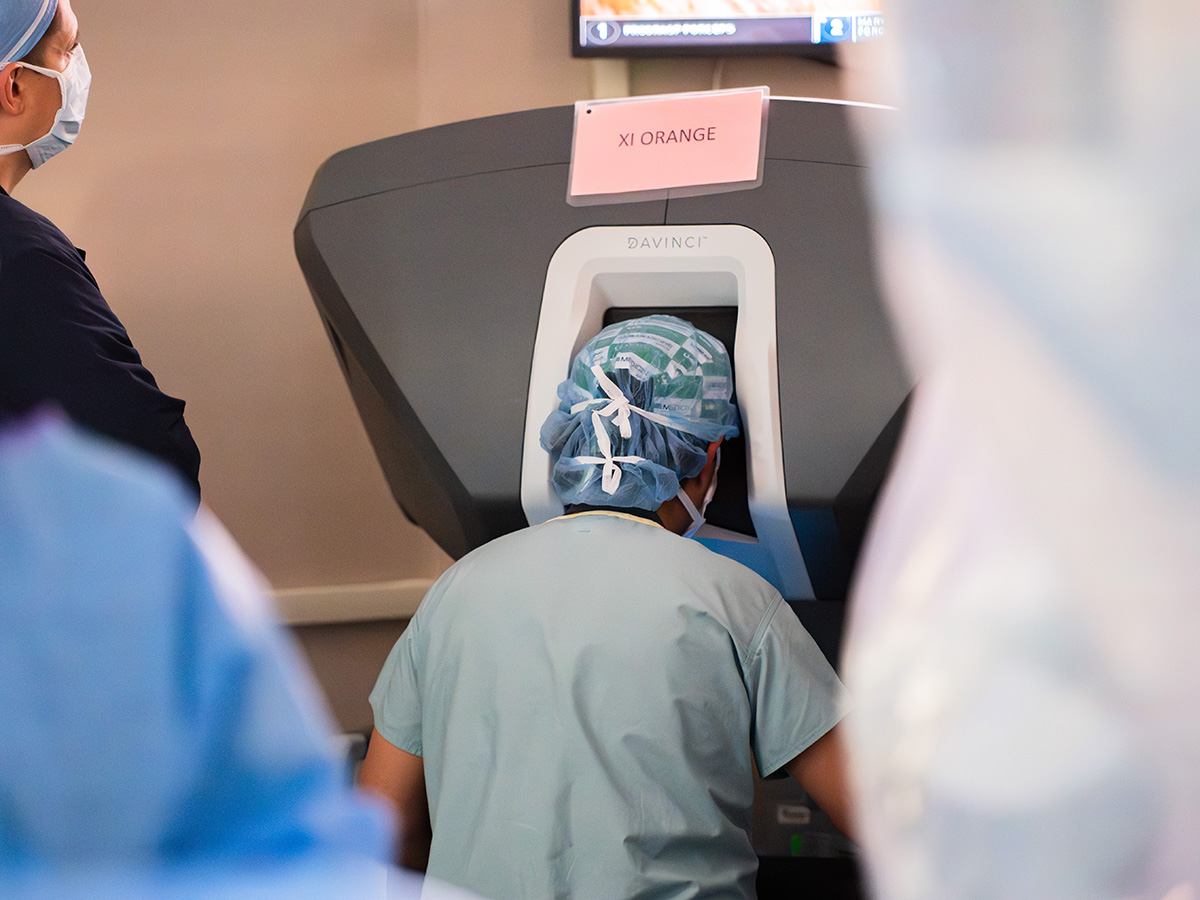 Muhammad Rabbani, M.D. operates a robotic surgical device during UAB's first robotic kidney transplant.“This milestone also reflects UAB’s commitment to being at the forefront of medical care, innovation and training,” she said.
She adds that, by integrating robotics into transplant surgery, UAB strengthens its position at the forefront of emerging technologies, aligns with national trends in minimally invasive care, and advances research that has the potential to influence public health on a broad scale.
UAB is one of the busiest transplant centers in the nation, performing more than 400 transplants each year across all organ groups. It is also home to the largest comprehensive program in the Southeast, performing 100 more transplants each year than any other program in the region.
At UAB, Hanaway holds the Martha Robinson Tankersley Endowed Professorship in Transplant Clinical Excellence.