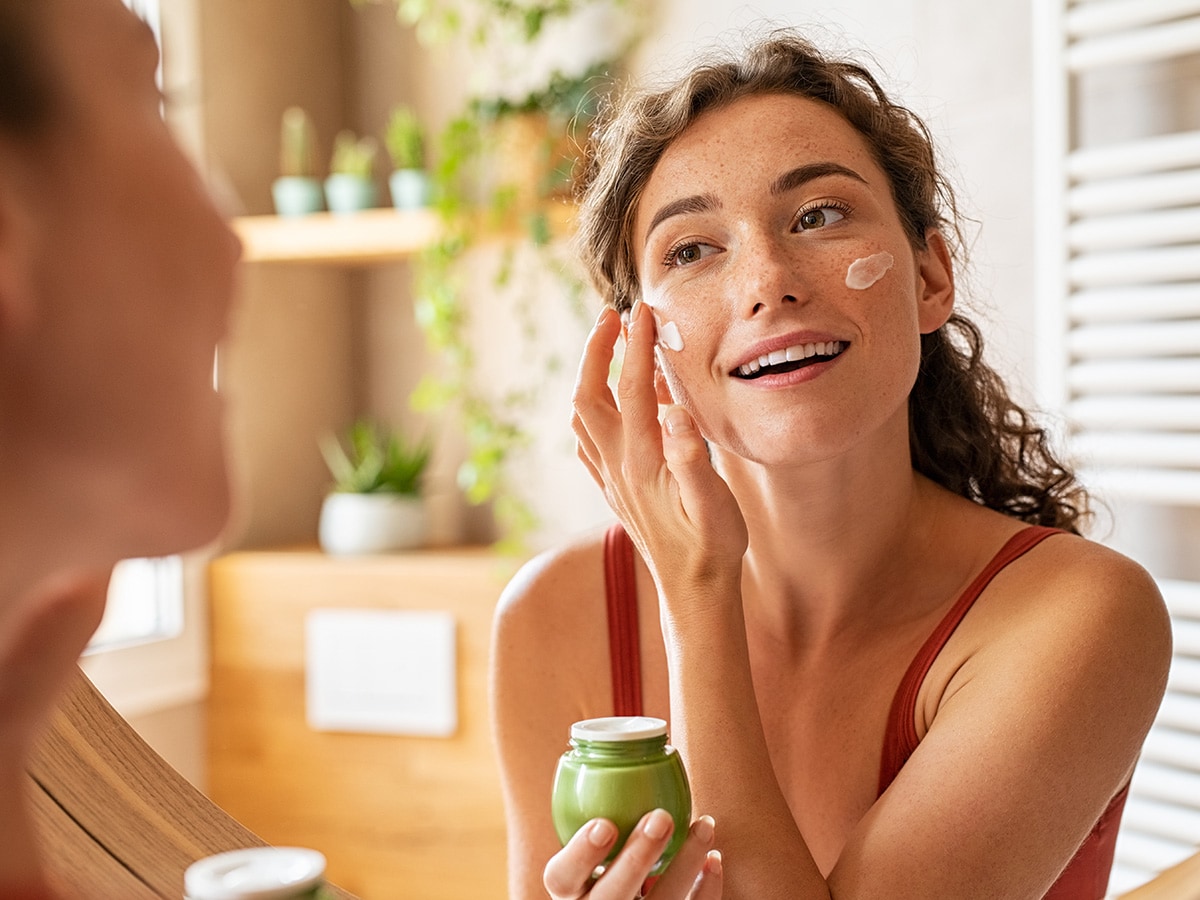
 An effective skin care routine focuses on simplicity. Understanding your skin type is key determining what skin care is right for you. As the body’s largest organ, the skin plays a vital role in regulating body temperature and protection against harmful bacteria and chemicals. Just as the skin works as a protective barrier, it is important for individuals to take steps to protect their skin.
The secret to achieving healthy, clear skin is not about overconsuming products and following viral beauty standards; but rather it is about having a consistent and simple routine.
Expert for the University of Alabama at Birmingham, Claire Petitt, M.D., assistant professor in the Department of Dermatology at the Marnix E. Heersink School of Medicine, provides perspective on skin care and how to take care of skin according to skin type. Petitt is a board-certified dermatologist who specializes in the diagnosis and treatment of diseases affecting the skin, hair and nails. Medical conditions she treats are skin cancer, eczema, psoriasis, acne and more.
Skin types and how they are defined
In determining how to approach the right skin care routine, Petitt clarifies it is important to understand the different skin types and how they are defined.
Skin is commonly categorized into five types:
- Normal skin: Neither excessively oily nor excessively dry, with few concerns regarding irritation or breakouts.
- Oily skin:Produces excess sebum, often resulting in a shiny appearance and increased susceptibility to acne.
- Dry skin:Produces less oil and may feel tight, rough, flaky or itchy.
- Combination skin: Features both oily and dry areas, commonly with oiliness in the forehead, nose and chin, also known as the “T-zone,” and drier cheeks.
- Sensitive skin: Not necessarily a distinct skin type, but rather skin that is more prone to irritation, burning, stinging, redness, or reactions to products and environmental factors.
How to determine skin type
People can determine their skin type based on how their skin behaves throughout the day:
- If the skin is flaky, tight or rough, then that means skin is more on the drier side.
- If it is shiny and oily within a few hours of washing, skin may be oily.
- If skin is oily in some areas but dry in others, it is most likely combination skin.
- If products frequently cause burning, stinging or redness, sensitive skin may be a factor.
Although skin can be classified into five categories, there is significant individual variation. Petitt says genetics can play a role in determining skin characteristics and dictating oil production, barrier function and pigmentation.
Skin type can change over time. According to Petitt, adolescents and young adults tend to have oilier skin due to hormonal influences. Oil production generally decreases with age, making dry skin more common. Changes in environment, such as moving to a colder or drier climate, can significantly affect skin hydration and sensitivity.
“People with conditions such as eczema often have skin barrier dysfunction and may experience chronically dry and sensitive skin,” Petitt said.
For an accurate diagnosis, a dermatologist can help clarify skin type and identify any underlying skin conditions that may mimic a particular skin type.
How to care for skin based on skin type
Skin care does not need to be as elaborate as social media portrays.
“Skin care does not need to be complicated. For most people, a simple routine is both effective and sustainable.”
“Consistency matters more than complexity. A simple routine that is followed regularly is often more beneficial than a complicated routine that is difficult to maintain,” Petitt said.
Petitt says a good skin care routine helps maintain the skin barrier, prevents excessive dryness and irritation, and can address specific concerns such as acne or hyperpigmentation.
Regardless of skin type, the essentials to a skin care routine for most are:
- Cleansing the skin regularly
- Moisturizing if the skin is dry or prone to irritation
- Protecting the skin from the sun
Rather than focusing on long lists of active ingredients, Petitt generally encourages patients to focus on products that support the skin barrier.
Based on skin type, Petitt recommends that individuals seek products with certain characteristics:
- Normal skin: Most moisturizers can be effective, and personal preference often determines adherence. The best moisturizer is ultimately the one that a patient will use consistently.
- Oily skin: Lighter lotions or non-comedogenic moisturizers, those which avoid clogging pores, are often preferred because they provide hydration without feeling heavy.
- Dry skin: Thicker creams and ointments that reduce water loss from the skin. Individuals should seek products that contain glycerin, hyaluronic acid, petrolatum, ceramides, and other softening or smoothing substances. Acne-prone individuals should seek non-comedogenic products, those that avoid clogging of pores, and products containing benzoyl peroxide or salicylic acid. Prescription medications may be appropriate depending on severity.
- Combination skin: Individuals with combination skin may benefit from applying a richer moisturizer to drier areas while using lighter products on oilier regions. However, many people can successfully use a single gentle cleanser and moisturizer across the entire face. Petitt recommends starting simple and only adding complexity if needed.
- Sensitive skin: Products with fewer ingredients and that are fragrance free are often best tolerated.
Additional products should be tailored to individual concerns.
Benefits of using SPF on skin
A vital step in any skin care routine and maintaining healthy skin is applying sun protection daily. SPF protects the skin from harmful ultraviolet rays and is commonly found in sunscreen and cosmetic products.
For individuals concerned about photoaging, daily sunscreen and/or the use of retinol or retinoids at night have the strongest evidence supporting their use.
“Daily sun protection with a broad-spectrum sunscreen of SPF 30 or higher is one of the most effective ways to help prevent premature skin aging, including fine lines and wrinkles and, in susceptible individuals, reduce the risk of skin cancer,” Petitt said.
Petitt adds that sunscreen works best when combined with other sun-protective measures, such as wearing a wide-brimmed hat, ultraviolet protection factor-rated clothing and seeking shade when possible.
Misconceptions of skin care
Social media has revolutionized the way people view skin care, contributing to various misconceptions.
Petitt addresses some of these misconceptions:
- More products automatically lead to better skin: Overcomplicating a routine causes irritation and can worsen skin problems.
- Natural products are gentler or safer: Natural ingredients can still cause irritation or allergic reactions.
- Underestimating the importance of sunscreen: Sunscreenis one of the most effective tools for preventing skin cancer and minimizing signs of photoaging.
- Expensive products are inherently superior: Many affordable store-brand products contain the same active ingredients found in more expensive formulations. Price does not necessarily correlate with effectiveness.
“When evaluating a product, I encourage patients to focus on the ingredients, evidence supporting their use and how well the product is tolerated rather than the price tag,” Petitt said. “In dermatology, the simplest products are often among the most effective.”
Lifestyle and skin health
In addition to having a beneficial skin care routine, maintaining a healthy lifestyle is closely connected to skin health.
“Poor sleep and chronic stress can exacerbate conditions such as acne, eczema, psoriasis and other inflammatory skin diseases,” Petitt said. “Regular exercise benefits overall health and may indirectly support skin health through improvements in cardiovascular and metabolic function.”
A balanced diet that supports overall health is likely to support healthy skin, but this is an area of ongoing research. According to Petitt, there is no single “perfect skin diet”; but some evidence suggests that high-glycemic diets, those high in processed foods and added sugars, may contribute to acne in susceptible individuals.
One message Petitt consistently shares with her patients is that healthy skin care is usually simpler than the beauty industry has the public believe. Additional treatments can be used for specific concerns, but an effective routine does not need to involve dozens of products or complicated regimens.
To learn more about your skin type, schedule an appointment with UAB Dermatology here.