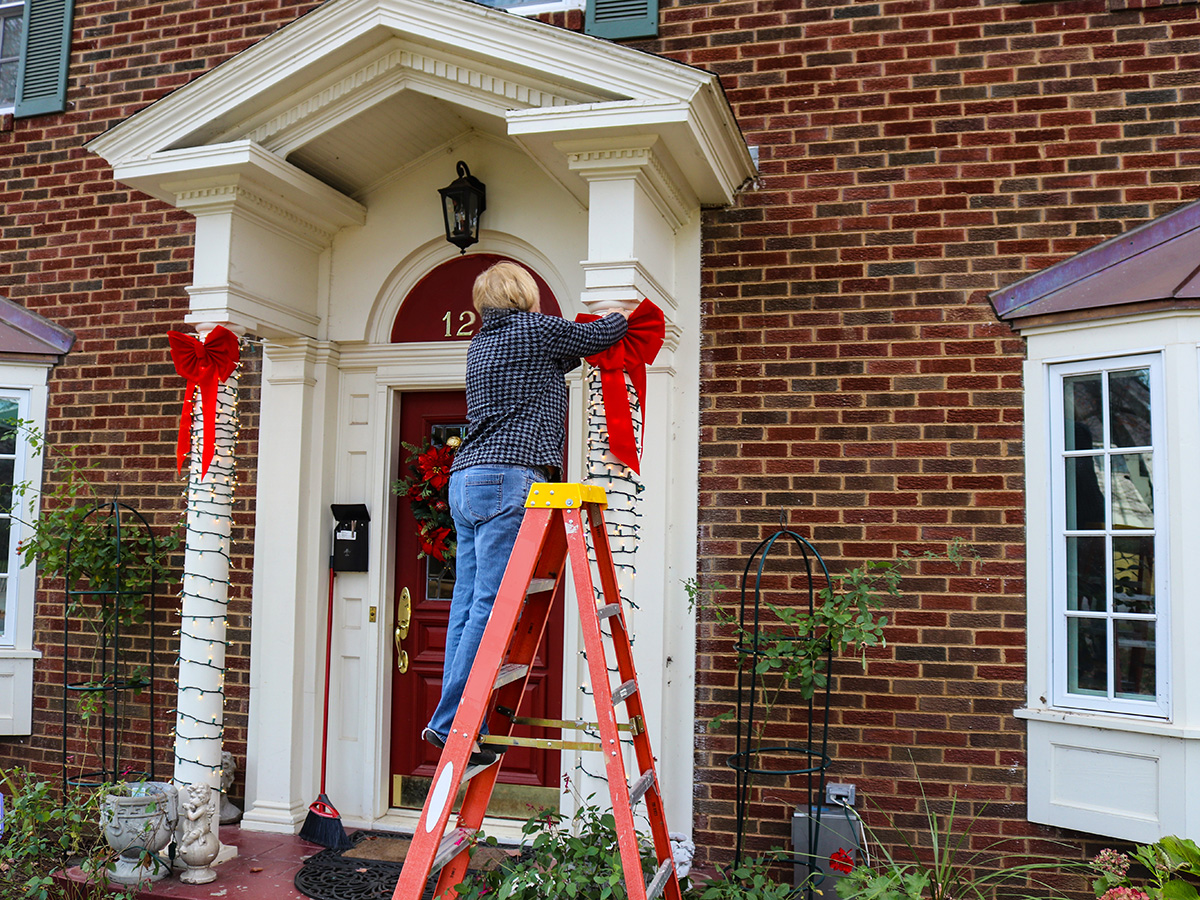
 UAB Neurosurgery and Trauma experts discuss the importance of taking precautions when decorating this holiday season. As families begin hanging lights and decorating homes for the holiday season, experts at the University of Alabama at Birmingham are reminding the public to take simple precautions that can prevent common and sometimes serious injuries.
Holiday decorating often involves activities that may be physically demanding, such as lifting heavy boxes, climbing ladders, carrying trees and reaching overhead for long periods of time. These movements can strain the back, neck and shoulders and increase the risk of falls.
Jakub Godzik, M.D., associate professor in the UAB Department of Neurosurgery, explains the importance of exercising caution during the holidays with seasonal activities.
“Yard work and seasonal tasks often involve activities that people do not always think of as dangerous,” Godzik said. “But without safety precautions, these tasks can lead to minor injuries like muscle strain or serious injuries such as falls and fractures. The key thing is to exercise caution and situational awareness.”
Before decorating, take a few minutes to warm up the body with a brisk five-minute walk or gentle stretching. Proper lifting techniques are important. People should bend their knees, keep their back straight and lift with their legs rather than the back. Maintaining good posture while kneeling, squatting or standing can help reduce strain. Strengthening the core and stretching regularly can make the body more resilient to injury.
Jonathan Bryant, injury prevention coordinator for UAB Trauma Services, says the most common decorating-related injuries are falls from ladders.
“Falls from ladders tend to be the most common and can be the most dangerous,” Bryant said. “These injuries affect all ages and can be very serious, especially for people who have underlying health conditions or take blood thinners.”
Ladder safety
Choosing the correct ladder for the job is the first step in preventing falls. Step ladders should never be climbed on the top rung. Extension ladders should extend at least 3 feet beyond the edge that supports the ladder. Ladders should always be placed at a safe angle on even, solid ground.
“Inspect ladders for loose hinges or damaged parts before use, ensure locks are working properly, and avoid overreaching while climbing,” Bryant said. “If someone needs to reach farther, climb down and move the ladder rather than stretching.”
Electrical safety
Lights and electrical cords should be inspected before they are hung. Bryant recommends checking for cracked sockets and broken or frayed wires and ensuring products have safety certification labels.
“People should avoid overloading outlets and use extension cords only when necessary,” Bryant said. “Cords should not be run under rugs or placed in areas where they can be pinched or damaged, and only outdoor-rated lights and cords should be used outside.”
Fire safety
Live trees should be watered daily since dry trees can become fire hazards. Heat sources such as space heaters or fireplaces should be kept at least 3 feet from trees, decorations and other combustible items.
“Use flameless candles, check smoke detectors monthly, and keep fire extinguishers in easy-to-reach locations,” Bryant said. “All lights should be turned off before leaving the home or going to bed.”
What to do if an accident happens
If a decorating-related injury occurs, the most important step is to remain calm and assess the situation. People should check for obvious bleeding, determine whether the person is conscious and look for signs of broken bones.
If someone is experiencing severe head pain, vomiting, balance issues or slurred speech, 911 should be called immediately and the injured person should be kept still. Pressure can be applied to control bleeding until help arrives.
“Falls from any height should be evaluated immediately,” Bryant said. “People should seek emergency care if they experience symptoms such as dizziness, slurred speech, nausea or vomiting. Minor injuries like small cuts that need stitches or sprains and strains can be treated at an urgent care clinic.”