Key Insights
- UAB expert speaks on the impact of good and poor posture and shares tips for posture improvement.
- Posture refers to the structural alignment of the head, shoulders, neck and back against gravity.
- Poor posture can affect productivity and contribute to issues such as difficulty reaching overhead, fully expanding lungs, standing upright, and nerve and rotator cuff impingement.
- Self-awareness of position relative to gravity, frequent movement and resting in a neutral position are three effective ways to improve posture.
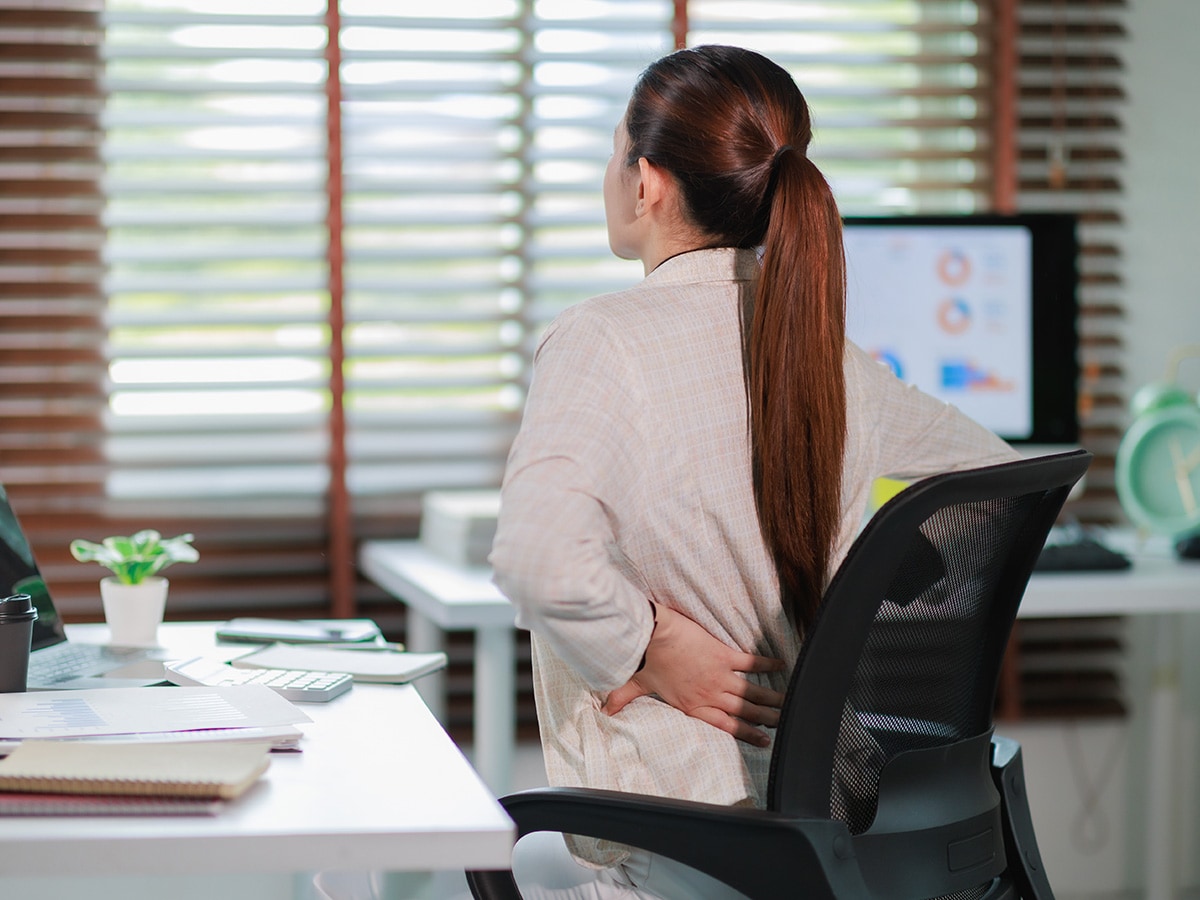 Self-awareness of position relative to gravity, frequent movement and resting in a neutral position are three effective ways to improve posture.Whether scrolling on a smartphone or tablet, working at a desk, watching television, or studying for an important exam, many people spend each day in positions that can negatively affect their posture. Spending every day hunched over a screen may seem harmless; but over time, it can result in poor posture, which can lead to long-term muscle and joint issues. However, practicing healthy posture habits allows individuals to support their muscle, joints and bone alignment over time.
Laura Reder, physical therapist assistant at the University of Alabama at Birmingham St. Vincent’s Bruno Rehabilitation Center, shares her insight on posture and tips on posture improvement.
What is posture?
According to Reder, posture refers to the structural alignment of the body (head, shoulders, spine and limbs) against gravity. It is all about how the structures in the body are stacked and how everything in the body is connected. An imbalance in muscle strength, length or tension will have postural, alignment and functional consequences.
“Usually when people talk about posture, they think about standing; but seated and resting posture also matters,” Reder said.
Ideally, the head is over the shoulders, the shoulders are over the hips, and hips are over feet, which helps to properly align the spine. Staying in one position for a long period of time, especially forward-flexed positions, like using the desktop, laptop, tablet or phone, leads to tightness and shortening of tissues on the front side of the body with the back side tissues becoming lengthened and weak.
What is the difference between good and poor posture?
If an individual’s body structures are properly aligned and balanced, they have normal posture; but if those structures are misaligned or imbalanced, it could be a result of poor posture.
“Looking at someone from the side and seeing how those structures are stacked up is one way to determine if someone has a postural abnormality,” Reder said.
One of the most common things seen in the clinic is “upper cross syndrome,” also known as forward head, rounded shoulders. This is when the shoulders and neck are pulled forward, chest and ribcage are pulled down, and the head shifts forward. Upper cross syndrome is a muscle and soft tissue imbalance. Some areas are tight, or the tissues are shortened, while the opposing tissues are pulled into a lengthened, weakened position.
At the Bruno Rehabilitation Center, patients are taught to restore posture by correcting the imbalance.
“We focus on lengthening what is shortened, strengthening what is weakened,” Reder said. “The primary goal is always educating the patient so that the changes are lifelong.”
Recognizing which activities are contributing to the imbalance and how to best correct the situation is key. The simple act of sitting up straighter, gently squeezing shoulders back and slightly retracting the head can help reestablish better alignment.
What are the effects of good and poor posture?
When body structures are in ideal alignment, movement and even breathing are easier.
Postural imbalances can eventually cause pain, making it difficult to focus and having a negative effect on a person’s productivity and well-being.
Over time, poor posture can contribute to such issues as:
- Nerve impingement, also known as pinched nerves, in which tight tissues press against the nerves of the body
- Rotator cuff impingement, the painful pinching of the shoulder tendons
- Difficulty fully expanding the chest and ribcage, or inability to take a deep breath
- Difficulty standing upright
- Pain reaching overhead
Oftentimes, people wonder whether poor posture can lead to a permanent hunched back over time. According to Reder, in some cases genetic factors may be involved; but consistently spending years with poor posture, such as a slouched position, can contribute to that posture change.
How to tell if you have poor posture
Most people do not realize they have poor posture until they start experiencing notable symptoms such as neck discomfort, shoulder pain or difficulty reaching for things. While these symptoms may begin as minor issues, they can build up over time and start interfering with daily activities.
According to Reder, an easy way to view one’s posture is in candid photographs from a side angle. This view and candidness will easily show how the head, shoulders, spine and limbs are aligned. If an individual looks stooped or slumped in most photos, it is likely they have poor posture.
How to improve posture
As humans age, activities are less varied, joints become stiffer, collagen levels change, and it becomes more difficult to correct long-standing habits. However, this does not mean poor posture is an inevitable part of aging.
Gravity is a constant force, pulling everything down. Humans, when upright, tend to be positioned in a way to be pulled forward and down; any work being done with hands is usually forward and down, and the eyes, head, neck and shoulders follow.
It is important for people to understand their position relative to gravity and change it up frequently. Reder emphasizes that having self-awareness and staying strong and flexible are key to maintaining good posture and health as people age. Practicing habits and implementing small, consistent changes early helps offset future posture problems.
The easiest way for people to improve their posture is to get up and move consistently. According to Reder, standing and walking is a simple way to facilitate postural improvement. Standing and walking engage the core and reduce stiffness in the joints. It is functional, active stabilization — keeping all the systems working together.
Getting up to move during the day is beneficial because it gives the body a break from the seated, constantly flexed position.
Sitting all day and then curling up into a ball at home reinforces flexed posture. When one is at rest, Reder recommends a neutral and comfortable position: lying on the back with knees bent, arms outstretched with palms up, while taking a few deep breaths and relaxing. This position allows gravity to pull the body in the opposite direction.
“Your body will thank you,” Reder said. “It doesn’t have to be complicated to be effective. Consistent movement is what matters.”
Movement prevents stiffness, fosters proper alignment, releases tightness and activates muscles in the body. Reder recommends individuals find an activity they enjoy so it will not seem like a chore or burden.
Seeing a physical therapist is also a great resource for posture-related issues. Physical therapists are specialists trained to evaluate situations, identify movement impairments and tissue imbalances, determine which muscles need strengthening or stretching, and offer recommendations on how individuals can manage their condition. Since every person’s body is different, recommendations are individualized.
Call 205-930-2300 to make an appointment with a physical therapist.