Key Insights
UAB researchers are developing an AI-assisted digital twin platform for building retrofit planning.
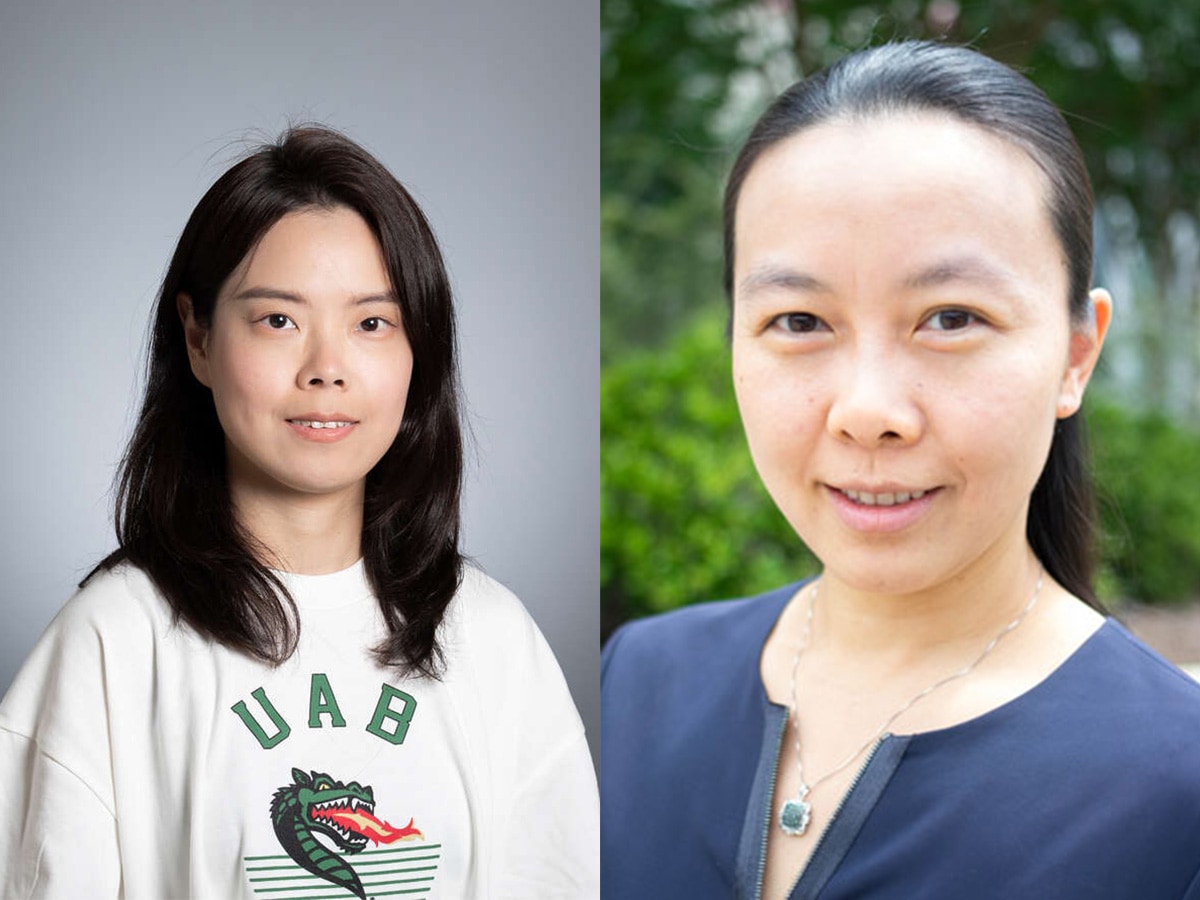 UAB researchers are developing an AI-assisted digital twin platform for building retrofit planning.Researchers from the University of Alabama at Birmingham have been awarded a grant from the U.S. National Science Foundation to help advance research and develop an AI-assisted digital twin platform. The purpose of the platform is for building assessment and retrofit planning.
The three-year project, “AI-Agentic Digital Twin for Collaborative Building Auditing and Retrofit Simulation,” is a collaborative effort led by the University of Alabama in partnership with UAB.
“A digital twin is a virtual representation of a physical system that brings together data, models and simulations to help us better understand how that system behaves,” said Xi Li, Ph.D., assistant professor in the UAB College of Arts and Sciences Department of Computer Science. “By combining digital twins with an AI agent, we can make these complex environments easier to explore and use for real-world analysis and decision-making.”
Building audits and retrofit planning can help improve the energy efficiency and resilience of existing buildings. These processes require information from multiple sources, including building measurements, inspection reports, energy models and professional guidelines. Bringing this information together and using it to evaluate possible improvements can be lengthy and often requires expertise across several fields.
Li’s project will develop an interactive platform that integrates a building digital twin with AI agents to support building auditing and retrofit analysis. The digital twin will bring together building data, analytical tools and simulations in a shared virtual environment, allowing users to examine building conditions and explore retrofit scenarios. To make this complex environment easier to access and use, AI agents will serve as an intelligent interface between users and the digital twin. They will interpret users’ questions, identify relevant data, documents and analytical resources, and reason across this information to provide context-aware guidance and decision support.
The team will also contribute to the development and integration of the platform.
At UAB, Li will lead the AI research for the platform alongside Chengcui Zhang, Ph.D., professor in the UAB Department of Computer Science. Throughout the project, Zhang will serve as co-principal investigator. The UAB team will develop knowledge graph- and retrieval-augmented AI agents that can understand users’ questions, retrieve relevant building data from the digital twin and supporting documents from the platform, reason across the retrieved information, and provide context-aware responses.
For example, users could ask about a building condition or possible renovation strategy, and the AI agent could identify relevant information from the digital twin, explain the factors involved and help users evaluate available options.
“Our goal is to bridge advanced AI and digital twin technologies with real-world users,” Li said. “We want to develop AI systems that can understand what users need, connect them with the right information and tools, and make these technologies easier to use for reliable, informed decision-making.”
Beyond building retrofits, the research will contribute to broader efforts in trustworthy and agentic AI by studying how AI systems can reliably reason over multimodal data, domain knowledge and simulation outputs, while providing accurate, transparent and context-aware assistance in real-world applications.
The collaboration combines UAB’s expertise in AI and computer science with UA’s expertise in civil engineering, building science and energy systems. The project will also provide interdisciplinary research and training opportunities for graduate and undergraduate students.
The project is supported by the National Science Foundation’s Cyberinfrastructure for Sustained Scientific Innovation program under Award No. 2609220.