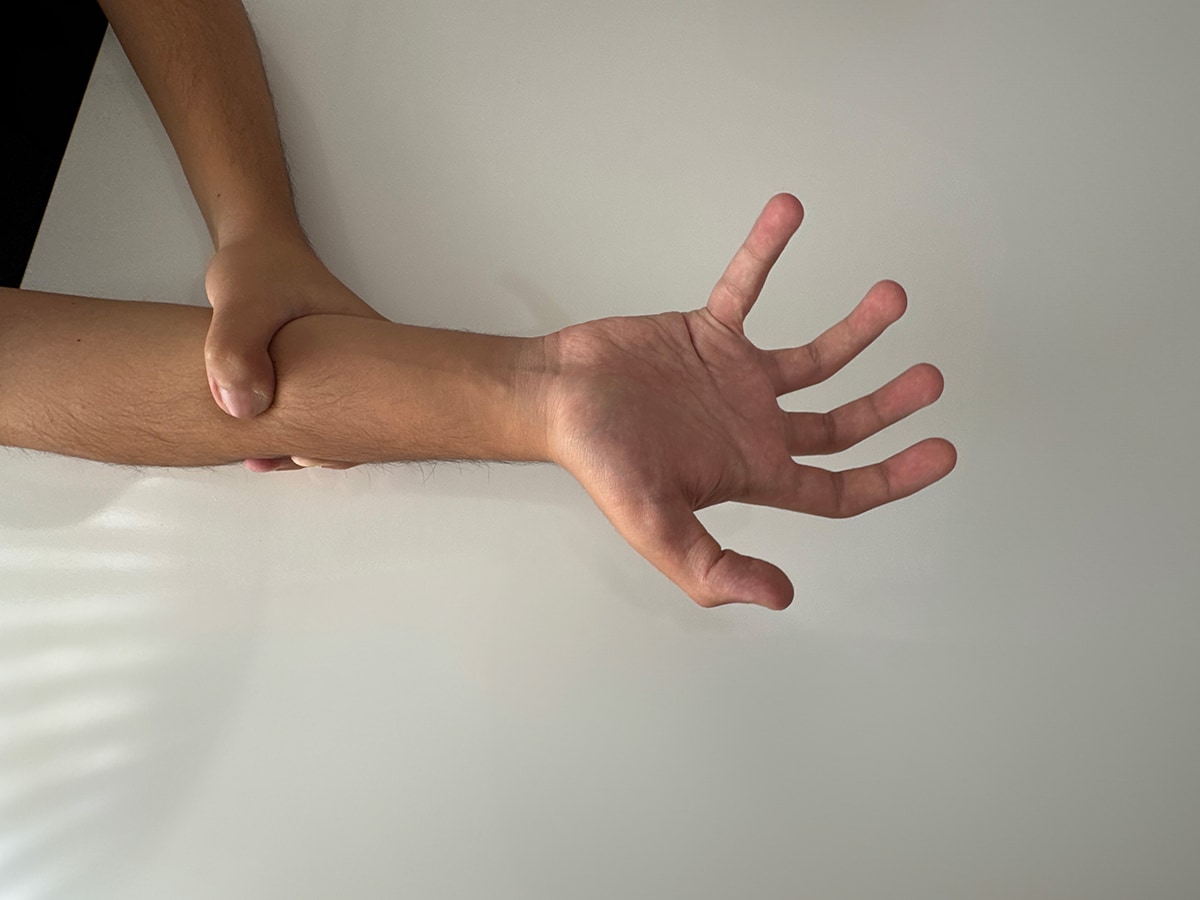
 Alien Hand Syndrome causes a person’s hand to move without intention or control.In rare cases, a person’s hand can move on its own, sometimes even fighting the other hand. This is known as alien hand syndrome — a brain disorder wherein a limb acts with a will of its own.
Victor Mark, M.D., associate professor in the University of Alabama at Birmingham Department of Physical Medicine and Rehabilitation, described the origins, subtypes and treatments of AHS in his article titled “Alien Hand: Current Research Trends,” published in the medical journal Current Neurology and Neuroscience Reports.
Causes and types
AHS is often caused by brain injury or neurodegenerative illnesses, but there is not enough research to determine any consistent cause or why it occurs.
“Alien hand is little investigated because it is rare and cannot predictively occur,” Mark said. “In comparison to other neurological illnesses, the involuntary movements do appear to be goal-directed, which is what makes alien hand unique.”
AHS has three main subtypes. Each one differs in the types of movements it causes and the areas of the brain that cause them.
Frontal alien hand involves grasping objects within reaching distance firmly, often making it difficult for the patient to free the hand. This is mainly caused by injury to the contralateral
medial frontal cortex, the part of the brain that regulates voluntary movement.
“It’s very frustrating for the patient and can even be dangerous when the grasped objects are either hot or sharp,” Mark said.
Callosal alien hand is more complex. Actions initiated by a person are countered by the alien hand, or the intended action is opposite from the action of the normal hand. This form of AHS is caused by injury to the corpus callosum, which connects the left and right sides of the brain and is responsible for the transfer of cognitive information between the regions.
“Callosal alien hand will reverse the voluntary actions of the other hand,” Mark said. “For example, if one hand is trying to button a shirt, the other hand will undo it.”
Posterior alien hand causes involuntary, but seemingly purposeful, movement of a limb. In some cases, patients reported some loss of sensory awareness in the limb. This type is caused by damage to the posterior cerebral parts of the brain that process memory, vision and sensory information.
Other subtypes of alien hand include combined forms of alien hand, bilateral alien hand, or alien leg or foot.
Effects and symptoms
AHS can cause self-injury, disturbance of sleep, unintentional behaviors, freezing of movement, difficulty with decision-making and uncontrolled verbal behavior. All types of the condition can cause individuals to accidentally harm themselves.
Patients also often experience confusion or anger about the loss of control. Mark notes an example from one of the earliest reported cases of AHS in which a woman was amazed, but also angry, when witnessing her hand move on its own.
“She said it was like there was a ghost controlling the hand, but that she found that amusing,” Mark said. “In most instances, patients do not see it in that way. In some cases, the symptoms will lead to a patient’s attempting to comfort the hand. They use the good hand to baby the alien hand, as if it’s an infant that they are trying to keep from acting maliciously.”
A difficulty in decision-making due to AHS has been observed, and an often overlooked aspect of the condition is alien communicative behavior. This causes patients to say unintended words and can last for years after the initial brain injury.
Ongoing research
Since AHS is quite rare, treatment results have been reported only in small series or single cases. One method that has been associated with improvement is mirror box training.
“The patient looks at the mirror reflection of the good arm that practices motor tasks and superimposed over the impaired arm,” Mark said.
Redirecting attention from the alien hand has seen conflicting results. However, in recent years, scientists have made progress in research attempting to understand AHS. This includes creating checklists to identify the behaviors linked to it, interviewing patients about their experiences and discovering that brain damage can spread farther than what regular MRI scans can usually show.
Current research on AHS focuses mainly on movement disturbances, rather than sensory issues. There has also been an uptake in looking into the impact on daily self-care from the condition.
“Some are trying to develop a more refined way to describe the disturbance,” Mark said. “That way, individuals could look at the criteria of defining or identifying alien hand and come to a consensus or gold standard for diagnosing alien hand.”
To learn more about AHS or the neurologic rehabilitation options that UAB has to offer, visit uabmedicine.org.