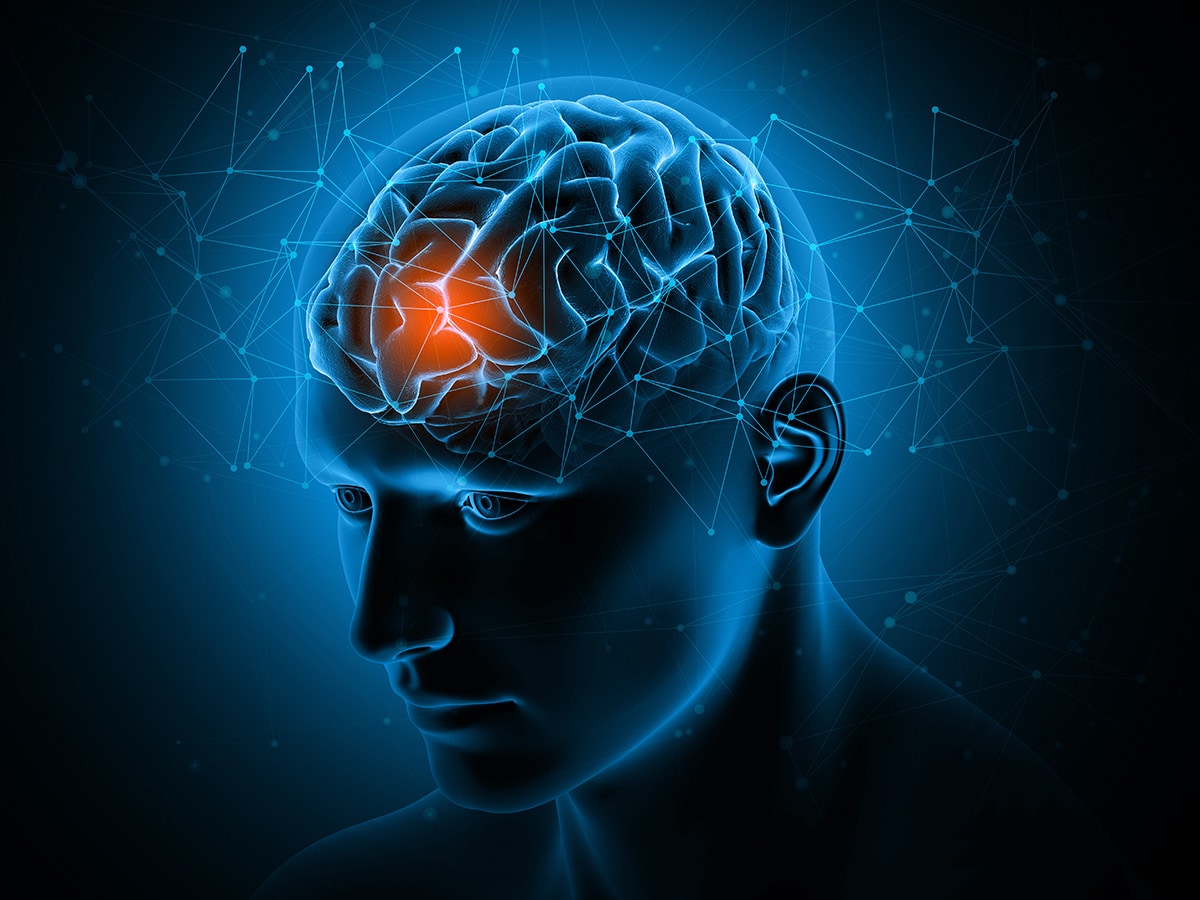
 A UAB researcher studied how tiny molecules could influence groups of genes responsible for how brain cells communicate, adapt and respond to stress.Oftentimes, someone with depression is categorized as an individual who is just feeling sad. However, one University of Alabama at Birmingham researcher explains that depression is linked to real biological changes in the brain and has published a study giving scientists an important new clue that could help develop better ways to understand, diagnose and eventually treat depression.
In the study, “Super Enhancer RNAs Rewrite the Molecular Script of Complex Gene Regulation in the MDD Brain,” Yogesh Dwivedi, Ph.D., Distinguished Professor and Elesabeth Ridgely Shook Endowed Chair in the Department of Psychiatry and Behavioral Neurobiology, sought to better understand these biological changes by examining the brain region involved in mood regulation and focused on tiny molecules called super-enhancer RNAs.
Super-enhancers are a specialized class of functional, non-coding RNA molecules transcribed directly from regions of the genome known as super-enhancers. In DNA, regular typical enhancers are short segments that help boost the transcription of specific genes. A super-enhancer is a large, dense cluster of these enhancers grouped closely together.
“A simple way to think about them is as small switches that help turn important genes on and off,” said Dwivedi, who also serves as co-director of UAB Depression and Suicide Center. “What we found is that many of these switches appear to work differently in people with major depression. Some may influence not just one gene but several genes at once, almost like a single switch controlling a whole set of lights.”
While regular enhancers handle general day-to-day gene maintenance, super-enhancers act as master control switches, turning transcription of neighboring genes on or off through chromatin looping, thereby dictating cell identity and fate.
In the study, Dwivedi examined the role of the super-enhancer RNAs in the dorsolateral prefrontal cortex, located at the top front right of the brain, from individuals with major depressive disorder and matched non-psychiatric controls. Several genes were found to be co-regulated by distinct seRNAs, and spatial mapping confirmed that many altered seRNAs were located near super-enhancer regions.
Results showed shared genetic signals linking MDD risk variants to downstream gene regulation mediated by super-enhancers, providing evidence that seRNAs may function as regulatory intermediaries linking genome-wide association studies risk loci to gene expression programs relevant to depression. Dwivedi says that, for the first time, the study highlights seRNAs as key modulators of proximal and distal gene networks in MDD, offering novel insights and therapeutic avenues.
“These seRNAs did not appear to be acting as isolated switches. Instead, they seemed to be part of a larger control system, influencing groups of brain genes that may be important for how brain cells communicate, adapt and respond to stress,” he said. “SeRNAs may help explain how risk signals in DNA are translated into biological changes that affect brain function, and that gives us a clearer window into the hidden molecular machinery behind depression.”
While the findings may not improve treatment of major depressive disorder in the near future, it gives researchers a promising new path. Dwivedi says his hope is that, over time, this work helps develop more precise ways to diagnose depression and, eventually, better treatments for the people who live with it.
“These findings point to tiny RNA switches that may help control whole groups of brain genes, and that matters because it could move us beyond treating symptoms alone and toward understanding the biology that drives the illness,” he said. “The research is still in its early stages, and the findings need to be confirmed in larger sample sizes; but a key next step will be to study the 3D structure of DNA in brain cells to better understand and confirm these long-range gene connections.”