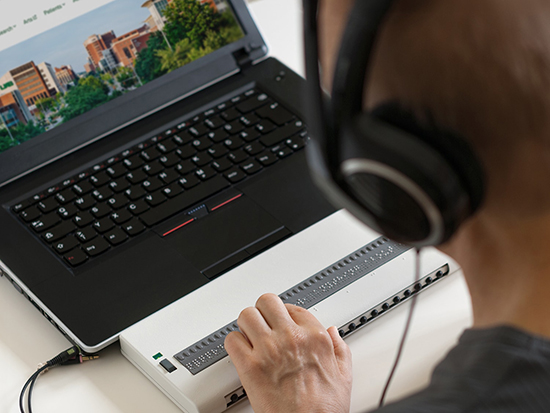
 In 2026, living and learning are increasingly digital experiences. Any barriers to accessing information digitally can prevent students from fully engaging with UAB’s courses and interfere with our shared responsibility as an institution to reach people locally and worldwide.
It is also now required by law. Title II of the Americans with Disabilities Act mandates that public-sector websites and apps meet specific accessibility standards by April 24, 2026. Aligning with these guidelines protects UAB and secures equitable access for every user.
General university content on the web, including online tools and videos, is being addressed through the UAB Digital Accessibility committee. The Office of Learning Technologies in the UAB Center for Teaching and Learning is leading the effort to assist faculty with their academic digital content.
Title II now requires that digital materials should be accessible to students from the start, without students' having to ask for accommodations, explains David Pollock, Ph.D., director of Learning Technologies for the Center for Teaching and Learning. “For university courses, this applies to any digital material, however it is provided to students,” including everything in Canvas, as well as PDFs, PowerPoints and other formats, Pollock said.
Accessible design helps all students learn better, Pollock says. “The classic example is captions for videos,” Pollock said. “I’m constantly turning on closed captions on videos these days on Netflix. I don’t have trouble mechanically hearing what is being said, but I find that having the captions that I can read along with a video, is really useful.” In addition to the millions of Americans who rely on screen readers to navigate websites and other digital content, there are others with undiagnosed disabilities or simply who “know that they read better than they listen, or vice versa,” Pollock added.
Help for faculty
Faculty are responsible for the digital content they require students to use in any course modality, including online, hybrid or in-person classroom.
Start here
The Office of Learning Technologies is providing a robust set of resources to help faculty meet the goal of fully accessible content for students, Pollock says. An overview video, FAQs and resource links can be found on the OLT’s accessibility page. This includes answers to common questions that Pollock has encountered as he meets with school leadership and faculty around campus to discuss accessibility in academic digital content.
Panorama
A new tool called Panorama, will be available inside Canvas starting Monday, Feb. 9, for UAB faculty. “It will flag a number of issues with inaccessible content. In many cases, it will let you fix flagged issues right inside Canvas. This is a great way for faculty to start with making their courses accessible,” Pollock said.
In addition to helping faculty improve the accessibility of course content, Panorama provides students with the option to convert course content into file types that may be more accessible for them, including Braille, Immersive Reader, ePub and more. This will also be available to students starting Monday.
Pollock is introducing Panorama to faculty in a Zoom webinar at 11 a.m. on Feb. 9 (join the webinar introduction to Panorama here). The recording will be available on the OLT website afterward (Accessibility in Academic Digital Content | The Office of Learning Technologies) along with other resources to get started.
Help ticketing system
Faculty can submit help tickets for assistance from Pollock’s team, which now includes additional support staff.
Additional training
More training opportunities through the Center for Teaching and Learning will be added soon, Pollock notes.
“Faculty should know that they are not alone,” said Amy Chatham, Ph.D., executive director of the Center for Teaching and Learning. “We understand the additional work this requires to comply with the law. We are here to help faculty. And this is the right thing to do for all our students.”