 James O. Hill, Ph.D., and Holly Wyatt, M.D., researchers specializing in weight loss maintenance, explain the reasons why patients quit taking GLP-1 drugs and strategies to help them keep their weight loss.Sometimes it feels like everyone is taking Ozempic or Wegovy or one of the other GLP–1 agonist drugs now approved for weight loss by the FDA.
It is not everyone, but the number is in the millions. In a November 2025 poll, one in eight American adults said they were currently taking a GLP–1 drug. (That included diabetes and other conditions as the primary reason for the prescription, in addition to weight loss.) Another survey in April and May 2025 extrapolated that one in five American women between the ages of 50 and 64 had taken a GLP–1 drug in the previous few months.
But soon there may be just as many former users of GLP-1s as current ones. According to preliminary reports, more than half of people who start on GLP–1 prescriptions will stop them within a year. In a study published in JAMA Network Open in January 2025, which included more than 125,000 patients, nearly 65 percent of those taking GLP–1s for reasons other than Type 2 diabetes discontinued them within one year. Patients primarily taking GLP-1s for Type 2 diabetes still discontinued them at a rate of 46.5 percent.
“Maintenance requires a different plan”
Often, the decision to quit is driven by financial considerations, including the high costs of GLP–1s and decisions by many insurers not to cover them for weight loss alone, says James O. Hill, Ph.D., director of UAB’s Nutrition Obesity Research Center, professor in the UAB Department of Nutrition Sciences and an internationally recognized expert on weight loss. But even if money were not an issue, Hill says, there are a number of other factors that could lead patients to decide not to take GLP-1s long-term (see below).
 “We’re not anti-medication at all,” Hill said. “These medications work. They get the weight off. They make you feel satisfied on less food. But without the meds, when you eat less you will get hungry, just like before. When you stop, all the food noise comes back. So you have to decide: Are you going to stay on them forever? And if you don’t, how are you going to avoid regaining all the weight you lost?”
“When appetite and food noise return, patients can feel blindsided,” said Holly Wyatt, M.D., an endocrinologist, expert in obesity medicine and professor in the Department of Nutrition Sciences. “They think something is wrong with them. But this is actually predictable biology. When you understand that, you can prepare for it instead of being discouraged by it.”
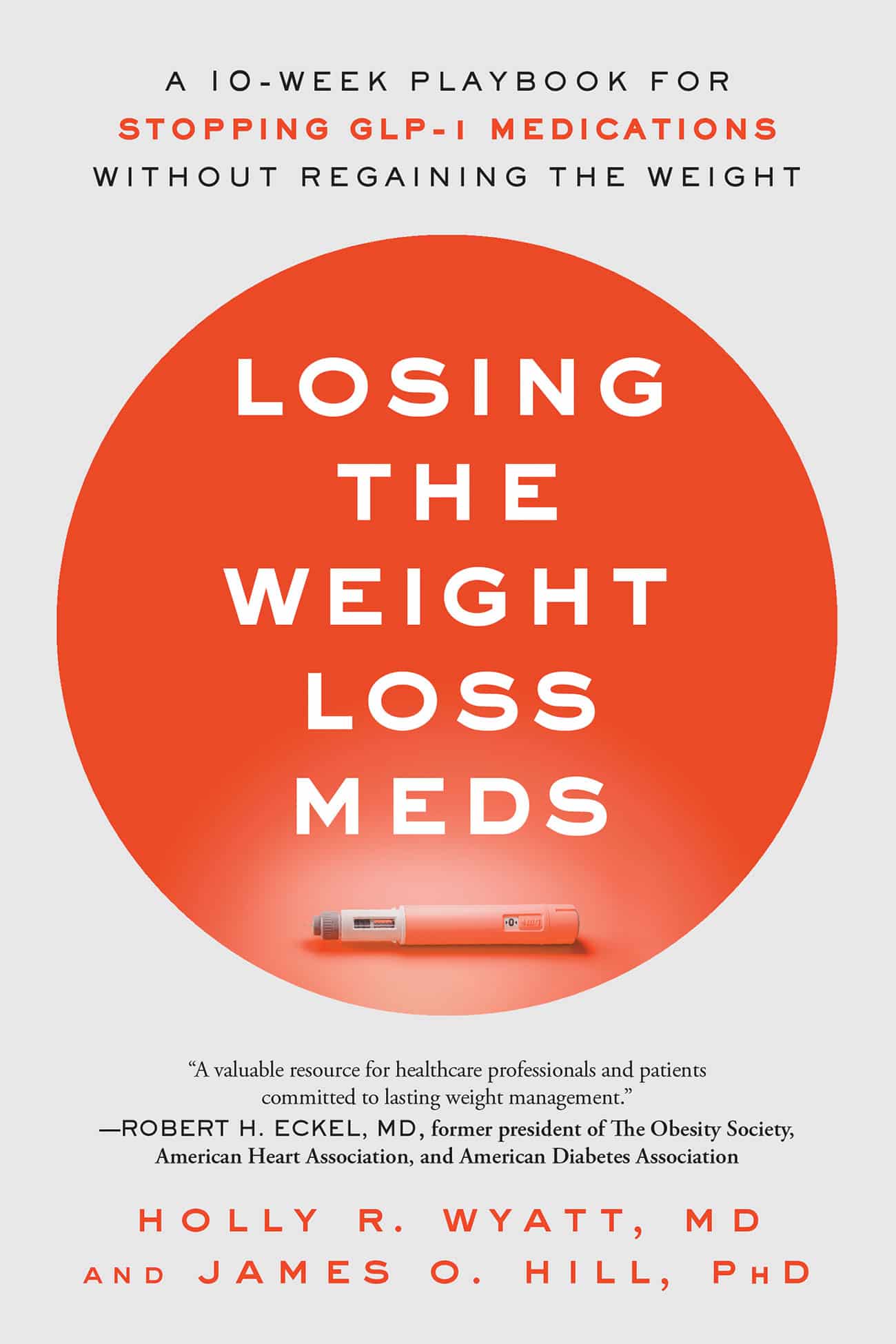
Hill and Wyatt have published a new book designed to help people successfully navigate life after GLP-1s: “Losing the Weight Loss Meds: A 10-Week Playbook for Stopping GLP–1 Medications Without Regaining the Weight.”
“We wrote this book because the medical system is good at helping people lose weight, but far less prepared to guide them through maintenance,” Wyatt said. “Maintenance requires a different plan and a different mind-state.”
Why quit? 3 main reasons
These are the top reasons people quit GLP-1s, Hill says.
Money: “In our experience, the No. 1 reason for stopping GLP–1s is financial,” Hill said. “Prices are coming down; but for a reasonably high dose, you are still talking about $500 a month.”
Side effects: “When people are losing weight, they will tolerate more side effects,” Hill said. (The most common side effects are gastrointestinal discomfort and nausea.) “Eventually, if you keep taking GLP–1s, you will reach a plateau. You won’t be losing weight anymore. People say, ‘The drug stopped working,’ but what really happened is that you have reached the metabolic plateau for your body.”
The joy of eating: “People miss the experience of food,” Hill said. “People like me and my wife — we like to go out to dinner. People who are on these meds often say that they don’t look forward to the pleasure of a meal. They miss the experience of enjoying food.”
Hill and Wyatt are leaders in the National Weight Control Registry, which has enrolled more than 10,000 participants who have successfully lost at least 30 pounds and kept the weight off for at least one year. That makes it one of the largest, if not the largest, ever such study. Still, 10,000 people is a tiny fraction of the number who try and fail to lose weight and keep it off long-term.
“Holly and I have been interested in weight-loss maintenance for a long time,” Hill said. “The trouble is that the number of people who lost enough weight and kept it off was so small. There have not been that many people interested in weight-loss maintenance in this field; but now with GLP–1s, people are reaching their goal weights, and they have to decide what to do next.”
Lessons from Wyatt and Hill’s work with the National Weight Control Registry and other research is clear, including the strategies that work and the general categories that most people fall into when struggling to maintain a healthy weight. “This is why we wanted to write this book and what we put into it,” Hill said. “The key to the book,” he added, “is that weight loss is different from weight loss maintenance.”
3 ways to maintain a healthy weight
The three most important strategies for weight maintenance after GLP–1s involve replacing the medications with other medicine, Wyatt and Hill write.
Food is medicine. “Before you lost weight, your appetite was too big,” Hill said. “On medicine, it is low. We give you strategies so that appetite doesn’t come roaring back. For one thing, there are lots of ways to eat to promote satiety. We cover those.” It’s also important to note that “food is not just about calories,” Wyatt said. “It is about strategically rebuilding satiety and satisfaction so hunger does not dominate your decisions again.”
Physical activity is medicine. “We have studied tens of thousands of people now who have lost weight,” Hill said. “There are very few who can do it without a substantial increase in activity. You need fewer calories now than you once did; physical activity increases your energy expenditure and optimizes your metabolism.”
Your mind is medicine. “Mindset alone is not enough,” Wyatt said. “We focus on what we call mind-state, which is mindset plus action. It is the daily behaviors that reinforce your belief that you can maintain this.” Hill added: “The more I look at it, the mind is the most important part of all of this. Are you resilient? Do you have a positive outlook? Are you enjoying this success with reaching a healthy weight? You need to see that success is not just a number on a scale, but a better life.”
3 common people profiles
“We have found that a lot of people fit into one of three profiles, which affects the strategy they might want to prioritize,” Hill said.
Non-stop food seekers: “For these individuals, food is the issue — they are hungry all the time,” Hill said.
Sedentary sitters: “These people are really good at losing weight, but they don’t keep it off because they are not physically active,” Hill said.
Setback cyclers: “Many people who struggle with maintenance are not lacking motivation,” Wyatt said. “They are lacking a plan for setbacks. Maintenance is not about perfection. It is about having a recovery strategy.”
Hill and Wyatt note that they are available to speak to any clinic at UAB where GLP-1 medications are used to help clinicians and their patients understand how to adapt to the challenges of weight loss maintenance.
Looking to the future
“My prediction is that within a few years we will have even more effective weight loss products,” Hill said. “Most people will be able to reach their weight goals. I think the challenge will be keeping it off. That’s why we decided to write this book.”