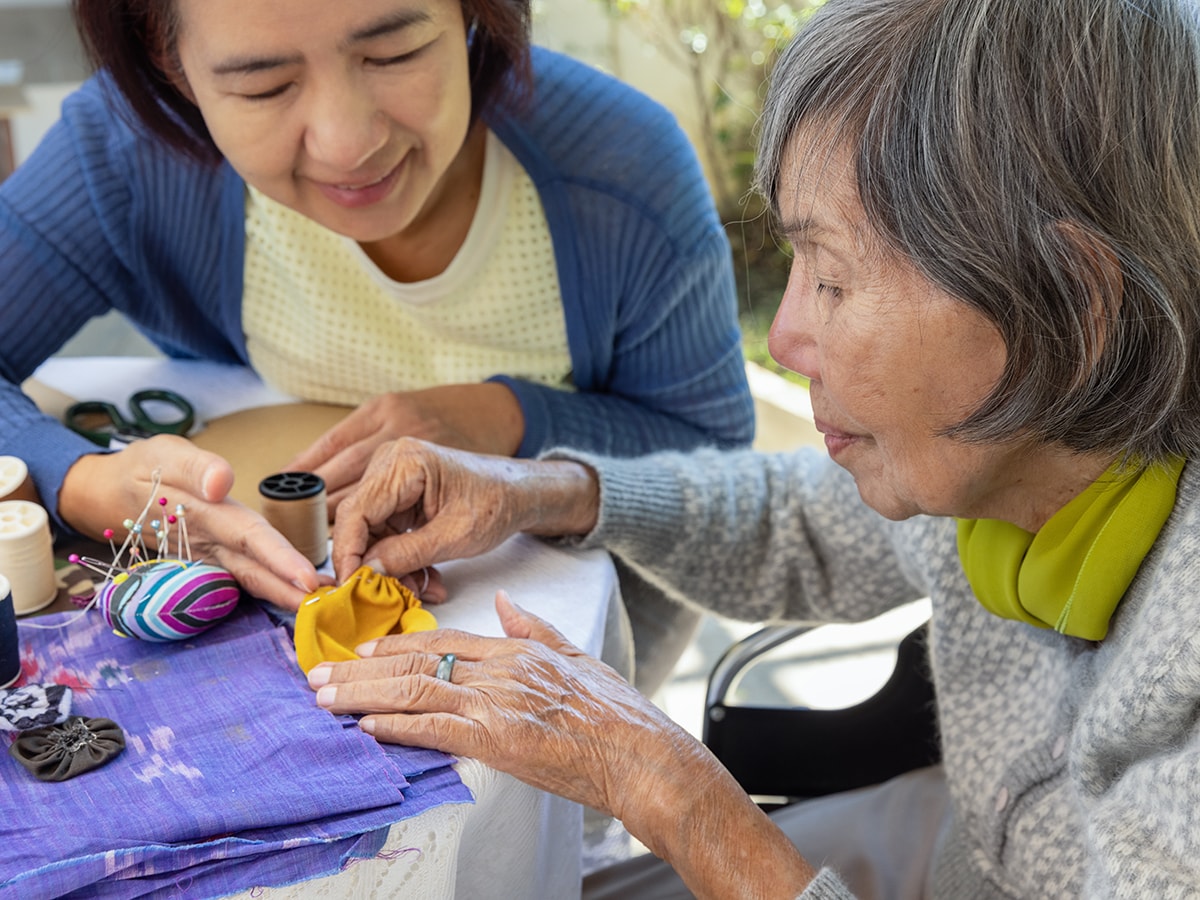
 Last summer, the federal Centers for Medicare & Medicaid Services brought an innovative new pilot project to Alabama. The Guiding an Improved Dementia Experience Model, or GUIDE, is a Medicare benefit designed to improve care and support for people with dementia and their caregivers. The goal is to reduce caregiver strain and financial burden and offer support to people in underserved areas.
“The GUIDE Model provides comprehensive, coordinated dementia care that improves quality of life for people with dementia by enabling them to remain in their homes and communities and reducing strain on their unpaid caregivers,” said Christy Baynes, MSHA, MBA, founder and CEO of LifeCare for Seniors, LLC. The company has been providing navigation of complex care needs for clients since 2012. In 2024, CMS selected LifeCare for Seniors to implement the GUIDE Model in Alabama, and it began to enroll participants in July 2025; it is one of just two GUIDE sites in the state.
The medical director for the LifeCare for Seniors GUIDE Model Team is UAB’s Andrew Duxbury, M.D., professor in the Division of Gerontology, Geriatrics and Palliative Care and a senior scientist in UAB’s Integrative Center for Aging Research and the UAB Center for the Study of Community Health. Baynes has multiple degrees from UAB, including a Master of Science in health administration, a Master of Business Administration and a graduate certificate in Gerontology.
Services and eligibility
GUIDE Model services include care coordination and management, caregiver education and support, and $2,500 per year for respite services. GUIDE is available at no out-of-pocket cost to patients with traditional Medicare who are not living in a nursing home or on hospice. The service area includes the entire state of Alabama.
About 10 percent of Medicare beneficiaries nationwide have dementia and may be eligible for GUIDE. “Medicare is looking at patient populations that are heavy users of the health care system and how we can be creative in delivering care that is not as expensive and invasive,” Baynes said. LifeCare for Seniors and the more than 325 other participating sites nationwide are capturing data on the project for eight years to determine its effect on reducing hospitalizations and unnecessary nursing home placements, reducing costs, and improving the quality of life for the person living with dementia and their caregivers.
How it works
An initial phone assessment is done with one of the nurse practitioners at LifeCare for Seniors, Baynes says. “Then the following month we make a home visit. We are servicing participants all over the state; in the first week alone I drove 900 miles, from north Alabama to Bay Minette” on the Gulf Coast, she said.
The goal of these visits is to “see these folks in the home with their family care partners, to learn more about them and to talk about the goals for this particular family,” Baynes said. “We gather general health history and get to know their families. We also look at their fall history, what assistive devices they are using, whether they have a history of anxiety and depression. And we ask some basic questions: Are they a veteran or a spouse of a veteran? Do they have an advanced directive? Does a relative have power of attorney? We can connect them with lawyers and even free legal services if they need a power of attorney.”
Families often find that timely support allows them to keep their loved one at home. “Most folks want to keep their loved ones at home and keep them with the resources they need in the home,” Baynes said. “I would say probably about 15 percent of the patients we see need to be on hospice services or have pronounced decline in function and exacerbated behaviors that may require hospitalization. In those cases, we help the family transition.”
Respite services
One of the nine service domains provided through GUIDE is respite services — either in-home or at a respite program, Baynes said: “If they want that, we connect them with one of our partner organizations; it is a little more than $2,500 each year. That is not a lot, but it is far more help than many participants were getting before.”
Patient and family education
GUIDE includes “a really unique, online, HIPAA-protected education and resource service,” Baynes said. Most of the GUIDE participants in Alabama are from rural and urban areas where health illiteracy is an issue. “Some don’t have internet; maybe they have a flip phone,” Baynes said. “Really what we are discovering is that the educational needs of families are very person-centered and individualized. We are meeting them where they are.”
Even “just a small orientation helps caregivers to understand what is happening so much better,” Baynes said. “For example, just learning the term ‘anosognosia,’ where a patient doesn’t recognize they have a problem, is something you can do in a three-minute video and can make a big difference. Many times, patients in underserved areas may have just been told, ‘Your mom has dementia; here’s a pill.’ That’s about it. We are able to provide careful education and are very respectful of the person living with dementia.”
LifeCare for Seniors also has “a licensing partnership with Teepa Snow, who has a trademarked approach for caring for seniors with dementia called the Positive Approach to Care,” Baynes said. “We were the first PAC-designed organization in the state of Alabama.”
Snow’s GEMS model classifies people living with dementia according to the skills and abilities that they still have, rather than those they have lost, Baynes said: “It goes through the journey of brain changes and what the person is experiencing, both physically and behaviorally, and how to approach them.”
24/7 support
GUIDE participants have a monthly scheduled call with one of the team’s Care Navigators to talk about how everything is working. They also have access to 24/7 phone support from LifeCare for Seniors. “What we have done for the last 15 years with LifeCare for Seniors has been private practice, available only to those who can afford it,” Baynes said. “It has been very rewarding to be a part of GUIDE and offer this support for free.”
Contact
For more information about the CMS GUIDE Model, call (205) 848-8400 or go to lifecareforseniors.com/guide.
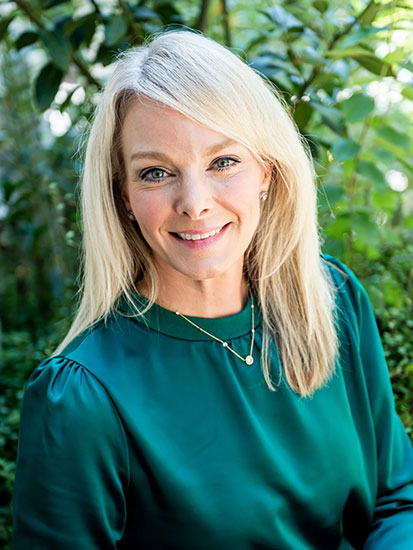 Christy Baynes, MSHA, MBA, founder and CEO of LifeCare for Seniors, LLC, which is implementing the GUIDE Model in Alabama. Photo courtesy Christy Baynes
A passion for helping seniors and families
Christy Baynes can trace her interest in helping seniors and their families to a post-undergraduate job in the late 1990s working with the landmark REACH (Resources for Enhancing Alzheimer’s Caregiver’s Health) study at UAB and the University of Alabama. The program was led by Alan Stevens, Ph.D., associate professor of gerontology and geriatric medicine at UAB, and Louis Burgio, Ph.D., at the University of Alabama.
After she graduated with a degree in psychology from the University of Alabama, Baynes intended to get a Ph.D. Looking for a job in the meantime, she was hired to do data entry for the REACH Program.
“UAB has been looking into this model for 30 years,” Baynes said. “Really, it was those projects that drove my passion.” She completed the dual MSHA/MBA program at UAB in 2001, graduating in class 35 of the MSHA program. “I knew by then that I wanted to be in the geriatric space,” she said.