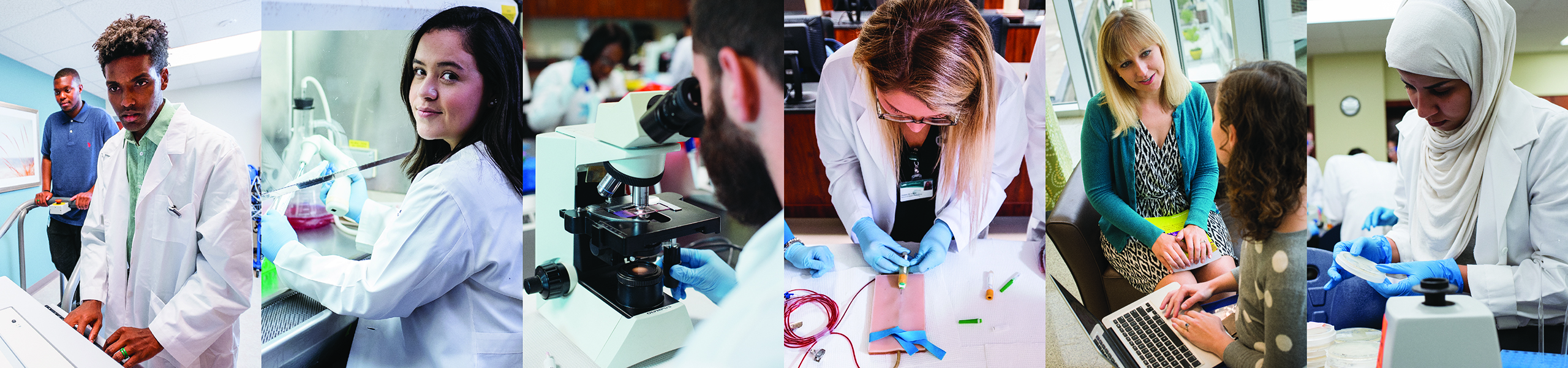
With a degree in Medical Laboratory Science, you can work as a medical laboratory scientist in:
- Hospitals
- Clinics
- Clinical Research Labs
- Reference Labs
- Research and Development Labs
- Health Departments
- Academia
- Consulting
- Many more organizations, finding answers to patients’ health questions.
Many of the careers in medical laboratory science allow you to work within the health care industry without direct patient care. This can be ideal for professionals transitioning from other health care professions or even those who are changing from careers in research or education. The hours for positions in this field tend to be flexible, with different types of shifts available.
In addition to pursuing careers as a medical laboratory scientist, some students use a degree in Medical Laboratory Science as part of their path to medical school.
In the Clinical Education portion of your BS MLS education, you get to apply your knowledge and skills in a contemporary, accredited medical laboratory and further develop discipline-specific competency under the supervision of clinical instructors.
Professional Clinical Sites Affiliated with UAB Medical Laboratory Science
- UAB Health System - Birmingham, AL
- UAB St. Vincent’s Hospital - Birmingham, AL
- UAB St Vincent’s East - Birmingham, AL
- UAB Medical West - Bessemer, AL
- Children’s of Alabama - Birmingham, AL
- VA Medical Center - Birmingham, AL
- DCH Regional Medical Center - Tuscaloosa, AL
- Huntsville Hospital - Huntsville, AL
- Grandview Medical Center - Birmingham, AL
- LabCorp - Birmingham, AL
- Brookwood Baptist Medical Center - Birmingham, AL
- Shelby Baptist Medical Center - Alabaster, AL
- Gadsden Regional Medical Center - Gadsden, AL
- Northeast Alabama Regional Medical Center - Anniston, AL
- USA Health University Hospital - Mobile, AL
- Princeton Baptist Medical Center - Birmingham, AL
- Jackson Hospital - Montgomery, AL
- CHI Memorial - Chattanooga, TN
- Piedmont Atlanta Hospital - Atlanta, GA
- WellStar Health System - Atlanta, GA
- Piedmont Columbus Regional - Columbus, GA
- UF Health Shands Hospital - Gainesville, FL
Prerequisite Requirements
- MA 105: Pre-Calculus Algebra or higher
- CH 115 and 116: General Chemistry I and Lab
- CH 117 and 118: General Chemistry II and Lab
- CH 235 and 236: Organic Chemistry and Lab
- BY 123: General Biology and Lab
- BY 261 or 271: Microbiology and Lab
- BY 210: Genetics
In addition to the general UAB admission requirements, to gain admission to the BS MLS program, applicants must:
- Have a minimum cumulative overall GPA of 2.75 at the time of application. A minimum cumulative GPA of 2.75 does not guarantee admission to the BS MLS program. Admission is competitive and is based on space available.
- Have successfully completed a minimum of 58 semester credit hours prior to matriculation into the BS MLS program.
- Have successfully completed all BS MLS prerequisite courses with a “C” or above prior to matriculation into the BS MLS program.
- Provide a written statement of interest and career goals.
- If accepted, a background check and drug screening will be required at program admission and again prior to clinical placement.
- If accepted, complete the UAB Student Health and Wellness Level III Immunization requirements and provide proof of medical coverage.
Application Procedure
Students are eligible to apply when they have successfully completed a minimum of 40 semester hours of credit. If accepted, applicants are enrolled in the Fall semester after completion of all admission requirements. Applicants should submit the following materials:
To the UAB Undergraduate Admissions Office
- Completed UAB undergraduate application and fee, if applicable. Apply online here.
- Official transcripts from each college or university attended.
To the MLS program, School of Health Professions
- Completed application to the BS MLS Program.
- Unofficial copies of all transcripts from each college or university attended emailed to
This email address is being protected from spambots. You need JavaScript enabled to view it. .
International Requirements
International students can apply to UAB as freshmen, transfer/second degree, or returning students. To learn more about our international admissions, visit the UAB Office of Global Engagement website.
Essential Functions
In order to successfully complete the degree requirements for the BS MLS, students must complete the academic and clinical practice requirements.
Students must also meet the essential requirements in addition to the academic requirements. Essential requirements are those physical abilities, mental abilities, skills, attitudes, and behaviors students must evidence or perform at each stage of their education. The absence of an essential requirement would fundamentally alter the program goals.
The essential requirements include categories of observation, movement, communication, intellect, and behavior.
-
Observation
The student must be able to:
- Observe laboratory demonstrations in which biological (i.e., body fluids, culture samples, tissue sections, and cellular samples) specimens are tested for their biochemical, hematological, immunological, microbiological, and histochemical components.
- Characterize the color, odor, clarity, and viscosity of biologicals, reagents, or chemical reaction products.
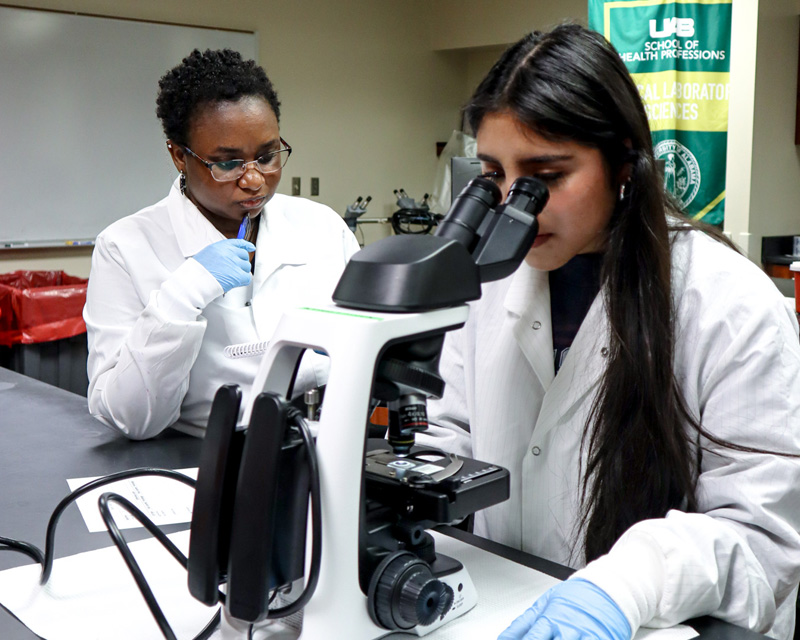
- Employ a clinical grade binocular microscope to discriminate among fine structural and color (hue, shading, and intensity) differences of microscopic specimens.
- Read and comprehend text, numbers, illustrations, and graphs displayed in print, on a projection screen, and on a video monitor.
-
Movement
The student must be able to:
- Move freely and safely about a laboratory.
- Reach laboratory bench tops and shelves, patients lying in hospital beds or patients seated in specimen collection furniture.
- Travel to numerous clinical laboratory sites for practical experience.
- Perform moderately taxing continuous physical work, often requiring prolonged sitting, in confined spaces, over several hours.
- Maneuver phlebotomy and culture acquisition equipment to safely collect valid laboratory specimens from patients.
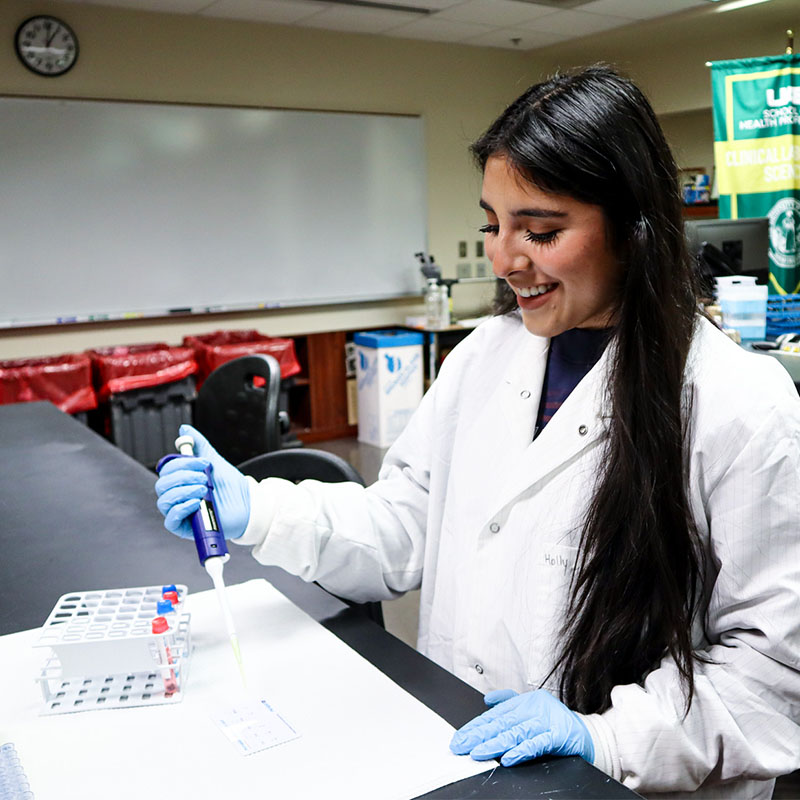
- Control laboratory equipment (i.e. pipettes, inoculating loops, test tubes) and adjust instruments to perform laboratory procedures.
- Use an electronic keyboard (i.e. 101-key IBM computer keyboard) to operate laboratory instruments and to calculate, record, evaluate, and transmit laboratory information.
-
Communication
The student must be able to:
- Read and comprehend technical and professional materials (i.e. textbooks, magazine and journal articles, handbooks, and instruction manuals).
- Follow verbal and written instructions in order to correctly perform laboratory test procedures.
- Clearly instruct patients prior to specimen collection (if applicable).
- Effectively, confidentially, and sensitively converse with patients regarding laboratory tests (if applicable).
- Communicate with faculty members, fellow students, staff, and other health care professionals verbally and in a recorded format (writing, typing, graphics, or telecommunication).
- Prepare papers, prepare laboratory reports, and take examinations within specified times.
-
Intellect
The student must:
- Possess these intellectual skills: comprehension, measurement, mathematical calculation, reasoning, integration, analysis, comparison, self-expression, and criticism.
- Be able to exercise sufficient judgment to recognize and correct performance deviations.
-
Behavior
The student must:
- Be able to manage the use of time and be able to systematize actions in order to complete professional and technical tasks within faculty-defined time limits.
- Possess the emotional health necessary to effectively employ intellect and exercise appropriate judgment.
- Be able to provide professional and technical services while experiencing the stresses of task-related uncertainty (i.e. ambiguous test ordering, ambivalent test interpretation), emergent demands (i.e. “stat” test orders), and a distracting environment (i.e. high noise levels, crowding, complex visual stimuli).
- Be flexible and creative and adapt to professional and technical change.
- Recognize potentially hazardous materials, equipment, and situations and proceed safely in order to minimize risk of injury to patients, self, and nearby individuals.
- Adapt to working with unpleasant biologicals.
- Support and promote the activities of fellow students and of health care professionals. Promotion of peers helps furnish a team approach to learning, task completion, problem solving, and patient care.
- Be honest, compassionate, ethical, and responsible. The student must be forthright about errors or uncertainty. The student must be able to critically evaluate her or his own performance, accept constructive criticism, and look for ways to improve (i.e. participate in enriched educational activities). The student must be able to evaluate the performance of fellow students and tactfully offer constructive comments.
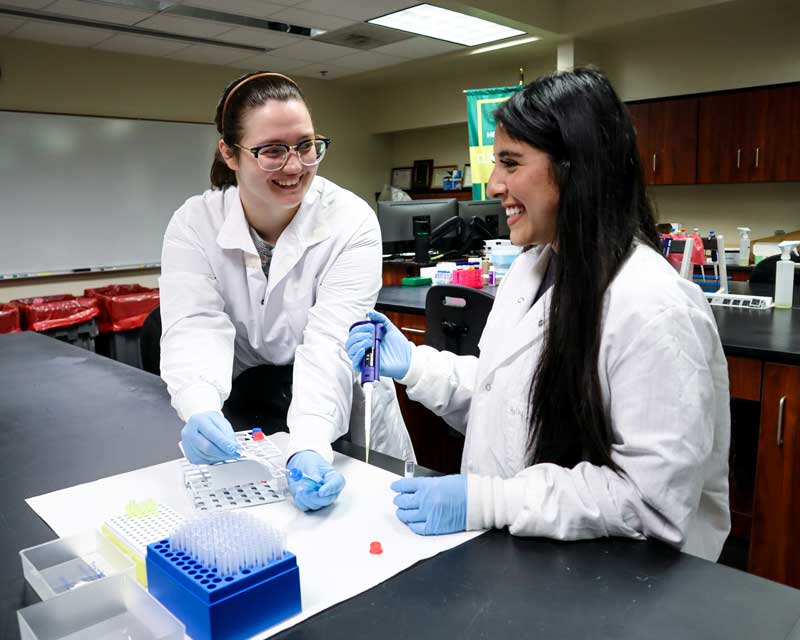
Do you love the thought of working in health care, but feel like a nurse, doctor, or other front-line health care professional just isn’t what you are looking for?
Do you love mysteries, puzzles, sudoku, hands-on science, or getting to the bottom of a problem?
If you answered yes to these questions, then a Bachelor’s in Medical Laboratory Science may be just for you! In the MLS program, we will teach you all the theory and skills needed to work in a clinical laboratory and become an amazing medical detective.
Students graduating with a BS in MLS will be able to put their education to use in a variety of clinical settings, including hospital laboratories, reference laboratories, industry laboratories, research laboratories, and many more. If you choose to further your education in a graduate program or medical school, you will also be well prepared.
Quick Facts
- Medical Laboratory Science is an excellent choice for those who enjoy learning about medicine and health care and prefer to make contributions to patient care behind the scenes.
- In addition to clinical laboratories in hospital settings, graduates can pursue employment in specialty clinics, industry, clinical research, and so much more!
- The field of Medical Laboratory Science is an ever-growing field driven by new technologies and innovative testing that continues to transform the health care industry.
Curriculum
The Medical Laboratory Science program is committed to providing a high-quality education to prepare students with a solid educational background and a set of skills translatable to a variety of health care settings. Visit the undergraduate catalog for the curriculum and course descriptions for courses in this program.
Program Outcomes
The purpose of program evaluation is to systematically study, investigate and appraise the effectiveness of the Medical Laboratory Science program in order to ensure that the program continues to provide a signature educational program that produces graduates who are prepared to be leaders in their field. This data will be available once the first cohort graduates, anticipated in 2028.
Accreditation and Certification
The program is accredited by the National Accrediting Agency for Clinical Laboratory Sciences. Program graduates are eligible to apply for the certification examination offered by the American Society of Clinical Pathology Board of Certification (ASCP-BOC).
NAACLS
5600 N River Road, Suite 720
Rosemont, IL 60018-5119
Phone: 773.714.8880
Fax: 773.714.8886
NAACLS website
ASCP Board of Certification
33 West Monroe Street, Suite 1600
Chicago, IL 60603
Phone: 312.541.4999
Fax: 312.541.4998
ASCP Website
Biomedical Sciences
Please click on a link below to open a PDF version of the program handbook that corresponds with the chosen year.
2025 - 2026
2024 - 2025
2023 - 2024
2022 - 2023
2021 - 2022
2019 - 2020
2018 - 2019
2017 - 2018
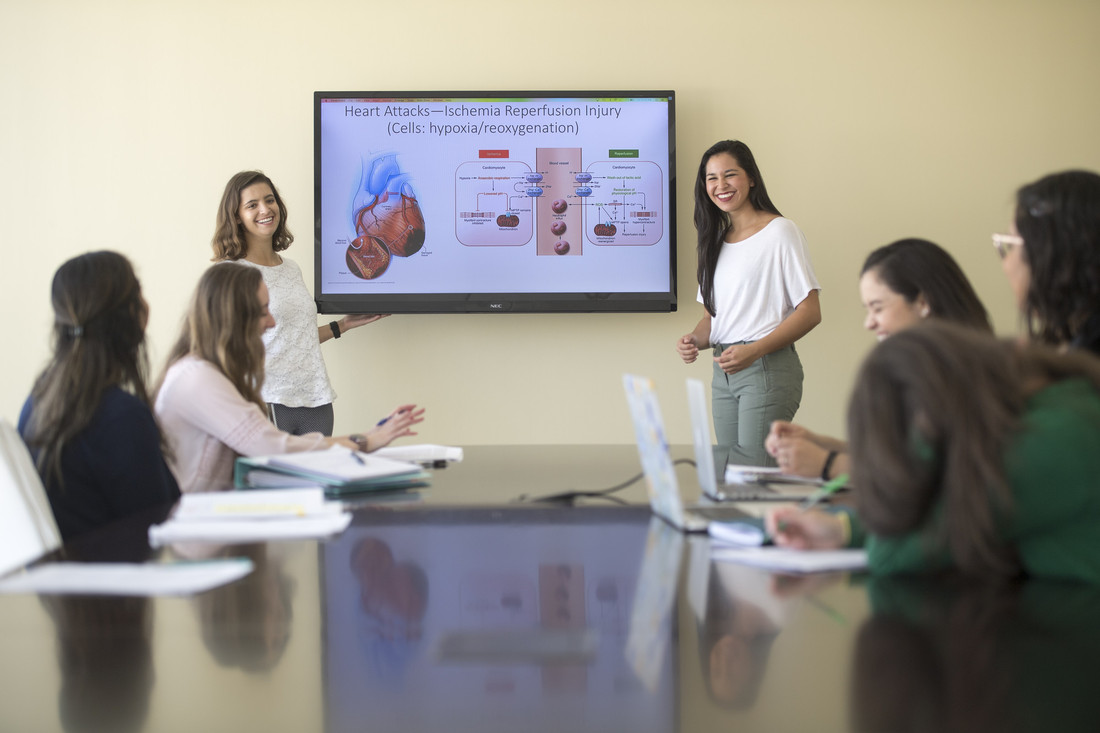 The Biomedical Sciences (BMD) major and minor provide a foundation of coursework and skills building to prepare students for research or clinical professions, as well as prepare students to continue on to master’s and professional programs, including, but not limited to, medical school.
The Biomedical Sciences major uses a team-based learning approach and gives students the opportunity to apply what they are learning in clinical settings. Undergraduate students can also participate in research as early as their Freshmen year and research opportunities include clinical research, working alongside physicians.
Exciting opportunities and experiences are available at UAB for undergraduates interested in the study of the human body. We believe in teaching differently, inspiring curiosity and building a supportive community that shapes leaders through our intentional science curriculum, current educational pedagogies, premier academic advising and purposeful professional growth instruction.
Our curriculum is rigorous to ensure success for our graduates to pursue many different careers in health care, education, and research. The BMD faculty and staff are dedicated to fulfilling its important role in the development of competent, successful and respected BMD graduates. We welcome interactions with hard-working, like-minded individuals that are committed to exploring science and personal growth.
International Students
The School of Health Professions is not only home to some of the best ranked programs in the nation, but we’re also a part of one of the most diverse universities as well. At UAB, you will find students from all around the world studying, living, and learning together.
We want to make sure international students have every opportunity to succeed in both course work and college life, so we’ve gathered some easy tips to help you have the best experience studying abroad at UAB:
Visit UAB’s International Student and Scholar Services located in the INTO UAB Center on the second floor on Mervyn Sterne Library. They can help you with forms and applications, provide city guides and recommendations, and answer your questions to help make your life easier.
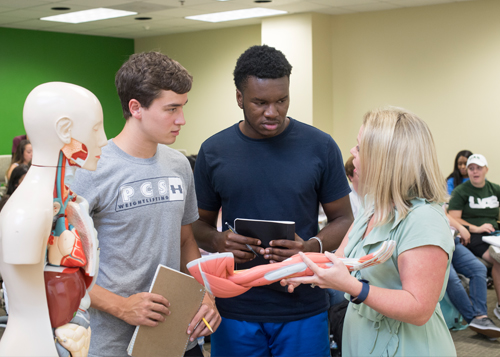 The Minor in Biomedical Sciences is ideal for students outside of the BMD major who are interested in preparing for future study in medicine and the health professions. You will complete our signature core of Clinical Physiology/Pharmacology courses. The BMD Minor can then be tailored to your education and career goals with assistance from BMD advisors who will aid students in identifying varied coursework to meet BMD minor requirements. For more information, contact
Curriculum
See the UAB Undergraduate Catalog for a full list of courses in the BMD minor. Additional courses can be added upon approval from the program director.
 The Bachelor of Science in Biomedical Sciences (BMD) program prepares you for health-related graduate and professional study or for entry into one of the fastest growing occupational sectors.
Are you looking for a flexible and solid undergraduate degree that will prepare you for today’s fastest growing occupational sector? Then BMD is for you.
You will tailor your degree to fit your academic and career goals. The program, which includes coursework in physiology, pharmacology, clinical biochemistry, medical microbiology and immunology, plus the pathological basis of disease, includes six elective courses that you choose based on your individual health-related educational track.
Accelerated Master’s Programs
Students interested in pursuing a graduate degree may take advantage of UAB’s accelerated master’s programs. The BMD undergraduate program can be paired with several health professions master’s degrees, as well as a Doctor of Pharmacy program. Learn more about available fast track programs.
Why Major in Biomedical Sciences?
The Biomedical Sciences major is ideal for students who are interested in pursuing careers in health professions or advanced degrees in healthcare-related field. The program is broad enough so that students can pursue non-healthcare related careers and advanced degrees, if their career goals should change. This program does include fewer required labs than other general science majors and is more healthcare focused. The coursework is rigorous and is designed to help prepare students for graduate and professional program coursework.
International Students
One of the best things about UAB is its amazing variety of its scholars — we are home to more than 2,000 international students, scholars and visitors annually. We want you to have every opportunity to succeed in your course work and college life. Here are some easy tips for you to follow:
- Visit the UAB International Student and Scholar Services website. They have all sorts of forms, guides, and helpful links to make your life easier.
- Don’t be shy. Let your instructors know that English is your second language.
- Take advantage of class study groups. They let you go over material at your pace.
- Record lectures (with your instructors’ permission). Transcribe your recording to notes.
- Meet regularly with your advisor. They are experts and can help!
- Visit the UAB English Language Institute. They will give you assistance with both oral and written English.
- Visit the UAB Writing Center. They have tutors and instructional workshops.
- Frustrated and out of options? UAB counselors are there for you.
We invite you to explore all of the programs and services offered to international students. International Student and Scholar Services will be able to advise you about how to apply and who to contact for information. Please visit their website, or send general questions to
And remember — you are not alone! There are other international students/non-native English speakers in just about every class you take! Share your stories and help each other!
In the UAB Department of Clinical and Diagnostic Sciences (CDS), our undergraduate students are not only preparing for careers in today’s health care system, but also gaining the skills and knowledge needed to make medical improvements and innovations for the future.
Whether you like one-on-one patient care, enjoy finding solutions behind the scenes, or are still figuring out where you belong in the health care industry, our rapidly growing workforce is waiting for you. Our CDS programs can train you for an exciting career of helping others through medical advancements.