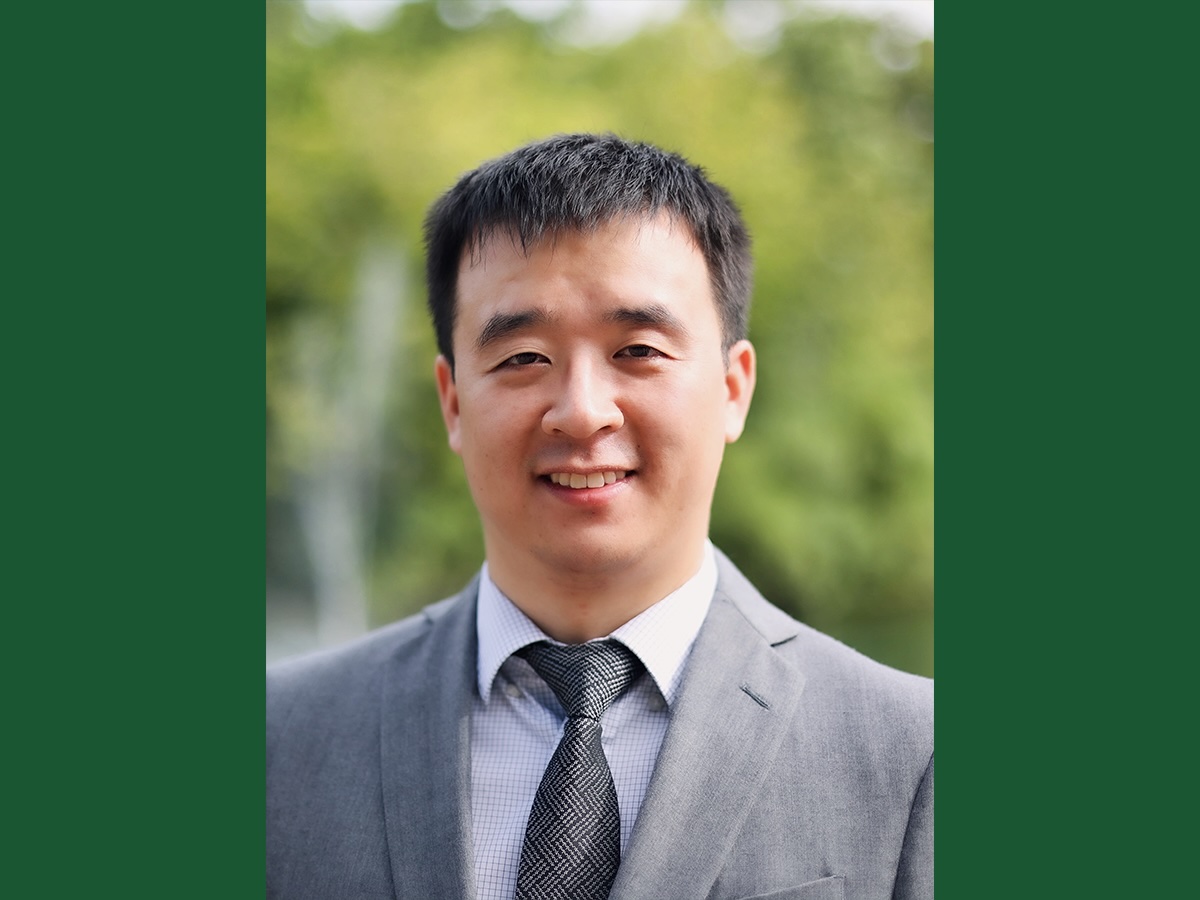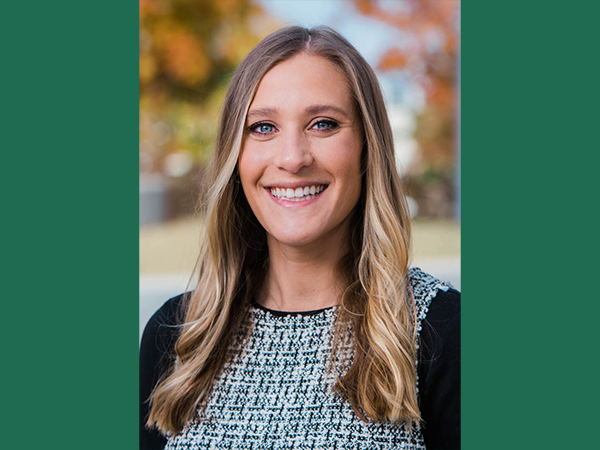
UAB Department of Occupational Therapy faculty, doctoral students, and alumni presented research on stroke rehabilitation, quality of life, pediatric resources, clinical assessment, daily routines, and community mobility at the American Occupational Therapy Association’s INSPIRE 2026 conference, held April 23–25 in Anaheim, California.
The presentations included a pilot trial of a restructured constraint-induced movement therapy (CIMT) schedule, reviews of upper-limb assessment after stroke and daily routines in attention-deficit hyperactivity disorder (ADHD), an online yogic breathing program for people living with amyotrophic lateral sclerosis, a workshop on mobility for people with vision loss, and a disability-inclusive children’s literature database.
Restructuring Stroke Rehabilitation Intervention for Routine Clinical Practice
CIMT is among the most effective interventions for upper-extremity recovery after stroke and is recommended in clinical guidelines. Yet its intensive schedule (35 supervised hours over 2 weeks) often does not fit reimbursement structures, limiting its use in routine clinical care.
Assistant Professors Sarah dos Anjos, PhD, OTD, MS, OTR/L, and Mary Bowman, OTR/L, presented a pilot clinical trial of the Keys treatment protocol, in collaboration with David Morris, PT, PhD, chair of the UAB Department of Physical Therapy. The protocol restructures CIMT to a tapered 8-week schedule of shorter sessions while preserving its core elements for clinical compatibility.
In seven adults with chronic stroke and mild-to-moderate upper-extremity impairment, all outcome measures improved, with gains exceeding clinically meaningful thresholds and lasting 3 months after treatment ended. The findings suggest the Keys protocol may offer benefits comparable to traditional CIMT on a schedule more practical for clinical therapy settings.
Clarifying Assessment After Stroke
PhD in Rehabilitation Science student Sadegh Mojarad, BSc, OT, presented a systematic review evaluating patient-reported outcome measures used to assess perceived upper-limb performance after stroke. Drawing on 35 studies of 17 patient-reported outcome measures, the review found the strongest support for the most-studied tools, including evidence supporting content validity, structural validity, internal consistency, and reliability. It also highlighted where the evidence is still thin: measurement error, cross-cultural validity, and responsiveness.
For clinicians, the review helps clarify which tools are best supported by current evidence; for researchers, it identifies targets for more rigorous measurement studies.
Empowering Independence for People with Vision Loss
Professor Elizabeth Barstow, PhD, OTR/L, SCLV, director of the Low Vision Rehabilitation Graduate Certificate program, co-led a 3-hour continuing education workshop on occupational therapy’s role in helping people with vision loss maintain independence in daily activities and community mobility. The session translated research into practical strategies clinicians can use in everyday care, and attendees spent an hour in hands-on practice on indoor mobility techniques.
Testing Yogic Breathing for People Living with Amyotrophic Lateral Sclerosis
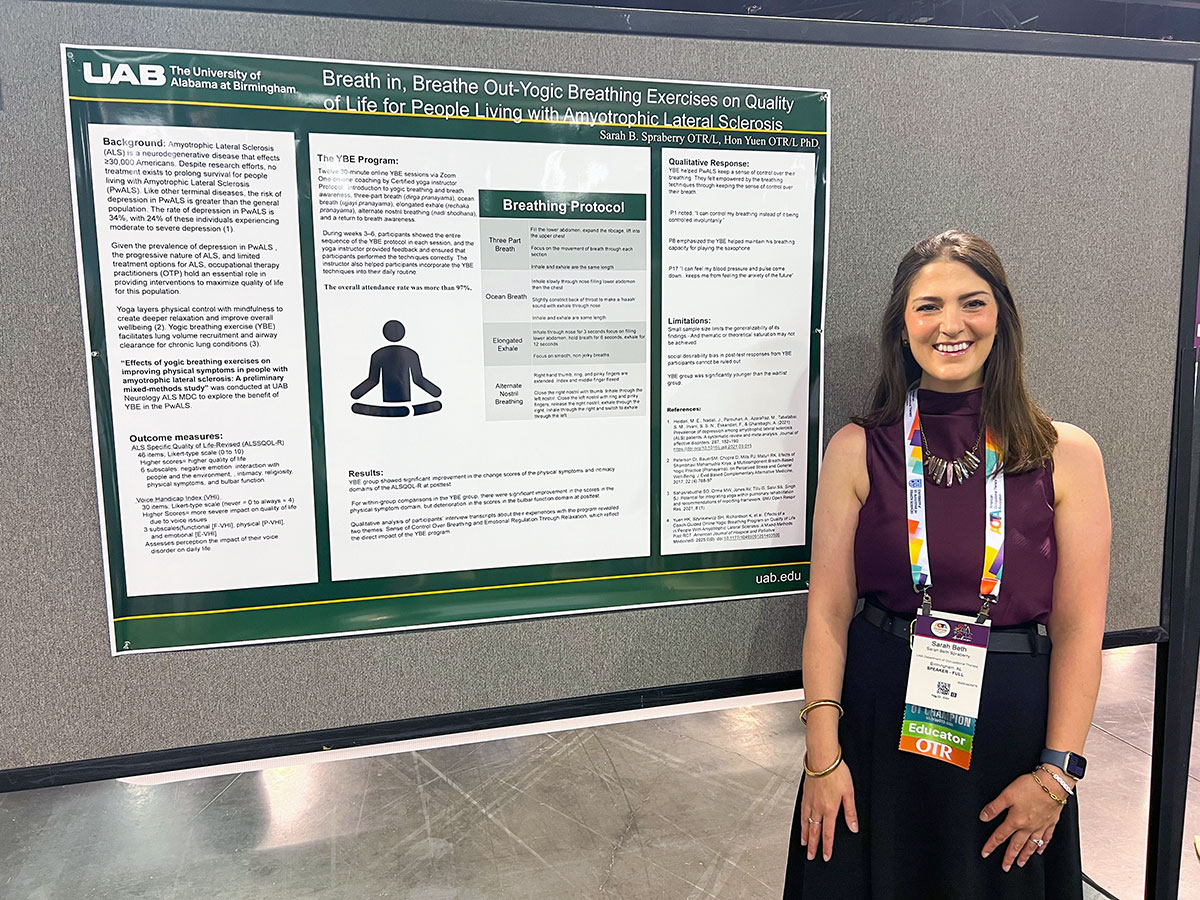
Assistant Professor Sarah Beth Spraberry, MSOT, OTR/L, shared findings from a pilot mixed-methods randomized controlled trial of a coach-guided online yogic breathing program for people living with amyotrophic lateral sclerosis. The study, coauthored with Hon Yuen, PhD, OTR/L, professor and director of research, tested a program of twelve 30-minute online sessions led by a certified yoga instructor.
Participants in the yogic breathing group showed significant improvement in quality-of-life measures related to physical symptoms and intimacy, and overall attendance exceeded 97%. In qualitative interviews, participants described two main benefits: a greater sense of control over their breathing and emotional regulation through relaxation. The work was recently published in the American Journal of Hospice and Palliative Medicine opens a new website.
Understanding Daily Routines in ADHD
PhD in Rehabilitation Science student Ibrahim Almudayfir, OT, MSC, working with Yuen, presented a scoping review on daily routines and habits in children and adults with attention-deficit hyperactivity disorder (ADHD). The review found that little research has focused on adults with ADHD, even though daily routines can shape sleep, eating, activity levels, and other parts of everyday life. Only six of the 31 included studies tested potential supports or treatments. The findings point to a need for more research and the development of interventions that better support healthy routines and habits across the lifespan of individuals with ADHD.
Building a Database for Disability-inclusive Children’s Books
Assistant Professor Megan Carpenter, OTD, OTR/L, SCFES, presented a capstone project by Katie Beth Sharp Staggs, OTD, OTR/L, a 2024 graduate of UAB’s entry-level occupational therapy doctorate (OTD) program. Sharp Staggs created a disability-inclusive children’s literature database to make books featuring children with disabilities easier for families, educators, and therapists to find.
The project responds to a clear gap: one in six U.S. children ages 3–17 has at least one developmental disability, yet only 3.4% of children’s books feature a main character with a disability. The database includes 534 titles opens a new website, organized by disability category and age range, and is housed on a UAB website designed for accessibility.