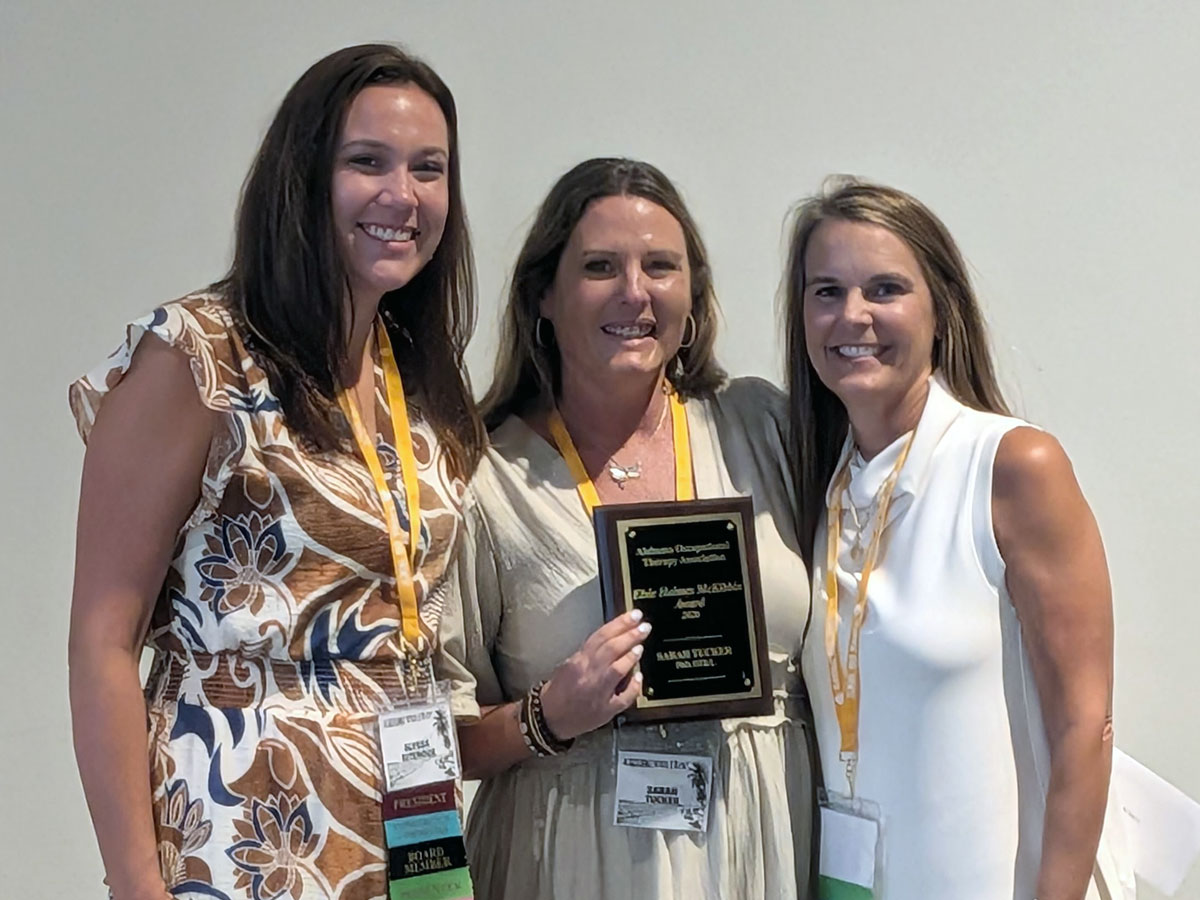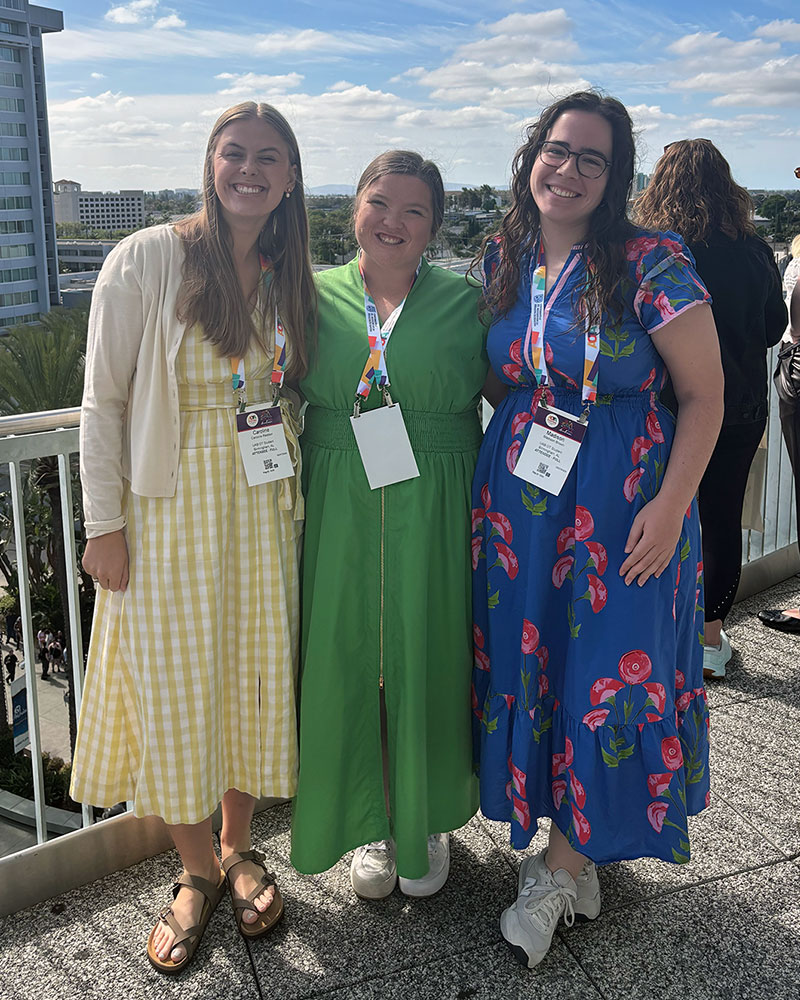
Entry-level OTD students presented four systematic and scoping review posters at INSPIRE 2026, held April 23–25 in Anaheim, California, reflecting the program’s emphasis on research training.
Virtual Reality (VR) for Parkinson’s Disease
Annabella Bradford, Taylor Davis, Claire Ferguson, Nevaeh McIntyre, Takhia Mims, and Maggie Vonderau systematically reviewed VR interventions for adults with Parkinson’s disease. Most of the 14 included randomized controlled trials (RCTs) and quasi-RCTs reported improvements in balance and walking speed, though about a third found no advantage over conventional therapy.
OT and Social Participation in Adolescents with Autism
Ashleigh Hogan, Hannah Alsup, Kenzie Robertson, Emily Jones, Madison Mapson, and Adelaide Howard conducted a scoping review of occupational therapy interventions targeting social participation in adolescents with autism spectrum disorder. The four included studies reported positive effects from cognitive behavioral therapy, learn-to-play therapy, and video modeling, but the authors concluded that the evidence is too limited to support strong claims.
Animal-assisted Therapy in Elementary-age Children
Meredith Cowart, Jessica Edwards, Morgan Heaton, Lauren Haley, Hannah Gentz, and Janna Jewell reviewed animal-assisted therapy interventions for children aged 4 to 12 years. Most of the eight studies included in the scoping review involved interventions with horses or dogs, enrolled children with ADHD, and reported improvements in attention, executive function, and social behavior.
Virtual Reality vs. Mirror Therapy after Stroke
Kieran Burkey, Virginia Collins, Maggie Logan, Taylor Pope, Madison Reed, and Braden Sellers compared two interventions for upper extremity motor recovery after stroke. Their systematic review of 26 studies suggested that virtual reality may be more effective than mirror therapy, though differences in treatment dose limit direct comparison.