Application Process
The Low Vision Rehabilitation Graduate Certificate program admits one cohort each fall semester (August start).
Application deadline: August 15
Application Fees:
- Domestic applicants and green card holders: $50
- International applicants: $60
Instructions for Completing the Application
UAB Graduate School
The following must be submitted directly to the UAB Graduate School:
- Complete and submit the UAB Graduate School online application (degree-seeking) for Low Vision Rehabilitation.
- Submit the application fee payment ($50 domestic, *$60 international)
*Students from countries where English is not the official and primary language must also take and receive an acceptable score: TOEFL 80; IELTS 6.5; or PTEA – 53. Institution code: 1856
Official transcripts from each institution where college credit was received can be submitted electronically to
UAB Graduate School
LHL G03, 1720 2nd Avenue South
Birmingham, AL 35294-0013
UAB Department of Occupational Therapy, Low Vision Program
The following must be submitted directly to the UAB Department of Occupational Therapy, Low Vision Program:
- Complete and submit the Low Vision Application Form
- Submit proof of licensure (email to
This email address is being protected from spambots. You need JavaScript enabled to view it. )
Documents can be scanned and submitted via email to Kerry McAlpine at
UAB School of Health Professions
Graduate Certificate in Low Vision Rehabilitation
SHPB 364, 1720 2nd Avenue South
Birmingham, AL 35294-1212
Final Steps
Applicants will be notified of a decision after submitting a completed application package. Written notification will be sent to the candidate.
Additional Information
For additional information, please contact Kerry McAlpine at 205-934-5420, 205-934-3568, or by email at
Request More Info

Combining the Low Vision Rehabilitation Graduate Certificate with the Post-Professional OTD
The Department of Occupational Therapy offers an online post-professional Clinical Doctorate in Occupational Therapy (OTD) program to meet the needs of busy working occupational therapists who want to advance their education and careers. The online OTD program aims to prepare experienced occupational therapists for important leadership roles in health care, academia, and advocacy for professional and community organizations. The program is designed for part-time enrollment, and students take one or two courses a semester.
The OTD program includes a Low Vision Rehabilitation specialization that allows students to complete the Low Vision Rehabilitation Graduate Certificate program and apply those course hours toward the clinical doctorate degree. Below are the two options for applying the graduate certificate as credit hours in the OTD program.
-
Option one: You can complete the certificate program and the OTD program at the same time
- You may take the courses offered in the graduate certificate and OTD programs at the same time. The graduate certificate courses must be completed in sequence, and you may take only one certificate course per semester.
- Students interested in completing both the certificate program and the OTD degree must complete two separate applications to the UAB Graduate School: one application for the Low Vision Rehabilitation Graduate Certificate program and a separate application for the post-professional OTD program. You must pay a separate fee for each application.
-
Option two: You can complete the Low Vision Rehabilitation Graduate Certificate program first and then apply to complete the OTD
In order for the graduate certificate credit hours to transfer to the OTD program, you must apply and be accepted to the OTD program within 5 years of obtaining your low vision certificate.
If you are completing or have completed the low vision certificate and are interested in pursuing the post-professional OTD degree, contact the OTD program director about using these credit hours toward the OTD degree.
Shortened Pathway to the CLVT Credentials
We pride ourselves in preparing our graduates to become the leaders in the field of low vision rehabilitation. One mark of our success is the number of graduates who are able to meet the rigorous requirements to become credentialed as experts in low vision rehabilitation. The Academy for Certification of Vision Rehabilitation & Education Professionals (ACVREP) offers advanced credentialing to occupational therapists in low vision.
Earn your CLVT quickly
ACVREP determined that graduates of the UAB certificate program qualify to apply in Category 1 for the CLVT. This enables our graduates to complete the CLVT exam while completing 350 hour practice requirement and significantly speeds up the time required to obtain the credential.
You will take only one course per semester, giving you time to keep up with family and work obligations.
Beginning in Fall 2026, students entering the Low Vision Rehabilitation Graduate Certificate will complete six courses (18 credits) instead of five (15 credits). Foundations in Blind Rehabilitation, formerly an elective, is now a required course, reflecting the increasing relevance of these skills in occupational therapy practice.
All course materials are available through the Internet and required texts. A high-speed Internet connection is strongly encouraged.
Students are required to come to campus one time during their final semester. Held in the summer, all students attend an intensive 2-day seminar in preparation for graduation.
Course List
-
First Fall Semester
OT 677 - Foundations in Low Vision Rehabilitation I (3 credit hours)
Introduces the field of low vision rehabilitation and addresses core knowledge required for the subsequent courses. Topics include: demographics of low vision; settings and reimbursement; anatomy of the eye and visual system; medical conditions causing low vision; psychosocial adjustment to vision impairment; communication and health literacy; administration and interpretation of low vision exams and environmental assessment and modification.
-
First Spring Semester
OT 679 - Foundations in Low Vision Rehabilitation II (3 credit hours)
Focuses on intervention strategies to improve occupational performance. Students learn to use information from evaluations to design appropriate interventions. Topics include: optics and prescribed optical devices, visual skills training, assistive technology, computer modification, reading, writing.
-
First Summer Semester
OT 690 - Foundations in Low Vision Rehabilitation III (3 credit hours)
Focuses on intervention strategies to improve occupational performance. Students learn to use information from evaluations to design appropriate interventions. Topics include: Activities of daily living with and without vision, functional mobility, diabetes self-management and driving.
-
Second Fall Semester
OT 680 - Foundations in Blind Rehabilitation (3 credit hours)
Introduces the field of blindness rehabilitation and strategies for implementing non-visual interventions. Topics include occupational therapy approach to blind rehabilitation; influence of intrinsic and extrinsic factors on occupational participation; intervention strategies; non-visual strategies for environmental adaptation; development of professional interactions; and evaluation of occupational performance to support safe, effective participation in daily activities.
Individuals not enrolled in the certificate program can apply to enroll in this course as a non-degree seeking student through UAB’s Graduate School. The deadline for non-degree seeking applicants is August 15.
-
Second Spring Semester
OT 689 - Foundations in Treatment of Visual Impairment from Brain Injury (3 credit hours)
Focuses on adults experiencing occupational limitations due to visual processing impairment from acquired brain injury. Topics include: visual system neuroanatomy; evaluation and intervention for deficits in visual acuity and focusing; hemianopsia; oculomotor impairment; hemi-inattention and neglect.
-
Second Summer Semester
OT 691- Foundations in Low Vision Rehabilitation IV (3 credit hours)
Focuses on ensuring the student is prepared for practice. Students must attend an intensive 2-day seminar on campus to review/demonstrate competence in evaluation and intervention.
Request More Info
My quest for knowledge regarding vision began after I became a certified vestibular/balance therapist. I knew that vision was a huge component of balance but wanted to know what else it influenced besides balance. Sarah J. LaRosa is a 2013 graduate of the UAB Graduate Certificate in Low Vision Rehabilitation program. An employee of Brooks Rehabilitation in Jacksonville, Florida since 2009, she developed the outpatient vision rehabilitation occupational therapy program at the Brooks Rehabilitation Center for Low Vision in 2013. While providing care as a home health occupational therapist many years ago, I worked with a woman who told me that she had the ‘macula’ and that because of it, she could no longer read or cut her meat. I was intrigued and puzzled as to what she meant. The University of Alabama at Birmingham Graduate Certificate in Low Vision Rehabilitation program has changed my life and my practice! I graduated from the UAB Low Vision program in 2009. My reason for entering the program was two-fold. I work as an occupational therapist in an acute hospital in Singapore. I first came to know about low vision rehabilitation when an expert, Beth Barstow, Ph.D., with the University of Alabama at Birmingham came to Singapore to teach about the subject in 2009. I have spent the majority of life as an occupational therapist working with adults with neurologic injury. I spent the first eight years or so working in neuro inpatient rehab programs and then spent about five years teaching at the University of Utah. Almost thirteen years ago, my husband took a new job, in a new city and I knew it meant starting over in a new job for me. From the time I received my Bachelor’s of Science in Occupational Therapy from Western Michigan University in 1992, I repeated my mantra that I would never return to school again. "Character cannot be developed in ease and quiet. Only through experience of trial and suffering can the soul be strengthened, ambition inspired, and success achieved." When I commenced the UAB Graduate Certificate in Low Vision Rehabilitation program in 2008, low vision rehabilitation as a practice area for occupational therapists was an unfamiliar concept to me – an Irish occupational therapist practicing in Ireland. When I decided to work towards receiving my Graduate Certificate in Low Vision Rehabilitation from UAB, I had no idea what great opportunities this experience would afford. Graduating from the University of Alabama at Birmingham’s Graduate Certificate in Low Vision Rehabilitation program has opened up so many doors for me. Since graduating, I have had several opportunities to advance myself as a clinician and educator in the field of low vision rehabilitation. Karen is a low vision occupational therapist working at Envision Vision Rehabilitation Center in Wichita, Kansas, who has worked in the field of low vision for 11 years.
Serena Speaker, OTR, SCLV

Sarah J. LaRosa, MOT, OTR/L, SCLV, CLVT

Lind Stevens MS, OTR/L, SCLV

Tomeico Faison, OTR/L
Ellen Davis, OT
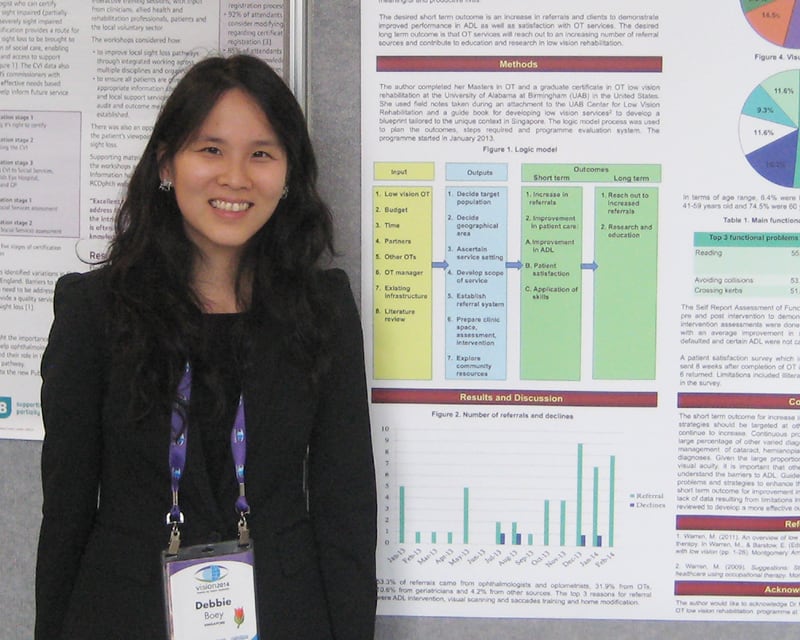
Debbie Boey, MS, OT
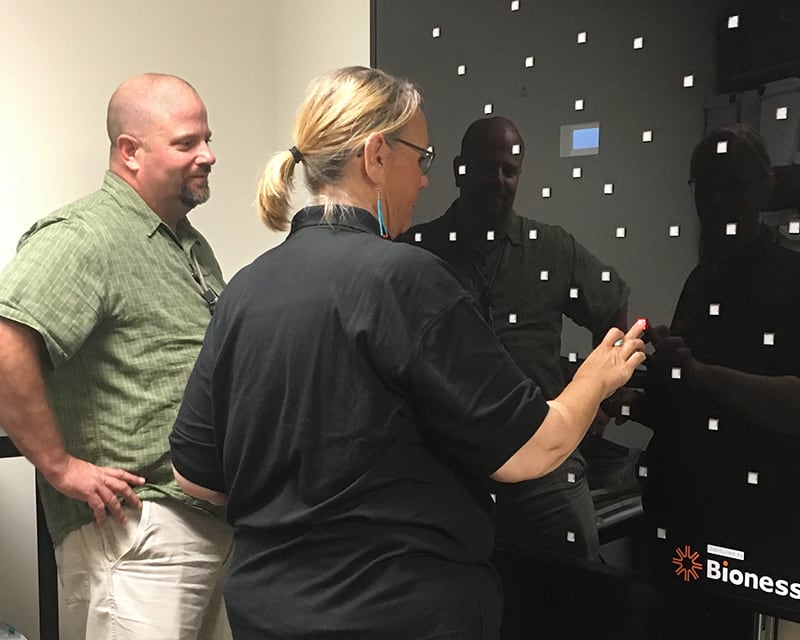
Kasey Mitchell, MOT, CLVT, OTR/L

Lara Anderson, MSOT
Chris Hedlich, OTR/L
Cheri Nipp, MS, OTR/L, SCLV
~Helen Keller
Sheila Roche, MSOT

Monica Perlmutter, OTD, OTR/L, SCLV

Julie Nastasi, ScD, OTD, OTR/L, SCLV, FAOTA

Karen Kendrick, OTR/L, CLVT

Our talented faculty and graduates are continually developing tools to assist and improve clinical practice in low vision rehabilitation. We wanted to share some of these tools with vision rehabilitation professionals to help them provide optimal services to their clients.
The following resources may be freely downloaded and shared with others - we only ask that you adhere to the copyright acknowledgment described for each tool.
Revised Self-Report Assessment of Functional Visual Performance (R-SRAFVP)
Certificate graduates Cheryl Zemina and Marlene Snow updated and established the psychometrics for a revised version of the SRAFVP as part of their post-professional graduate work at UAB. The resulting R-SRAFVP form more accurately reflects the activities completed by older adults in the digital age.
The R-SRAFVP is freely available to any professional who wishes to use the form and adhere to the copyright requirements.
The toolkit contains the following items:
- A guide to using the form including copyright requirements, how the form was developed, its psychometric properties, instructions for administering the form and calculating a Medicare g-code, and a case example.
- The R-SRAFVP forms and task descriptions.
- A spreadsheet version of the form that automatically calculates the number of relevant measures, the composite score, the percentage of disability and the g-code levels. Instructions and a client example are included.
- Educational materials on g-code reporting.
Self-Report Assessment of Functional Visual Performance
The SRAFVP is an ADL assessment that focuses on 38 vision-dependent ADL tasks.
The assessment was developed through a collaboration between the occupational therapy departments at the Eye Foundation, University of Missouri-Kansas City, Washington University and the University of Florida. UAB serves as the repository site for the form and the toolkit.
The assessment was developed with a grant from the American Occupational Therapy Foundation and is freely available to any professional who wishes to use the form and adhere to the copyright requirements.
The SRAFVP toolkit contains the following items:
- A guide to using the form including how it was developed and its psychometric properties, copyright requirements, instructions for administering the form and calculating a Medicare g-code.
- The SRAFVP form in four different formats
- Spreadsheet version of the form that automatically calculates the number of relevant measures, the composite score, the percentage of disability and the initial g-code levels.
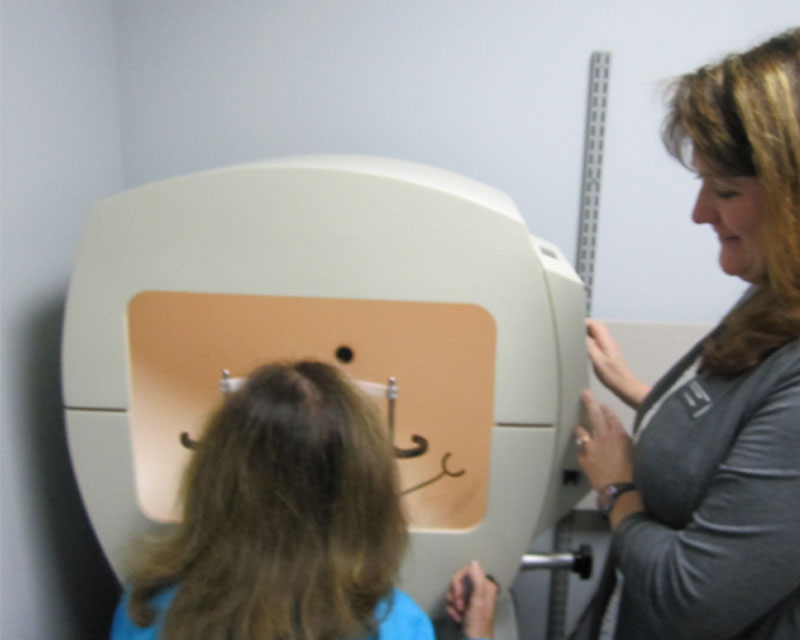
Age Group Comparisons on the Dynavision
Our graduate students have collected data to establish norms on typical adult performance on the Dynavision for five age groups of typical males and females between the ages of 20 and 70 years. There are 25 males and 25 females in each age group.
As a student completing the Low Vision Rehabilitation Graduate Certificate, the Multitiered Approach to Trauma Graduate Certificate, or the Clinical Doctorate in Occupational Therapy degree (OTD), you qualify to pay in-state online graduate tuition fees regardless of the state or country in which you reside.
Graduate students are charged more tuition than undergraduate students, and tuition rates are calculated per credit hour. For an online 3-credit course, for example, you would be charged the in-state graduate tuition rate multiplied by 3.
The link below takes you to the UAB Tuition & Fees page, which has detailed information for the university’s graduate and undergraduate programs. Click the “Graduate” tab and scroll down to “Online Courses Offered” to view the row with the per-semester-hour cost for School of Health Professions post-professional programs.
Request More Info
-
I have never taken an online course before - how does it work?
You will log into a passcode protected course site. The site is available to you 24/7. The course content is delivered through narrated power point presentations and videos of specific evaluation and intervention techniques. You will participate with classmates and instructors in online discussion boards to analyze cases and discuss intervention application. Online chats are held throughout the courses to allow students to interact with experts who provide low vision services.
-
Do I have to enroll in the certificate program or can I just take a few classes?
Because the courses are sequential and build upon on another to provide basic professional competence, you must commit to taking all of the courses in sequence within your cohort.
-
Will I have an additional credential to add to my name when I complete the certificate?
No. Universities do not function as certifying organizations such as NBCOT. Therefore we can’t offer you a credential. However you will receive a certificate diploma from the University of Alabama at Birmingham. The diploma reflects completion of formal graduate educational preparation to work as a low vision rehabilitation specialist. As such it carries equal weight with potential employers as certification. In addition, completing the Graduate Certificate prepares you to obtain AOTA Specialty Certification in Low Vision Rehabilitation.
-
Will the graduate certificate prepare me to apply for certification in Low Vision Rehabilitation?
Our success in preparing graduates for advanced credentialing has not gone unnoticed by ACVREP. In 2016, the organization completed a rigorous review of our curriculum and determined that graduates of the UAB Graduate Certificate in Low Vision Rehabilitation qualify for accelerated pathways to the CLVT.
-
Will the graduate certificate prepare me to work with both children and adults?
It is not possible, even with an extensive curriculum, to comprehensively address intervention for both children and adults. The program focuses on adults because of the great demand for occupational therapy specialists to work with adults with age-related eye disease and vision impairment from brain injury. However, many of the interventions used for adults are applicable to children and we have graduates who only work with children.
-
My degree is from another country; can I be accepted into the certificate program?
Yes. As long as your degree is from a program accredited by the World Federation of Occupational Therapy (WFOT) you may be accepted. You must provide documentation that you graduated from a school with WFOT accreditation.
-
I am not an OT. Can I enroll in the graduate certificate?
Vision rehabilitation professionals who are not occupational therapist can apply to the program and are admitted on a case-by-case basis.
Request More Info