A Message from the Director
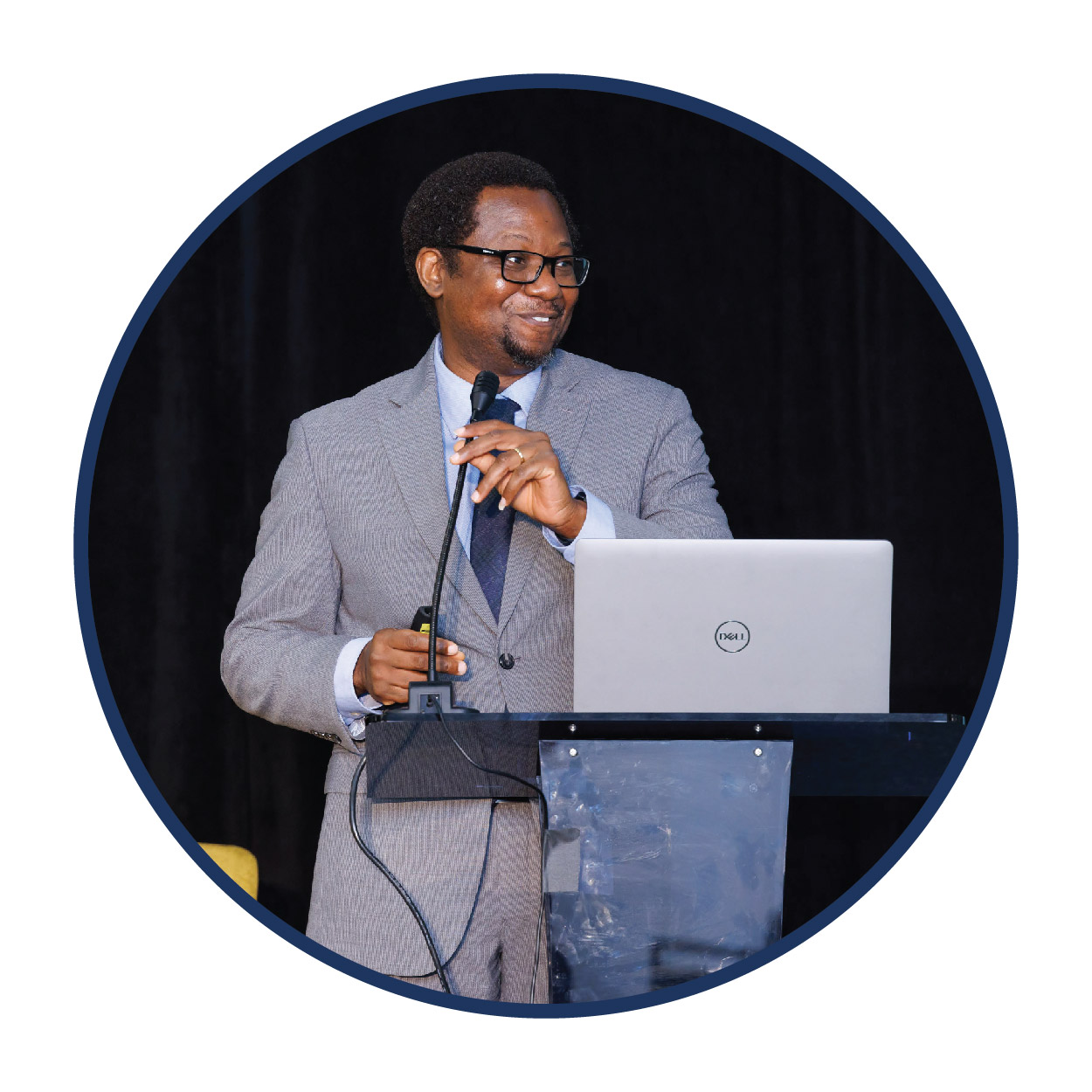
How we do global health has changed in fundamental ways since the last time I wrote to you, and there’s no going back to the way things used to be. What remains to be seen is whether the aspiration of global health, the ideal of advancing everyone’s heath, especially the health of vulnerable populations in resource-limited settings through global cooperation and solidarity, will also change. Despite these changes, the Sparkman Center continued to make great strides in advancing interdisciplinary global public health education, research, and practice that positively impact population health globally.
In the past year, we double-downed on our focus on dissemination and implementation science, recognizing that this is one clear pathway for translating evidence-based solutions to health impact at scale. We successfully hosted the 2nd UAB Sparkman Center for Global Health Summer Institute on implementation research to advance health inequities – and brought together professionals from more than nine countries to develop projects addressing inequities and other implementation changes to global health solutions in different countries. We established a network of institute alumni to support various implementation research initiatives across the globe and inaugurated the first subset of Sparkman Scholars faculty as core faculty for global health research and education within the UAB School of Public Health. The core faculty in turn initiated different implementation research pilot projects to address solutions to a range of topics ranging from HIV, cancers and other non-communicable diseases in various resource-limited settings.
We made significant progress with developing regional field sites in sub-Saharan Africa and South Asia to be more proximal to partners and populations in these regions working collaboratively to advance global health – and commissioned studies with partners in Nepal and Kenya to guide future global health agenda and priority setting in these countries. We continued to support training and capacity-building of global health research scholars both within the United States and in low- and middle-income countries through the NIH-funded D43 global health research training program. We also continued to work collaboratively with UAB faculty, staff, students, alumni, and global partners through the Sparkman Scholars and Fellows program, UAB student scholarships, Peace Corps prep., global case competitions, the Global Health Interest Group (GHIG) to advance global health practice among our students, trainees, faculty, and partners globally. We successfully co-hosted the Consortium of Universities for Global Health (CUGH) annual conference in Atlanta which convened over 1300 participants from 61 countries to consider innovation and implementation strategies in global health for a sustainable future.
We couldn’t have achieved these successes without your support. I am grateful to you and to all Center staff, UAB faculty, students, staff, alumni, and global partners for all we were able to accomplish together over this past year. Yet, I have an extraordinary request to ask of you going back to the beginning of this message. You see, unlike the ‘how’ of global health which can change with policy shifts, the aspiration of global health will only change when people as individuals and collectives start believing that such ideals are no longer worth advocating for. I humbly ask that you remain true to these ideals because that is who we are as a people. Finally, I would like to dedicate this report to the Dean of the UAB School of Public Health for whom this report will be the last one before he steps down as Dean. Thank you, Dean Erwin, for championing the aspiration of global health during your tenure.
-Dr. Olakunle Alonge, MD, PhD, MPH
Annual Reports
Check out our annual reports below to learn more about the Center.
Our Mission
We develop sustainable approaches to advance global health equity and social justice through support for cutting-edge interdisciplinary education, research, global health practice, and community engagement in collaboration with international and domestic partners.
Our Vision
To make substantive and sustainable contributions to the achievement of health equity and social justice in resource-limited settings around the globe by working collaboratively to increase public health knowledge and capacity.
Shared Values
Above all else, we value:

- Respect and Engagement: Celebrating societies, cultures, and individuals across the globe while promoting social justice and human rights
- Ethical Behavior and Integrity: Adhering to the highest ethical standards of integrity and transparency in our work with partners and communities to eliminate global health inequities
- Collegiality and Collaboration: Practicing respect and accountability in the workplace and modeling professional and equitable global partnerships
- Academic Excellence and Freedom: Pursuing evidence-based scholarship in all endeavors through free exploration in research, education, community engagement, and global health practice
- Global Citizenship: Contributing to efforts to enhance the ways that UAB and the broader community think and act as global citizens
- Sustainability and Environmental Protection: Promoting sustainable economic development and solutions that contribute to environmental justice and reduce negative impact on the global environment
Mission Pillars
The Sparkman Center for Global Health's mission is supported by three fundamental pillars. These are:
- Education: graduate and undergraduate global health educational programs and opportunities for UAB students, faculty, and community
- Research: support for research and scholarship conducted by UAB faculty, staff, and students in collaboration with global partners
- Global health practice and community engagement: training, empowerment, knowledge dissemination, capacity building, and workforce development in global partner countries and the UAB community
Foundations
The Sparkman Center for Global Health Mission Pillars rest on three foundations. These are:
- Collaborative Organizational Culture: Fostering respect, openness, and teamwork in an organizational culture that thrives on inclusive and equitable participation, and supports education, research, community engagement, and global health practice
- Fiscal Responsibility and Resource Development: Practicing fiscal soundness and appropriate use of resources, as well as fostering organizational development to ensure a diverse and sustainable resource portfolio
- Interdisciplinarity: Involving and fostering networking and partnerships across all disciplines at UAB and beyond
Sparkman Center Podcast - Navigating Global Public Health
Navigating Global Public Health is a podcast centered around the UAB Sparkman Center for Global Health's mission of connecting global health solutions to communities around the world.
In this series, the Sparkman Center for Global Health addresses health concerns in communities around the world, offers guidance through trending and confusing health-related information, and discusses the current and future landscape of global public health.
The series will include interviews and case studies with experts in their respective areas of expertise.
Available on Apple Podcasts, Spotify, Amazon, Pocket Casts, Podcast Addict, Player FM, and The Podcast Index.