
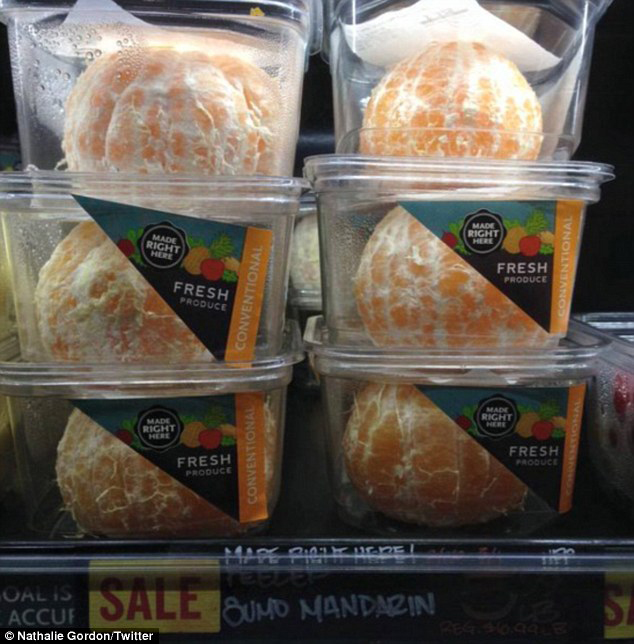
 Pre-peeled oranges sold in plastic containers, as displayed above, are indicative of the kind of waste that should be avoided. Photo courtesy of Sarah GloverSarah Glover - Contributor
srglover@uab.edu
We live in a world where bananas and apples are now wrapped in plastic to be sold in grocery stores. Believe it or not, peeled oranges can be found packaged in plastic containers.
However, there are ways that all of us can help stop the madness. Most environmentally conscious people understand the importance of recycling, but there are many different ways to reduce waste and help protect the environment that may not be as obvious.
While it is always best to abstain from buying plastic items that are not reusable, there are some important things to know about which types of plastic can be recycled. If you check on the bottom of plastic containers and bottles, there are numbers indicating the type of plastic. There are seven main classifications, and not all of them are very recyclable. No. 2 plastics are the easiest to recycle and can be used in many different products. Only about 20 percent of No. 1 plastics are recycled. Plastics labeled with numbers three to seven are not recyclable on campus or through the majority of curbside programs. Around 2.5 million plastic bottles are thrown away every hour in America, so consider that before your next plastic purchase.
Recycling is not the only way to reduce plastic waste. There are a lot of different ways to help the environment that you may not have considered.
Tips to get started
1. Use your dining dollars to buy a reusable cup at Starbucks and get a discount while you are at it. The plastic lids on the coffee cups there are No. 5, which most recycling programs do not accept. Starbucks gives you 10 cents off your drink order each time you use the reusable cup.
2. Use reusable cloth or mesh bags for buying produce.
3. Replace paper towels and napkins with a set of small cloth towels in the kitchen. Thirteen billion pounds of paper towels are thrown away each year.
4. Avoid chewing gum, since most gum is now made with synthetic rubber.
5. Buy products packaged in cardboard or glass as often as possible. Glass and cardboard are both easily recycled, unlike plastic.
6. Bring your own containers for takeout when you go to restaurants. Some styrofoam never biodegrades, and several cities have even banned the use of it.
7. Bring your own silverware when eating on campus instead of using plastic utensils.
8. Eat less meat. Animal agriculture is responsible for more greenhouse gas emissions than transportation.
9. Rent a UAB garden plot with friends to grow some of your own food.
10. Turn out the lights in your dorm room whenever you leave. If it’s a sunny day, open the blinds instead. Heat and electricity account for a very large portion of greenhouse gas emissions.
There are plenty of recycling bins around campus for paper, cans and plastic that are labeled either No. 1 or No. 2. The Alabama Environmental Council has a recycling center in Avondale where you can take products that aren’t as easy to recycle, such as glass and steel cans. There are people there to help you sort everything and let you know which materials can be recycled.
“Help preseve the Earth. If not for yourself, then for future generations. After all, there’s only one Earth. It’s best not to waste it,” said Nicole Brown, the Green Initiative president on campus.
Recognizing that our trash doesn’t disappear once it’s thrown away can lead to an entirely different perspective on the waste produced by the typical American lifestyle. Some of the products we throw away will remain in landfills or oceans for hundreds or even thousands of years, but there are plenty of ways to reduce our waste and make a positive impact on the planet.