-
-

-
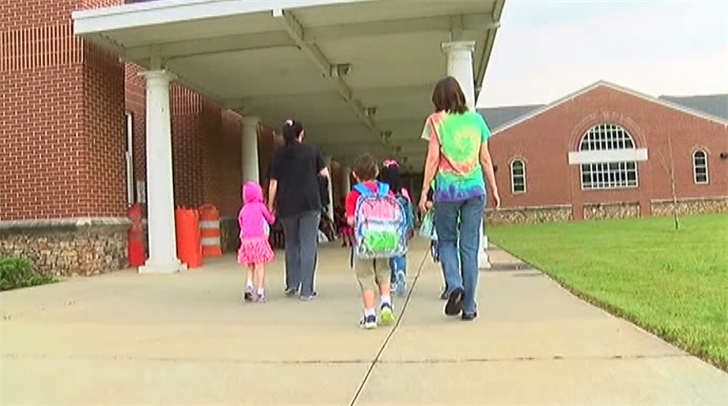 Back to school: When should children walk to school alone?“I would suggest parents walk to school the first few days, make sure they know the route, make sure the child remembers their pedestrian safety rules. Even older children, make sure they get there safely,” UAB researcher Dr. David Schwebel said.
 -
-
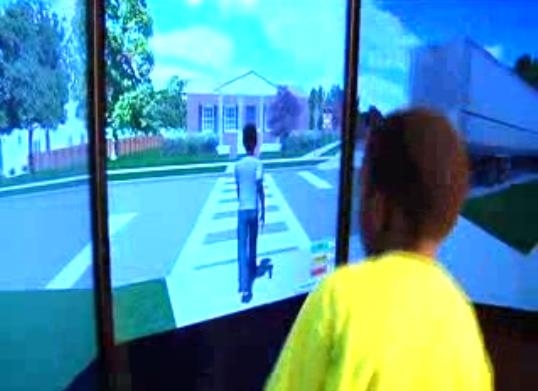 UAB psychologist develops simulator to help kids learn how to safely cross a streetBirmingham and the Hoover metro area rank sixth in the nation when it comes to pedestrian fatalities. UAB Psychologist Dr. David Schwebel has developed a life sized simulator to help teach children how to safely cross the street.
 -
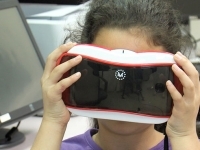 UAB Professor Uses Latest Virtual Reality Technology to Improve Access to Pedestrian Safety EducationA new mobile virtual reality system helps children learn to cross streets safely.Pedestrian injuries are a leading cause of death in children in the United States and around the world.Schwebel loads a smartphone into the Google Cardboard viewing device to begin the virtual reality training exercise.The Birmingham-Hoover metropolitan area is ranked No. 13 by Smart Growth America and the National Complete Streets Coalition in a 2016 report of cities where people walking are more likely to be killed by vehicles, with 150 pedestrian deaths reported.A University of Alabama at Birminghampsychology professor has focused his research on developing technologies to help children learn how to cross the street in an accessible, safe environment. His latest project, an immersive virtual reality mobile application that uses Google Cardboard, takes the accessibility to the next level.“Safe pedestrian behavior requires sophisticated cognitive-perceptual skills,” said David Schwebel, Ph.D., “Because those skills are still developing in children, they are particularly vulnerable in pedestrian situations.”As director of UAB’s Youth Safety Lab, Schwebel worked to develop this technology after creating virtual reality applications in less mobile platforms, and realizing that the need to make the training tool more accessible was necessary in order to improve pedestrian safety education.Schwebel’s first iteration of the virtual reality intervention program was available in a nonmobile desktop computer format. From there, he adapted the technology into a larger, mobile simulator. That simulator is able to move from one location to the next but, given its size, does have limitations.The Google Cardboard platform allows for a completely mobile and immersive virtual reality experience, and Schwebel is using it to evaluate 7- and 8-year-olds’ safe street-crossing skills in a study funded by the National Institutes of Health.To make use of this new platform, Schwebel created a Cardboard-compatible application that runs on a mobile phone. The user places the phone into the back of the viewer, and views the content of the application through the lenses.Students in a classroom in Changsha, China, test the Google Cardboard virtual reality training system.“Children using the simulator can learn whether they’re safe or not safe, and learn those difficult skills of figuring out how fast that car is moving, how far away it is and how quickly it will get to where they are,” Schwebel said. “And we can do all that virtually without the child’s actually being at risk of being hit by a car.”The environment recreates the street and crosswalk in front of a local school, and it gives the user various traffic patterns to monitor from both directions.When the child decides it is safe and traffic is clear, he or she clicks the button on top of the Cardboard viewer and triggers his or her virtual self to walk across the street. The user can see him- or herself cross, so they can learn whether or not they were safe in crossing.Though the study is not yet complete, results so far are promising in showing that the children are able to cross streets with success similar to that of adults. According to Schwebel, nearly all participants have been able to complete adult-level virtual scenarios safely, crossing a street with moderate traffic level that represents real traffic at a local crossing.Once this study is complete, Schwebel plans to continue to broaden access and availability of the training platform for domestic dissemination and use globally. Related story UAB technology helps children learn to cross the street safely “The development of Google Cardboard allowed us to make our pedestrian simulator completely accessible,” Schwebel said. “It’s simple and affordable, and gives us hope that we can bring this tool to children worldwide. We have already conducted parallel research to train children in pedestrian safety in China, and envision a future where location-specific pedestrian environments are simulated, and training is distributed using mobile smartphones to schoolchildren worldwide.”Families with 7- and 8-year-old children who would like to participate in the ongoing research can call the UAB Youth Safety Lab at 205-934-4068 to learn more and register to participate.Schwebel, a leader in the field of psychology and injury prevention, was recently named University Professor by the University of Alabama System Board of Trustees. He was also recognized with the Dennis Drotar Distinguished Research Award from the Society of Pediatric Psychology, the top research award in the scientific society, and was named to the Board of Scientific Counselors at the National Center for Injury Prevention and Control, Centers for Disease Control and Prevention.
 -

-
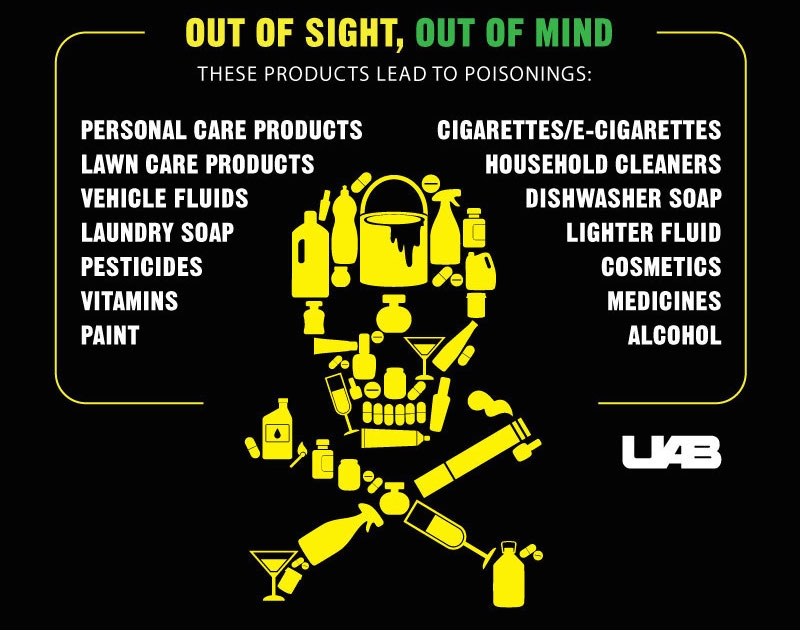 Flavored Fruit Drink or Poisonous Cleaning Product? How to Prevent Accidental PoisoningsThe summer months often mean more time spent at home for kids. While the break from the books can be enjoyable, one UAB expert says there is one lesson both children and parents still need to learn: how to prevent poisoning.The summer months often mean more time spent at home for kids. While the break from the books can be enjoyable, one University of Alabama at Birmingham child safety expert says there is one important lesson both children and parents still need to learn: how to prevent poisoning.Every day in the United States, poisonings send more than 300 children to the emergency room and two children die as a result, according to the Centers for Disease Control and Prevention. During the warmer months of the year, when school is out, higher volumes of poisonings have been reported by the American Association of Poison Control Centers.David Schwebel, Ph.D., associate dean for Research in the Sciences in the UAB College of Arts and Sciences and professor in the Department of Psychology, recently published a study in the Journal of Pediatric Psychologythat not only suggests ways manufacturers can reduce the risk of accidental poisonings, but how parents can do so as well.
 -
 Findings: What Young Children See When They Look at PoisonsIn a paper recently published in the Journal of Pediatric Psychology, David Schwebel’s team in the Youth Safety Lab translated findings from a series of studies into distinct steps manufacturers could adopt to reduce the risk of accidental poisonings.The bottle of citronella tiki torch fuel sure looked tasty. The toddler was on a family campout to celebrate his second birthday. He got his hands on the container and took a sip.“A few hours later, he was dead,” said David Schwebel, Ph.D., associate dean for Research in the Sciences in the UAB College of Arts and Sciences and professor in the Department of Psychology. “The product is highly toxic; it aspirates the lungs and makes it hard to breathe.”Schwebel, who directs UAB’s Youth Safety Lab, was a consultant on a lawsuit brought by the boy’s family. That led him to begin research “on how pre-literate children decide what to consume,” he said. “These are young children. They can’t read, so they are looking at the shape of the bottle, the colors, the pictures and whatever cues are available to them.”Most toddlers can’t give a clear description of the reasoning behind their actions. So Schwebel’s team recruited more than 200 children for a series of studies in the Youth Safety Lab. The researchers watched as kids from 18 months to 4.5 years interacted with several different types of objects, including teddy bears and other toys, harmless drinks such as apple juice, and potential poisons in a range of containers and packaging. (The actual substances used were all harmless.)The researchers identified a number of visual cues that attract children — and cues that warn them of danger. In a paper recently published in the Journal of Pediatric Psychology, Schwebel’s team translated these findings into distinct steps manufacturers could adopt to reduce the risk of accidental poisonings. The paper also lists ways parents can protect their children.
 -
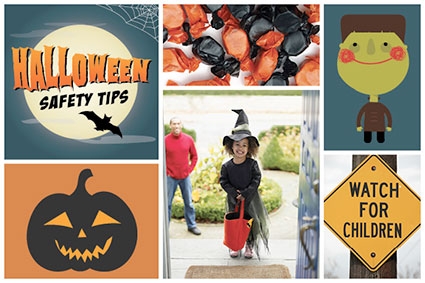 Make Halloween Fun, Not Scary, for Kids and TeenagersWhile Halloween is a favorite holiday for many children and teenagers, it also presents challenges for parents concerned with safety. Halloween can be safe and fun for all involved.While Halloween is a favorite holiday for many children and teenagers, it also presents challenges for parents concerned with safety. Halloween can be safe and fun for all involved.“Children should enjoy the holiday,” said David Schwebel, Ph.D., University of Alabama at Birmingham psychologist and director of the UAB Youth Safety Lab. “It should be a fun time for family and friends, but safety is important too. Parents need to think about safety on the roads, safety with pumpkin carving and safety with candy.”
 -
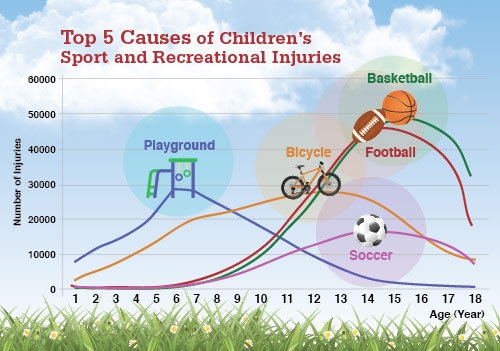 UAB Research Examines Youth Sports Injury RatesResearchers at the University of Alabama at Birmingham have taken an in-depth look at patterns in pediatric sports-related injuries in anew study published in the Journal of Athletic Training.Researchers at the University of Alabama at Birmingham have taken an in-depth look at patterns in pediatric sports-related injuries in anew study published in the Journal of Athletic Training.The study suggests that tailoring safety regulations more closely by age could impact the incidence of injury. It examined records of more than 2.5 million children ages 1-18 who were seen in hospital emergency departments for sports or recreation injuries during an eight-year study period. Among those, the five most common causes across all of childhood were basketball, football, bicycling, playgrounds and soccer.
 -
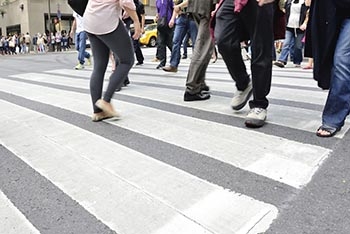 UAB Study Shows Sleep-deprived Teen Pedestrians More Likely to Get HitUniversity of Alabama at Birmingham (UAB) researchers have published a study showing that sleep-deprived adolescents are in greater danger crossing the street than their better-rested peers.University of Alabama at Birmingham (UAB) researchers have published a study showing that sleep-deprived adolescents are in greater danger crossing the street than their better-rested peers.The study, published Sept. 3, 2013, in the Journal of Adolescent Health, revealed that when restricted to four hours of sleep the previous night — half the number of hours experts consider adequate for 14- and 15-year-olds — subjects in a virtual-pedestrian environment took more time to initiate crossings, crossed with less time before contact with vehicles and experienced more close calls than those who slept for 8.5 hours.“This study suggests that adolescents’ ability to cross the street can be compromised after only one night of acute sleep restriction,” said study author Aaron Davis, Ph.D., psychology post-doctoral fellow in the Leadership Education in Adolescent Health (LEAH) program in the UABDivision of General Pediatrics and Adolescent Medicine.Davis studied 55 adolescents in a virtual reality environment at the UAB Youth Safety Lab in the Department of Psychology, where she completed her doctoral work. Teens’ sleep was measured for two weeks by actigraphy. Participants wore an actigraph watch, and their reactions to simulated traffic situations were recorded after sleeping four hours and 8.5 hours.
 -
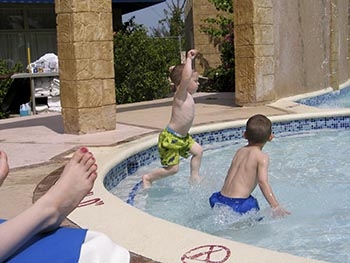 Keep Summer Water Fun Safe with Training and SupervisionFun in the summer often means kids spending time in the water, whether at a pool, the beach, a lake or river. A pediatric safety expert at the University of Alabama at Birmingham (UAB) stresses proper training and supervision to avoid drowning and other injuries.Fun in the summer often means kids spending time in the water, whether at a pool, the beach, a lake or river. A pediatric safety expert at the University of Alabama at Birmingham (UAB) stresses proper training and supervision to avoid drowning and other injuries.Three children die each day in the United States as a result of drowning, which is the leading cause of injury death for young children ages 1 to 4, according to the Centers for Disease Control and Prevention.“Backyard swimming pool drownings are far too common,” said David Schwebel, Ph.D., director of the UAB Youth Safety Lab. “These incidents are devastating to families, and they can be prevented.”
 -
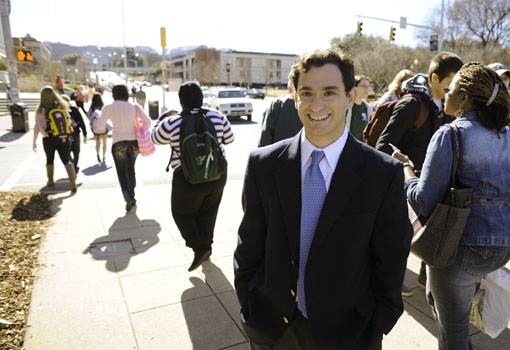 Schwebel Co-authors World Health Organization Road Safety ManualUniversity of Alabama at Birmingham (UAB) professor David Schwebel, Ph.D., associate dean for the UAB College of Arts and Sciences, is one of 11 contributors worldwide to author the World Health Organization’s (WHO) new manual Pedestrian safety: a road safety manual for decision-makers and practitioners. University of Alabama at Birmingham (UAB) professor David Schwebel, Ph.D., associate dean for the UAB College of Arts and Sciences, is one of 11 contributors worldwide to author the World Health Organization’s (WHO) new manual Pedestrian safety: a road safety manual for decision-makers and practitioners. The manual is due for release during the second United Nations (UN) Global Road Safety Week, May 6-12, 2013.
 -
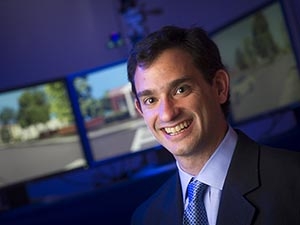 Psychology’s Schwebel Wins Ireland Prize for Scholarly DistinctionDavid Schwebel, Ph.D., University of Alabama at Birmingham (UAB) associate dean in the College of Arts and Sciences (CAS) and professor of psychology, has been selected as recipient of the 2013 Caroline P. and Charles W. Ireland Prize for Scholarly Distinction.David Schwebel, Ph.D., University of Alabama at Birmingham (UAB) associate dean in the College of Arts and Sciences (CAS) and professor of psychology, has been selected as recipient of the 2013 Caroline P. and Charles W. Ireland Prize for Scholarly Distinction. Schwebel, director of the UAB Youth Safety Lab, researches the prevention of unintentional injuries of children and adolescents. He is renowned for his work with pedestrian safety in crosswalks.Each year UAB presents the Ireland Prize to a full-time faculty member of CAS to recognize professional and academic achievements and contributions made to the university and local community.
 -
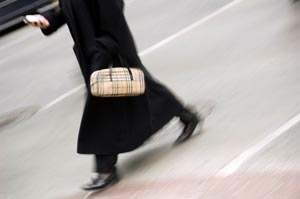 Surfing Internet, Crossing Street Will Likely Lead to WipeoutUniversity of Alabama at Birmingham (UAB) research, published online in the journal Accident Analysis & Prevention, has found that college students crossing the street while surfing the Internet on a cell phone are more than twice as likely to be hit or have a close call as when they crossed the street undistracted.University of Alabama at Birmingham (UAB) research, published online in the journal Accident Analysis & Prevention, has found that college students crossing the street while surfing the Internet on a cell phone are more than twice as likely to be hit or have a close call as when they crossed the street undistracted.The research, co-authored by Katherine Byington, Ph.D., and David Schwebel, Ph.D., associate dean in the UAB College of Arts and Sciences, also reveals that the students looked away from the street for an average of 36 seconds of every minute they waited to cross while distracted, but they looked away for less than one second with no distractions.“Even though the participants waited longer to cross while distracted, giving them more time to decide on a safe crossing gap, the longer wait did not increase their likelihood of crossing safely,” said Byington.
 -
 Sleepy Teen Pedestrians More Likely to Get Hit, UAB Study SaysA University of Alabama at Birmingham study reveals sleep-deprived adolescents are more likely to be hit by cars while crossing the street than those who are well-rested.A University of Alabama at Birmingham study reveals sleep-deprived adolescents are more likely to be hit by cars while crossing the street than those who are well-rested.“These 14- and 15-year-olds are perceived to be safe pedestrians, but we found that when they are sleepy they take more risks when crossing the street,” said Aaron Davis, M.A., author of the study and a doctoral candidate in the UAB Department of Psychology. “At this age they walk more because they can’t drive, and that is disconcerting because our results show they are 56 percent more likely to be hit by a car or experience a close call while crossing a street fatigued.”Adolescents require more sleep, a minimum of 8.5 hours uninterrupted each night, than young children. Davis, whose work on this subject recently won the Student Poster Award at the Midwest Regional Conference on Pediatric Psychology, studied 55 adolescents in a virtual reality pedestrian environment at the UAB Youth Safety Lab. Student sleep was measured for two weeks by actigraphy. Participants wore the actigraph watch, and each was studied after sleeping four hours and eight and a half hours. The research revealed teens that slept four hours experienced more hits, more close calls and took more time to initiate crossings; however, adolescents with a full night sleep missed more safe opportunities to cross the street.
 -
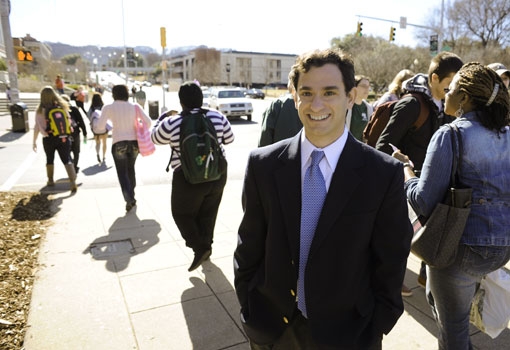 Safety PatrolUAB child safety expert David Schwebel has helped call attention to the everyday dangers of crosswalks, swimming pools, and dog bites through a series of intriguing, headline-grabbing experiments.UAB child safety expert David Schwebel has helped call attention to the everyday dangers of crosswalks, swimming pools, and dog bites through a series of intriguing, headline-grabbing experiments.
 -
 Don’t Let a Gift Dog Take a Bite out of Fun“Everyone thinks their dog is good and will never bite, but we can’t forget that all dogs are animals,” says David Schwebel, Ph.D. director of the UAB Youth Safety Lab.Get your kid that dog they begged for all year? Think it’s time to unleash them both and let the fun begin? A child-safety expert at the University of Alabama at Birmingham warns against it.“Everyone thinks their dog is good and will never bite, but we can’t forget that all dogs are animals,” says David Schwebel, Ph.D. director of the UAB Youth Safety Lab. “If it’s provoked enough — and a child is much more likely to provoke it than an adult — even the best-behaved, best-trained dog can bite.”Schwebel, associate dean for Research in the Sciences in the UAB College of Arts and Sciences, is the first author of a paper published in the most recent Journal of Pediatric Psychology that studied the effectiveness of software designed to teach children safety around dogs. They reported that the children did learn more about animal safety; however, they also demonstrated that the new knowledge did not translate to behavior.
 -
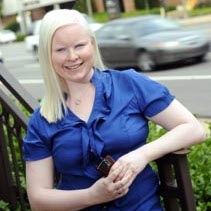 Governor’s Committee Names UAB Psychology Major Student of the YearThe Birmingham Area Governor’s Committee on Employment of People with Disabilities honored UAB Department of Psychology senior Lauren McCartney with its Student of the Year award.The Birmingham Area Governor’s Committee on Employment of People with Disabilities honored UAB Department of Psychology senior Lauren McCartney with its Student of the Year award.McCartney has Oculocutaneous Albinism, which is an autosomal recessive, genetic disorder involving the pigmentation of the body. In the absence of pigment, the visual system develops differently which results in vision impairment. Her vision is 20/200.“She hasn’t let her disability keep her from doing what she wants to do,” says Allison Solomon, M.S., director of UAB Disability Support Services. “I wish all students could take her approach in life and in their studies at UAB.”