Written by Brian C. Moon | August 7, 2026
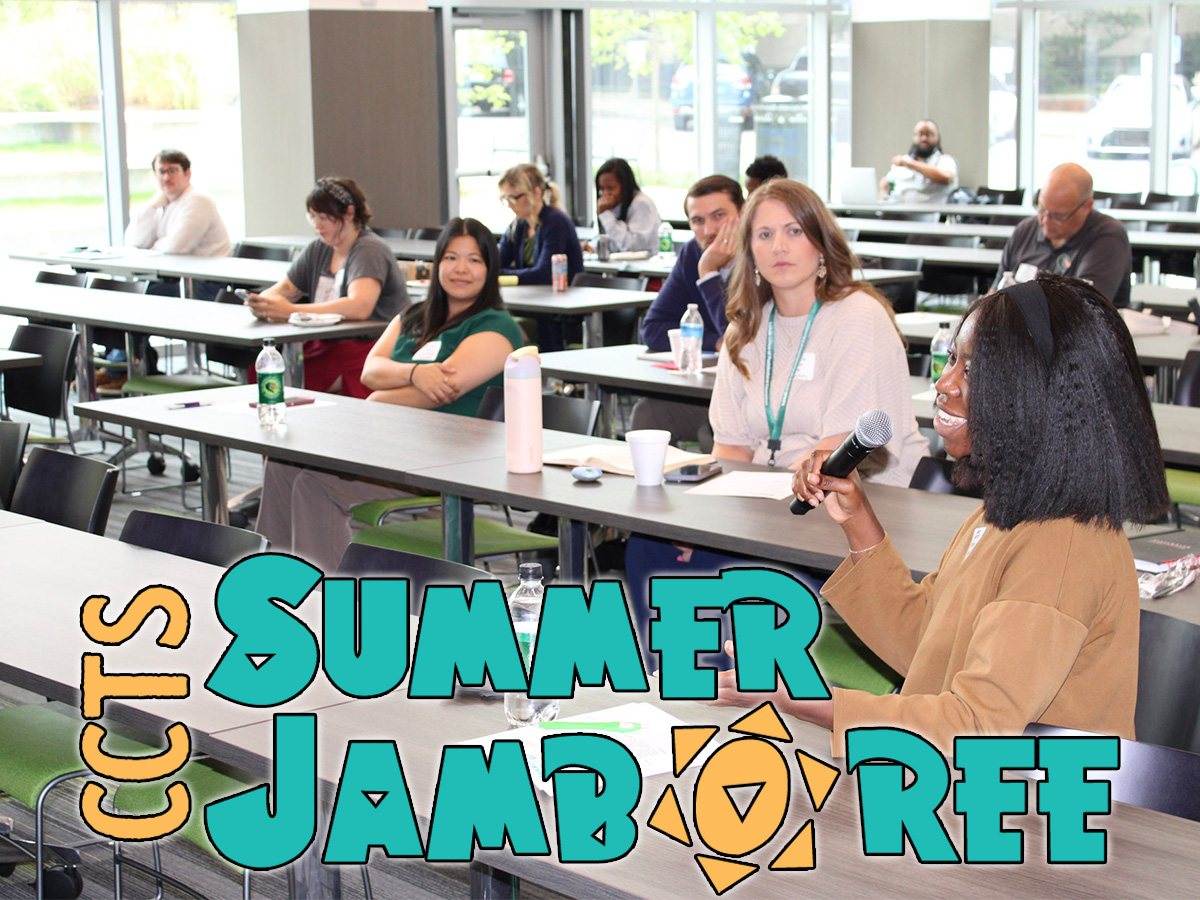
Seventy-five scholars, trainees, mentors, researchers, and community partners took part in the 2026 Center for Clinical and Translational Science (CCTS) Summer Jamboree, which culminated in a July 15 public program at the UAB Marnix Heersink Conference Center.
The July 15 event followed a full day of onboarding for new CCTS scholars. Activities included a TeamS workshop, scholar and fellow sessions, an alumni career journey panel, and networking with CCTS leaders and trainees. Together, these activities set the stage for a public program focused on career development, science communication, and community-engaged research.
Charting a Career in Translational Science
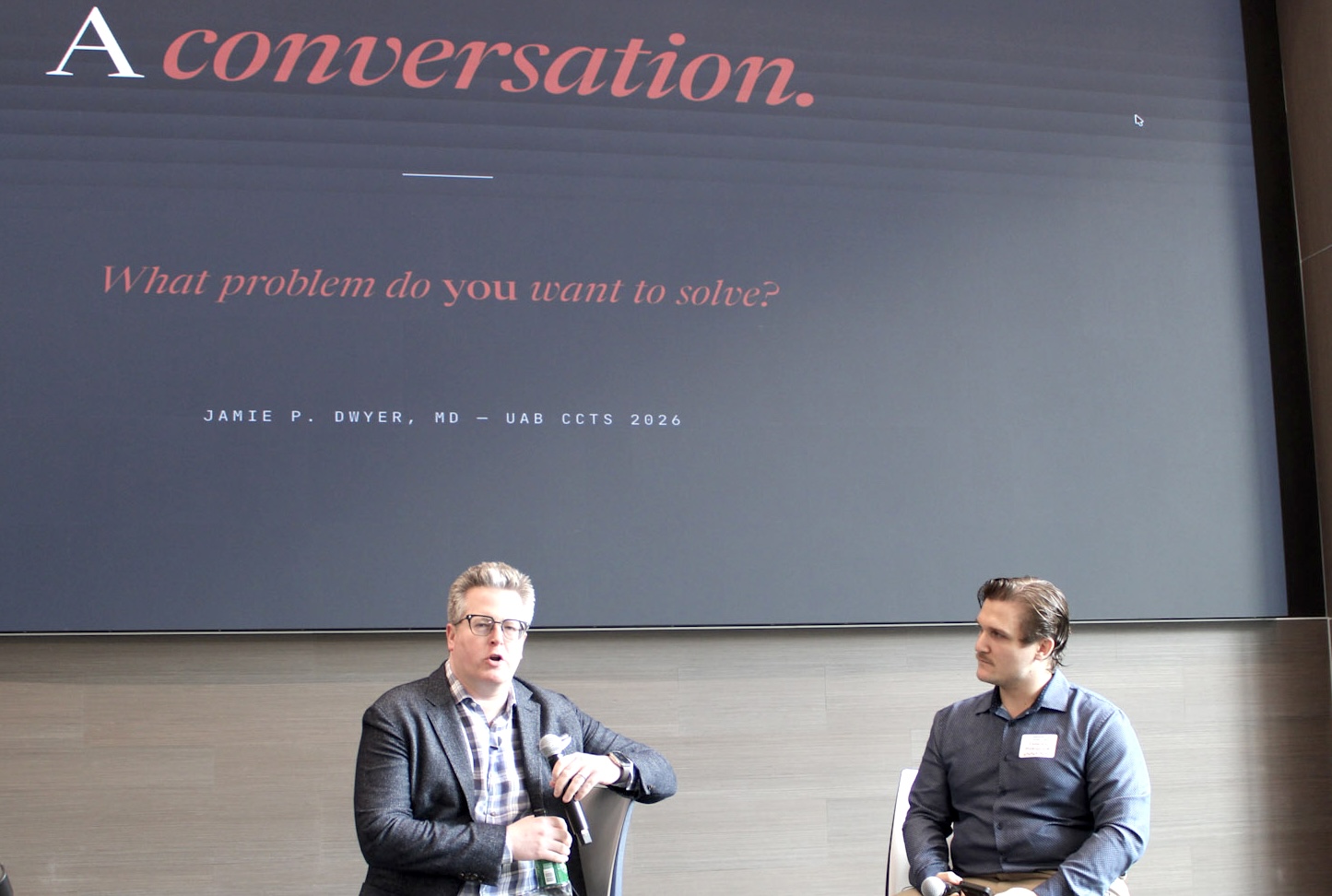 CCTS Director Orlando Gutierrez introduced Jamie P. Dwyer, MD, assistant vice president for clinical research at University of Utah Health. Dr. Dwyer’s presentation, “New Maps for Modern Scientific Careers. Or, a career is not a random walk,” drew from his professional journey and offered practical guidance to early-career researchers as they consider the directions their own careers may take.
Dr. Dwyer emphasized that translational science extends beyond moving discoveries from bench to bedside. It also examines how discoveries become therapies, why promising ideas fail and how the research process can be strengthened and made more efficient. Following the presentation, Federico Prokopczuk, a CCTS predoctoral T32 student, led a conversation with Dr. Dwyer that allowed attendees to ask questions and explore his career advice further.
Practicing Clear Science Communication
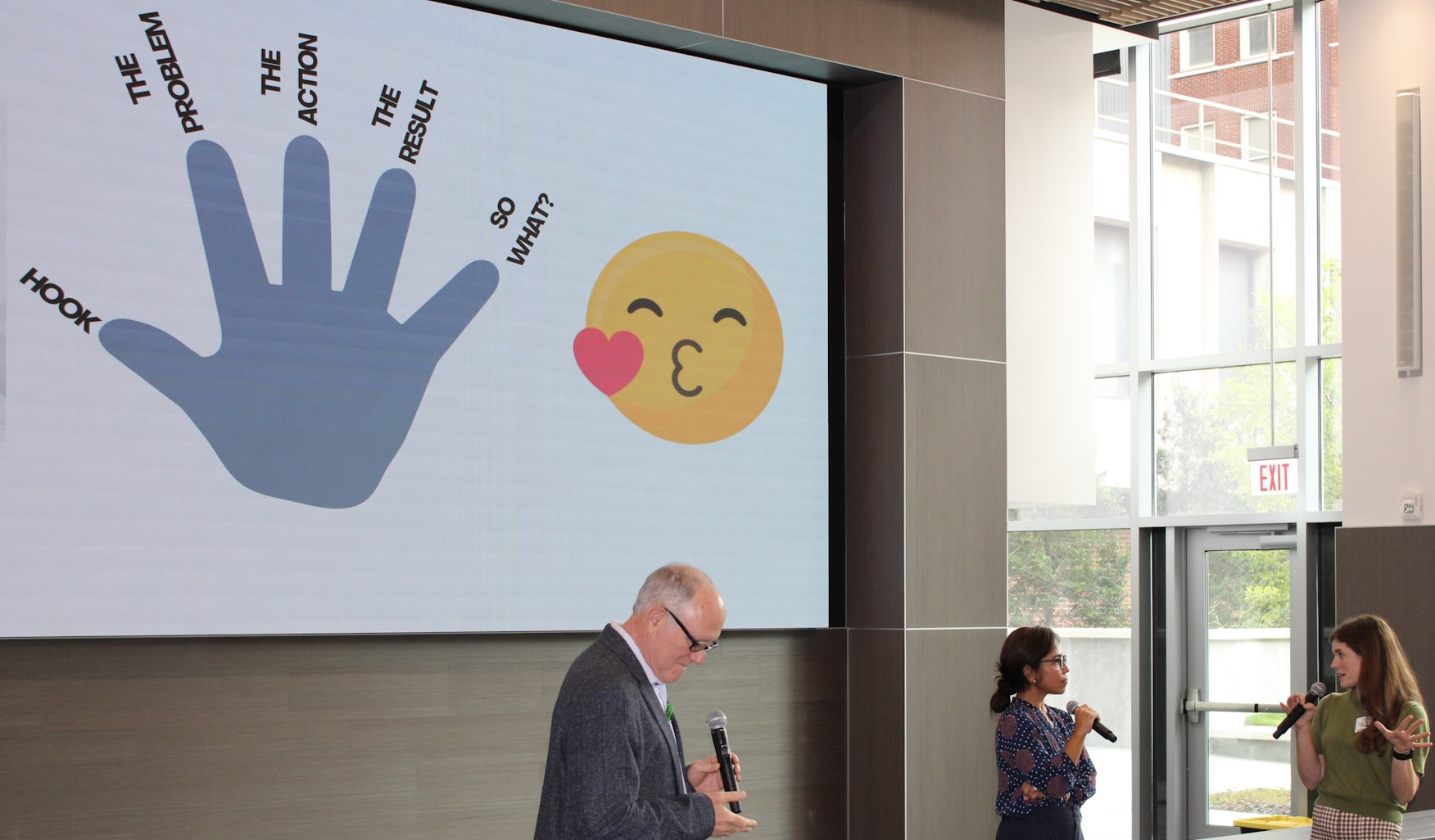
The program then shifted from career development to a closely related skill: explaining your research to people outside the research community. Jennifer Pollock, PhD, Endowed Professor of Nephrology and Director, CCTS Predoctoral Clinical and Translational Science Training Program (T32), led “Communicating Your Impact: Strategies for Impromptu Science Discussions with Non-Experts.” She provided guidance on how researchers can communicate their work to people without research backgrounds, particularly during brief, unplanned conversations.
Attendees then had opportunities to practice their newly learned skills. Ken Saag, MD, MSc, Ana Lois Waters Professor, Director, CCTS Mentored Career Development Program (K12), and Bertha Hidalgo, PhD associate professor of Epidemiology, Associate Dean, School of Public Health, and Director, CCTS Postdoctoral Dissemination & Implementation Science Training Program (T32), took on the role of non-experts, prompting participants to explain what they study and why it matters in clear, understandable terms without relying on specialized language.
Connecting Research with Communities
That emphasis on clear communication carried into the final portion of the program, which focused on strengthening lasting connections between researchers and the communities they aim to serve. “Engaging Communities” was presented by Lori Bateman, PhD, RD, Associate Professor of Medicine, Division of General Internal Medicine and Population Science, and CCTS Community & Stakeholder Engagement module lead. Dr. Bateman described community engagement as a sustained process built on trust, collaboration, and authentic partnerships.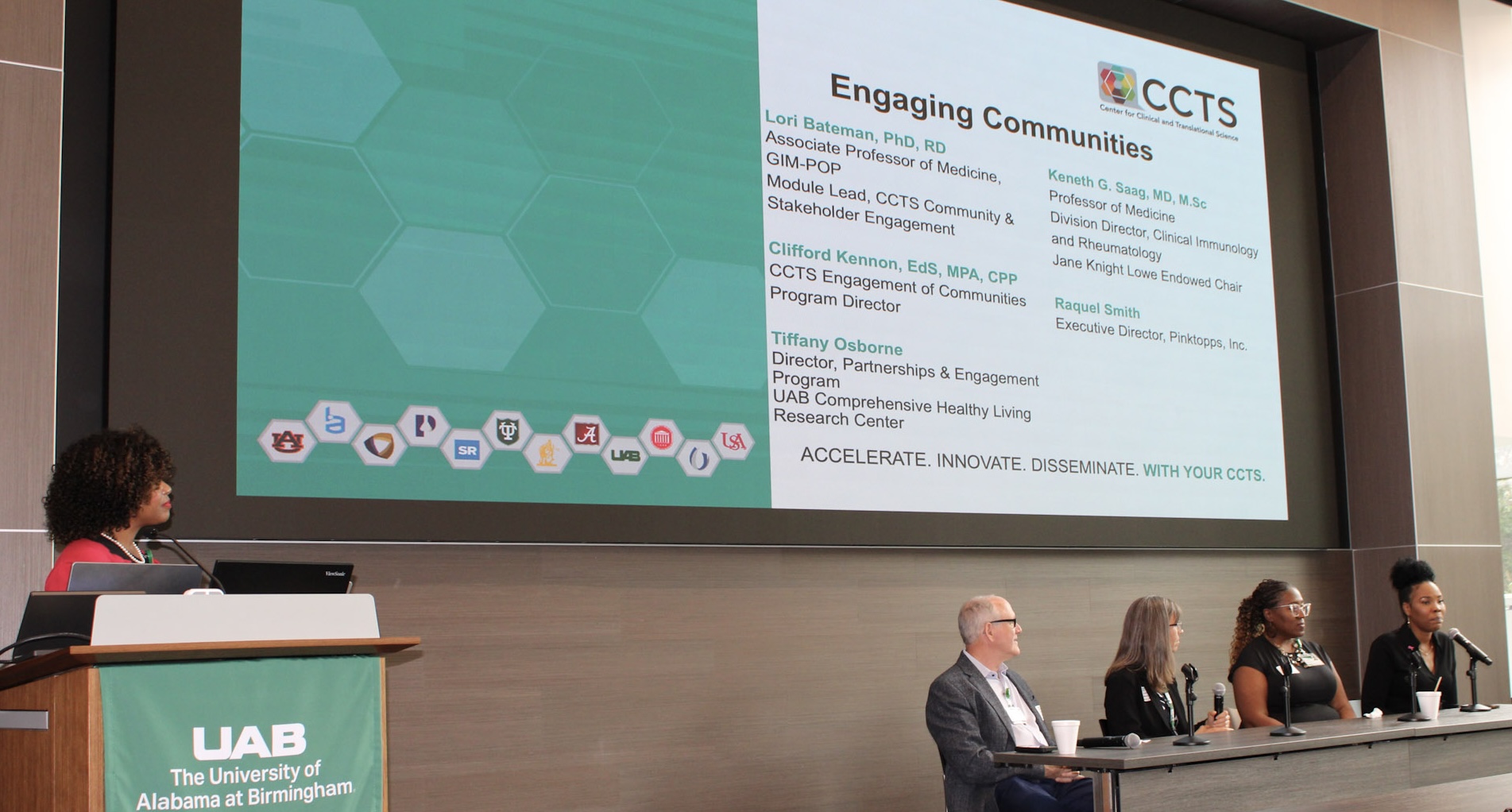 She explained how community-engaged research can improve research quality, support the use of evidence-based practices and help produce health efforts that are more relevant to the people they are intended to serve. She also highlighted CCTS resources for investigators, including Community Engagement Institute programs, advisory boards, CCTS panels, and community-focused funding opportunities.
Moderated by Tiffany Osborne, Director of Community Engagement at the UAB Comprehensive Healthy Living Research Center, the stakeholder panel featured Raquel Smith of PinkTopps, Inc.; Dr. Saag; Dr. Bateman; and LaToya R. Bishop, PhD, MPH, also from the UAB Comprehensive Healthy Living Research Center. The panel brought research and community perspectives together to continue the discussion about sustained engagement throughout the research process. Together, the sessions connected career development with the communication and relationship-building skills needed to move research forward.
“The Summer Jamboree gives CCTS scholars and trainees time to learn from experienced investigators, practice communicating their science and connect with people who can broaden how they think about research,” said Dr. Pollock. “This year’s program reinforced that becoming a translational scientist involves more than making discoveries. It also requires thoughtful career development, clear communication and meaningful engagement with communities.”
Continue Your Translational Science Journey
The Summer Jamboree reflects the CCTS commitment to supporting researchers at every stage of their careers, from foundational training to advanced skill-building in communication, collaboration, and community-engaged science. To explore additional opportunities for professional growth, visit the CCTS Training Academy, which offers programs and resources for both new and experienced investigators.
For additional news, events, training, and research opportunities from across the CCTS Partner Network, subscribe to the weekly CCTS Digest and follow CCTS on LinkedIn.
View the 2026 Summer Jamboree Photo Gallery
Scroll through the event pictures below or click here to view the full gallery.