
Community members bring knowledge, experience, and local perspective that can strengthen research, programs, and academic-community partnerships. Engaging them in meaningful roles to shape that work was the focus of the latest Center for Clinical and Translational Science (CCTS) Community Engagement Institute (CEI) Perspectives event, “Community Action Boards: Building Trust, Collaboration, and Community Impact,” presented June 26, 2026, via Zoom.
Community Action Boards connect organizations with the communities they serve. During the panel discussion, speakers explored how action boards can move beyond providing feedback to participate in decision-making, guide implementation, improve communication, and help ensure that research responds to community priorities.
A Conversation Grounded in Experience
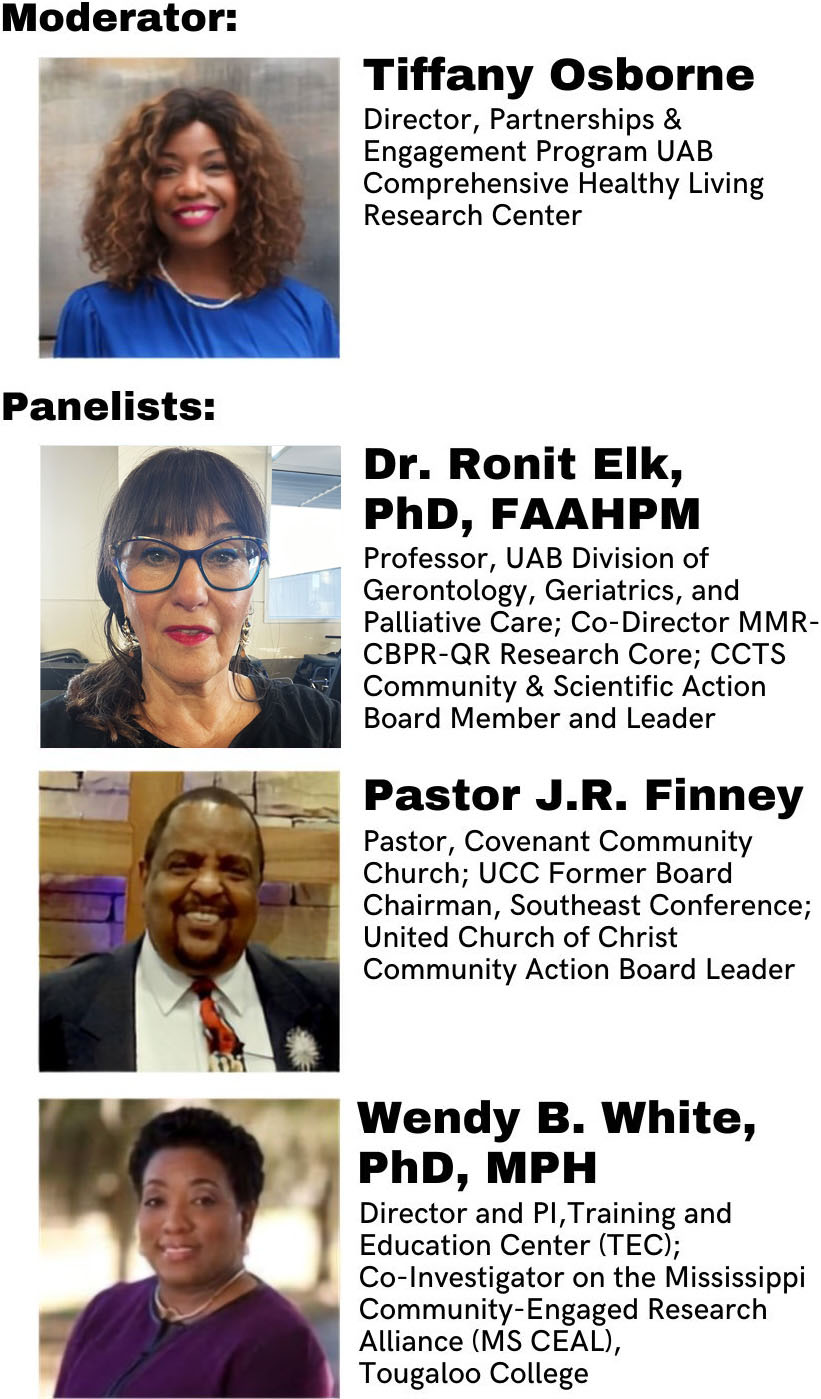
The event was moderated by Tiffany Osborne, Director of Community Engagement at the UAB Comprehensive Healthy Living Research Center. Drawing on 10 years of experience developing community boards and coalitions across Alabama, Osborne guided a discussion featuring:
- Ronit Elk, PhD | Professor, UAB Division of Gerontology, Geriatrics, and Palliative Care; Co-Director, MMR-CBPR-QR UAB Institutional Research Core; Member, CCTS Community & Scientific Action Board
- Pastor J.R. Finney II | Senior Pastor, Covenant Community Church; Community Action Board Leader
- Wendy B. White, PhD, MPH | Director and Principal Investigator, Jackson Heart Study Undergraduate Training and Education Center; Mississippi Center for Clinical and Translational Research
The panelists brought perspectives from research, community leadership, training, and long-term academic-community partnerships.
From Advice to Shared Action
 Dr. White opened the session by explaining the distinction between Community Advisory Boards and Community Action Boards. Advisory boards traditionally provide guidance and recommendations, while action boards participate more directly in developing priorities, making decisions, supporting implementation, and communicating with the broader community.
A strong action board does not simply react to plans that researchers have already completed. Community members are involved early enough to shape the questions being asked, the methods being used, and the way findings will be communicated. As Dr. White explained, “You can’t have research without community.”
She described how Jackson Heart Study community members served on steering committees, voted on decisions, and helped ensure research reflected local knowledge and practices.
Building Trust by Showing Up
Trust was a recurring theme throughout the discussion. Panelists emphasized that trust is earned through consistency, transparency, and long-term presence, not institutional reputation alone.
Researchers should not engage communities only when they need participants, input, or letters of support. Instead, they should remain present, attend community events, listen, and maintain relationships even outside of active projects. Panelists also cautioned against “helicopter” or “hit-and-run” research that collects data without sharing results or explaining what was learned.
Pastor Finney emphasized transparency, noting, “I think that you have to be overly transparent, even to the point of redundancy.”
Shared Decision-Making in Practice
The panel shared examples of meaningful community decision-making. Pastor Finney described action board members as active decision-makers who help guide the work based on community input.
“We are the decision makers, and we are the community voices,” he said.
Dr. Elk shared an example in which action board members selected cultural values, wrote scripts, and appeared in training videos, effectively creating the program rather than simply reviewing it.
“The community guides and makes every single decision,” she said.
Panelists also stressed the importance of planning for participation from the start, including compensation, training, transportation, and scheduling in project budgets.
Communicating Research Clearly
Action boards can help ensure research findings are understandable and useful to the public. Dr. White shared another example from the Jackson Heart Study, where community members requested plain-language summaries instead of technical abstracts. The study responded by working with undergraduate scholars to translate findings into clear, plain language.
This approach supported community understanding and helped train emerging researchers in effective communication. Panelists emphasized that communication should continue throughout a project, including updates, explanations of changes, and sharing results in formats community members can understand and use.
Building Strong Community Action Boards
Action boards are most effective when members feel comfortable sharing different perspectives and working toward a shared purpose.
Pastor Finney noted, “You don’t have to see eye to eye to walk hand in hand.”
Strong boards benefit from clear roles, training opportunities, and structures that support participation. Panelists also highlighted the importance of recognizing community contributions, including opportunities for presentations, training roles, and co-authorship when appropriate.
Key Takeaways: Strengthening Action Board Partnerships
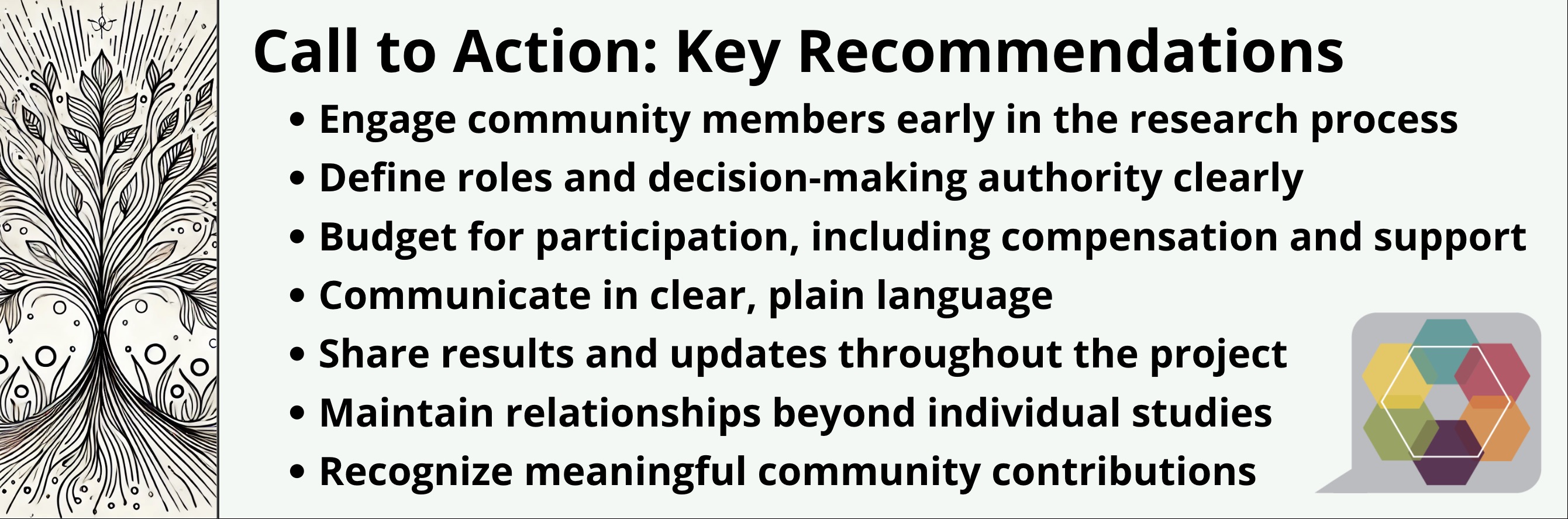
The session offered several practical steps for strengthening action board partnerships:
- Engage community members early in the research process
- Define roles and decision-making authority clearly
- Budget for participation, including compensation and support
- Communicate in clear, plain language
- Share results and updates throughout the project
- Maintain relationships beyond individual studies
- Recognize meaningful community contributions
These practices help move community engagement from consultation toward shared decision-making.
Strengthening Community Voice Through the CCTS
 “Community Action Boards are most effective when community members are not simply asked for feedback but are trusted as partners with a meaningful role in shaping decisions and moving the work forward,” said Clifford Kennon, EdS, MPA, CPP, Program Director of the CCTS Community Engagement Institute. “Building that kind of relationship takes time, transparency, and a commitment to staying connected beyond a single project.”
Stay Connected
Researchers planning to establish or strengthen a Community Action Board can connect with the CCTS Engagement of Communities team for guidance and support. Those who missed the event can view the recording and explore previous CEI Perspectives sessions on the CCTS Video Channel. For additional news, events, training, and research opportunities from across the CCTS Partner Network, subscribe to the weekly CCTS Digest and follow CCTS on LinkedIn.