We tend to think of learning as something that happens in the mind, a mental exercise of reading, practicing, and remembering. But the truth is far more visceral.
Every time you learn something new, your brain physically reshapes itself. How you feel about what you’re learning, whether you love it, tolerate it, or resent it, directly affects how well that reshaping occurs and how long those changes last. This neuroscience has profound implications for how we approach education, professional development, and lifelong learning.
1. Your Brain Physically Rewires Itself When You Learn
The brain’s remarkable ability to reorganize itself, known as neuroplasticity, means that every new skill or piece of knowledge triggers actual structural changes in your neural wiring. Your brain is never static; it’s constantly being sculpted by your experiences throughout your entire life (Cunnington, n.d.).
Key structural changes that happen during learning:
- Synaptic strengthening, connections between neurons become stronger
- Structural remodeling, the physical architecture of neural pathways changes
- Functional reorganization, brain regions adapt how they work together (Brain Research Review, 2025)
Brain imaging studies show that when you’re learning something new, specific regions light up initially. But as you become more skilled, those localized activity patterns give way to broader, more efficient network connections across the brain (Bertolero et al., 2018). It’s the difference between a beginner laboriously thinking through every step and an expert operating on instinct.
Dopamine’s critical role:
- Dopamine doesn’t just make you feel good, it regulates neural plasticity and motivation by signaling reward and influencing how much effort you’re willing to invest (Neuroscience News, 2015).
- Research on motor learning shows that when dopamine levels are restored, people can reorganize their neural networks and resume learning new physical skills, evidence of its central importance in forming new abilities (Technology Networks, 2025).
2. Why Your Feelings About Learning Actually Matter
Once you understand that learning involves physical changes in the brain, it becomes clear why emotion plays such a decisive role.
What happens when you’re intrinsically motivated:
- Your brain responds differently to feedback and engages memory systems more effectively (Murayama et al., 2015).
- Highly motivated learners show sharper distinctions between positive and negative feedback, helping them learn from both success and failure more efficiently.
- Curiosity activates reward circuits in the brain and strengthens memory formation.
What about external incentives?
- Even external incentives, like the promise of money, can enhance learning, primarily by sharpening attention and filtering out distractions (Gruber & Ranganath, 2020).
- Internal passion and external rewards reinforce learning simultaneously, just through different neural routes.
Dopamine also supports both reinforcement learning and behavioral activation based on anticipated rewards (Neuroscience News, 2023). When you enjoy what you’re learning, your brain releases more dopamine, which improves attention and strengthens the neural connections involved in memory consolidation (Leming, n.d.).
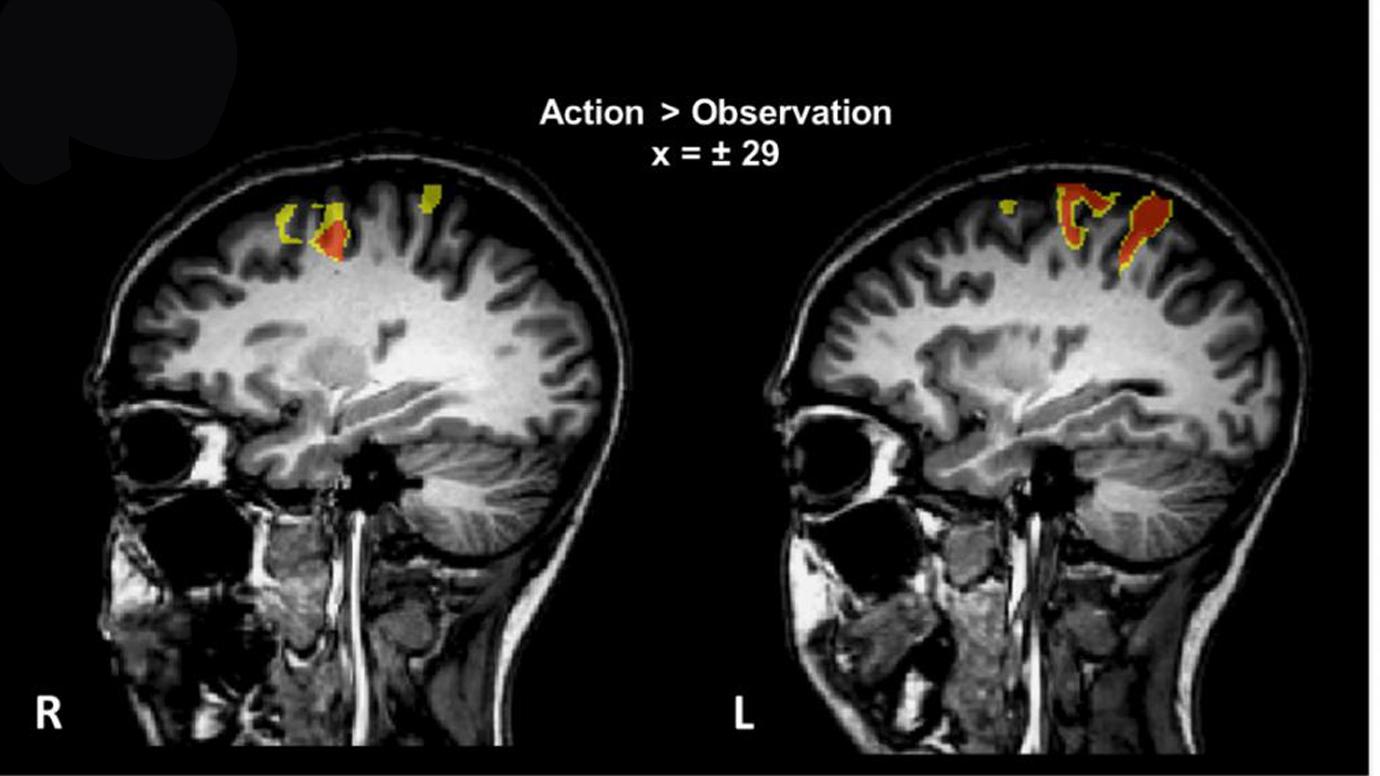
Above: "Brain scans showed that students who took a hands-on approach to learning had activation in sensory and motor-related parts of the brain when they later thought about concepts such as angular momentum and torque." (Ingmire, 2015)
3. The Difference Between Loving and Hating What You Learn
When you love what you’re learning:
- You focus better and for longer periods, which improves how much you absorb and retain (Leming, n.d.).
- Positive emotional states strengthen both encoding (the process of forming memories) and recall, making it easier to retrieve information later (Leming, n.d.).
- Interest naturally drives you to explore beyond the minimum, building richer, more interconnected knowledge networks (Leming, n.d.).
- Both immediate performance and long-term retention improve significantly compared to traditional methods when learning is enjoyable (BMC Medical Education, 2025).
When you dislike what you’re learning:
- Motivation drops.
- Feedback processing weakens.
- Attention becomes inefficient.
- Learning still happens, it just requires more effort and typically produces weaker retention because engagement and reward signaling are diminished (Murayama et al., 2015).
That said, neutral or unpleasant learning isn’t worthless. With sustained effort, you can reach flow states, those moments when engagement increases as competence builds, reinforcing cognitive control and improving how you process feedback (Lu et al., 2024). But reaching that state usually demands deliberate persistence rather than happening naturally from intrinsic attraction.
4. What This Means Over the Long Haul
The emotional relationship you have with your subject matter doesn’t just affect immediate performance, it shapes your entire learning trajectory.
The long-term impact in a nutshell:
- Loving what you learn: You engage with it repeatedly. That repetition strengthens neural connectivity patterns that persist even when you’re not actively studying (Bertolero et al., 2018). Accelerates adaptation and improves retention.
- Disliking what you learn: Disengagement reduces repetition and cognitive investment, limiting opportunities for deep consolidation. Slows things down but doesn’t make learning impossible.
- Neutral engagement: Produces functional results, but they’re often suboptimal.
The brain is designed to learn under almost any circumstances. It’s just exceptionally good at learning when reward circuits, emotional state, and cognitive effort all point in the same direction.
Final Thoughts
Learning isn’t only a mental activity, it’s a biological transformation. Neuroplasticity, synaptic modification, and network reorganization physically reshape your brain whenever you acquire new knowledge or skills. And these changes are profoundly influenced by emotion.
The Key Takeaways:
- Motivation, curiosity, and enjoyment modulate how your brain processes feedback, releases dopamine, directs attention, and consolidates memories.
- Together, they determine how effectively learning becomes durable knowledge.
- Loving what you learn doesn’t simply make the process more pleasant,it measurably improves your brain’s capacity to retain and apply that knowledge over time.
So, when people say you should be passionate about what you learn, they’re not just offering feel-good advice. They’re describing neurological leverage.
Resources
Citations
Bertolero, M. A., Bassett, D. S., & D’Esposito, M. (2018). Learning differentially reorganizes brain activity and connectivity. arXiv. https://arxiv.org/abs/1810.08840
Brain Research Review. (2025). The neuroplastic brain: Current breakthroughs and emerging frontiers. ScienceDirect. https://www.sciencedirect.com/science/article/pii/S0006899325002021
BMC Medical Education. (2025). Impact of game-based teaching on learning and retention. https://bmcmededuc.biomedcentral.com/articles/10.1186/s12909-025-07630-9
Cunnington, R. (n.d.). Neuroplasticity: How the brain changes with learning. UNESCO/IBRO Science of Learning Portal. https://solportal.ibe-unesco.org/articles/neuroplasticity-how-the-brain-changes-with-learning/
Gruber, M. J., & Ranganath, C. (2020). How curiosity enhances hippocampus-dependent memory: The intersection of motivation and cognition. Brain Structure and Function. https://link.springer.com/article/10.1007/s00429-020-02074-x
Leming, M. (n.d.). The impact of enjoyment on learning retention. The Hun School of Princeton. https://www.hunschool.org/resources/the-impact-of-enjoyment-on-learning-retention
Lu, H., van der Linden, D., & Bakker, A. (2024). The neuroscientific basis of flow. arXiv. https://arxiv.org/abs/2409.06592
Murayama, K., et al. (2015). Neural basis of intrinsic motivation and feedback processing. NeuroImage. https://www.sciencedirect.com/science/article/pii/S1053811915005510
Neuroscience News. (2015). The role of dopamine in learning and reward. https://neurosciencenews.com/dopamine-learning-reward-3157/
Neuroscience News. (2023). Dopamine plays double duty in learning and motivation. https://neurosciencenews.com/dopamine-motivation-learning-23403/
Technology Networks. (2025). Dopamine’s role in learning new motor skills revealed. https://www.technologynetworks.com/neuroscience/news/dopamines-role-in-learning-new-motor-skills-revealed-398033
Written by: Hammond Lake, Communications Specialist