A new University of Alabama at Birmingham (UAB) startup, Fast Prototyping Software Solutions, is helping researchers simplify and accelerate eye imaging analysis.
Founded by Massimo Fazio, Ph.D., UAB associate professor in the Department of Ophthalmology and Visual Sciences, the company has developed software that unifies multiple imaging analysis algorithms into a single, streamlined pipeline.
Designed for use with Optical Coherence Tomography (OCT) images — which generate 3D scans of the retina — the software was born out of necessity.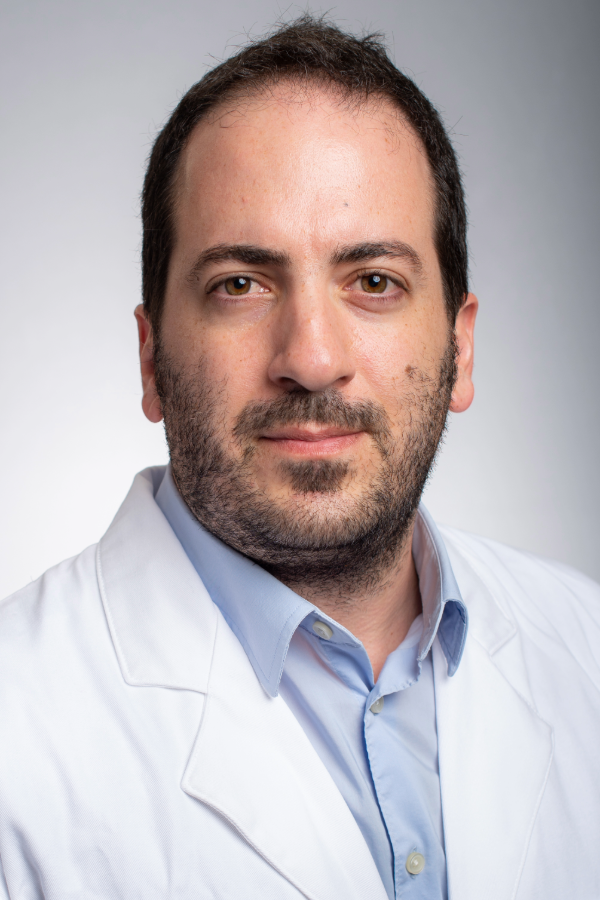 Massimo Fazio, Ph.D.
Fazio realized that researchers like himself were spending valuable time manually combining image analysis tools from various programming platforms. His solution enables users to integrate processing modules written in different languages through an intuitive graphical interface, creating a seamless workflow.
While not a treatment tool, the software is proving valuable in academic research, particularly in studies of retinal diseases and vascular changes in the eye over time.
"You’re kind of only limited by your creativity in how you use integrated image analysis pipelines,” said Wink Crittenden, Ph.D., licensing associate at UAB’s Harbert Institute for Innovation and Entrepreneurship, which partnered with Fazio to launch the company. “The software gives researchers flexibility to combine algorithms and study retinal changes more efficiently.”
Fast Prototyping Software Solutions is initially focusing on academic institutions and eye hospitals. Its first licensee is using the software to analyze longitudinal OCT scans and examine how retinal morphology changes with body position and intraocular pressure.
The tool — known as WIPES — has made it possible to review these complex datasets efficiently, a task that would otherwise be challenging for research teams without access to custom software developers.
“This will give researchers greater flexibility in the types of image analysis pipelines they can build,” Wink said. “The flexibility means they can tailor their studies to specific research questions and explore new ways to understand retinal disease”
To learn more, reach out to Dr. Fazio by email at
-- Dec. 11, 2025