Tricorder Array Technologies LLC, a University of Alabama at Birmingham (UAB) startup, recently announced PenPal®, an AI-powered monitoring device that is designed to protect animal investment and strengthen animal welfare.
Robby Tindal, President of Tricorder Array Technologies, was working in UAB’s information technology department when he was assigned to support the software that operates the Animal Resource Program. After discussing gaps in monitoring and census processes with program leaders, Tindal pursued a Small Business Technology Transfer (STTR) grant to develop a new approach. He introduced the idea of a 24/7 active sensor capable of automatically monitoring animals and collecting behavioral data.
“That was the moment the NIH program officers said, ‘Congratulations on your new company,’” Tindal recalled.
Tindal recruited a team of collaborators, including Erik Dohm, DVM, and Sam Misko, who helped write and execute the company’s first grants. Together, they secured STTR Phase I and Phase II funding, an Innovate Alabama Supplemental Grant, and support from the UAB School of Engineering. The development of PenPal® was funded with the help of two grants from the NIH Office of Research Infrastructure Programs, including STTR Phase I grant No. R41OD026185 and SBIR Phase II grant No. 2R44OD026185-02A1. The patent for PenPal®, filed with the HIIE in 2019, was granted in 2025.
Building the startup was not straightforward. The team navigated a tight six-month Phase I timeline and budget; mastered a complicated federal grant process, which had not been successful at UAB in nearly 20 years; and pushed through multiple rounds of revisions. Resilience, Tindal emphasized, was essential.
“When it comes to writing grants, you have to be persistent and build a good team,” he said.
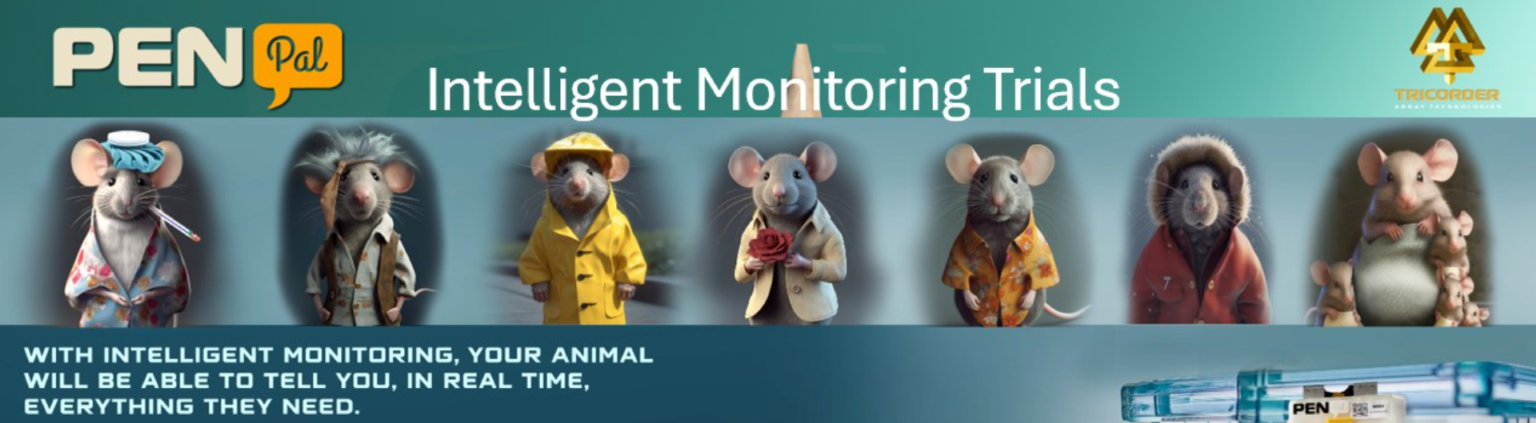 This image is part of TriCorder Array's marketing campaign for the PenPal device.
Developing PenPal
PenPal® combines temperature, humidity, light, and ultrasonic vocalization monitoring to provide continuous insight into cage conditions and animal behavior. The device is small, battery-powered, network-connected and designed for simple deployment. T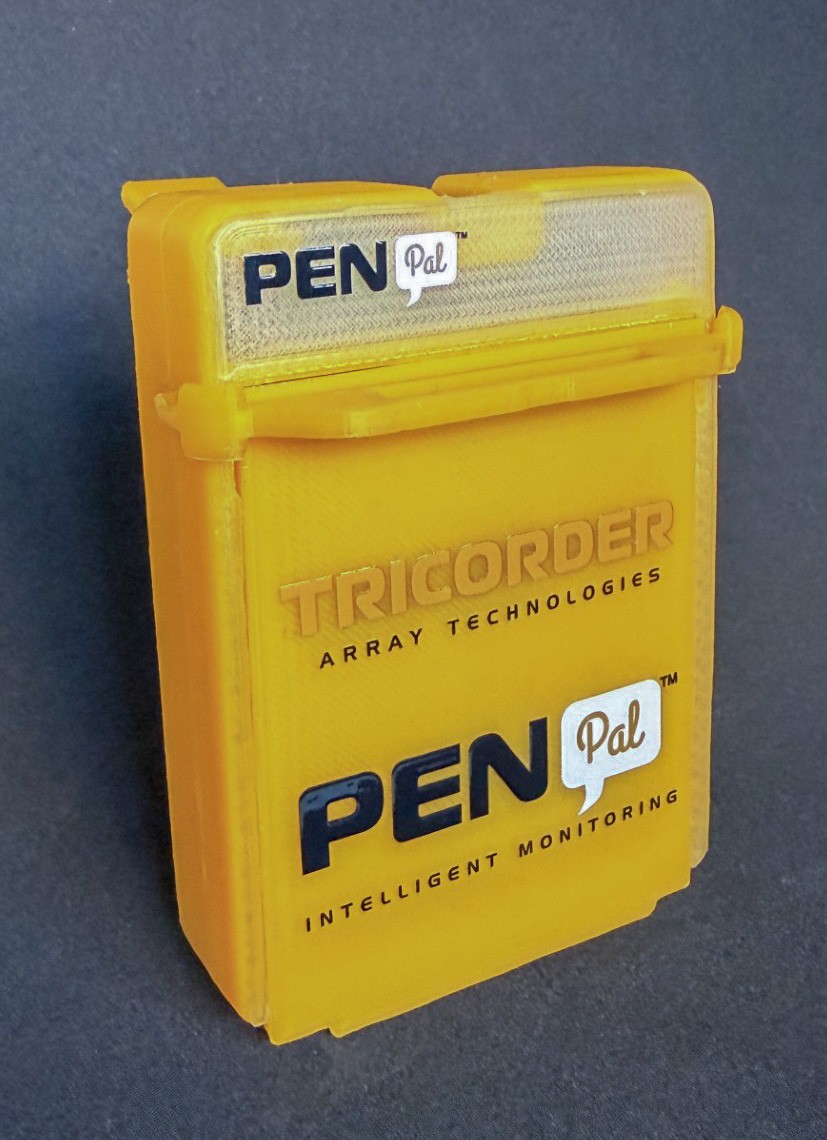 The PenPal device.he system integrates environmental sensing with real-time analysis of ultrasonic vocalizations, allowing facilities to detect mating, stress, injury, pups, and other key events that often go unnoticed.
“So what’s really cool about collecting all this data is that there is a whole language to be discovered,” Tindal said. “The opportunity to continuously learn from the PenPal® data is the exciting part of implementing this system. It’s intelligent monitoring that leverages artificial intelligence.”
Commercialization and what’s next
PenPal® became fully operational in May 2025. Tricorder Array Technologies built customer interest by attending the American Association for Laboratory Animal Science (AALAS) annual conference, where they have been a vendor for the past two years. The company has had more than 340 inquiries for the product, Tindal said.
Three contracts are currently pending, including two in Europe, and UAB is working toward adoption within its own facilities.
Tindal encourages new entrepreneurs to understand their market early.
“You can get excited about your product, but you have to know who will buy it,” he said.
Looking ahead, the company plans to expand PenPal® deployments and continue refining its A.I. models.
“Our goal is to be a high impact for science,” Tindal said. “The more units deployed, the more data we get, and the better and faster we can make this system.”
For more information about PenPal® and Tricorder Array Technologies, visit https://tricorderarray.com/penpal.
-- Jan. 21, 2026