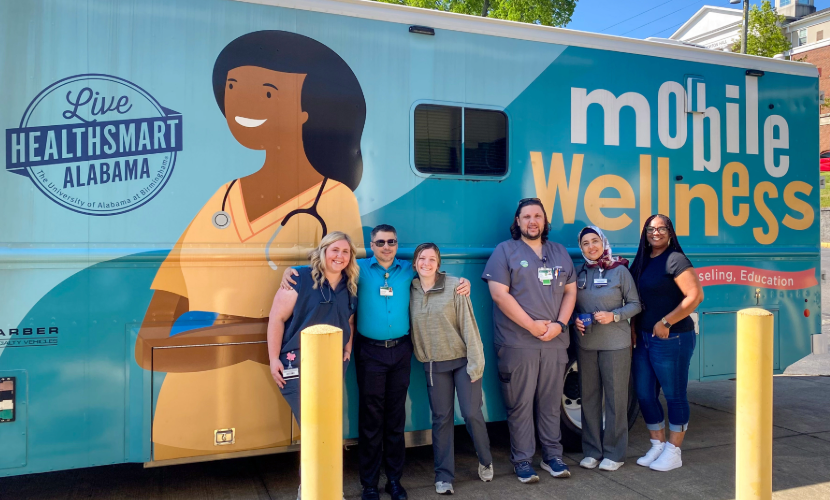
The UAB Department of Family and Community Medicine has officially integrated its Cahaba-UAB Highlands Family Medicine Residency Track rotations with Live HealthSmart Alabama’s (LHSA) Mobile Wellness program.
The partnership first began in 2023 when Sumayah Abed, M.D., Assistant Professor in the department, developed a Community Health Education elective for pre-clinical students with the help of Dalton Norwood, M.D., LHSA Director for Prevention and Wellness. This course prepares preclinical medical students (MS1 and MS2) in the classroom, then places them in UAB clinics and programs for hands-on service in the community. Today, it has become a structured, recognized part of physician training, setting UAB apart from other family and community medicine residency programs nationwide.
The LHSA Mobile Wellness program was an ideal collaboration for this elective. Residents valued the chance not only to sharpen their clinical skills but also to gain a deeper understanding of Birmingham’s neighborhoods and the barriers many patients face in accessing care.
“Working with Mobile Wellness has always been a blessing for both the residents and the students,” Abed said. “It’s not just about giving back to the community, it’s about what they gain in return. They learn how to connect patients to resources they might never encounter in the classroom. Now, it’s an official part of our curriculum.”
Irfan Asif, M.D., chair of the Department of Family and Community Medicine and associate dean of Primary Care and Rural Health, is also enthusiastic about what this partnership means for both groups. “UAB has been working to expand access to care across Alabama. While we are extremely proud of opening new clinics throughout the area and growing our primary care footprint, ensuring better health outcomes here in Birmingham means that we must go into our communities, remove barriers to care, and meet people where they are,” he said. “There is no better way for our residents to do that than by partnering with Live HealthSmart Alabama’s Mobile Wellness unit.”
 Teresa Shufflebarger, LHSA Chief Administrative Officer, helped champion this official partnership. “This collaboration provides an opportunity for our next generation of physicians to be in the community gaining experience that can shape their practice,” she said. “UAB’s widely regarded Family Medicine Residency program can extend learning opportunities to their residents that deepen their understanding of the impact of chronic disease in a community. We are fortunate at UAB to have leaders who not only want to provide the best learning experience for our residents but also create greater access to community residents for preventive health screenings and connections to primary care that positively impact their health.”
Impact for UAB Residents & Medical Students
Unlike a traditional clinic rotation, the LHSA Mobile Wellness unit takes healthcare into the community itself, from church parking lots to schools and neighborhood events. Medical residents aren’t waiting for patients to come through clinic doors; they’re meeting them where they live, work, and gather.
First year residents who have rotated with the Mobile Wellness unit before often serve as mentors for newer colleagues and second year medical students. In these moments, they’re reinforcing their own clinical knowledge while also teaching and delegating tasks. The unit becomes a living classroom where residents model effective patient communication, demonstrate procedures, and encourage students to find their own voice in community health. This dynamic helps residents grow into future physician leaders and gives students the confidence to practice medicine in real-world community settings.
Earl Salser, M.D., vice chair of Education and director of the UAB Family Medicine Residency Training Program, found his passion for medicine working with community health programs and is thankful that his residents now have this same opportunity.
“It’s a requirement of our program to work with the community, so making this partnership official benefits our residents greatly,” he said. “Working with community members helps them understand the true role of a physician and can incorporate this experience into their practice moving forward.”
In the community, residents practice motivational interviewing, improve their bedside manner, and learn how to connect patients with resources such as transportation options, food access programs, or free clinics. They also learn what textbooks can’t teach: how to translate “head knowledge” into everyday conversations about health.
Cristel Flores, M.D., current resident of the Cahaba-UAB Highlands Family Medicine Residency Program, recently completed a rotation with LHSA Mobile Wellness.
“Working with the Mobile Wellness unit reminded me why I went into medicine: to meet people where they are and break down barriers to care,” she said. “It showed me how much impact we can have just by meeting patients on their terms. This experience will shape how I practice, and I will always remember that good medicine means understanding the person in front of you, not just their diagnosis.”
Filling a Community Health Need
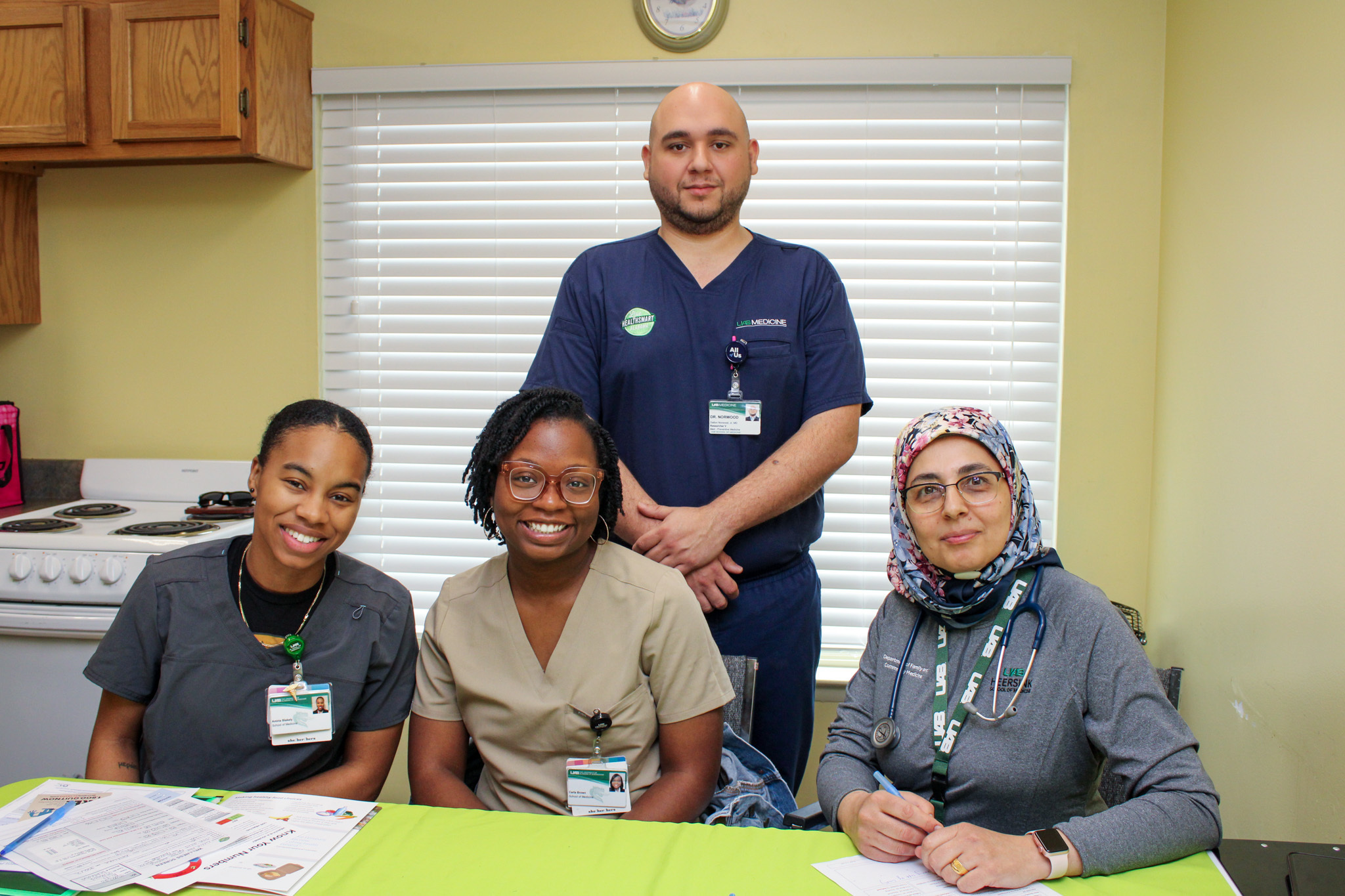
For the communities served, Mobile Wellness is more than a clinic-on-wheels. Residents provide screenings, explain results in real time, and connect people to the next steps—whether that’s a primary care physician, a nearby clinic, a nutrition program, or simply helping someone understand their blood pressure reading.
Flores shared a personal story: “I had the chance to sit with a patient and go over their blood pressure readings, discussing how diet and lifestyle changes could help. Because the conversation wasn’t rushed, the patient felt heard and supported, and I realized how much these small interactions can have a lasting impact.”
Connecting with each participant directly and personally can make all the difference in one’s health and wellness journey, especially for individuals who may not understand what their numbers mean or know to how access reliable resources.
Many community members are referred to primary care with the UAB Residency Program Clinic, Cooper Green Mercy Health, Christ Health, or another location that best accommodates one’s location and financial situation. Others connect with additional LHSA programs, like weekly fitness classes or the Mobile Market, a rolling grocery store. At the end of the day, both residents and communities benefit from the collaboration.
“This partnership embodies the very best of who we are as a university,” said Norwood. “It unites our mission of serving communities with our vision of training the next generation of physicians, while expanding our footprint as a health-promoting university. It’s more than a collaboration — it’s a powerful model where residents gain real-world experience, communities receive vital services, and Alabama moves closer to a healthier future. Everyone wins.”