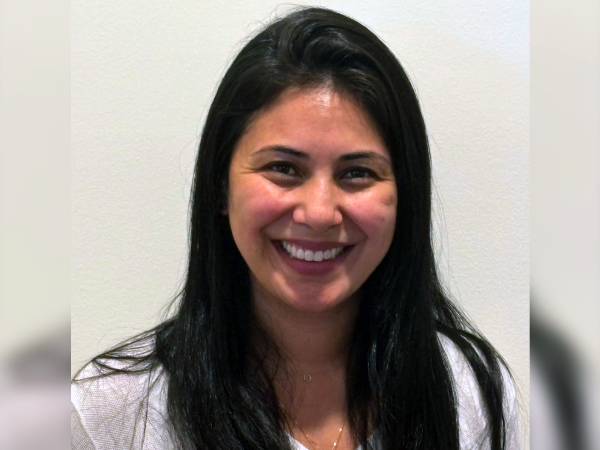
 Priscila Sato, Ph.D.
Our Get to Know series highlights our dynamic researchers from across the UAB Comprehensive Diabetes Center (UCDC), from faculty members to trainees and laboratory staff. This month, we’re spotlighting Priscila Sato, Ph.D., associate professor in the Department of Medicine Division of Cardiovascular Diseases. The Sato Lab focuses on molecular mechanisms of cardiovascular diseases, with particular emphasis on G-protein coupled receptor signaling and cardiac metabolism.
Tell us a little bit about you and your role at UAB and the UCDC.
I am an associate professor in the Division of Cardiovascular Disease in the Department of Medicine. I began my independent career at Drexel University College of Medicine as a tenure-track assistant professor before joining UAB in October 2023.
During my independent career, I have been fortunate to benefit from the resources and collaborative environments of two Diabetes Centers: the University of Pennsylvania Diabetes Research Center (DRC) and, more recently, the UAB DRC, which is part of the UAB Comprehensive Diabetes Center (UCDC). The UCDC has been incredibly welcoming and has already fostered several new interactions and collaborations with faculty who share my research interests. It has also provided valuable opportunities to discuss ongoing projects in my laboratory.
The UAB DRC currently supports one of our pilot studies, which has connected me with other UCDC members and is helping us lay the groundwork for future NIH-funded collaborations.
At the UCDC, I am particularly invested in advancing research, supporting recruitment efforts at all levels, and participating in work-in-progress discussions that strengthen the scientific community.
What first got you interested in diabetes research?
I consider myself a cardiac-centric researcher who follows the data wherever it leads. During my postdoctoral training, I discovered that G protein-coupled receptor kinase 2 (GRK2) is also localized to the mitochondria, where it regulates glucose oxidation following myocardial ischemia-reperfusion injury. That observation led me to step back and ask a broader question: which diseases alter glucose metabolism in ways that ultimately impact the heart? This line of thinking naturally led me to consider the pancreas. I then began asking what we know about GRK2 in pancreatic biology and how pancreatic signaling might influence cardiac function. That scientific path ultimately brought my work into the diabetes field, driven entirely by the biology and the questions arising from our data.
Tell us a little bit about your lab, your research, and collaborations.
I feel incredibly fortunate to have worked and continue to work with a group of talented and dedicated scientists. At the lab level, we operate as a team and family. Everyone has a voice in shaping the direction of our science, and my goal is to create an environment that encourages creativity, collaboration, and discovery at all levels of training. Our laboratory currently focuses on two primary research areas, along with several pilot studies that help expand our scientific breadth and foster new collaborations. The main projects investigate how specific kinases regulate cardiac metabolic health and influence the progression of heart failure. Our pilot studies allow us to explore emerging ideas, expand our projects, and build interdisciplinary collaborations. At UAB, we currently collaborate with investigators across multiple departments, including biochemistry, genetics, immunology, endocrinology, pathology, and radiation oncology. For expanded project specifics, please visit our website psatolab.org, where I try to keep up-to-date information on our research.
What does the support of the UCDC and its mission mean to you?
The support provided by the UCDC is truly multifaceted. It creates opportunities to enter new research areas, exposes investigators to cutting-edge science, and most importantly, provides a collaborative home where scientists from different disciplines can come together to tackle complex questions. In my view, this type of interdisciplinary environment is essential for advancing our understanding of diabetes and ultimately moving closer to meaningful therapeutic solutions. The UCDC plays a critical role in fostering these collaborations and supporting innovative, paradigm-shifting research. My team and I are incredibly grateful to be part of such a dynamic and supportive community of colleagues, scientists, and friends.
What do you enjoy doing outside of the lab?
I lost my mother when I was 20 years old, and that experience profoundly shaped how I view life and time. It left me with many unanswered questions, but also reinforced what matters most to me. My greatest priority in life is being a mother. My daughters are 13 and 11 years old, and I make a conscious effort to spend meaningful time with them every day. It is very important to me that they always feel loved and supported.
The girls have also inherited my love for exercise, and we spend a lot of time outdoors together. I run every day, and running serves several purposes for me. It helps me maintain my mental balance and provide a sense of calm. It also allows me to connect with nature: watching the first bloom of flowers, hearing birds in the trees, and enjoying the beautiful Alabama skies (which I believe are unlike anywhere else in the world).
Those quiet moments outdoors, with minimal human interference, remind me to appreciate life and the fragility of time. It ultimately resets my compass on a daily basis.