 Elizabeth Proenza, M.D., PGY-3, and Rafaella Navarro Hoyos, M.D., PGY-2, in the UAB Department of Pediatrics, spent two weeks in Peru and realized a medical truth widely sought after in the UAB community. They learned that sometimes the most powerful medicine isn't just in the treatment, it's in a spirit of collaboration that can cross distance and borders.
Proenza and Navarro Hoyos went to Peru for a Cassell Family Training Program rotation, bringing with them the high-quality, standard-of-care training they had received as physicians trained in the United States.
Both traveled to Peru for global health training, and they expected exposure to tuberculosis (TB) care. However, in addition, they found a deeply connected system that reshaped how they think about collaboration, public health, and clinical practice.
This rotation is supported by the Mary Heersink Institute for Global Health in partnership with Socios En Salud, which is a system so interconnected that it is the largest international non-governmental organization in Peru and one of the largest in the Latin America and Caribbean Region, making it easy to communicate broadly about specific patient care. Both residents spent two weeks embedded in Peru’s TB care network, working across clinics, rehabilitation centers, and hospitals while observing how national policy translates to bedside care.
Learning how the system works
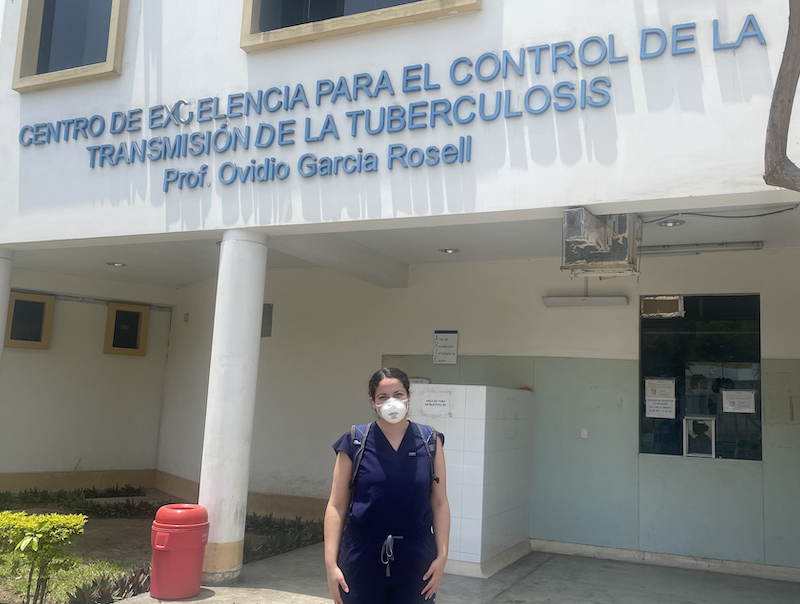 Elizabeth Proenza, M.D.Proenza initially expected clinics to function independently. After only two weeks, she left with an entirely different understanding of what global healthcare collaboration could look like.
“I assumed clinics in Peru would operate individually, similar to the United States,” she said. “However, everything went through MINSA (Peru’s Ministry of Health).”
Instead, she found an integrated model in which TB cases flow through a national strategy that connects community clinics, rehabilitation services, and public health teams.
Navarro Hoyos entered the rotation with a different perspective. As a native Peruvian physician training in the United States, she had her heart set on this rotation and experienced the program both as a learner and someone returning home.
“I’m a global scholar, and that’s how I knew about the opportunity,” Navarro Hoyos said.
Her schedule reflected the scope of the program, with two days each week in community health centers assessing patients with post-tuberculosis lung disease, one day in a tertiary hospital clinic seeing patients with active or past TB, and dedicated time working with the national TB strategy team reviewing surveillance and treatment planning. At rural sites, she assisted with spirometry and respiratory assessments.
A closer look at TB care
Both residents helped treat complex cases, including drug-resistant disease and the long-term respiratory complications that can persist after infection clears.
Proenza spent time at post-TB lung rehabilitation centers, where she followed a patient whose recovery illustrated the impact of coordinated care. Initially, the woman could walk only a few steps without stopping. Weeks later, she returned, moving quickly down the hallway and nearly jogging.
“Her recovery process was due to the rehab program and her compliance with treatment,” Proenza said. “It made such a huge difference in her quality of life.”
For Navarro Hoyos, the rotation emphasized how evidence, public health priorities, and clinical realities intersect. She reviewed major TB treatment trials, analyzed how research-informed Peruvian guidelines were developed, and applied that knowledge while presenting patient cases to attending physicians.
“As a Peruvian, it was eye-opening to see all the effort that was put into the new guideline,” she said. “Decisions were taken based on clinical trial data and public health convenience.”
A network built on collaboration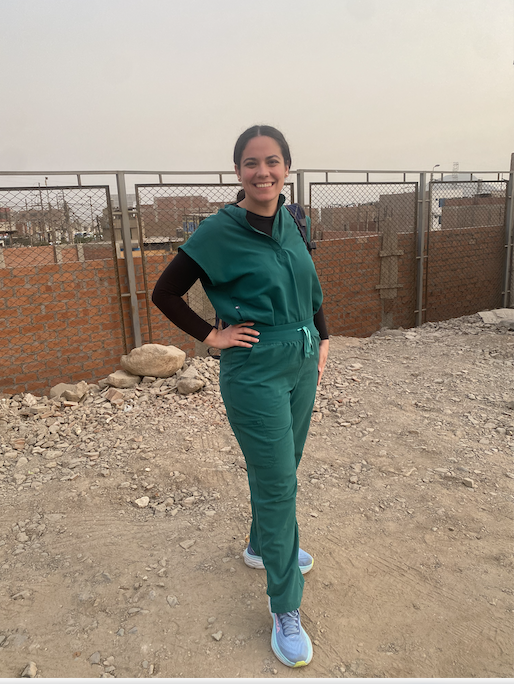
What stood out most to both residents was the level of coordination. Proenza observed constant communication between clinics and public health teams.
“There was a huge collaborative effort between community clinics and the public health department,” she said. “They would message constantly and work through problems together.”
Navarro Hoyos saw how innovation supported that collaboration, including laboratory and imaging tools adapted into point-of-care technologies that could reach remote communities. The experience highlighted how national systems, nonprofit organizations, and international partners can work together while maintaining locally led care.
Practicing medicine with limited resources
Working across urban and rural settings also meant confronting logistical challenges. Travel to peripheral health centers could be difficult, Navarro Hoyos said, but the exposure was invaluable. Both residents described becoming more intentional about resource use.
“This trip helped me be more conscious of the medical resources that I am using and how they will impact care on a larger scale,” Proenza said.
For Navarro Hoyos, the experience clarified how research, global health, and public health can be integrated into everyday clinical decision-making.
“I learned how to combine public health, global health, and research,” she said.
She also saw firsthand how social determinants, such as overcrowding and access to care, can shape patient outcomes in high-burden settings.
More than a short-term rotation
Beyond clinical knowledge, both residents said the rotation had a personal impact on their ideas about working in a different health system.
“I loved the people I met, saw interesting cases I would not have seen in the U.S., and learned a lot about myself in the process,” Proenza said.
Navarro Hoyos offered emphatic advice to future trainees: “Go, go, go! Seeing how medicine can be practiced in settings with short budgets is incredible.”
About the Cassell Family Training Program
Since a tuberculosis outbreak in Carabayllo in 1994, Socios En Salud has worked to expand access to TB treatment, including multidrug-resistant disease, reporting cure rates among the highest globally.
The Cassell Family Training Program connects UAB trainees with this work through two- to four-week rotations focused on maternal and child health, HIV, addiction medicine, and post-tuberculosis lung disease. The program covers travel, lodging, and fieldwork expenses for selected fellows fluent in English and Spanish.
“As a founding co-director of this program, seeing the continuum from a transformative, intentional financial gift from the Cassell Family to the development of Peruvian country-wide post-TB lung guidelines and culminating in UAB residents learning from this global classroom sparks so much joy for me,” said Matthew Heimann, M.D., associate director, Mary Heersink Institute for Global Health. “We eagerly look forward to the continued growth of this partnership between UAB and Socios En Salud.”
As they returned to Alabama, both residents carried forward a clearer understanding of what global health looks like in practice, coordinated systems, evidence-based policy, and care that continues long after treatment ends.
“It was an amazing time, and I feel so privileged to have gone and learned so much from incredible patients and doctors,” Proenza said.
For more information about the Cassell Family Training Program or to apply, visit the Mary Heersink Institute for Global Health at UAB website.